
Bald Cardinals and Quiet Yards: August Molt Explained
Bald cardinals, silent mornings and ragged jays are one story: molt. What it costs a bird, an August field key, and two questions science hasn't settled.
Key takeaways
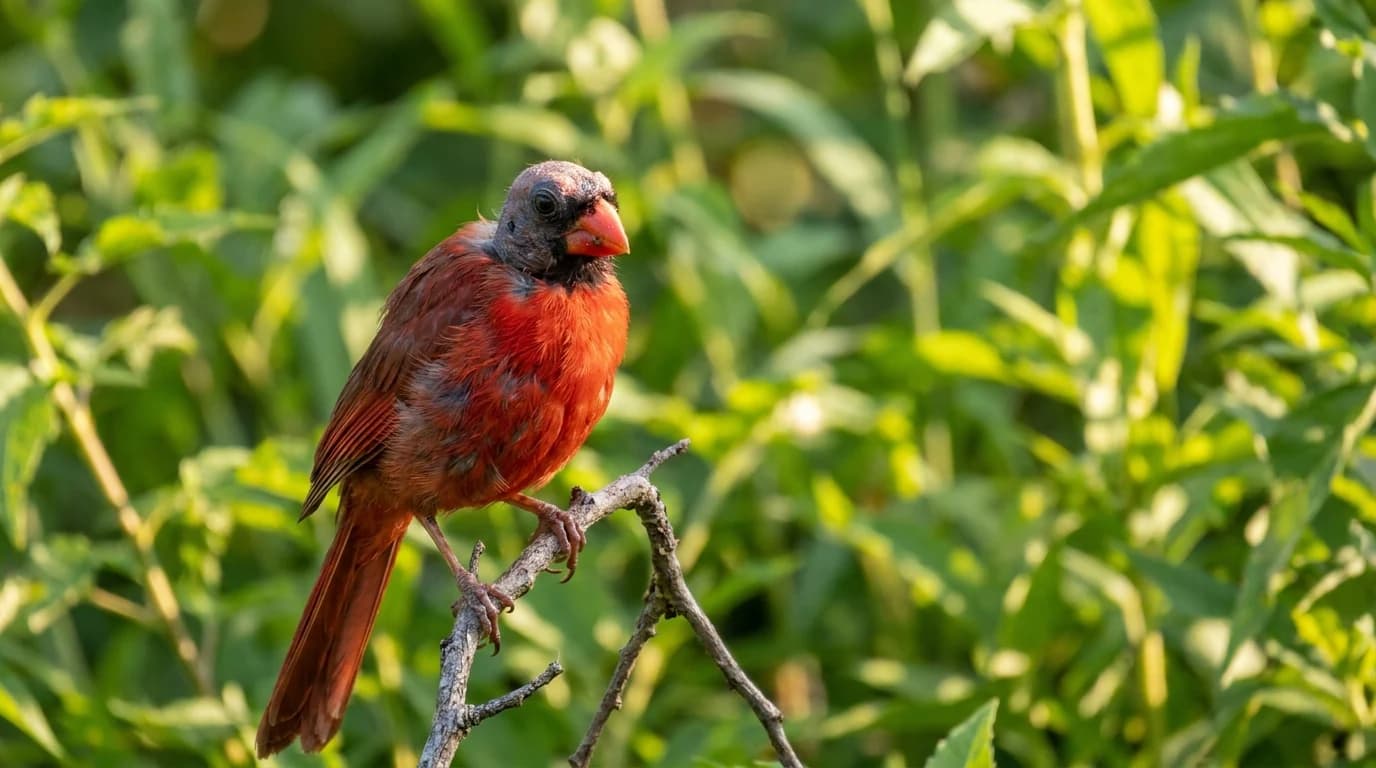
- A bald cardinal or jay is usually normal. Project FeederWatch reports these birds drop their head feathers simultaneously during molt and stay bald for about a week; check the skin colour, not the feathers.
- Molt is the most expensive thing a bird does. It can consume a quarter or more of total body protein mass, much of it from muscle — which is why singing, breeding and migrating all stop around it.
- Demote colour to fourth place in August. Structure, behaviour and habitat survive a molt; plumage does not.
- Some missing birds have left to molt elsewhere. A 2018 analysis of 760,000+ capture records found that most North American landbirds move away from their breeding grounds to molt, at least sometimes.
Something goes wrong with backyards in the second half of August. The cardinal on the feeder has no head. The yard that woke you at 4:30 in June has gone quiet. A jay looks like it lost a fight, and the warblers moving through are wearing colours that match nothing on the plate you are staring at.
Nothing has gone wrong. Your birds are rebuilding themselves, and it is the most expensive thing they do all year.
The bald bird at your feeder is probably fine
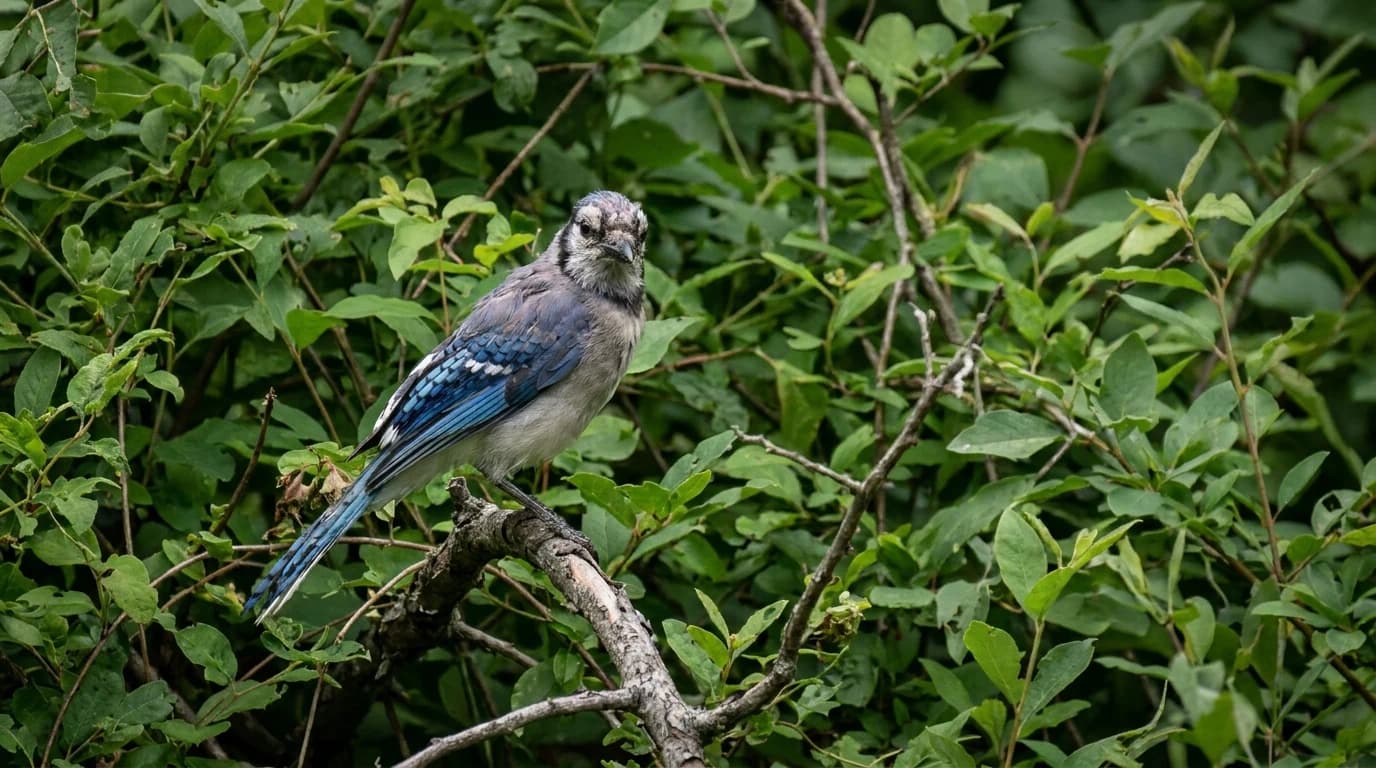
Every year Project FeederWatch receives reports of bald-headed birds, overwhelmingly Blue Jays and Northern Cardinals. In most late-summer and autumn cases the birds have dropped their head feathers all at once while molting, and stay nearly bald for about a week. For Blue Jays that pattern is considered normal; in Northern Cardinals it turns up often enough to sit inside the normal range. Many are juveniles going through their first prebasic molt, the one that produces their first winter adult plumage.
Staggered feather replacement, a few at a time so the bird keeps flying, is the usual pattern for most species. Heads are the exception that makes people panic. New feathers usually grow back within a few weeks, and FeederWatch's paired photos of one bald Blue Jay show fresh feathers already coming in four days later.
Check the skin, not the feathers
It takes two seconds through binoculars, and it is the only part of this worth your attention.
Ordinary, leave it alone:
- A bald jay or cardinal in late summer, especially a young one.
- Bare skin in the right colour. A cardinal's skin is black, so a black-headed bald cardinal is doing something normal.
Worth a closer look:
- Head skin the wrong colour, or growths, or a scabby coating — FeederWatch reads these as signs of an ailment rather than a molt.
- A bald bird that is neither jay nor cardinal — more likely an abnormal molt, feather mites or lice, or something environmental or nutritional.
Rule of thumb: right-coloured bare skin on a jay or a cardinal means wait a week. Wrong-coloured skin, crusting or growths is a different problem, and so is a bald bird of any other species.
What molt actually costs
A bird replaces essentially all of its feathers at least once a year, and that swap lands in the gap between breeding and migration for a reason: there is nowhere else to put it. The Institute for Bird Populations, whose researchers study molt full time, states the bill plainly:
- A quarter or more of total body protein mass, much of it drawn from muscle tissue.
- Exposure. Missing feathers leave a bird vulnerable to heat loss and to predators.
- Exclusivity. The energy demand makes molt effectively incompatible with breeding or migrating at the same time.
The metabolic side has been measured directly, though in only a handful of species. In a study of white-plumed honeyeaters, resting metabolic rate peaked about 82% above each bird's pre-molt level while the energy conversion efficiency of growing the feathers was just 6.9% — which those authors call one of the most energetically demanding and inefficient growth processes yet measured.
Why the yard goes quiet
So the silence makes sense. In Audubon's account of the molt research, birds stop singing from open perches and melt into dense thickets until their feathers are replaced, a stretch that can run a month or more. Your yard is not empty. It is full of birds declining to be seen — which is exactly when learning calls by ear starts paying, because contact notes carry on long after song stops.
An August field key
Six things that look broken this month, and what each one actually is:
| What you are seeing | What is happening | What to do |
|---|---|---|
| Bald-headed cardinal or jay | Simultaneous head molt, often a juvenile's first | Check the skin colour, then wait a week |
| The yard has gone silent | Breeding song is over and molting birds stay hidden | Switch your attention to calls |
| Ragged wings, gap-toothed tails | Flight feathers being replaced in sequence | Normal — identify on structure, not plumage |
| A drake that looks like a female | Eclipse plumage, and a brief flightless spell | Expect it on every pond and reservoir |
| Drab, unplaceable warblers | Fresh basic plumage, plus juveniles you have never seen | Fall is the harder season |
| Feeder traffic collapses | Molt plus a wild-food glut outcompeting your seed | Work the checklist, one change at a time |
The duck row surprises people most. Male ducks swap their bright feathers for female-like eclipse plumage, and their moult runs over such a short window that they temporarily cannot fly at all.
Molt breaks the first rule beginners learn
Almost everyone starts with colour, because colour is what a field guide plate sells. August is the month that rule stops paying, and the fix is to demote colour to fourth place:
- Structure first. Bill shape, body proportion, tail length and posture do not molt away.
- Behaviour second. Tail-pumping, bark-creeping, sallying out and back — habits survive a bad feather year.
- Habitat third. A bird skulking in wet undergrowth has already narrowed your options.
- Colour last, and only as confirmation. Our five-clue method is built in this order for exactly this reason.
Two things nobody can tell you yet
Most of what you will read about August birds is stated with more confidence than the evidence supports, and two of the biggest questions are genuinely open.
The first is baldness itself. FeederWatch says outright that nobody knows for certain what causes it, and that the condition has not been well studied — so every confident "it is feather mites" you meet online is running ahead of the science.
The second is bigger. In 2018, Institute for Bird Populations scientists analysed more than 760,000 capture records covering 140 species at 936 banding stations and found that most North American landbirds move somewhere else to molt, at least sometimes — including familiar backyard residents like American Goldfinch, Gray Catbird, Carolina Wren and Northern Cardinal. Why they move is still unsettled: food is the leading explanation, and IBP notes plainly that the hypothesis has not yet been rigorously tested.
The honest version: what makes a bird go bald, and why so many birds leave home to molt, are both unanswered. Some of the birds missing from your yard are not skulking in your shrubs at all — they have gone somewhere else to grow feathers, and they will be back.
What your yard can offer a molting bird
Molt is a protein problem and a safety problem, so aim at those two things:
- Water, all day. Bathing and preening are how a bird settles new feathers into place. A shallow dish beats an ornament — our bird bath guide covers depth and placement, and the bath picks cover the hardware.
- Protein-dense food. Black-oil sunflower and suet both earn their place, and suetA high-energy cake of rendered fat (often with seeds) that draws woodpeckers, nuthatches, and chickadees. is not a winter-only food. Our top-scored pair are Wagner's black oil sunflower (on Amazon) and the Stokes Select double suet feeder (on Amazon).
- Cover, left alone. Postpone the shrub pruning until the birds have finished. Dense tangle is the habitat a molting bird is actually shopping for.
- Lower expectations, briefly. A slow August yard is a working yard.
By late September the birds are back in fresh feathers and the whole thing looks deliberate again. If you want a structured way to keep learning through the quiet weeks, the Backyard Birder level of the Flight Path is built around exactly this kind of month.
Useful gear for this guide
Optional, subject-matched picks from our live catalog—not a requirement for doing the advice above.

Molting birds eat hard — feed them well.
Frequently asked
Why does the cardinal at my feeder have no head feathers?+
Almost certainly molt. Project FeederWatch reports that bald-headed Blue Jays and Northern Cardinals in late summer and fall have usually dropped their head feathers all at once, staying nearly bald for about a week before new feathers grow in. Many are juveniles in their first prebasic molt. The one thing to check is the skin: a cardinal's skin is black, so a differently coloured head, growths, or a scabby coating suggests an ailment rather than a molt.
Do birds stop singing because of molt?+
Partly. Song largely ends with the breeding season, and molt keeps birds quiet on top of that. Growing a full set of feathers is energetically expensive and leaves birds vulnerable, so they stop singing from exposed perches and spend the period in dense cover. Contact calls carry on, which is why late summer is a good time to work on calls rather than song.
Should I feed birds differently while they are molting?+
Slightly. Molt draws heavily on body protein, so protein-dense and fat-dense foods earn their place: black-oil sunflower, and suet, which is not a winter-only food. Fresh water matters just as much, because bathing and preening are how a bird settles new feathers. Keep everything clean — late-summer heat spoils food and water fast.
Is a bald bird sick, and should I take my feeder down?+
Not on its own. Baldness in Blue Jays and Northern Cardinals sits within the normal range, and FeederWatch is explicit that no one knows for certain what causes baldness in birds, because the condition has not been well studied. Take a feeder down when you see actual disease signs — swollen or crusted eyes, lethargy, birds letting you walk up to them — and clean feeders regularly regardless.
Sources & further reading
We research from primary and authoritative sources. Where our guidance rests on a fact, here's where it comes from.
- Bald-headed Birds | Project FeederWatch (Cornell Lab of Ornithology) — Head feathers dropped simultaneously during molt; normal for Blue Jays and within range for Northern Cardinals; skin colour as the diagnostic; cause of baldness not well studied.
- Molt and Plumage Studies | Institute for Bird Populations — Molt can require a quarter or more of a bird's body protein mass; incompatible with breeding and migration; molt-migration found in goldfinches, wrens, catbirds and cardinals, with the food hypothesis untested.
- More Birds Rely on Special Molting Locations Than We Realized | Audubon — Coverage of Pyle, Saracco & DeSante (2018, The Auk): 760,000+ records, 140 species, 936 banding stations; molting birds stop singing and hide in thickets for a month or more.
- Inexplicable Inefficiency of Avian Molt? | Hoye & Buttemer, PLOS ONE (2011) — Resting metabolic rate peaked 82% above pre-molt levels in white-plumed honeyeaters, with an energy conversion efficiency of 6.9%.
- The eclipse moult of Mallards | BirdLife International — Male ducks adopt female-like eclipse plumage and become temporarily flightless during a short moult window.
Prices and BirdingScores reflect our most recent research and refresh on a cycle; confirm the live price before buying. We may earn a commission from affiliate retailers — it never changes our recommendations. See how we review.