
Fall Migration: What to Look For in August and September
Fall migration runs mid-August to mid-November, and it is harder than spring: drab plumage, almost no song, more juveniles. A week-by-week guide.
Key takeaways
- Fall migration is already underway. Audubon calls it a protracted season starting as early as mid-June — adult shorebirds head south from mid-July, well before anyone calls it autumn.
- Mid-August to mid-November is the nocturnal window. BirdCast puts the contiguous-U.S. peak at mid-September through mid-October, and its radar maps switch back on 1 August.
- Fall is genuinely harder than spring, and nobody warns beginners. Drab non-breeding plumage, a flood of juveniles and almost no song is why people give up in August.
- The workaround is shape and call notes. Colour is the field mark that disappears in autumn; structure, wingbars, behaviour and chip notes are the ones that stay.
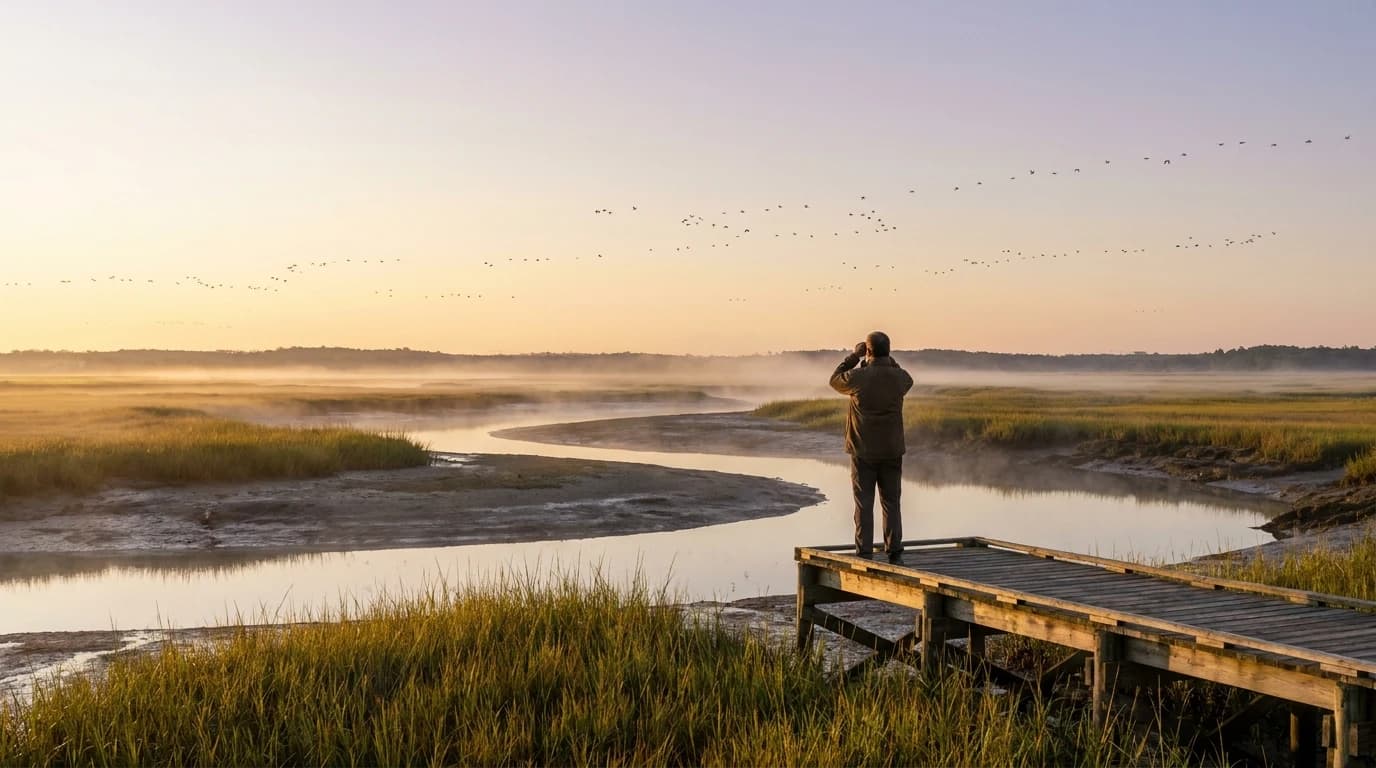
Spring migration gets the festivals. Fall gets the birds — every adult that bred, plus everything it raised.
And it is already running. While most of us are still calling this summer, shorebirds have been heading south for weeks and the radar network is about to switch back on.
The part nobody tells beginners: autumn is the harder season. Here is the honest version, week by week, and the technique that gets you through it.
Fall migration is already running
Autumn migration does not start at the equinox. Audubon describes it as "a protracted experience, starting as early as mid-June and lasting until the early days of January" — the opposite of spring, which it calls a contracted window of a few short weeks.
Shorebirds run early
Arctic adults whose nests failed turn around by late June. By mid-July the successful adults follow, and by late July the first juveniles appear. A mudflat in the first week of August can already be the best birding of your year.
Songbirds run on radar time
BirdCast, the Cornell Lab's radar forecasting project, puts most nocturnal autumn migration between mid-August and mid-November, with the contiguous-U.S. peak from mid-September through mid-October. Its models are trained on early August to early November, and its live and forecast maps come back online on 1 August.
Rule of thumb: if BirdCast has nothing to show you, it is not fall yet — the maps are dark until 1 August by design. If the dashboard is new to you, start with our walkthrough of how to use the BirdCast forecast.
Week by week: August into September
A broad North American pattern, not a timetable. Everything shifts by latitude and flyway — earlier in the far north, later along the Gulf.
| Window | What is on the move | Where to point yourself |
|---|---|---|
| Late July – 7 Aug | Adult shorebirds heading south in force, first juveniles behind them | Mudflats, drawn-down reservoirs, flooded fields, sod farms |
| 1 – 14 Aug | BirdCast maps return on 1 August; earliest warblers moving — Tennessee Warblers leave their summer range by mid-August | Read the nightly forecast, then walk creek corridors and woodland edges at dawn |
| 15 – 31 Aug | Nocturnal migration proper begins; western songbirds molt-migrate into the monsoon Southwest; south-east Arizona hits peak hummingbird diversity in early August | Desert riparian canyons out west, damp shaded edges in the east |
| 1 – 14 Sep | Volume climbs fast; first big raptor days; the night after a cold front is the night | Ridgelines and lake shores for hawks, your local patch on a north wind |
| 15 – 30 Sep | The contiguous-U.S. peak begins; Broad-winged Hawk kettles; Blackpoll Warblers peak late September into early October | Hawk watches, and anywhere with cover the morning after a big flight night |
For scale on that last row: at Acadia National Park's hawk watch, 21 September 2023 produced 1,387 raptors in a single day — 1,142 of them Broad-winged Hawks, in kettles of up to 170 birds.
Why fall is harder than spring
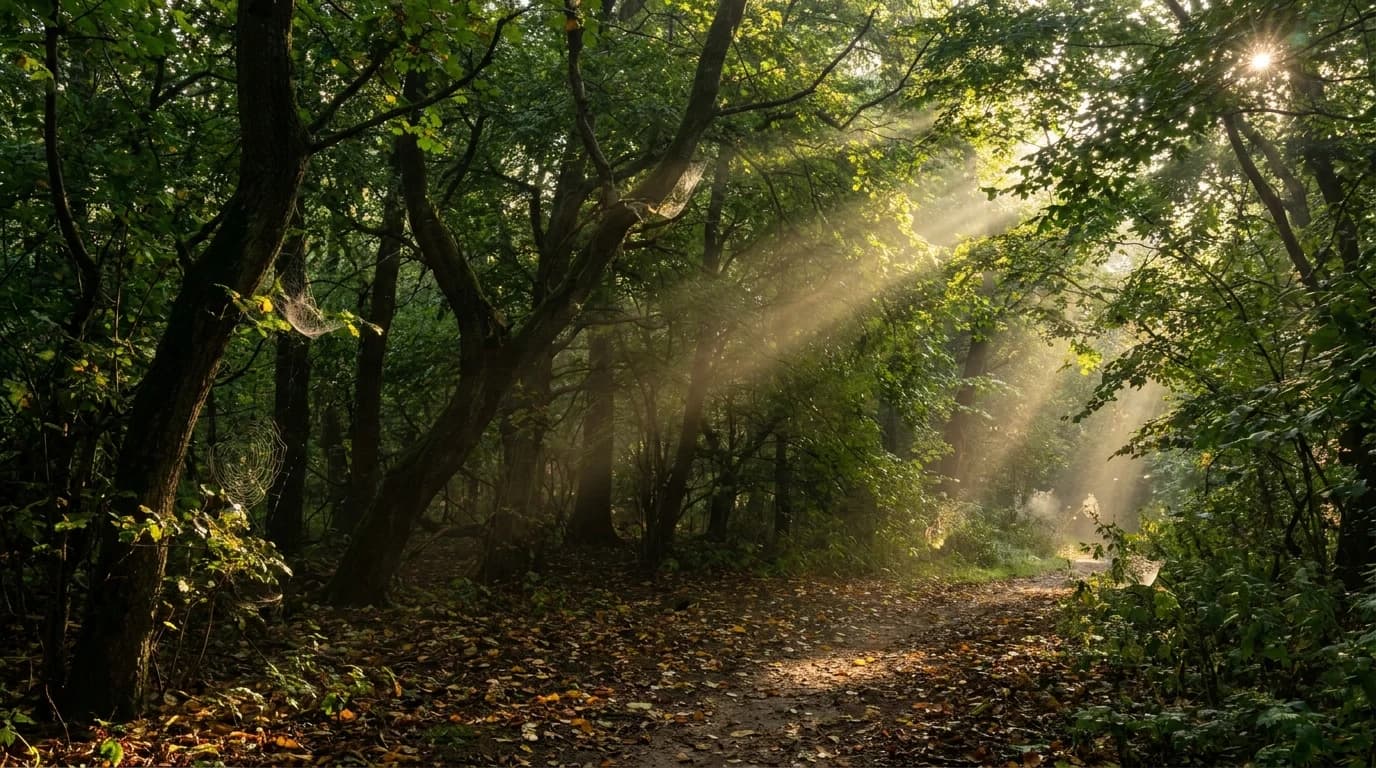
Spring hands you a bright, singing adult male on a bare branch. Fall hands you a silent grey-olive first-year bird inside a full canopy. Audubon puts the change plainly: the bright feathers "are replaced by dull brown as the birds molt into their non-breeding plumage. And because there's no reason to sing for a mate, they're much quieter, too."
| What changes | Spring | Fall |
|---|---|---|
| Length of season | A few sharp weeks | Mid-August to mid-November |
| Plumage | Bright breeding colour | Drab non-breeding brown and olive |
| Song | Constant and diagnostic | Nearly absent; chip notes only |
| Who is present | Mostly adults | Adults plus a flood of juveniles |
| Cover | Bare or opening leaves | Full canopy |
| Pace | Urgent and compressed | Slow, staggered, easy to miss |
If August feels like failure, it isn't: you are being handed the year's hardest identification problem with its two easiest clues — bright colour and song — taken away. Nothing is wrong with you, and nothing is wrong with your binoculars.
Two clues that survive the molt
The same Audubon guide carries the whole strategy in one line: colour may seem important, but certain markings and behaviours persist throughout the year.
What still works in autumn:
- Structure. Size, bill shape, tail length, posture. Nothing about shape molts.
- Hard marks. Wingbars, eye arcs, eye lines, back streaking, undertail colour. Audubon's autumn Blackpoll clue is dark legs with pale orange feet.
- Behaviour. Where in the tree it feeds, how it moves, whether it flicks its tail or creeps along a limb.
- Call notes. Chip and flight calls carry on all season after song stops — the highest-return skill of the autumn, and the reason our method for learning bird sounds by ear exists.
What stops working:
- Bright breeding colour, the first thing to go.
- Song, which is largely finished for the year.
- Any mental image built only from a spring adult male.
- Waiting for a bird to sit in the open, which in full canopy it will not.
The optics part, honestly
Most of the good autumn birding happens in the first two hours of daylight, under full leaf cover, on a bird that will not sit still. That is the one situation where objective lensThe big front lens; its diameter in mm (the '42' in 8x42) sets how much light the binocular gathers. size stops being a spec-sheet argument and becomes the difference between a bird and a shape.
An 8x42 is the right shape of tool for it: enough light for dawn and shade, wide enough to catch movement. In cost order, the ones we rate — the Celestron Nature DX 8x42 (on Amazon) as the honest budget entry, the Athlon Midas G2 UHD 8x42 where most people should stop, and the Nikon Monarch M5 8x42 (on Amazon) as the step up if you already know you will use it. None of it is required. A pair you already own, taken out at dawn, beats a better pair used at noon.
Log it, and where this gets vague
Everything above is a regional average dressed up as a calendar. The dates for your own county do exist: BirdCast publishes county-level peak windows built from radar measurements taken between 1995 and 2018, defined as the shortest window in which half of a county's nocturnal migration traffic passes. Look yours up rather than trusting a national month.
Then write down what you see. eBird turns a season of scattered walks into a record you can hold against next August, which is how the pattern in your own patch becomes visible at all. Two autumns of your own notes will beat any article, this one included.
Migration rewards better glass.
Frequently asked
When does fall migration actually start?+
Earlier than most people expect. Audubon describes fall migration as a protracted season that can start as early as mid-June, with Arctic shorebirds whose nests failed turning south by late June and successful adults following from mid-July. For nocturnal songbird migration, BirdCast puts the main autumn window at mid-August to mid-November.
When is the peak of fall migration?+
In the contiguous United States, BirdCast puts the peak of nocturnal migration from mid-September through mid-October. That is a national average. BirdCast also publishes county-level peak windows calculated from radar data collected between 1995 and 2018, and yours may sit a week or two either side.
Why is fall migration harder than spring?+
Three things stack up. Birds molt into drab non-breeding plumage, so the colour clues you learned in spring are gone. They have no reason to sing for a mate, so they are much quieter. And the population now includes young birds you have never seen before, moving through full leaf cover. It is the hardest identification season of the year, which is exactly why beginners tend to stall in August.
What should I learn instead of colours and songs?+
Shape and call notes. Size, bill shape, tail length and posture do not change with the molt, and neither do hard marks such as wingbars, eye arcs and leg colour. Chip and flight calls carry on all autumn after song has stopped, so time spent on call notes in August pays back across the whole season.
Do I need different binoculars for fall migration?+
No, but light matters more in autumn than at any other time of year, because the birding happens at dawn under full leaf cover. An 8x42 gathers more light than a compact and is the usual recommendation for migration. A pair you already own, taken out at first light, will do more for you than a better pair used at midday.
Sources & further reading
We research from primary and authoritative sources. Where our guidance rests on a fact, here's where it comes from.
- It's Summer, and That Means Fall Migration is Already Underway | Audubon — Source for fall migration as a protracted season starting as early as mid-June against spring's contracted window, the shorebird sequence (failed adults from late June, successful adults from mid-July, first juveniles by late July), western molt migration into the monsoon Southwest by early August, and peak hummingbird diversity in Arizona in early August.
- Migration Periods: Peak Migration | BirdCast (Cornell Lab of Ornithology) — Source for autumn nocturnal migration running mid-August to mid-November, the contiguous-U.S. peak of mid-September through mid-October, and the definition of peak periods as the shortest window carrying 50% of a county's nocturnal migration traffic, derived from radar measurements from 1995 to 2018.
- FAQ | BirdCast — Confirms BirdCast's forecast models are trained on early August to early November for fall migration, and explains why the migration tools are inactive outside the spring and fall windows.
- How to Recognize Six Warblers in Their Fall Feathers | Audubon — Source for bright feathers being replaced by dull brown non-breeding plumage and birds becoming much quieter, for markings and behaviours persisting year-round, for the Blackpoll's dark legs and pale orange feet, for Tennessee Warblers leaving by mid-August, and for Blackpoll peak migration in late September and early October.
- Riding the Winds: Hawk Watch in Acadia National Park 2023 | U.S. National Park Service — Source for the 21 September 2023 count of 1,387 raptors in a single day, including 1,142 Broad-winged Hawks and a largest kettle of 170 birds.
- Welcome to the Dark Side: Your Guide to Nocturnal Migration Birding | Audubon — Background on nocturnal flight calls and on using BirdCast to choose a night worth listening to, which is why call notes are the highest-return autumn skill.
Prices and BirdingScores reflect our most recent research and refresh on a cycle; confirm the live price before buying. We may earn a commission from affiliate retailers — it never changes our recommendations. See how we review.