
Best Bird Field Guides
Paper still beats apps for browsing and building a mental map of bird families.
Content updated October 21, 2026
The 30-second answer
The Kaufman Field Guide to Birds is the easiest starting point for new North American birders, while the Sibley Guide is the comprehensive reference to graduate to once you're hooked.
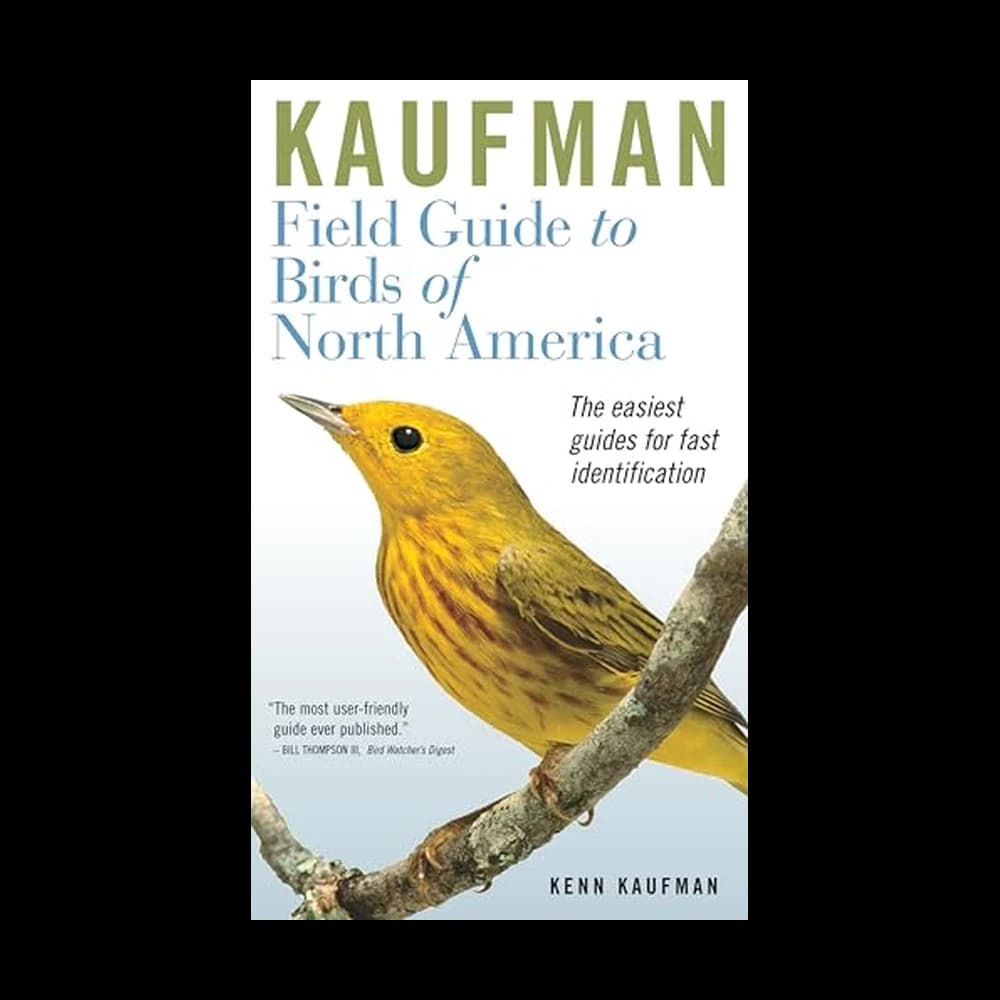
Top pickKaufman Field Guide to Birds
Beginning North American birders wanting a compact, photo-based guide that's easy to use in the field.
Buy on Amazon$12.99
Great valuePeterson Field Guide to Birds
New North American birders wanting the classic illustrated guide that pioneered field-mark identification.
Buy on Amazon$18.55
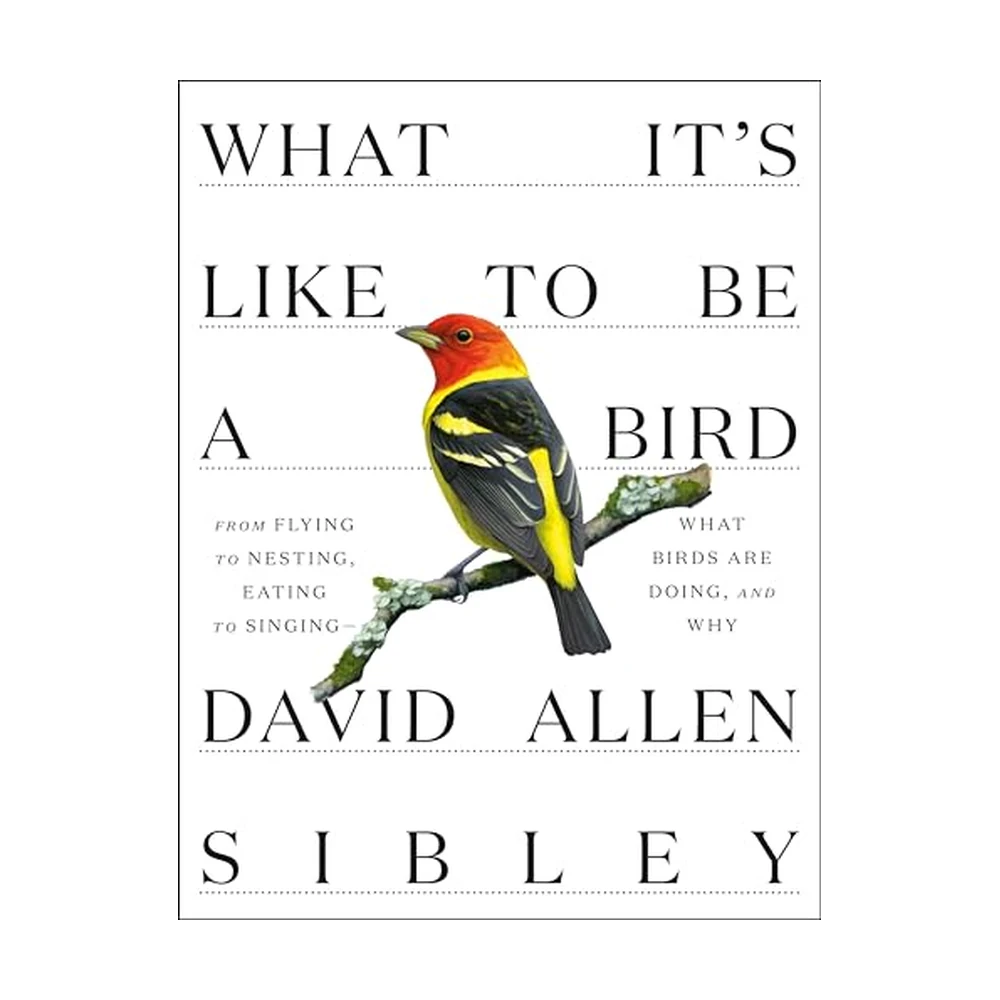
Cheapest alternativeWhat It's Like to Be a Bird
Curious readers and gift-givers wanting beautifully painted insights into how birds live and behave.
Buy on Amazon$13.38
Owner ratings come from Amazon; BirdingScore is our separate research score.
Compare two picks
Tap an unselected chip to compare it with your current right-hand pick — all 5 picks available.
BirdingScore
93/100
94/100
Skip it if
You prefer painted plates or an exhaustive reference; this favors edited photos and portability.
You need a pocket ID guide; this is a behavior-focused book, not a field reference.
Region
North America
North America
Format
Paperback (compact)
Hardcover
Art style
Photos (digitally edited)
Illustrations (paintings)
Species covered
—
—
Pages
—
—
Best for
Beginners / portable field use
Understanding bird behavior

Who it's for
Birders who want to browse, compare, and build a mental map of bird families the way paper does better than any app.
Who should skip
Skip a heavy comprehensive guide if you only bird one small region or want quick song ID — a regional guide or an app will serve you better in the field.
What matters when buying
- Region match — a guide scoped to your area (North America here) beats a global doorstop for everyday use
- Illustrations vs. photos — illustrations (Peterson, Sibley) isolate field marks; photos (Kaufman) show birds as you actually see them
- Portable vs. comprehensive — a compact guide rides in a pack; a complete reference like Sibley lives on the shelf
- Beginner-friendly layout — clear arrows to field marks and simple organization matter most when you're starting out
Common mistakes
- Buying the thickest 'complete' guide as a beginner and getting overwhelmed
- Grabbing a guide for the wrong region or continent
- Expecting one book to do everything — a browsable field guide and a narrative like What It's Like to Be a Bird serve different needs
How we chose: BirdingScore reflects owner satisfaction and field usefulness gathered from specs and thousands of owner reviews, not our own field trials. We favored beginner clarity, region fit, and how usably the book handles in hand.
The constraint-stacked answer
Start with how you learn, then with what you will carry. Kaufman is photo-based, compact and the easiest entry point; Peterson and Sibley use painted plates, which isolate field marks more cleanly. The Sibley second edition covers 923 species across 624 pages — a shelf reference, not a pocket one. Region matters more than any of it, and all five here are North America.
Every pick, reviewed
93Bird
Mariner
Kaufman Field Guide to Birds
Photo-based and beginner-friendly.
Skip it if: You prefer painted plates or an exhaustive reference; this favors edited photos and portability.
4.8 Amazon(1,034)$12.99
94Bird
Knopf
What It's Like to Be a Bird
The gift that turns curiosity into obsession.
Skip it if: You need a pocket ID guide; this is a behavior-focused book, not a field reference.
4.8 Amazon(6,748)$13.38
88Bird
Mariner
Peterson Field Guide to Birds
The guide that invented the genre.
Skip it if: You want photographs or the most current, exhaustive species treatment; this leans illustration and tradition.
4.8 Amazon(1,245)$18.55
86Bird
Knopf
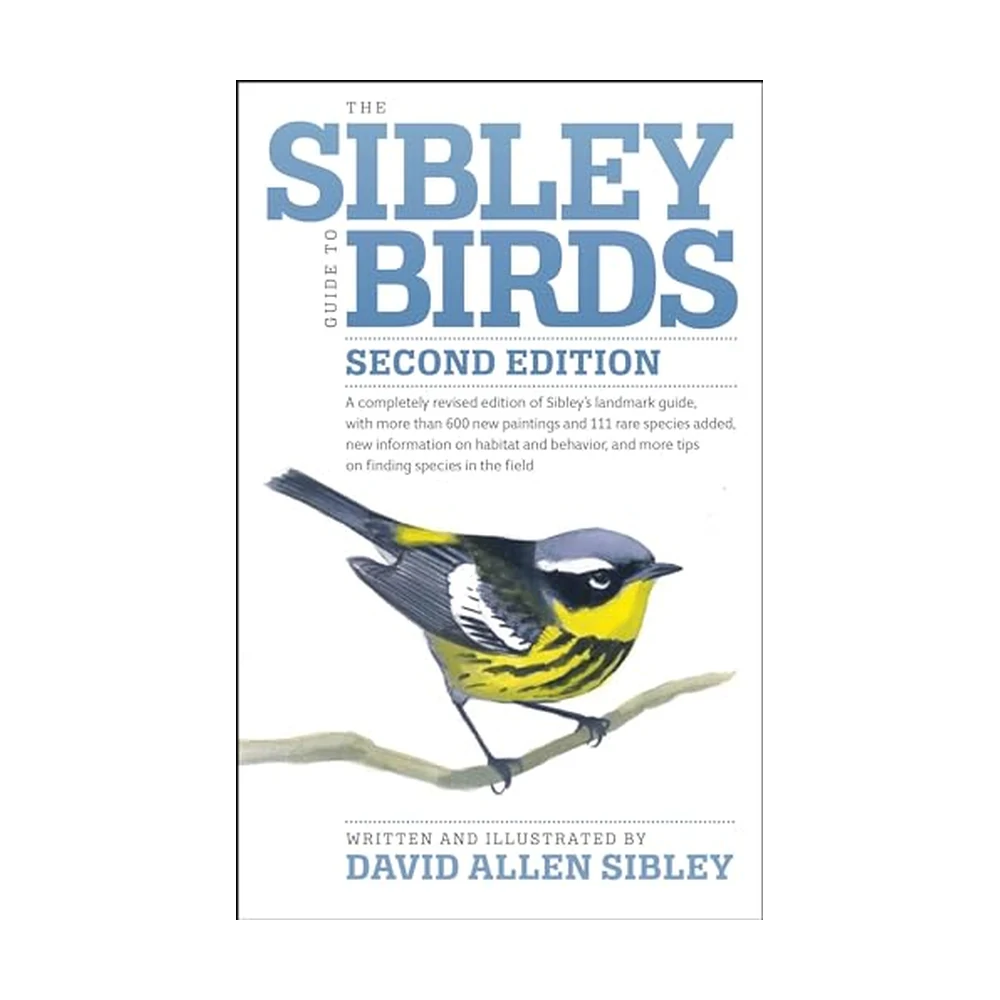
The Sibley Guide to Birds
The modern industry-standard guide.
Skip it if: You want a light pocket guide; at 624 pages some find it dense and unwieldy afield.
4.8 Amazon(2,868)$20.84
65Bird
National Geographic
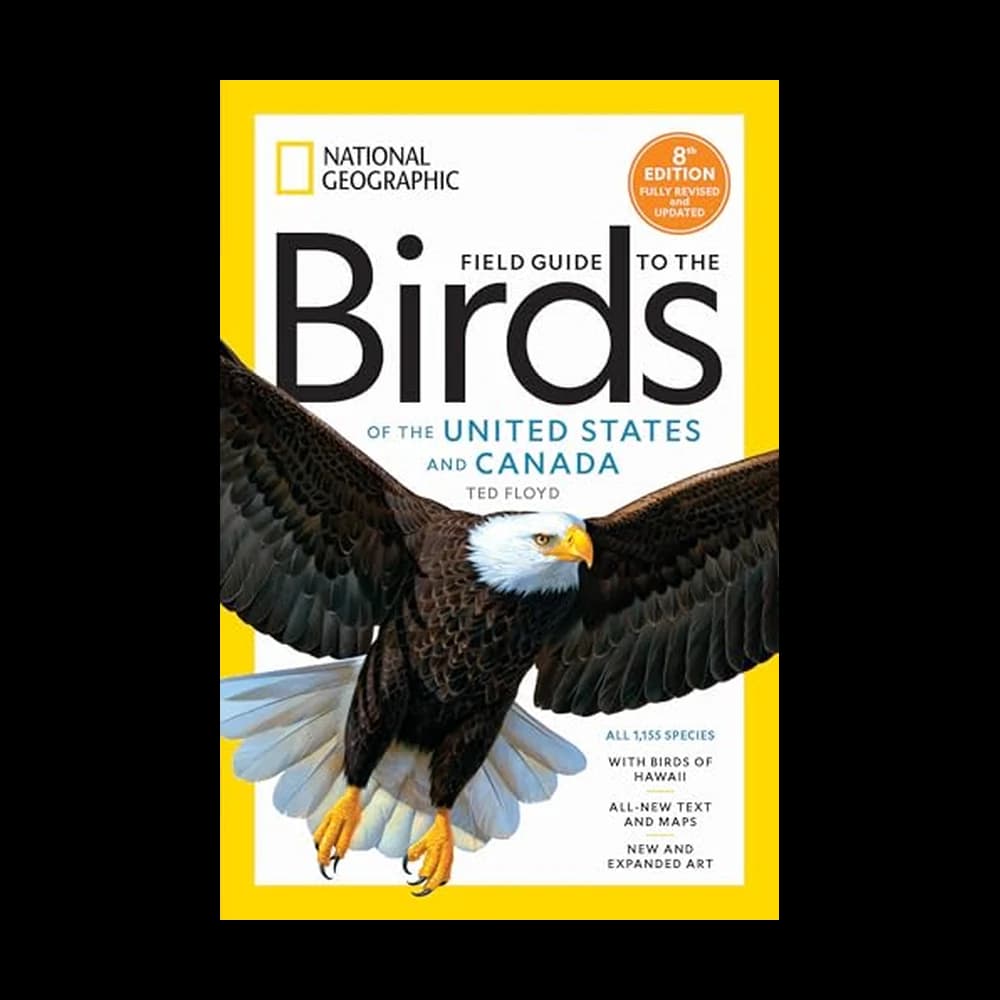
Nat Geo Field Guide to Birds
Broad coverage, compact layout.
Skip it if: You rely on range maps or easy readability; buyers flag map quality and small type.
4.5 Amazon(132)$23.49
From the birding community
What birders actually say about field guides & books
Recurring themes we found across 95 public discussion threads in r/birding, r/whatsthisbird, r/Ornithology, read in July 2026. We summarise what comes up repeatedly and link the threads — we never quote or identify anyone, and these forums don't give us vote counts, so treat this as the shape of the conversation rather than a measured majority.
Comes up again and again
Sibley is the name that comes up first, and usually second
It is praised for showing several plumages, flight and perched views on one plate, which is what makes it useful for a bird you are still working out. The regional editions are the ones people recommend actually carrying.
Comes up again and again
Illustrations beat photographs for identification
The reasoning given repeatedly is that a painting shows the diagnostic features on an idealised bird in consistent light, while a photograph shows one individual at one angle. Photographic guides get recommended as a gentler start for beginners.
The dissenting view
Apps have not replaced the book, and regulars explain why
Merlin and eBird are near-universally used, but the argument that recurs is that an app hands you an answer while a guide teaches you which field marks to look at. Browsing a book before you go is described as how identification skill is actually built.
The recurring complaint
The comprehensive guide is the one you leave at home
Large national guides are repeatedly described as too heavy for the field and best kept in the car or on the shelf, with a slimmer regional edition doing the actual walking.
Guides for buying Field Guides & Books
eBird Explore: Find the Bird, Then Read Your Odds6 min readConfusing Fall Warblers: Read the Underside First5 min readBald Cardinals and Quiet Yards: August Molt Explained6 min readHow to Plan Your First Hawk Watch: Day, Wind, Site6 min readFall Migration: What to Look For in August and September6 min readHow to Stop Birds From Hitting Your Windows5 min readHow to Identify an Unknown Bird: 5 Clues6 min readCommon Backyard Birds: A Beginner ID Guide3 min readHow to Join a Christmas Bird Count (Beginners Welcome)5 min readHow to Use BirdCast to Time Your Best Birding Days5 min readHow to Use eBird: Your Birding Notebook, Explained5 min read
Frequently asked
Which bird field guide should a beginner buy?+
The Kaufman Field Guide to Birds is our top-scored pick — compact, photo-based, and easy to use in the field. The Peterson guide is the classic illustrated alternative if you prefer painted plates.
Illustrations or photographs?+
Birders overwhelmingly favour illustrations for identification. A painting shows the diagnostic features on an idealised bird in consistent light, while a photograph shows one individual at one angle.
Do I still need a book if I use Merlin or eBird?+
The argument that recurs is that an app hands you an answer while a guide teaches you which field marks to look at. Buy a slimmer regional edition for the field — the big national guides are the ones people leave in the car.
Sources & research (55)Show
- eBird Bar Charts, Line Graphs, and Histograms — eBird Help Center, Cornell Lab of Ornithology — Source of the frequency definition (proportion of complete checklists), the bar-height-to-frequency bin table, the 0.4 equals 40% worked example, the vertical line marking today's date, and the Download Histogram Data link.
- Explore Regions and Hotspots in eBird — eBird Help Center — Source of the sign-in requirement and its Google Maps rationale, the statement that counties and districts are the smallest areas summarised, the hotspot definition, eBird Mobile Explore, and the Community Targets rules.
- eBird Alerts and Targets FAQs — eBird Help Center — Source of the Species You Need location, the Targets workflow and frequency sort, Photo and Audio Targets, the three Alert types, the CONFIRMED and Unconfirmed distinction, the 500-record Rare Bird Alert cap, and the country-wide Needs Alert exclusions.
- eBird Rules and Best Practices — eBird Help Center — Source for what makes a checklist complete: reporting every species you were able to identify by sight or sound, which is the data the bar charts are built from.
- Better Birding: Using eBird to Plan Trips — eBird News — Cornell's own trip-planning walkthrough of Hotspot Explorer, Explore a Region, Alerts and Targets, and the source of the listserv comparison used in the limits section.
- Bay-breasted Warbler Identification — All About Birds, Cornell Lab of Ornithology — Source of the "when viewed from below" instruction, the buff-olive undertail coverts and flanks, the dark legs lacking pale soles, and the note that nonbreeding birds can be hard to identify.
- Blackpoll Warbler Identification — All About Birds, Cornell Lab of Ornithology — Orange-yellow legs in all plumages; nonbreeding birds washed pale yellow with blurry flank streaking and bold white wingbars.
- Tennessee Warbler Identification — All About Birds, Cornell Lab of Ornithology — White undertail coverts even on birds that are olive-yellow overall, plus the lack of distinct wingbars and the thin, pointed bill.
- Orange-crowned Warbler Identification — All About Birds, Cornell Lab of Ornithology — Undertail coverts are always yellow and are often the brightest part of the plumage, across regional variation.
- Pine Warbler Identification — All About Birds, Cornell Lab of Ornithology — White lower belly and undertail coverts, blurry side streaking, stout bill, long tail and the broken "spectacled" eyering.
- Roger Tory Peterson, "Confusing Fall Warblers" (1960) — Toledo Museum of Art — Museum record for the original plate 10 artwork that gave the phrase its name: gouache, watercolour, pencil and ink on board, object 2012.121.
- Bald-headed Birds | Project FeederWatch (Cornell Lab of Ornithology) — Head feathers dropped simultaneously during molt; normal for Blue Jays and within range for Northern Cardinals; skin colour as the diagnostic; cause of baldness not well studied.
- Molt and Plumage Studies | Institute for Bird Populations — Molt can require a quarter or more of a bird's body protein mass; incompatible with breeding and migration; molt-migration found in goldfinches, wrens, catbirds and cardinals, with the food hypothesis untested.
- More Birds Rely on Special Molting Locations Than We Realized | Audubon — Coverage of Pyle, Saracco & DeSante (2018, The Auk): 760,000+ records, 140 species, 936 banding stations; molting birds stop singing and hide in thickets for a month or more.
- Inexplicable Inefficiency of Avian Molt? | Hoye & Buttemer, PLOS ONE (2011) — Resting metabolic rate peaked 82% above pre-molt levels in white-plumed honeyeaters, with an energy conversion efficiency of 6.9%.
- The eclipse moult of Mallards | BirdLife International — Male ducks adopt female-like eclipse plumage and become temporarily flightless during a short moult window.
- Hawkwatch Site Profile: Hawk Mountain Sanctuary | HawkCount (Hawk Migration Association of North America) — Source for the ninety-year, 10,261-day data record, for every figure in the species table (average season counts and top single-day counts with their dates for Broad-winged Hawk, Sharp-shinned Hawk, Red-tailed Hawk, Osprey, American Kestrel and Golden Eagle), for migration being most pronounced on northwest winds in the several days following a cold front, for raptors slope-soaring the Kittatinny Ridge and thermal-soaring adjacent valleys, and for the admission fee charged to reach the lookouts.
- Hawkwatch Site Selection | HawkCount — The site finder itself: count data and site profiles for over 300 North American hawkwatch sites, searchable by name, country, state or province.
- How to Hawkwatch: A Beginner's Guide to Observing Raptors | HawkWatch International — Source for thermals as columns of rising warm air, for ridges and coastlines funnelling migrating raptors into predictable paths, for favouring days with clear skies or the period right before or after a storm, and for the gear guidance that binoculars are essential while a scope and a seat are optional comforts.
- Migration Network | HawkWatch International — Source for the recommendation to use the Migration Timing tab on hawkcount.org to find when each species is most commonly seen at a given site, for rainy days being poor while the period before or after bad weather is good, and for hawkwatching being a long game worth staying several hours for.
- Broad-winged Hawk Overview | All About Birds (Cornell Lab of Ornithology) — Source for kettles as swirling flocks that can contain thousands of circling birds, and for four satellite-tracked Broad-winged Hawks migrating an average of 4,350 miles to northern South America at 69 miles per day.
- Hawk Mountain Hawk Count | Hawk Mountain Sanctuary — The daily count log referenced in the post: species totals published day by day alongside the day's weather, wind direction and observer notes.
- Migration Tools | BirdCast (Cornell Lab of Ornithology) — Confirms BirdCast's live maps, forecast maps, dashboard and alerts all describe nocturnal bird migration — which is why they do not forecast daytime raptor movement.
- It's Summer, and That Means Fall Migration is Already Underway | Audubon — Source for fall migration as a protracted season starting as early as mid-June against spring's contracted window, the shorebird sequence (failed adults from late June, successful adults from mid-July, first juveniles by late July), western molt migration into the monsoon Southwest by early August, and peak hummingbird diversity in Arizona in early August.
- Migration Periods: Peak Migration | BirdCast (Cornell Lab of Ornithology) — Source for autumn nocturnal migration running mid-August to mid-November, the contiguous-U.S. peak of mid-September through mid-October, and the definition of peak periods as the shortest window carrying 50% of a county's nocturnal migration traffic, derived from radar measurements from 1995 to 2018.
- FAQ | BirdCast — Confirms BirdCast's forecast models are trained on early August to early November for fall migration, and explains why the migration tools are inactive outside the spring and fall windows.
- How to Recognize Six Warblers in Their Fall Feathers | Audubon — Source for bright feathers being replaced by dull brown non-breeding plumage and birds becoming much quieter, for markings and behaviours persisting year-round, for the Blackpoll's dark legs and pale orange feet, for Tennessee Warblers leaving by mid-August, and for Blackpoll peak migration in late September and early October.
- Riding the Winds: Hawk Watch in Acadia National Park 2023 | U.S. National Park Service — Source for the 21 September 2023 count of 1,387 raptors in a single day, including 1,142 Broad-winged Hawks and a largest kettle of 170 birds.
- Welcome to the Dark Side: Your Guide to Nocturnal Migration Birding | Audubon — Background on nocturnal flight calls and on using BirdCast to choose a night worth listening to, which is why call notes are the highest-return autumn skill.
- Stop Birds Hitting Windows | American Bird Conservancy — Proven collision-prevention methods, outside-of-glass application, and the 2 by 2 inch spacing rule
- Why Birds Hit Windows—and How You Can Help Prevent It | Cornell Lab — Current exterior-treatment, feeder-distance and immediate rehabilitation guidance, checked October 12, 2026.
- Building Skills: The 4 Keys to Bird Identification — Cornell Lab — Primary framework for starting with size and shape, color pattern, behavior, and habitat before small field marks.
- How to Identify Birds — National Audubon Society — Supports structure-first identification, behavior and flight clues, note-taking, sound, range, and the honest limits of field identification.
- Identifying Birds — Project FeederWatch — Supports making a sketch or written record before consulting a guide and observing multiple field characteristics.
- Four Keys to Bird Identification | All About Birds (Cornell Lab) — Directly supports the size/shape, color pattern, behavior (and habitat) ID method the article teaches.
- Merlin Bird ID — official app homepage (Cornell Lab of Ornithology) — Confirms Merlin is free and identifies birds by photo and by sound, as stated in the tools section.
- The Magic of Merlin | Cornell Lab of Ornithology — Backs Merlin's Sound ID / Photo ID capabilities and Cornell Lab authorship.
- House Finches, Purple Finches, and Cassin’s Finches | Cornell Bird Academy — Supports whole-bird comparison and different facial patterns in female finches, correcting the bill-only finch/sparrow shortcut.
- Audubon Christmas Bird Count — Primary program page. Confirms the December 14 – January 5 window every season and describes the CBC as the nation's longest-running community science bird project, with annual summaries back to 1901.
- Answers to your top questions about the Christmas Bird Count | Audubon — Source for the 15-mile-diameter circle, free participation, 'birders of all skill sets are involved', beginners being paired with an expert by the compiler, the feeder-watcher rule requiring prior arrangement, effort data being collected alongside bird numbers, and the hundreds of analyses and peer-reviewed publications using CBC data.
- Join the Christmas Bird Count | Audubon — Sign-up mechanics: the CBC circle map, green/yellow circles open to new participants and red circles full, contacting compilers by email in advance via the circle pop-ups, and confirmation that 2026-27 is Audubon's 127th count (Dec 14, 2026 – Jan 5, 2027).
- Project FeederWatch — Project Overview — Confirms FeederWatch is a November–April survey run by the Cornell Lab of Ornithology and Birds Canada, with an $18 US annual fee and any-amount donation for Canadian participants.
- Great Backyard Bird Count | Audubon — Confirms the GBBC is a free four-day February event co-run by Audubon, the Cornell Lab of Ornithology and Birds Canada, with a 15-minute minimum count and open to any experience level.
- About BirdCast — the project and its partner institutions — Names the current collaboration: the Cornell Lab of Ornithology, UMass Amherst, the University of Illinois Urbana-Champaign and Purdue University.
- BirdCast homepage (migration tools hub) — Primary source. States that over 80% of North America's migratory species migrate at night; the four tools (live maps, forecast maps, local dashboard by county/state for the contiguous U.S., and local migration alerts for 216 U.S. cities); tool season windows of March 1–June 15 and August 1–November 15; and the Lights Out program.
- Live Migration Maps — BirdCast — Source for map-reading mechanics: brighter colors mean more migration; intensity is migration traffic rate (MTR) in birds/km/hour across a 1-km perpendicular transect; red line = local sunset, yellow line = local sunrise, orange arrows = flight direction; green dots = active radar stations, red dots = stations down for maintenance.
- Migration Forecast Maps — BirdCast — Source for how the forecast is generated: a model trained on 23 years of radar-detected bird movement plus historical NARR weather data, driven by GFS forecasts, showing predicted migration approximately three hours after local sunset and updated every six hours, with expected precipitation overlaid in grayscale.
- Predicting Gulf Coast spring migration events: 17-20 March 2021 case study — BirdCast — Source for the fallout mechanism: migrants depart on southerly or calm winds, then encounter a cold front bringing northerly headwinds and rain, and descend quickly into the nearest habitat rather than fly into highly unfavorable conditions.
- Drivers of fatal bird collisions in an urban center (Van Doren et al., PNAS 2021) — Peer-reviewed evidence for the Lights Out claim. Two decades of collision surveys at Chicago's McCormick Place: halving lighted window area decreased collision counts by 11x in spring and 6x in fall, and nearly half of all documented collisions occurred on the 25% of nights with the largest migration events.
- Complete Checklists and Birding as Your Primary Purpose — eBird Help Center — Defines a complete checklist and states that only complete checklists power eBird Status and Trends; confirms you don't have to be an expert birder.
- Guide to eBird Protocols — eBird Help Center — Source for Stationary (within ~100 feet), Traveling (report unique distance only), and Incidental (auto-marked incomplete) protocol definitions.
- eBird Data Quality: The eBird Review Process — eBird Help Center — Confirms the three flagging reasons (rarity, out of season, high count), the volunteer regional reviewer role, and that flagging is not rejection.
- Saving bird observations with Merlin Bird ID — eBird Help Center — Confirms Merlin-only records stay private, don't appear on eBird maps/alerts, and aren't used by eBird Status and Trends; Merlin Life List includes eBird species.
- Lab of Ornithology hits 2 billion bird sightings, 3 million recordings — Cornell Chronicle (Aug 19, 2025) — Source for 2 billion observations, 150M+ checklists since 2002, 1M+ users, and 1,250+ published scientific studies.
- Explore eBird Hotspots — eBird Help Center — Source for the 450,000+ global eBird hotspots figure and how to browse hotspots via Explore and eBird Mobile.
Keep narrowing the choice
Prices and ratings shown are the most recent values we pulled from affiliate retailers and refresh on a recurring cycle; confirm the live price before buying. See how we score.