
How to Stop Birds From Hitting Your Windows
Window collisions are one of the biggest and most preventable causes of bird deaths. Here are the fixes that actually work, ranked so you can start today.
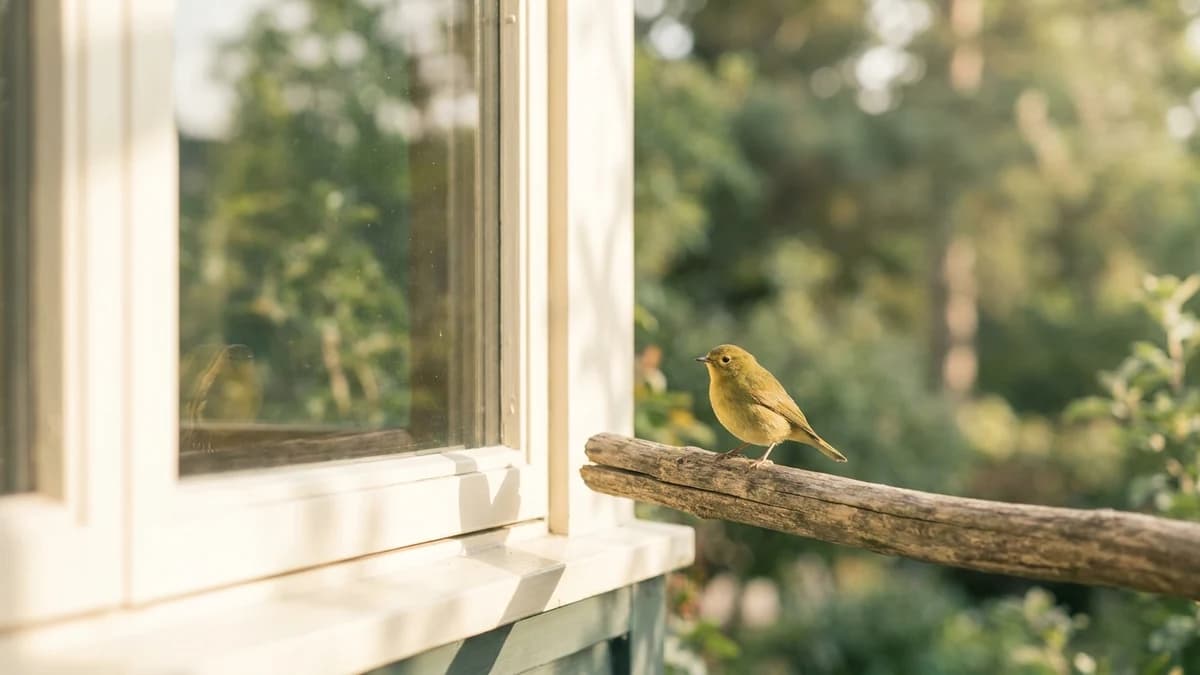
Key takeaways
- Birds collide with glass because they see a reflection of the sky and trees, or a clear path through the house to plants and other windows. They do not see the glass at all.
- Whatever you use must go on the OUTSIDE of the window and be spaced closely, following the 2 by 2 inch rule: marks no more than 2 inches apart in every direction.
- A single hawk silhouette or one decal does not work. Birds simply fly around it. Dense coverage across the whole pane is what saves them.
- Move feeders within 3 feet of the glass, or onto it, and still treat the window: distance alone doesn't make glass safe. If a bird is stunned after a hit, contain it in a dark, quiet box and call a licensed wildlife rehabilitator.
Pick by your situation
| If your situation is… | Pick | Why |
|---|---|---|
| You want the most effective, lowest-fuss fix and do not mind a little cost | External screen or netting over the window | It hides the reflection and cushions any bird that still comes in, giving the best protection with the least ongoing thought. |
| You want a cheap DIY project this weekend | Tempera-paint dots or paracord bird-savers on the outside | Both are inexpensive, easy to apply at 2-inch spacing, and highly effective. Tempera paint is non-toxic and washes off if you want to change it. |
| Collisions happen right where you feed birds | Move the feeder within 3 feet of the glass, or onto it, and mark the pane | Very close means birds cannot gain harmful speed. The markings handle the rest, because no feeder distance makes untreated glass safe. |
| Strikes happen at night in spring or fall | Turn off unnecessary outdoor and indoor lights | Artificial light disorients night-flying migrants. Reducing it during migration season lowers the odds of a collision after dark. |
A shortcut by situation — start from the row that sounds like you.
Few things sink the heart of a new backyard birder faster than the soft thud of a bird against the window. It is one of the most common causes of bird deaths across North America, and here is the encouraging part: it is also one of the most preventable. You do not need to be an expert or spend much money to make your windows dramatically safer.
Why birds hit windows
Birds do not understand glass. To their eyes, a window is not a barrier at all. There are two things going on, and your windows probably do both at different times of day.
Problem one — reflection:
- When light hits the outside of the glass, the window mirrors the sky, the clouds, or a nearby tree.
- A bird sees open sky or a leafy branch and flies straight for it, which is why collisions often happen on bright days and near gardens.
Problem two — see-through:
- When a bird can see through one window and out another, or straight through to a leafy houseplant on the sill, the glass looks like a clear flight path.
- They aim for the greenery and never register the pane in between.
Both problems share one solution: make the glass visible from the outside so birds treat it as a solid surface.
The fixes that actually work, ranked
The rule that decides everything: the American Bird Conservancy's guidance is that any pattern you apply must go on the outside of the glass and follow the 2 by 2 inch rule — marks spaced no more than 2 inches apart in every direction. Birds will try to fly through any gap larger than that.
Dense, close spacing is what makes the difference, not the specific product. Here is how the proven methods stack up:
| Method | How well it works | Effort | Cost |
|---|---|---|---|
| External screens or netting | Excellent, also cushions any impact | Higher | $$ |
| Closely spaced dots or stripes outside (2-inch rule) | Excellent | Medium | $ |
| Acopian bird-savers (paracord curtain) | Excellent | Medium (DIY) | $ |
| Tempera paint or dense decals outside | Very good | Medium | $ |
| Moving feeders within 3 ft of the glass | Good supporting fix, not a substitute | Low | Free |
| Closing blinds, breaking reflections | Helpful, partial | Low | Free |
| One hawk silhouette or single decal | Does not work | Low | $ |
Screens and netting are the gold standard
A screen mounted a few inches in front of the glass both hides the reflection and softens any bird that does hit it.
Closely spaced patterns are the easiest DIY win
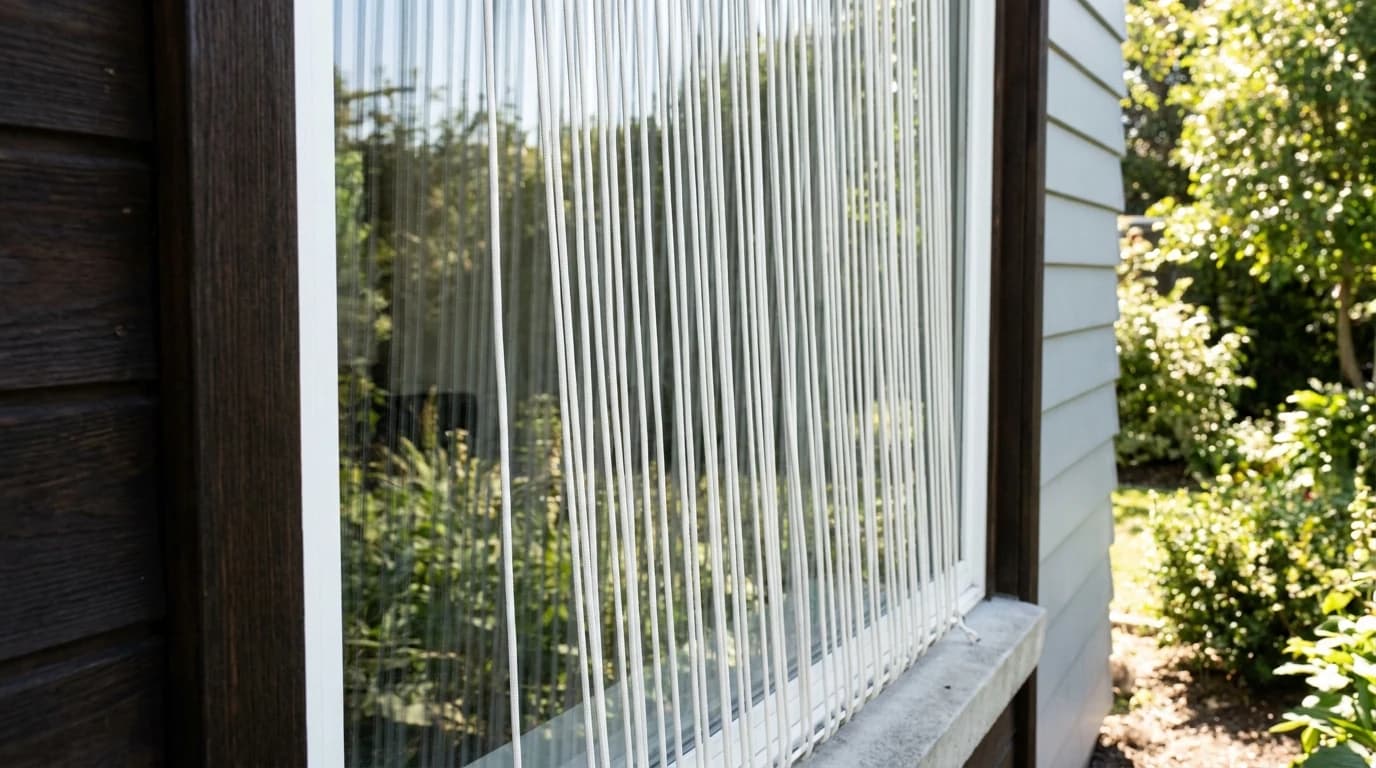
You can buy dot decals or specialty tape, or make your own marks with tempera paint (it is cheap, non-toxic, and washes off). Cover the whole pane with dots or vertical stripes spaced within the 2-inch rule. Acopian bird-savers, sometimes called zen curtains, are lengths of paracord hung a few inches apart down the outside of the window — tidy, cheap, and very effective.
The single hawk sticker is the one thing that doesn't work
Birds just fly around a lone decal. If you love the look of silhouettes, use enough of them to cover the glass at 2-inch spacing.
Feeders, lights, and small tweaks
Where you place your feeders matters, and the safe distance is counterintuitive: closer is safer.
- Put feeders within 3 feet of the window, or right on it. A startled bird leaving a close feeder cannot build up enough speed to be hurt. The old advice that 30 feet or more is also safe has been dropped: the Cornell Lab now says to make any window near a feeder bird-friendly, however far away the feeder is.
- Inside the house, close blinds or curtains to cut the see-through effect, and move leafy houseplants back from the glass.
- At night during spring and fall migration, turn off unnecessary lights — artificial light disorients night-flying migrants.
Or bring the birds right to the glass
If you would rather keep birds happily at the window on purpose, a window feeder mounts on the pane itself, so there is no run-up distance at all; Cornell counts feeders fixed to the glass among the safest placements. The DesGully metal window feeder (on Amazon) is the top-scored pick of that style and a cheap way to try it, and the Nature's Hangout acrylic feeder has the biggest tray, about 4 cups. Treat the rest of the pane as usual.
If you are setting up a new station, our guide on where to place a bird feeder walks through the rest. Making your yard bird-friendly and making it bird-safe go hand in hand, so if you are just getting started see how to attract birds to your yard.
If a bird hits your window
Sometimes a bird strikes and drops, stunned but alive. Its best chance is a licensed wildlife rehabilitator, and fast: Cornell's rescue guidance notes that collision injuries are often internal, are not visible at first, and can worsen with time, even in a bird that seems to recover.
- Contain it gently. Approach from behind and cover it with both hands, holding it loosely; small birds are fragile.
- Use a small cardboard box or unwaxed paper bag lined with paper towel so it can grip, and close it.
- Keep it dark, quiet and warm, somewhere safe from cats, dogs, and children.
- Do not handle it again or offer food or water. A stunned bird does not need feeding, and handling adds stress.
- Call a licensed wildlife rehabilitator and follow their instructions on transport. Release the bird only if they tell you to.
Worth knowing: every window you treat is a small, real act of conservation. Start with the one your birds hit most, apply the fix on the outside, keep the spacing tight, and you will hear that heartbreaking thud far less often.
Making the window safer? Move the feeder close to the glass, or put it right on it.
Frequently asked
Why do birds keep flying into my windows?+
Because they cannot see the glass. Your window either reflects the sky and trees, so the bird flies toward what looks like open air, or it lets the bird see straight through the house to plants or another window, so the glass looks like a clear flight path.
Do those hawk-shaped window stickers work?+
A single hawk silhouette does not work. Birds simply fly around one lone decal. What works is dense coverage: marks spaced no more than 2 inches apart across the whole pane. If you like silhouettes, you need enough of them to meet that spacing.
Should the pattern go on the inside or outside of the glass?+
Always the outside. Reflections form on the outer surface of the glass, so a pattern applied inside is largely hidden by the reflection and does not prevent collisions. Outside-of-glass application is the single most important part of any fix.
What is the 2 by 2 inch rule?+
It is the spacing guideline from the American Bird Conservancy: your dots or stripes should be no more than 2 inches apart in every direction. Birds will try to fly through any gap bigger than that, so tight, even spacing across the whole window is what keeps them safe. Paracord curtains are the exception: the Cornell Lab says Acopian BirdSavers can hang 4 inches apart because the cords are more visible.
A bird hit my window and is sitting stunned. What do I do?+
Call a licensed wildlife rehabilitator first: collision injuries are often internal and can worsen even when the bird seems fine. Meanwhile, gently cover it with both hands from behind and place it in a small cardboard box or unwaxed paper bag lined with paper towel. Close it and keep it dark, quiet and warm, away from pets and children. Do not handle it again or offer food or water, and release it only if the rehabilitator tells you to.
Sources & further reading
We research from primary and authoritative sources. Where our guidance rests on a fact, here's where it comes from.
- Stop Birds Hitting Windows | American Bird Conservancy — Proven collision-prevention methods, outside-of-glass application, and the 2 by 2 inch spacing rule
- Why Birds Hit Windows—and How You Can Help Prevent It | Cornell Lab — Current exterior-treatment, feeder-distance and immediate rehabilitation guidance, checked October 12, 2026.
Prices and BirdingScores reflect our most recent research and refresh on a cycle; confirm the live price before buying. We may earn a commission from affiliate retailers — it never changes our recommendations. See how we review.