
Common Backyard Birds: A Beginner ID Guide
Meet the 12 birds you're most likely to see at a US or Canadian feeder, and learn the simple size-shape-color-behavior method to name them fast.
The short answer
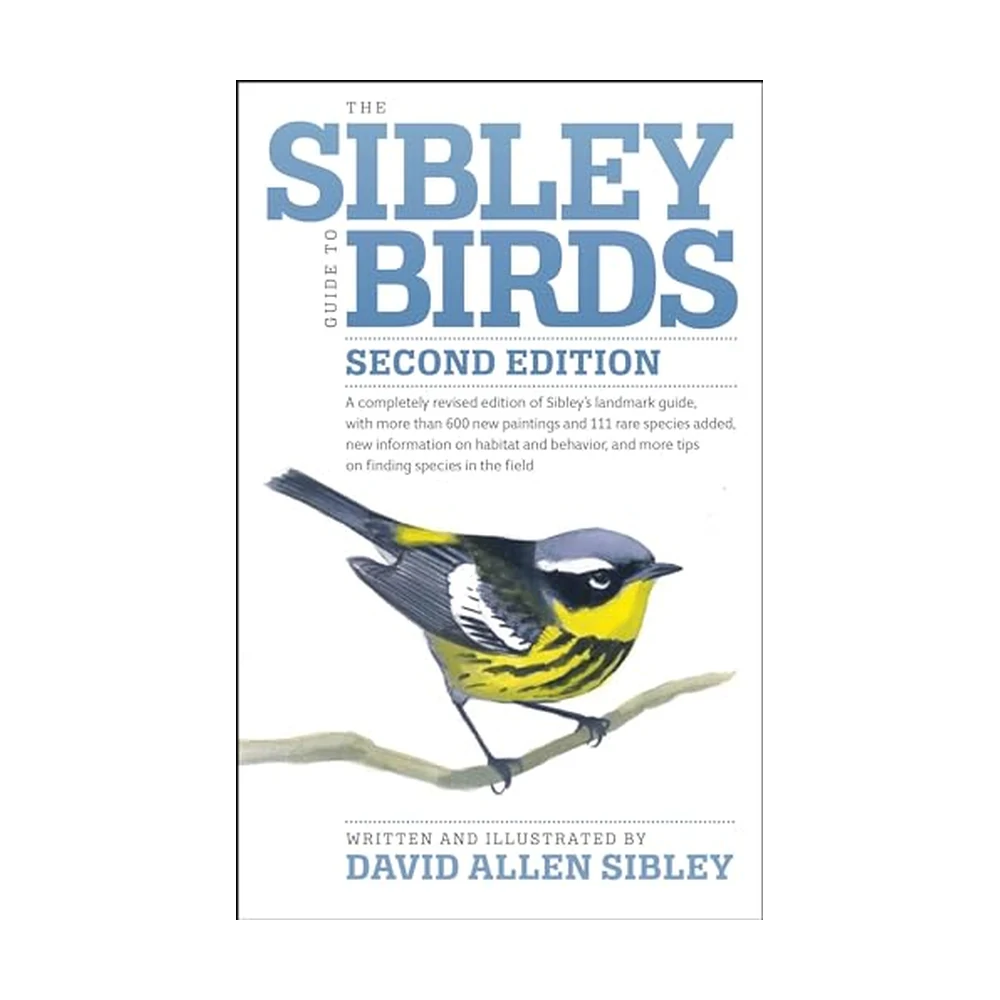
- Serious North American birders wanting the comprehensive standard: 923 species across 624 illustrated pages.
- You want a light pocket guide; at 624 pages some find it dense and unwieldy afield.
Key takeaways
- A dozen species cover most sightings. Learn cardinals, robins, jays, chickadees, finches and a few more and you'll name most of your visitors; which dozen depends on your region and season.
- Use the size-shape-color-behavior method. Compare against a robin or sparrow, note the silhouette, then colors and habits, in that order.
- The Merlin app is the beginner's shortcut. Free from the Cornell Lab, it IDs by photo and by sound in real time.
- Field marks beat overall color. A wing bar, eye ring, or bill shape narrows it down faster than 'small and brown.'
Field Guides & Books: our picks
| Pick | Best for | Rating | Price | |
|---|---|---|---|---|
| TopThe Sibley Guide to Birds, 2nd Edition | The modern industry-standard guide. | ★ 4.8 Amazon | $20.84 | Buy on Amazon |
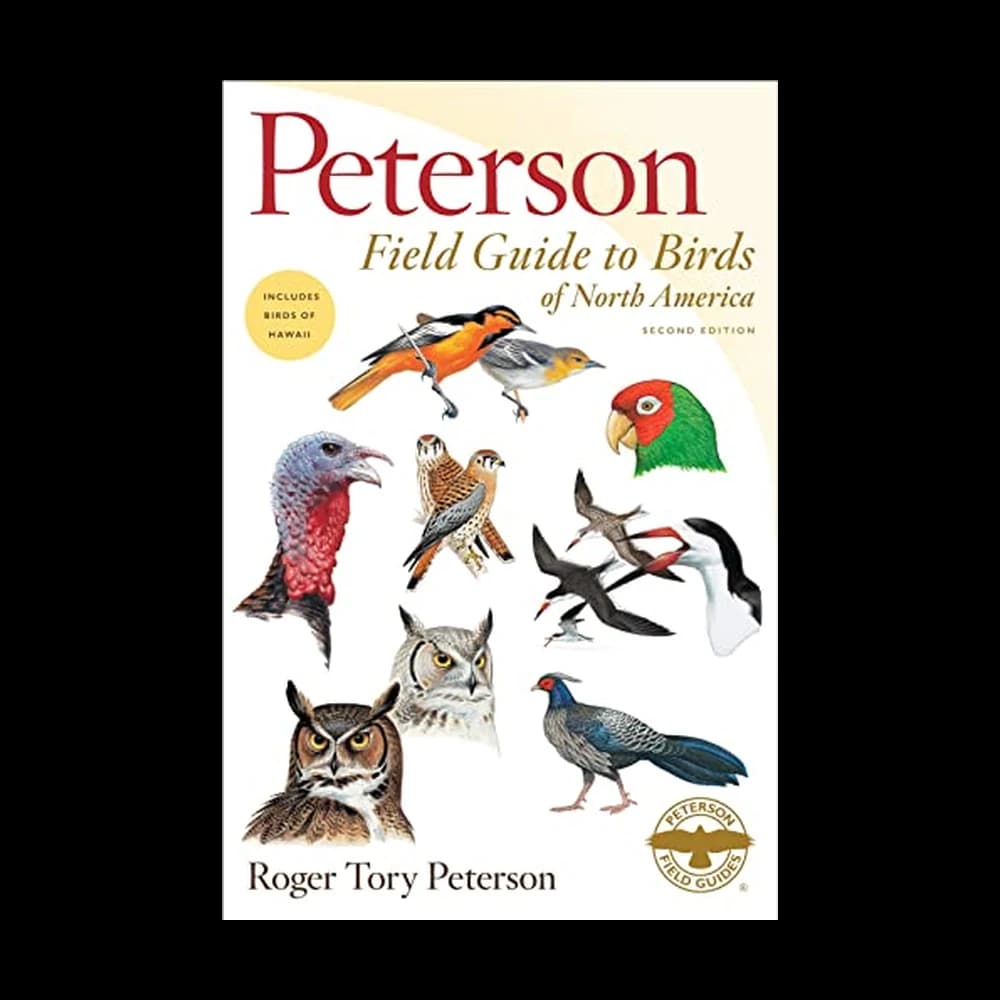 Peterson Field Guide To Birds Of North America, Second Edition: The… Peterson Field Guide To Birds Of North America, Second Edition: The… | The guide that invented the genre. | ★ 4.8 Amazon | $18.55 | Buy on Amazon |
Most birds at a US or Canadian feeder are one of about 12 common species, and you can learn them fast using size, shape, color, and behavior in that order. Which twelve depends on your region and season, so treat the list below as your starting cast. Start by comparing every new bird to two yardsticks you already know: a robin (medium) and a house sparrow (small).
The beginner ID method
Don't start with color. Work through four questions and you'll shortcut most mistakes.
- Size — Bigger or smaller than a robin? Smaller or bigger than a sparrow?
- Shape — Chunky and round, slim and long-tailed, or short and stubby? Note the bill: thick cone (seed-eater) or thin point (insect-eater)?
- Color — Look for the pattern, not just the main color: wing bars, an eye ring, a cap, a masked face, a streaked chest.
- Behavior — Clinging upside down, hopping on the ground, hammering bark, or hovering? Habits are huge clues.
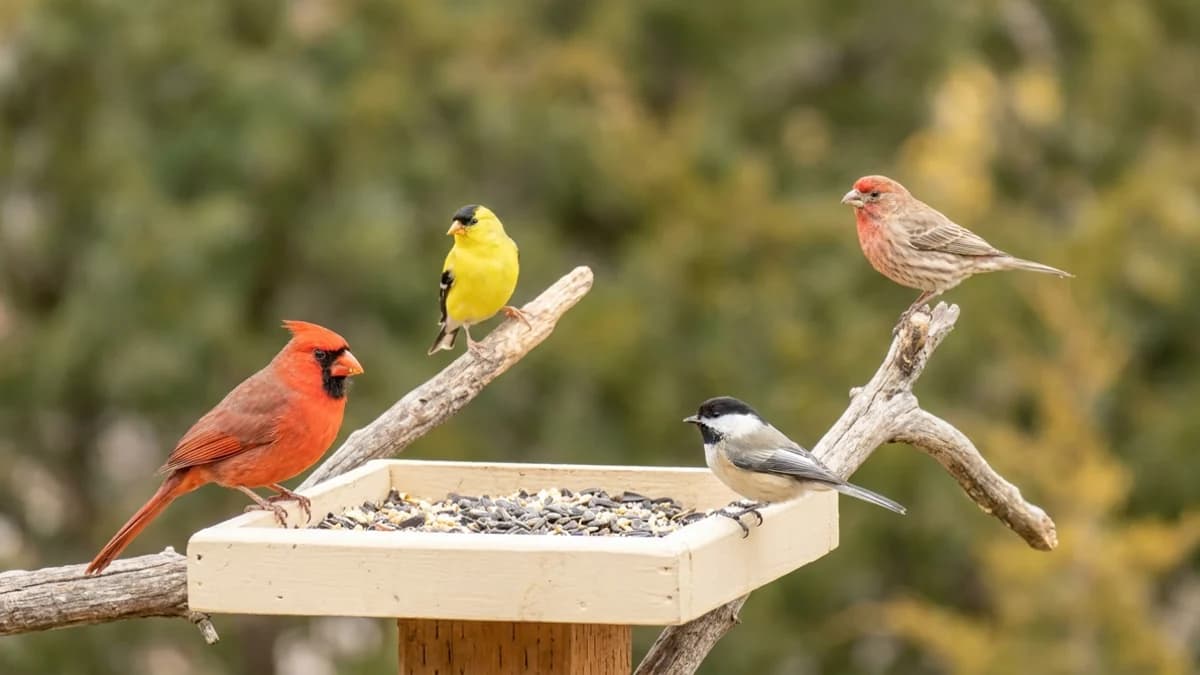
Rule of thumb: one clear field mark gets you to the right bird family, and a second clue confirms the species. A crest and red bill says cardinal; a black cap and bib says chickadee, and range tells you which one. Black-and-white on a trunk is a Downy or Hairy Woodpecker, and bill length settles it.
The 12 most common backyard birds
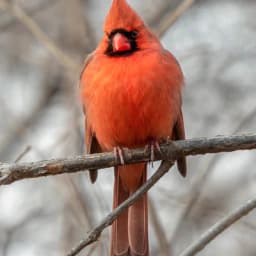
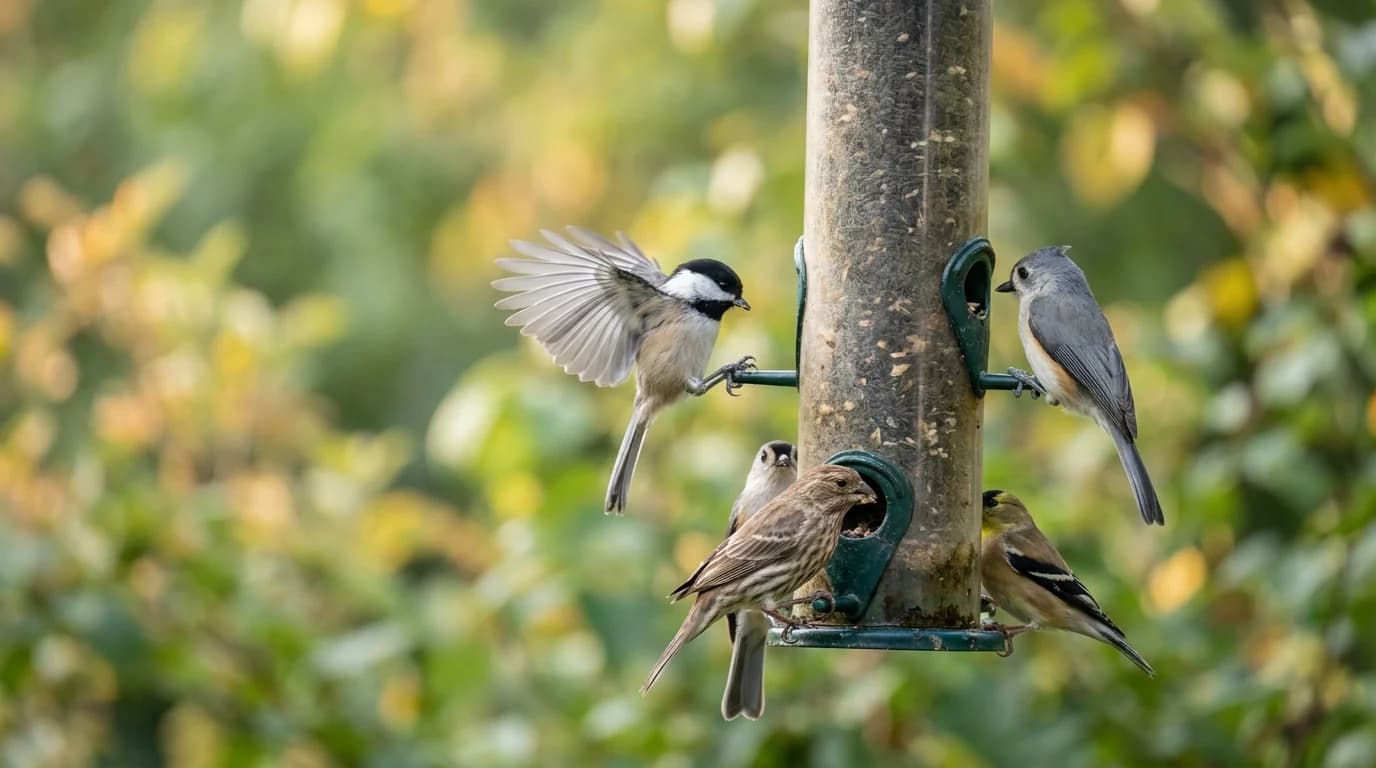
Northern Cardinal
Robin-ish
Red male, pointed crest, black face
Shrubs, hoppers, ground
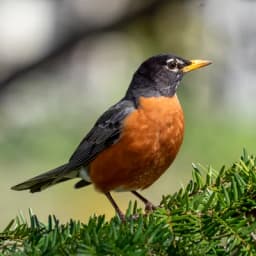
American Robin
Medium
Orange breast, gray back
Lawns, hunting worms
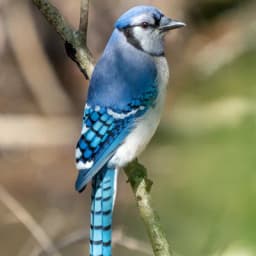
Blue Jay
Larger
Blue crest, black necklace
Feeders, oak trees, loud
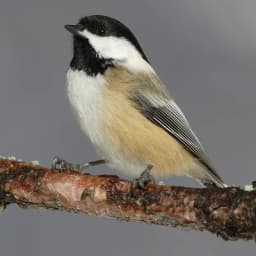
Black-capped Chickadee
Tiny
Black cap and bib
Flitting to and from feeders
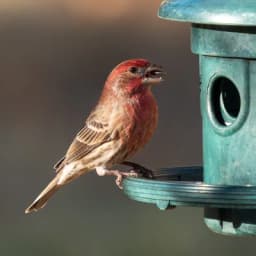
House Finch
Small
Streaky brown, red-washed male
Tube feeders, in flocks
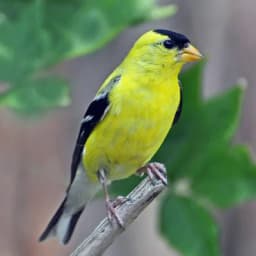
American Goldfinch
Small
Bright yellow (summer male)
Nyjer / thistle feeders
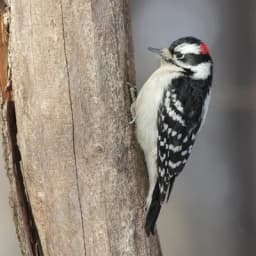
Downy Woodpecker
Small
Black-white checks, red nape (male)
Clinging to suet and bark
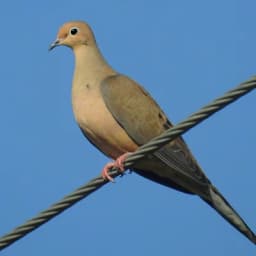
Mourning Dove
Medium
Slim, long pointed tail, soft coo
Ground below feeders, wires
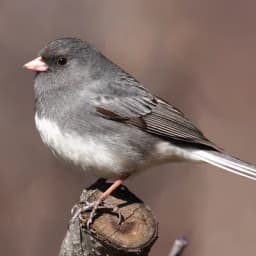
Dark-eyed Junco
Small
Slate gray hood, white belly
Ground feeding, winter
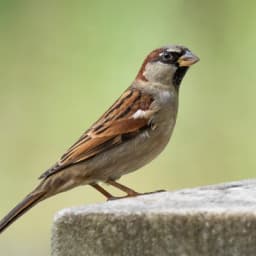
House Sparrow
Small
Chunky, gray cap, black bib (male)
Everywhere, near buildings
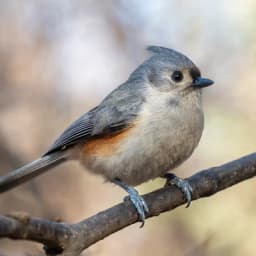
Tufted Titmouse
Small
Gray crest, big dark eye
Grabs one seed and flies
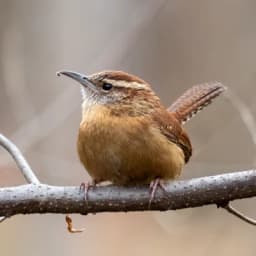
Carolina Wren
Tiny
Cocked tail, warm brown, loud song
Brush piles, low tangles
Photo credits & licenses
- Northern Cardinal © Rhododendrites — CC BY-SA 4.0 · source
- American Robin © Rhododendrites — CC BY-SA 4.0 · source
- Blue Jay © Rhododendrites — CC BY-SA 4.0 · source
- Black-capped Chickadee © No machine-readable author provided. Mdf assumed (based on copyright claims). — CC BY-SA 3.0 · source
- House Finch © Rhododendrites — CC BY-SA 4.0 · source
- American Goldfinch © Rodney Campbell — CC BY 2.0 · source
- Downy Woodpecker © Cephas — CC BY-SA 4.0 · source
- Mourning Dove © JeffreyGammon — CC BY 4.0 · source
- Dark-eyed Junco © Cephas — CC BY-SA 3.0 · source
- House Sparrow © Rhododendrites — CC BY-SA 4.0 · source
- Tufted Titmouse © Rhododendrites — CC BY-SA 4.0 · source
- Carolina Wren © Rhododendrites — CC BY-SA 4.0 · source
The little gray or brown ones are the hard part
Beginners get stuck on small drab birds. A few quick tells:
- Slate-gray hood, white belly, ground-feeding in winter — dark-eyed junco (the classic "little gray bird").
- Gray crest and a big dark eye — tufted titmouse.
- Streaky brown with a heavy conical bill — a finch or a sparrow, not a warbler.
- Tiny, brown, tail cocked straight up — a wren.
Finch vs. sparrow: look past the bill
This is the most common mix-up, and the bill alone won't settle it: both groups can have conical seed-eating bills. Compare facial pattern, breast streaks, tail shape and range together.
Lean finch if you see:
- Blurry streaks, as on a House Finch.
- A red wash on the head and chest, on males.
- A fairly plain brown face over streaked underparts, on a female House Finch.
Lean sparrow if you see:
- A chunkier body with cleaner, bolder face patterns.
- A gray crown and a black bib, on a male House Sparrow.
One catch: a female Purple Finch carries a strong pale eyebrow, so a bold face doesn't automatically make a bird a sparrow. Cornell's finch comparison shows the difference side by side.
Tools that make it click
A good app plus a good book beats either alone. The free Merlin Bird ID app from the Cornell Lab identifies birds by photo and by sound, which is perfect when a bird is singing but hidden.
For deeper learning, a paper field guide trains your eye in a way an app can't. The Sibley Guide to Birds is the modern standard, and the Peterson Field Guide to Birds uses the famous arrow-to-the-field-mark system that's ideal for beginners.
Your cast of characters shifts with region and season
Dark-eyed juncos are a winter bird across most of the lower US, then vanish north to breed. Carolina wrens dominate the Southeast, while house wrens are more widespread in summer. Blue jays are an eastern staple; westerners see Steller's jays and scrub-jays instead.
Don't worry about memorizing every regional swap at first — the four-step method still works, and your field guide's range maps fill in the rest.
Where to go next
Once you can name these dozen, everything gets easier — new birds become "like a chickadee but..." comparisons. Keep a list, check the field guides in our gear section, and when you're ready to level up, start the Fledgling path to build real ID skills step by step.
Frequently asked
What is the most common backyard bird?+
In much of the US and Canada it's the house sparrow, house finch, American robin, or dark-eyed junco depending on region and season. At feeders specifically, black-capped chickadees, house finches, and northern cardinals are among the most frequent visitors.
What's the best app to identify birds?+
Merlin Bird ID, made free by the Cornell Lab of Ornithology, is the top pick for beginners. It identifies birds from a photo and, impressively, from their song or call in real time, which helps when a bird is hidden in foliage.
How do you tell a finch from a sparrow?+
Look past the bill, because both groups can have conical seed bills. House Finches show blurry streaks and, in males, a red wash on the head and chest; a male House Sparrow has a gray crown and black bib. Females are harder: a female Purple Finch has a strong pale eyebrow, so compare facial pattern, streaking, tail and range together.
What is the little gray bird at my feeder?+
If it has a slate-gray hood, a white belly, and feeds on the ground, especially in winter, it's almost certainly a dark-eyed junco. If it's gray with a crest and a big dark eye, it's a tufted titmouse.
Sources & further reading
We research from primary and authoritative sources. Where our guidance rests on a fact, here's where it comes from.
- Four Keys to Bird Identification | All About Birds (Cornell Lab) — Directly supports the size/shape, color pattern, behavior (and habitat) ID method the article teaches.
- Merlin Bird ID — official app homepage (Cornell Lab of Ornithology) — Confirms Merlin is free and identifies birds by photo and by sound, as stated in the tools section.
- The Magic of Merlin | Cornell Lab of Ornithology — Backs Merlin's Sound ID / Photo ID capabilities and Cornell Lab authorship.
- House Finches, Purple Finches, and Cassin’s Finches | Cornell Bird Academy — Supports whole-bird comparison and different facial patterns in female finches, correcting the bill-only finch/sparrow shortcut.
Prices and BirdingScores reflect our most recent research and refresh on a cycle; confirm the live price before buying. We may earn a commission from affiliate retailers — it never changes our recommendations. See how we review.