
Where to Place a Bird Feeder (The 3-and-30 Rule, Updated)
Place feeders within 3 ft of a window (and treat the glass), at least 10 ft from squirrel launch points, about 5 ft high, and 10-15 ft from cover.
The short answer
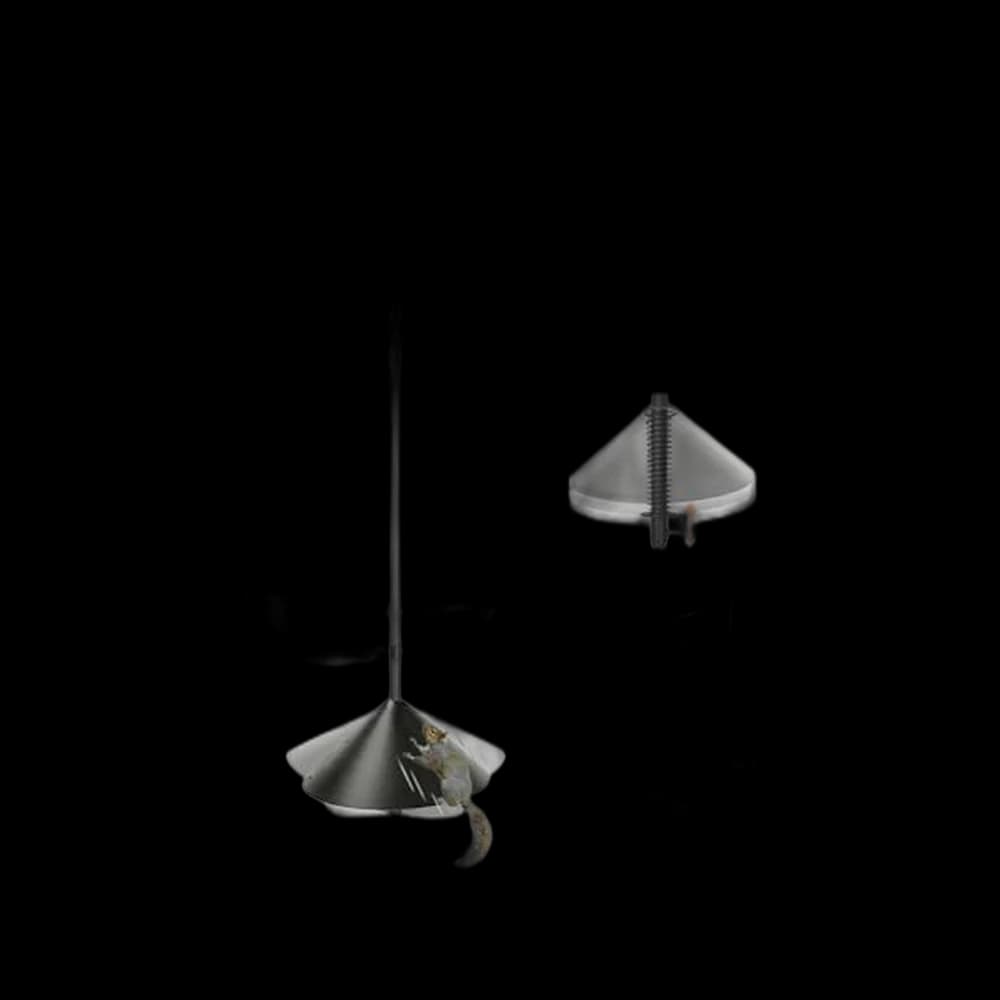
- Birders wanting a cheap adjustable 92-inch pole with four hooks, a 9-prong base, and a spring baffle.
- Skip if you need heavy-duty stability, since buyers flag durability, sturdiness, and squirrel resistance. Rated 4.1 stars on about 660 ratings, just under our usual 4.3 bar.
Key takeaways
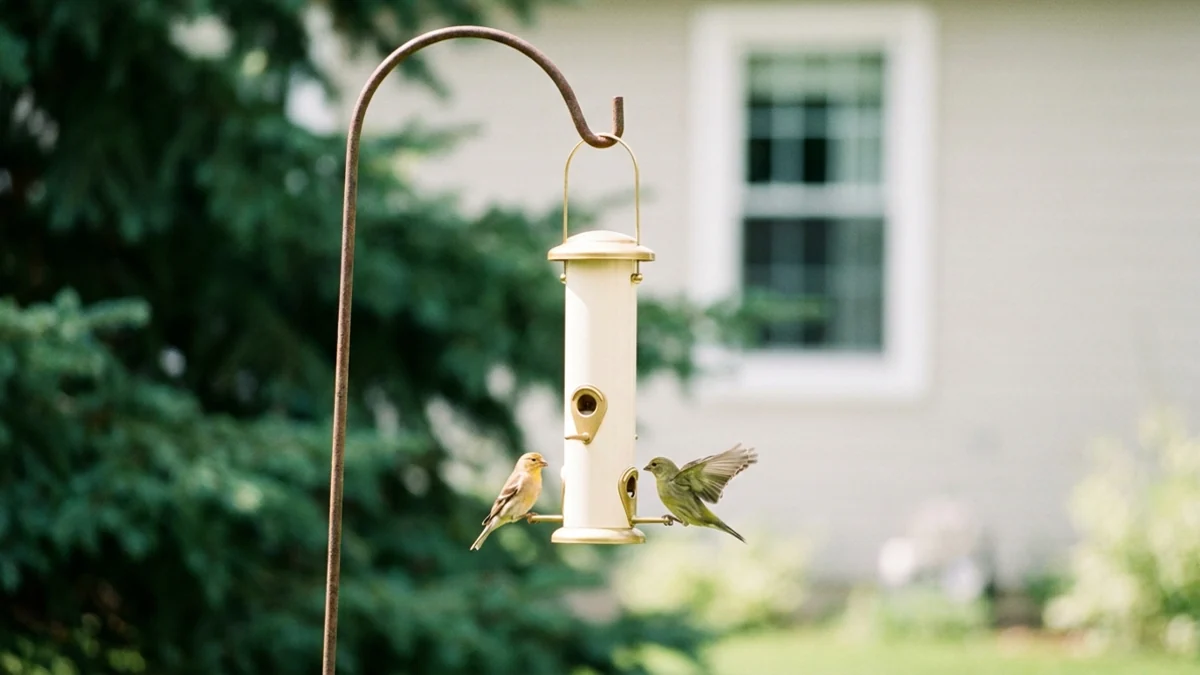
- Close to the glass, and treat the glass. Within 3 ft a startled bird can't hit fatal speed. The old 'or beyond 30 ft' half of the rule no longer holds, so mark nearby windows on the outside.
- Keep it 10+ ft from squirrel launch points — fences, branches, roofs, and deck rails are all springboards.
- Hang it about 5 ft high — comfortable to fill and watch, above ground predators.
- Place it near but not in cover — shrubs 10-15 ft away give birds escape routes without hiding ambush predators.
Pick by your situation
| If your situation is… | Pick | Why |
|---|---|---|
| Birds keep hitting your window | Move the feeder within 3 ft of the glass and mark the outside of the pane | A close feeder prevents fatal-speed strikes; exterior markings make the glass read as a barrier at any distance |
| Squirrels raid a feeder near a fence or tree | A pole system in the open, like the eWonLife 92-inch pole | It puts the feeder in open space with a baffle included; you still set it 10 ft from launch points |
| You already have a pole but squirrels climb it | Add a wrap-around baffle like the Woodlink 18-inch | A wide baffle below the feeder blocks the climb cheaply |
A shortcut by situation — start from the row that sounds like you.
Feeder Poles & Baffles: our picks
| Pick | Best for | Rating | Price | |
|---|---|---|---|---|
| TopeWonLife 92 Inch Squirrel Proof Bird Feeder Pole with 9 Prongs… | Cheap multi-hook pole to get started. | ★ 4.1 Amazon | $39.99 | Buy on Amazon |
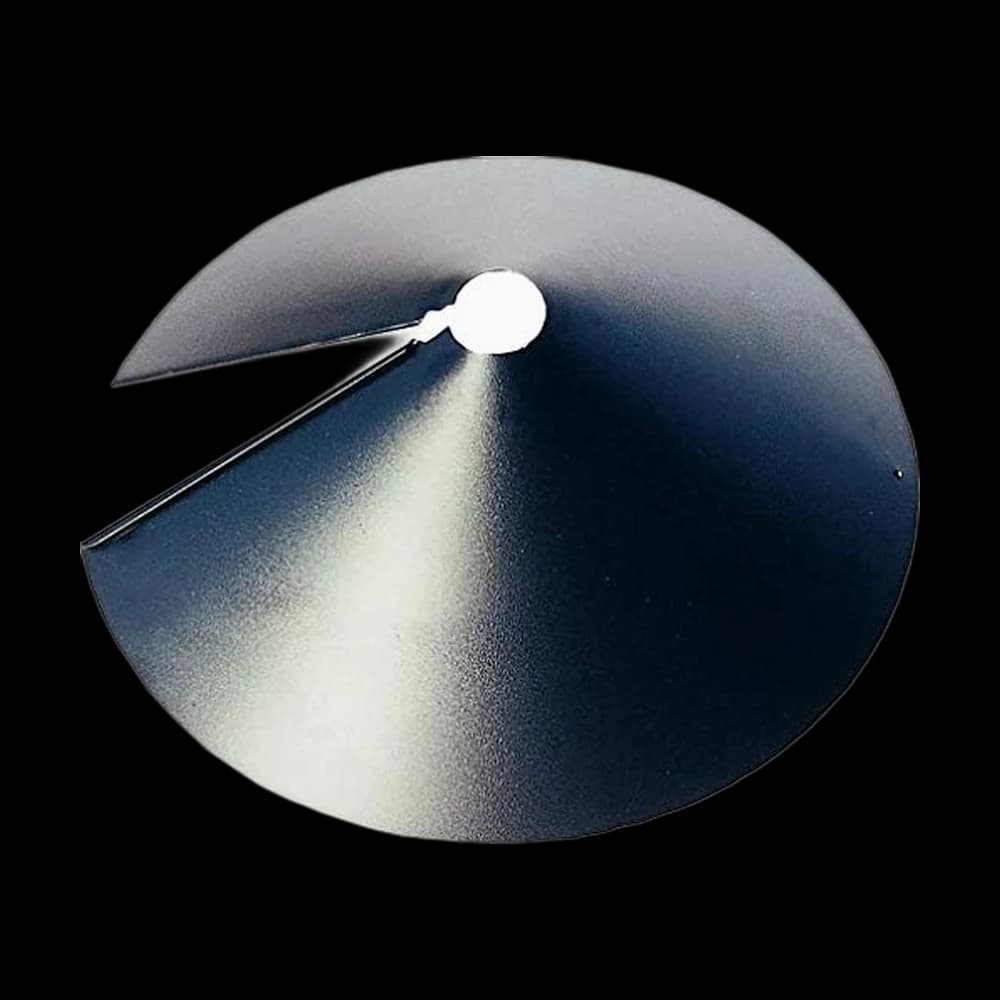 Woodlink NABAF18 Audubon Wrap Around Squirrel Baffle, 18-Inch -… Woodlink NABAF18 Audubon Wrap Around Squirrel Baffle, 18-Inch -… | The classic 18-inch wrap-around baffle. | ★ 4.3 Amazon | $48.85 | Buy on Amazon |
Good placement comes down to a few numbers: 10–15 feet from escape cover, at least 10 feet from any squirrel launch point, and about 5 feet up on a pole in open space. Near a window, closer is safer: within 3 feet of the glass a startled bird can't build up speed, and the pane still needs treating on the outside. That combination keeps birds safe, squirrels frustrated, and the view great.
The window rule that saves lives
Window collisions kill hundreds of millions of birds a year in North America, and the feeder you hang near the house is part of that picture.
The counterintuitive fix: put the feeder very close to the glass, within 3 feet or stuck right on it, so a bird taking off can't build up fatal speed. Then make the glass itself visible.
What still holds:
- Within 3 ft, or on the glass: a startled bird can't accelerate enough to be badly hurt. The Cornell Lab's placement advice is closer than 3 feet to a picture window, or even fixed to the glass or frame.
What changed:
- "Beyond 30 ft is safe" is retired. The Cornell Lab now says past safe-distance recommendations are no longer valid. If a window is near a feeder, make it bird-friendly with exterior markings or a screen, however far away the feeder is.
Our window-collision guide covers the treatments that work, from 2-inch dot patterns to paracord curtains.
The distance-and-height cheat sheet
Everything about placement comes down to a few numbers.
| Factor | The rule | Why |
|---|---|---|
| From a window | Within 3 ft (or on the glass); treat nearby glass at any distance | Low impact speed; markings make the pane visible |
| From cover | 10-15 ft away | Escape route without ambush cover |
| From squirrel launch points | At least 10 ft | Squirrels leap ~10 ft across, ~5 ft up |
| Height | About 5 ft | Easy to fill; above ground predators |
Beating squirrels with geometry
Placement beats gadgets
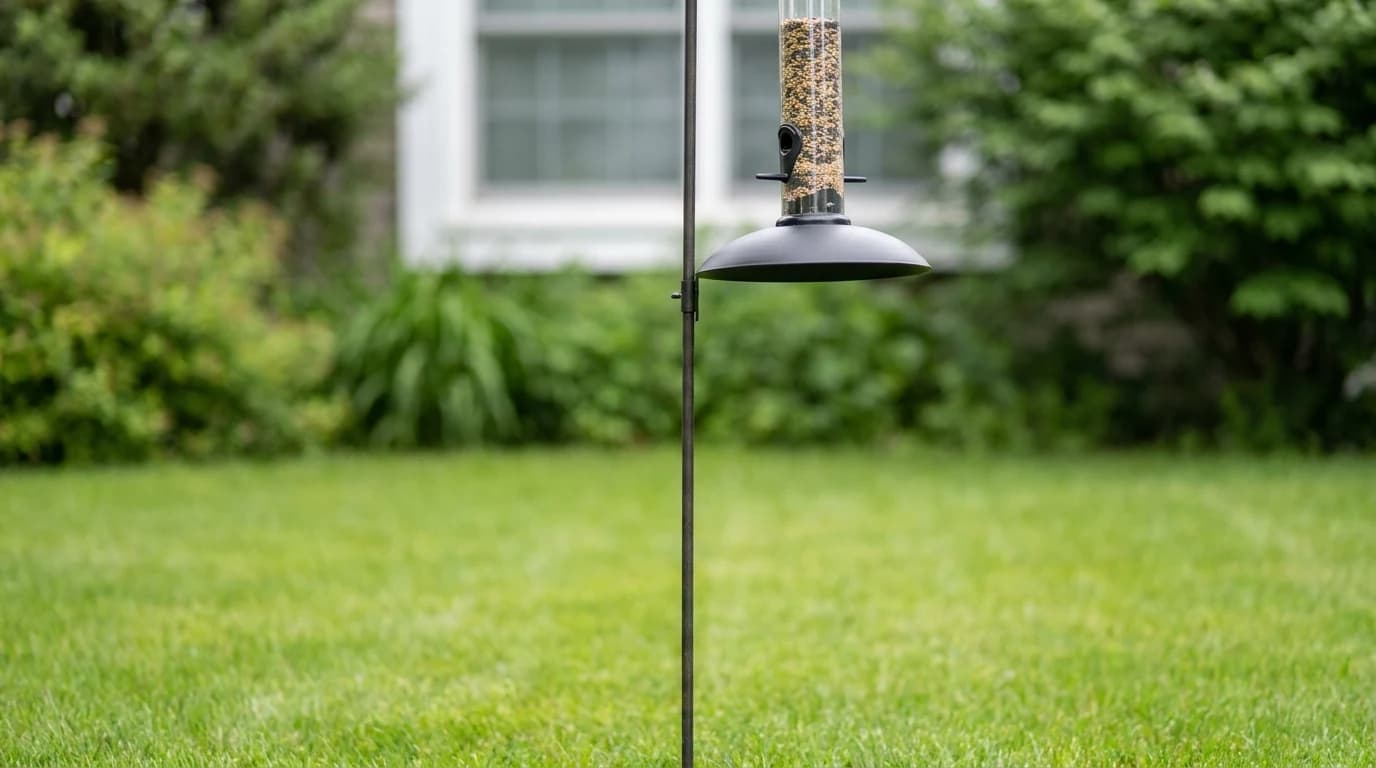
Squirrels are athletes: they jump roughly 10 feet sideways and 5 feet up, and drop from higher. So keep the feeder 10+ ft from fences, branches, railings, and roofs — any launch pad — and mount it on a pole in open space rather than hanging it from a tree limb. A baffle below the feeder blocks the climb.
A pole puts the feeder in open space
A dedicated pole system like the eWonLife 92-inch pole gives you hooks, a spring baffleA dome or cylinder on a feeder pole that blocks squirrels from climbing up to the seed. and a ground base in one box. It can't create the buffer for you, so set it 10+ ft from every launch point and the geometry does the rest. On an existing pole, a wrap-around baffle like the Woodlink 18-inch baffle mounted below the feeder stops climbers from below.
Cover, sun, and comfort
Ten to fifteen feet is the escape-route sweet spot
Birds want a quick escape but not a hiding spot for cats and hawks. Place feeders 10-15 ft from shrubs or trees — close enough to bolt to, far enough that predators can't lurk unseen right beside the perch.
Morning sun, afternoon shade
That's ideal in most of the US and Canada; avoid baking a feeder in full afternoon heat, which spoils seed. In snowy northern yards, a spot sheltered from prevailing wind keeps birds feeding through winter. And pick somewhere you can see it easily — the whole point is watching, so aim for a favorite window, close to the glass.
Give new feeders time
Birds are wary of anything new in the landscape. It can take days to a few weeks for them to find and trust a feeder, and placing it near existing cover and other bird activity speeds discovery.
The trap: moving the feeder every few days because nothing has shown up. Pick a good spot using the rules above and leave it there — restarting the discovery clock is what keeps a yard empty.
Frequently asked
Where is the best place for a bird feeder?+
About 5 feet off the ground, 10-15 feet from shrubs or trees for cover, at least 10 feet from any squirrel launch point like a fence or branch, and within 3 feet of a window if it sits near the house, with the outside of that glass treated. A spot you can watch from a favorite window is a bonus.
How high should a bird feeder be?+
About 5 feet off the ground is the sweet spot — high enough to stay above ground predators and easy for you to reach when filling and cleaning, but low enough to watch comfortably. Pair the height with a baffle and open placement to keep squirrels off.
How far should a bird feeder be from a window?+
Within 3 feet, or right on the glass: a bird leaving a close feeder can't build up dangerous speed. The old advice that beyond 30 feet is also safe no longer holds. The Cornell Lab now says past safe-distance rules aren't valid, so any window near a feeder needs bird-visible markings on the outside, however far away the feeder is.
Should a bird feeder be in sun or shade?+
A mix is best — morning sun with afternoon shade keeps seed from spoiling in heat while still feeling open and safe to birds. In cold northern climates, choose a spot sheltered from prevailing winter wind so birds keep visiting through the season.
Sources & further reading
We research from primary and authoritative sources. Where our guidance rests on a fact, here's where it comes from.
- Where to Put Your Bird Feeder (Cornell Lab, All About Birds) — Backs placing feeders closer than 3 feet to a window (or on it), about 10 feet from cover as a compromise against squirrels and cats, and patience while birds discover a new feeder.
- Why Birds Hit Windows—and How You Can Help Prevent It (Cornell Lab) — Current guidance prioritizes exterior window treatments at any feeder distance; this supersedes the old safe-distance claims.
- Glass Collisions (American Bird Conservancy) — Authoritative estimate that glass kills hundreds of millions of birds per year in North America, backing the collision-toll claim.
- How do I keep squirrels off my feeders? (Project FeederWatch) — Supports the 10-foot squirrel-launch buffer and pole-plus-baffle placement advice.
Prices and BirdingScores reflect our most recent research and refresh on a cycle; confirm the live price before buying. We may earn a commission from affiliate retailers — it never changes our recommendations. See how we review.