
Best Bird Feeders for Winter: Dry Seed, Big Capacity, No Squirrels
Winter feeders have four jobs: keep seed dry, carry birds through a cold snap, beat squirrels and come apart for washing. Six feeders ranked on exactly that.
The short answer
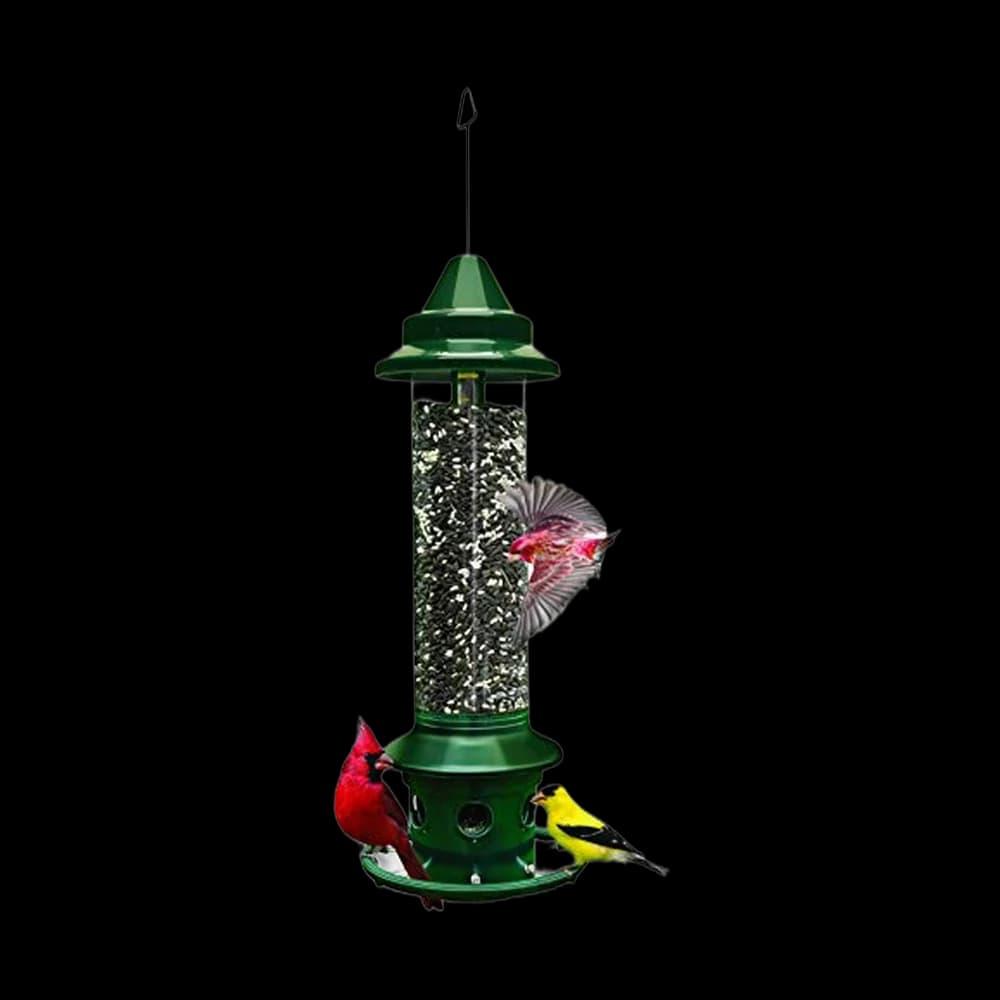
- Serious backyard feeders wanting the gold-standard 5.1 lb, 6-port squirrel-proof feeder with an adjustable weight spring.
- Skip if $129 feels steep, since some buyers question the value and long-term durability.
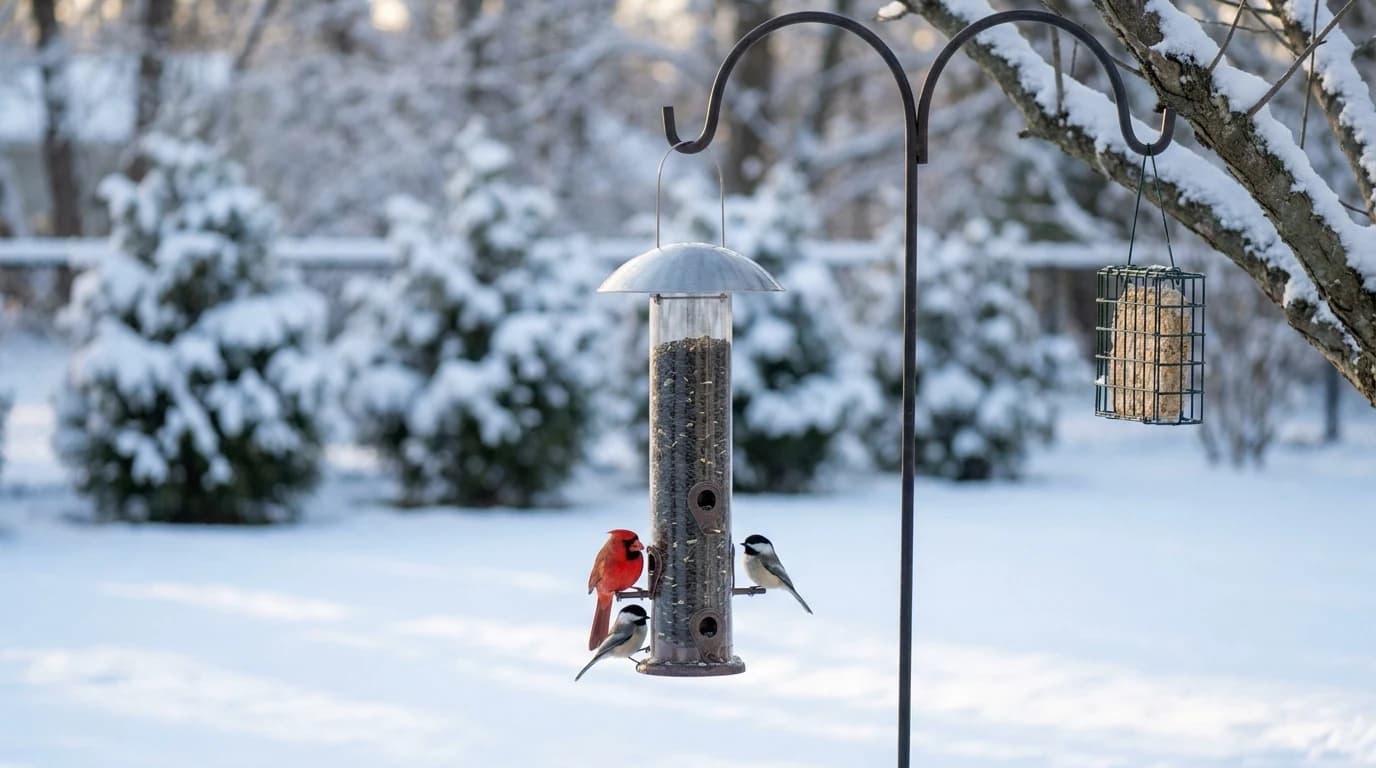
Key takeaways
- Buy the Squirrel Buster Plus first. Audubon says if you hang just one winter feeder, make it a sunflower tube with squirrel-deterring ports; this one holds 5.1 lb and shuts its ports under a squirrel's weight.
- Capacity matters more in winter than any other season. A small feeder in a busy January yard means a refill every day, which is the complaint owners raise about the Squirrel Buster Mini.
- Washable beats pretty. Project FeederWatch says clean every week or two and more often in wet weather, and advises against feeders that cannot be thoroughly washed, such as wood.
- Add suet, and a baffle. Fat draws woodpeckers, nuthatches and creepers a seed feeder never sees, and FeederWatch calls baffles usually the best squirrel defense.
Pick by your situation
| If your situation is… | Pick | Why |
|---|---|---|
| If you are buying one feeder for the winter | Squirrel Buster Plus ($129.04) | A 5.1 lb sunflower tube whose shroud closes under a squirrel's weight and comes apart by hand for washing |
| If your yard has a big flock and you hate refilling | Woodlink Absolute II ($84.00) | About 12 lb of seed in a steel hopper, though its size also welcomes grackles and doves |
| If you want woodpeckers and nuthatches | Birds Choice tail-prop suet feeder ($44.99) | Two cakes, a 9.5-inch tail prop and washable recycled plastic rather than wood |
| If you have no squirrels and want the easiest wash | Aspects Quick-Clean Big Tube ($103.99) | A snap-off base built for cleaning, but no squirrel defense at all |
| If you mostly watch from indoors | Desgully window feeder ($15.29) | A draining mesh tray on the glass, the closest view you will get of winter birds |
Each pick is one of the products compared below — a shortcut by situation, not a separate recommendation.
Winter feeders: our picks
| Pick | Best for | Rating | Price | |
|---|---|---|---|---|
| TopSquirrel Buster Plus Squirrel-proof Bird Feeder w/Cardinal Ring and… | The squirrel-proof gold standard. | ★ 4.6 | $129.04 | Buy on Amazon |
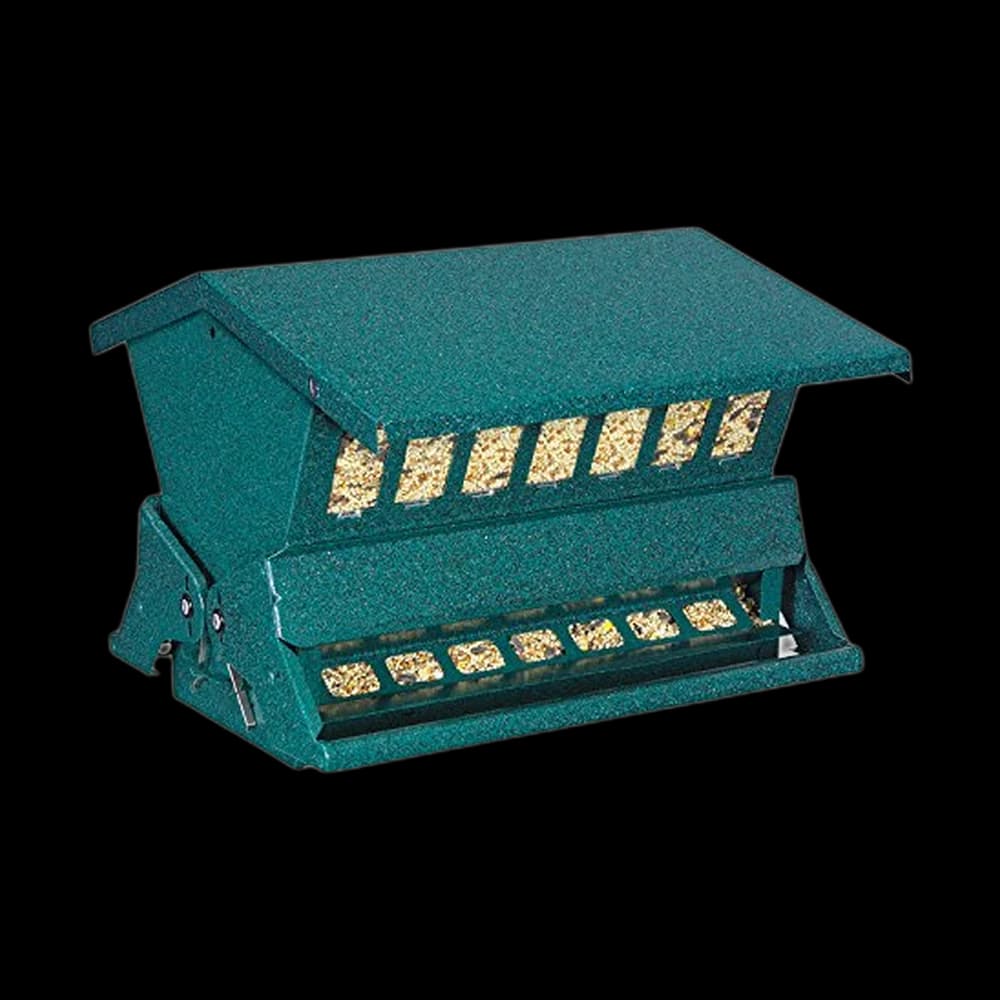 Woodlink Absolute II Squirrel Resistant Bird Feeder Model 7536, 12… Woodlink Absolute II Squirrel Resistant Bird Feeder Model 7536, 12… | Weight-adjustable hopper, big capacity. | ★ 4 | $84.00 | Buy on Amazon |
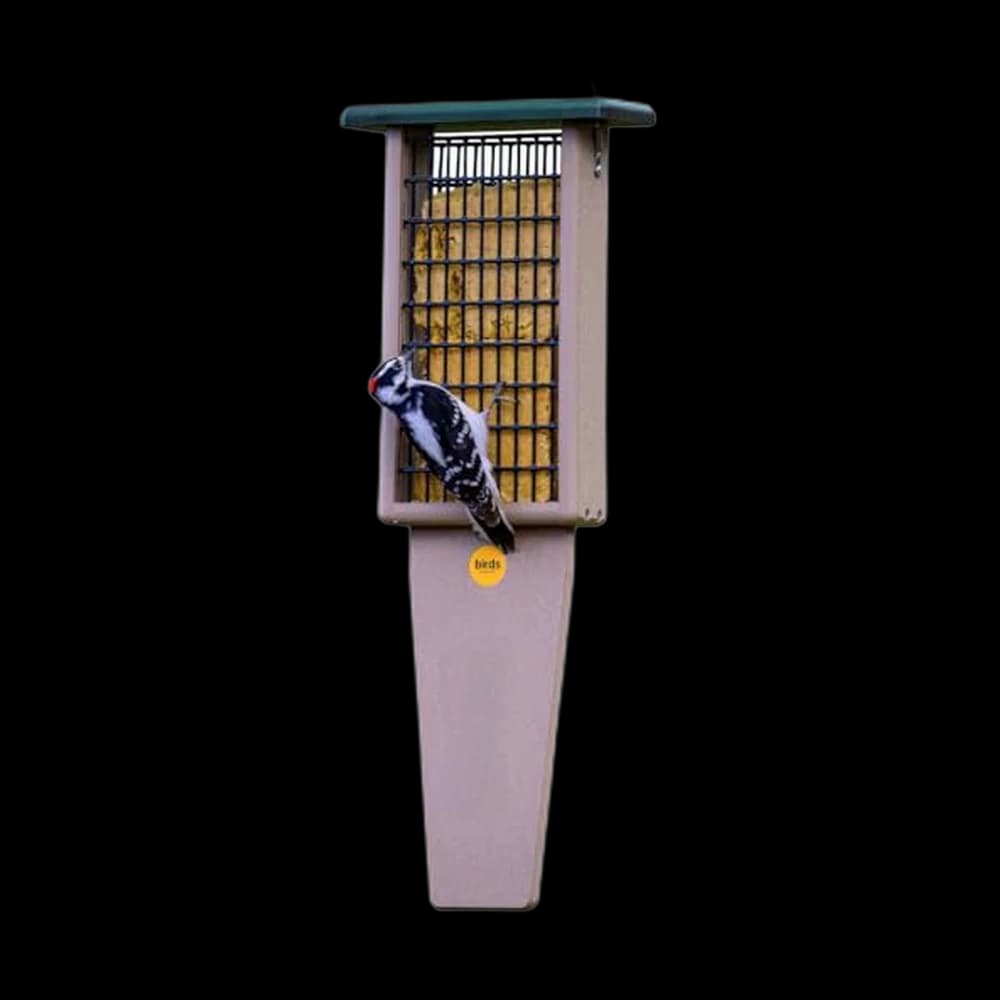 Birds Choice Pileated Suet Feeder with Tail Prop, Holds 2 Suet Cakes Birds Choice Pileated Suet Feeder with Tail Prop, Holds 2 Suet Cakes | Recycled-poly build with a tail prop. | ★ 4.7 | $44.99 | Buy on Amazon |
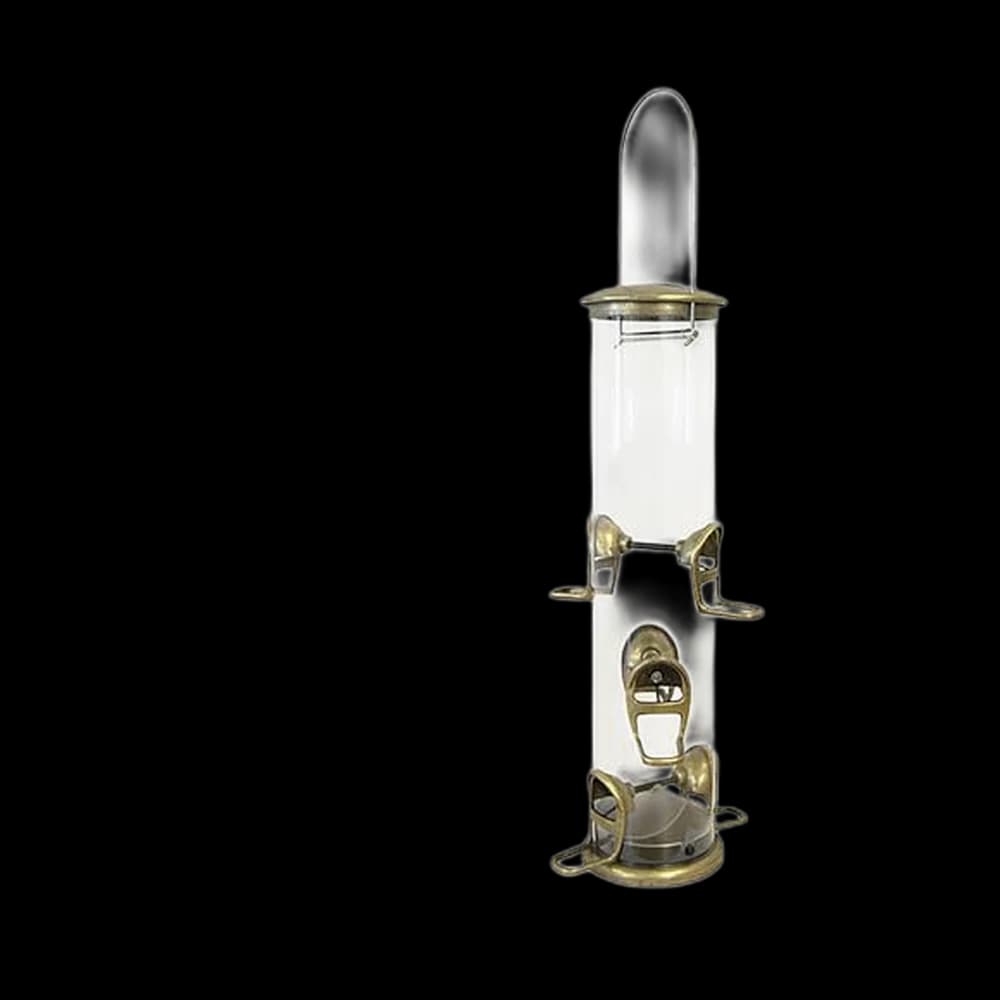 Aspects 420 Antique Brass Quick Clean Big Tube Feeder, Large, Brown/A Aspects 420 Antique Brass Quick Clean Big Tube Feeder, Large, Brown/A | Snap-clean base for real hygiene. | ★ 4.5 | $103.99 | Buy on Amazon |
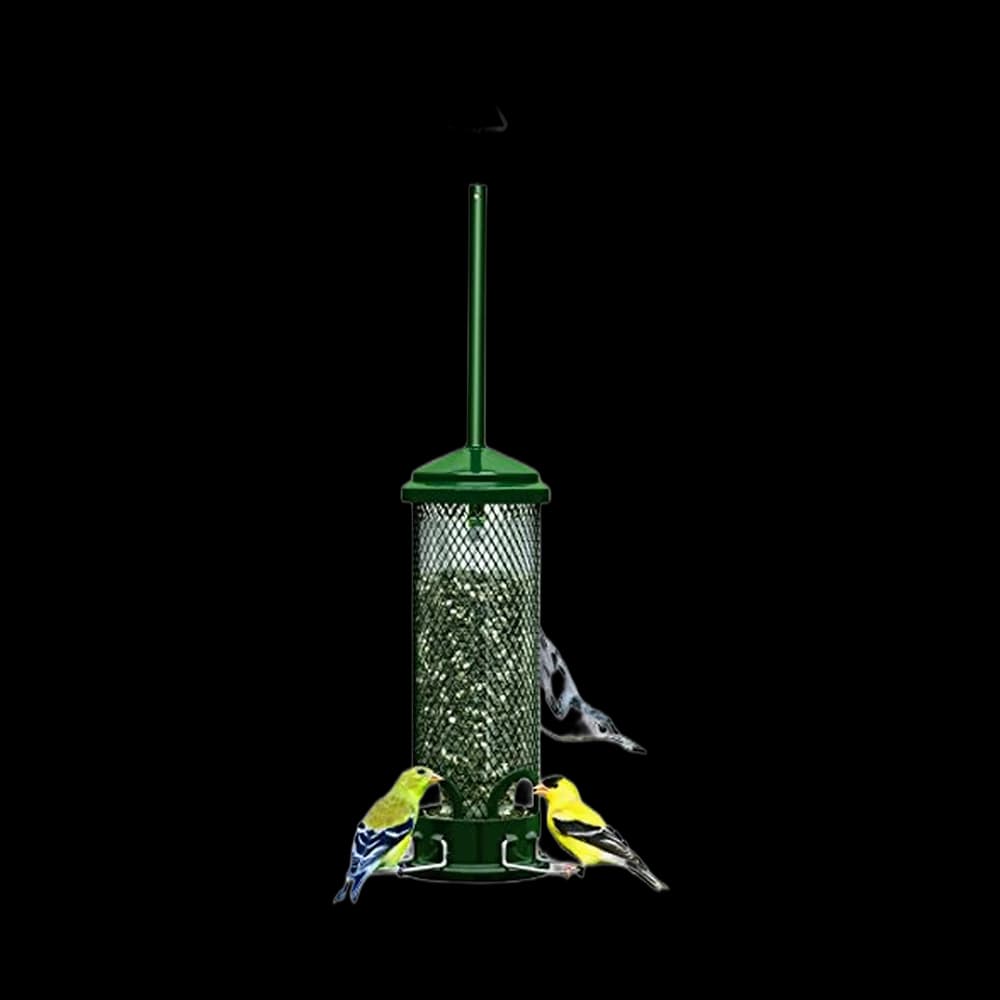 Squirrel Buster Mini Squirrel-Proof Bird Feeder for Wild Birds Squirrel Buster Mini Squirrel-Proof Bird Feeder for Wild Birds | Same tech, smaller and cheaper. | ★ 4.6 | $37.36 | Buy on Amazon |
A winter feeder has a harder job than a summer one. It has to keep seed dry through snow and freezing rain, hold enough to carry birds through a cold snap without a trip across an icy yard every afternoon, stand up to squirrels that are just as hungry as the birds, and still come apart for a scrub. Summer roundups rank feeders on looks and port count. Winter ranks them on those four jobs.
| Feeder | Its winter job | Capacity | Score | Price |
|---|---|---|---|---|
| Squirrel Buster Plus | The one sunflower feeder to own | 5.1 lb, 6 ports | 77 | $129.04 · Amazon |
| Woodlink Absolute II | Big flocks, fewest refills | About 12 lb (2 gallons) | 70 | $84.00 · Amazon |
| Birds Choice tail-prop suet feeder | Fat for woodpeckers and nuthatches | 2 suet cakes | 77 | $44.99 · Amazon |
| Aspects Quick-Clean Big Tube | The easiest one to wash | Large tube, 6 ports | 82 | $103.99 · Amazon |
| Squirrel Buster Mini | Small yard, small budget | 4 ports | 83 | $37.36 · Amazon |
| Desgully window feeder | Watching from a warm room | 1.7 lb tray | 90 | $15.29 · Amazon |
Score is our BirdingScore, which blends owner satisfaction with field value — how we score. It rates each feeder against its own kind and knows nothing about January, which is why the order above is set by the winter jobs rather than the number. We research feeders from specs, manufacturer pages and owner reports; we do not test them in our own yard.
The four jobs a winter feeder has to do
Project FeederWatch, the Cornell Lab's winter feeder survey, describes each feeder design by what it does with weather, and that is the right lens for December.
- Keep the seed dry. FeederWatch says tube feeders keep seed fairly dry, and a hopper's walls and roof protect seed against the weather. An open platform needs plenty of drainage holes, and a roof, to do the same.
- Hold enough for a cold snap. Capacity is the feature summer shoppers overbuy and winter feeders underbuy. A small feeder in a busy January yard is a refill every day.
- Beat the squirrels. They are feeding for winter too.
- Come apart for washing. FeederWatch says to clean seed and suetA high-energy cake of rendered fat (often with seeds) that draws woodpeckers, nuthatches, and chickadees. feeders every week or two, more often during heavy use or wet weather — which describes most of winter. It also advises against feeders that cannot be thoroughly washed, and names wood.
Rule of thumb: a winter feeder is judged on dry seed, capacity, squirrels and washing, in that order. Looks come fifth.
Why the Squirrel Buster Plus is the one to buy first
Audubon's winter-feeding guide is blunt about the sunflower-seed tube feeder: if you hang just one feeder, it should be this, with metal around the ports to deter squirrels. The Squirrel Buster Plus is that recommendation with the squirrel problem engineered out.
Brome's own spec page gives the numbers: 28 inches tall, 5.1 lb of seed, and a weight-triggered shroud that drops over the six ports when a squirrel climbs on. The spring is adjustable, so you decide how heavy a visitor has to be to shut it. Two details matter more in winter than in any other season:
- It comes apart by hand. Brome says the feeder is designed to be dismantled into its components without tools, which is what makes a weekly wet-weather wash realistic rather than aspirational.
- The Cardinal Ring gives larger birds a perch around the ports, so cardinals are not left balancing on a small peg.
Owners praise its quality and squirrel resistance and are mixed on value and long-term durability. That is the honest trade: you pay a lot once. The Squirrel Buster Mini uses the same shroud and scores higher on owner satisfaction, but owners flag its size and how often it needs refilling — the exact complaint a cold snap makes worse.
When a hopper beats a tube
A hopper holds more and feeds more kinds of bird. Audubon describes one as storing several pounds of mixed seed, mounted on a pole about 5 feet up, drawing everything a tube does plus jays, grackles, red-winged blackbirds and cardinals.
The Woodlink Absolute II is the big version: steel, a roughly 2-gallon (about 12 lb) reservoir, ports on both sides, and a closing mechanism you adjust by weight. It is the pick when you would rather refill on Saturday than every evening.
The trade is in who it invites. FeederWatch notes that large hoppers let bigger species such as doves and grackles feed, and suggests a smaller hopper if you would rather discourage them. Owners of the Absolute II praise its capacity and sturdiness, and are mixed on squirrel resistance and durability.
Suet: the winter-only food group
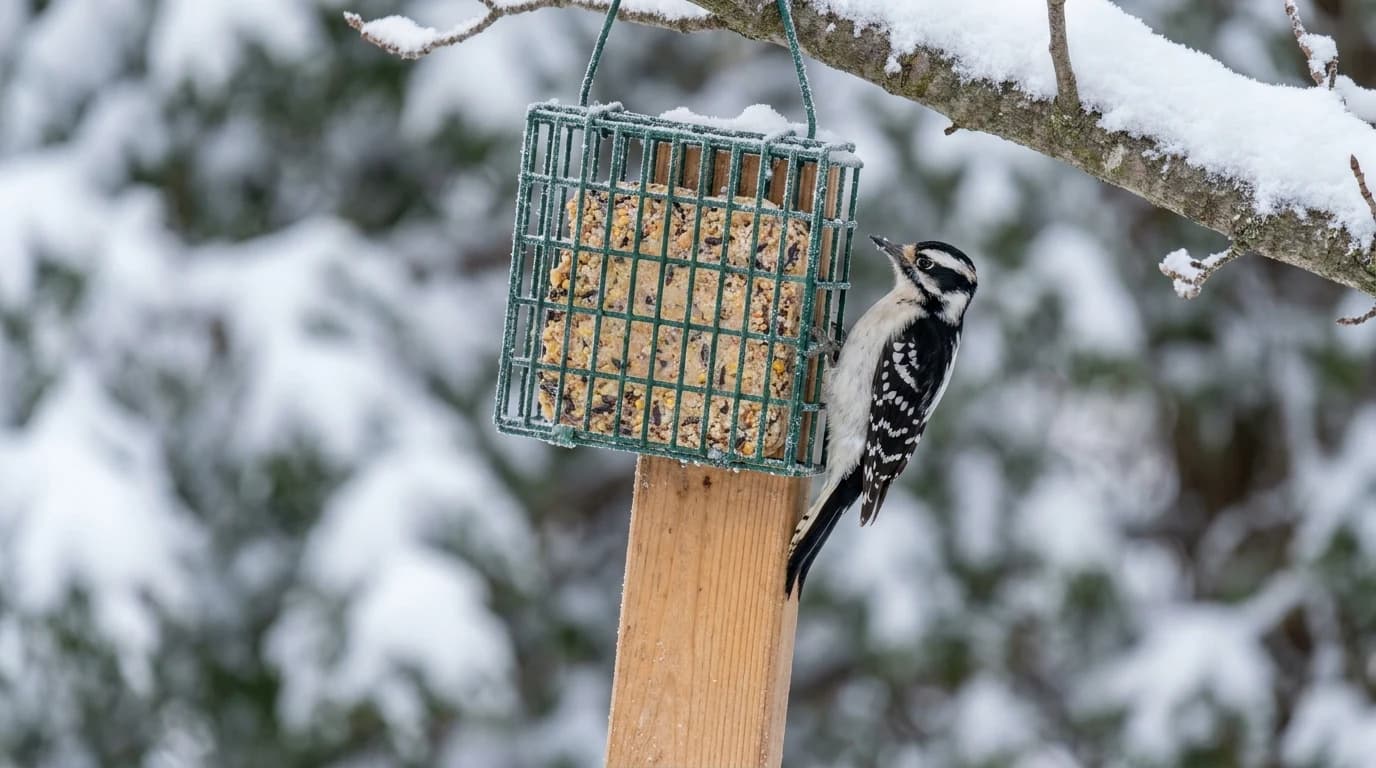
Fat is the food that pulls in birds a seed feeder never sees. Audubon lists titmice, chickadees, nuthatches, woodpeckers, wrens, creepers and warblers at suetA high-energy cake of rendered fat (often with seeds) that draws woodpeckers, nuthatches, and chickadees., and says to stop offering it when temperatures climb into the 80s — so winter is its season.
The Birds Choice tail-prop feeder holds two cakes and extends its back panel into a 9.5-inch prop for woodpeckers to brace on. It is built from recycled plastic lumber with a vinyl-coated grid, so it passes FeederWatch's washable test where a wooden suet box does not.
What it does not do is exclude starlings. FeederWatch says cages that birds can reach only from the bottom tend to be starling-resistant; this one is open on the face. If starlings run your yard, our guide to suet and when to start covers the bottom-access fix.
The two cheaper roles
The easiest tube to wash. The Aspects Quick-Clean Big Tube is sold on its quick-clean design, with a base that comes off for washing, and owners single out its capacity and ease of cleaning. It has no squirrel defense at all, so it belongs on a baffled pole or in a yard without squirrels.
The window seat. The Desgully window feeder is a metal frame with a removable 1.7 lb mesh tray that drains. In winter, when the yard is a place you look at rather than sit in, a feeder on the glass is the best view in the house. Mounted on the glass, it also sits inside the 3-foot band Audubon's window rule allows, which is next.
Where to hang it for winter
Audubon's winter guide gives the distances: tube feeders at least 5 feet off the ground, and 3 feet from a window, or more than 30, to avoid collisions. FeederWatch adds cover. Evergreens are ideal because thick foliage hides birds from predators and buffers winter wind, but branches too close become a launch pad for squirrels and cats; about 10 feet is its compromise.
What actually keeps squirrels off:
- A baffle. FeederWatch calls baffles usually the best way to keep squirrels off, below a pole-mounted feeder or, for jumpers, a tilting baffleA dome or cylinder on a feeder pole that blocks squirrels from climbing up to the seed. at least 18 inches across above it. Our feeder poles and baffles picks cover both.
- Distance. FeederWatch says squirrels can jump to feeders placed less than ten feet from a tree or building.
- A weight-triggered feeder, as a second layer rather than the only one.
What people rely on that often fails:
- The word squirrel-proof on its own. FeederWatch is candid that squirrels often find a way into these feeders too.
- Hanging the feeder from the nearest convenient branch, well inside jumping range.
The short version: one weight-triggered sunflower tube, one suet feeder, 5 feet up, 10 feet from cover, and a baffle under it. Everything else is a bonus.
Water is the one thing winter takes away that a feeder cannot replace. FeederWatch says a birdbath heater will keep ice from forming, and never to add anti-freeze; our guide to whether you need a heated bird bath picks it up from there. For why any of this matters to a chickadee on a sub-zero night, read how birds survive winter.
Frequently asked
What is the best type of bird feeder for winter?+
A sunflower-seed tube feeder. Audubon's winter-feeding guide says that if you hang just one feeder, it should be a tube, with metal around the ports to deter squirrels. Project FeederWatch adds that tube feeders keep seed fairly dry. Add a suet feeder alongside it, because fat brings in woodpeckers, nuthatches, creepers and wrens that rarely use a seed tube.
How big should a winter bird feeder be?+
Bigger than you would buy in summer. Refilling in snow and ice is a chore, so a feeder that holds several pounds lets you top it up before a cold snap rather than every afternoon. The Squirrel Buster Plus holds 5.1 lb and the Woodlink Absolute II about 12 lb. Small feeders such as the Squirrel Buster Mini work, but owners flag how often they need refilling.
Do squirrel-proof feeders actually work?+
Partly. Weight-triggered feeders like the Squirrel Buster shut their ports when a squirrel climbs on, but Project FeederWatch is candid that squirrels often find a way into squirrel-proof feeders. It calls baffles usually the best defense, and notes squirrels can jump to feeders placed less than ten feet from a tree or building. Use a weight-triggered feeder as a second layer, with a baffle and distance as the first.
How often should I clean a bird feeder in winter?+
Project FeederWatch recommends cleaning seed and suet feeders every week or two, and more often during heavy use or wet weather, which covers much of winter. Take the feeder apart, scrub off old seed and hulls, wash with warm water and dish soap, rinse and let it dry completely before refilling. It advises against feeders that cannot be thoroughly washed, such as wooden ones.
Where should I hang a bird feeder in winter?+
Audubon's winter guide says to hang tube feeders at least 5 feet off the ground and either within 3 feet of a window or more than 30 feet away, to avoid window collisions. Project FeederWatch recommends placing feeders near cover such as evergreens, which hide birds and buffer winter wind, but about 10 feet from branches squirrels and cats could launch from.
Sources & further reading
We research from primary and authoritative sources. Where our guidance rests on a fact, here's where it comes from.
- The Audubon Guide to Winter Bird Feeding | Audubon — If you hang just one feeder, make it a sunflower-seed tube with metal ports to deter squirrels; hopper and tube feeders about 5 feet high; hang tube feeders 3 feet from a window or more than 30 feet away to avoid collisions; food, water and cover as the three essentials.
- 5 Best Bird Feeders for Winter | Audubon — Sunflower-seed tube feeder with metal ports as a winter staple; suet feeders for titmice, chickadees, nuthatches, woodpeckers, wrens, creepers and warblers, avoided once temperatures reach the 80s; hopper feeders store several pounds of seed and add jays, grackles, blackbirds and cardinals.
- Feeding Birds | Project FeederWatch, Cornell Lab of Ornithology — Clean seed and suet feeders every week or two, more often in heavy use or wet weather; do not use feeders that cannot be thoroughly washed, such as wood; tube and hopper feeders keep seed dry; large hoppers admit doves and grackles; bottom-access suet cages resist starlings; place feeders near evergreen cover about 10 feet from launch points; baffles are usually the best squirrel defense and squirrels often defeat squirrel-proof feeders; use a birdbath heater, never anti-freeze.
- Squirrel Buster Plus | Brome — Manufacturer page: 28 inches tall, 5.1 lb seed capacity, Cardinal Ring, weight-activated shroud that closes the ports, dismantles by hand without tools for cleaning, seed tube ventilation.
Prices and BirdingScores reflect our most recent research and refresh on a cycle; confirm the live price before buying. We may earn a commission from affiliate retailers — it never changes our recommendations. See how we review.