
Heated Bird Baths: Do You Actually Need One?
In freezing climates, open water is one of winter's scarcest resources, so a heated bath becomes a magnet when everything else locks up. In mild regions, skip it.
The short answer
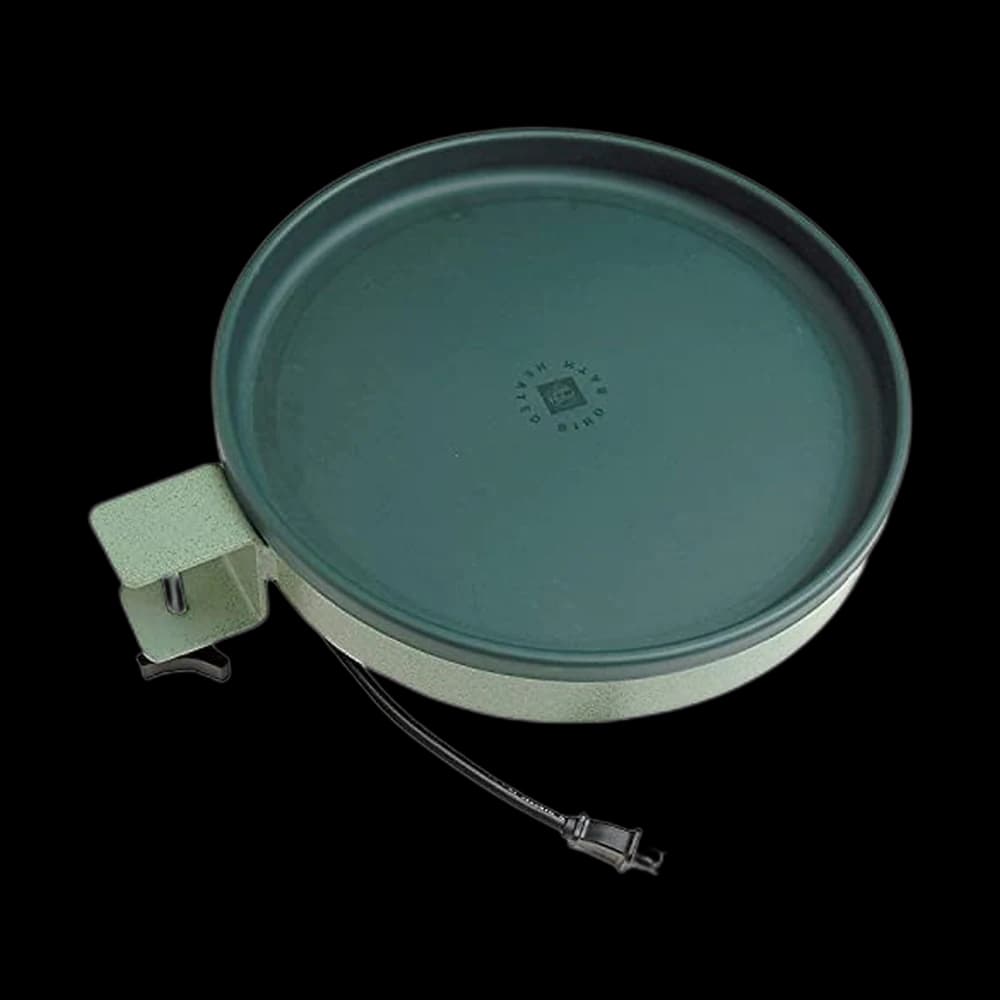
- Cold-climate birders wanting a thermostatic 75W deck-rail bath that only heats when needed.
- Skip if you want a deep bath, since the 1-quart shallow saucer draws capacity and depth complaints. Rated 4.1 stars on about 1,900 ratings, just under our usual 4.3 bar.
Key takeaways
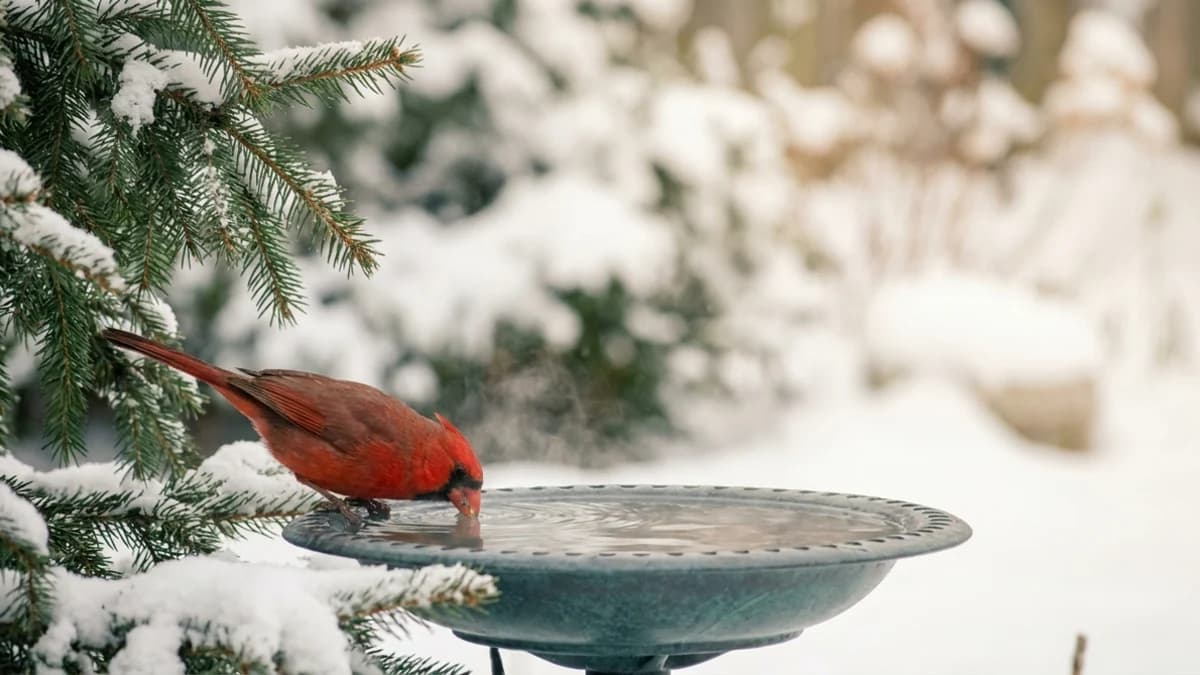
- Winter water is scarce, so it's a big draw. Birds don't depend on it (they get water from snow and icicles), but in hard-freeze regions open water is heavily used.
- Heated bath vs de-icer. A heated bath is a complete unit; a de-icer is a small heater you drop into a bath you already own.
- Thermostats keep costs down. A thermostatic unit only heats near freezing, and even a 75W element running all day uses just 1.8 kWh.
- Climate decides it. Worth it where water freezes for days; skip it in mild-winter regions like the Pacific and Gulf coasts.
Pick by your situation
| If your situation is… | Pick | Why |
|---|---|---|
| If you live where water freezes for days (northern US, Canada) | A thermostatic heated bath like the Farm Innovators | Open winter water is a rare, high-impact draw, and the thermostat keeps running costs low. |
| If you already own a bird bath | A drop-in de-icer | You keep your existing setup and add winter heat only when you need it. |
| If you want the simplest always-on unit | An always-on heated bath like the API Four Seasons | No thermostat to think about — reliable liquid water through hard northern winters. |
| If your winters are mild (coastal, southern) | A standard unheated bath | Water rarely freezes, so heat is wasted money — just keep it shallow and clean. |
A shortcut by situation — start from the row that sounds like you.
Bird Baths (incl. Heated): our picks
| Pick | Best for | Rating | Price | |
|---|---|---|---|---|
| TopFarm Innovators Heated Bird Bath, 1 Quart Capacity, Outdoor Decor… | Thermostat-controlled deck-rail bath. | ★ 4.1 Amazon | $59.99 | Buy on Amazon |
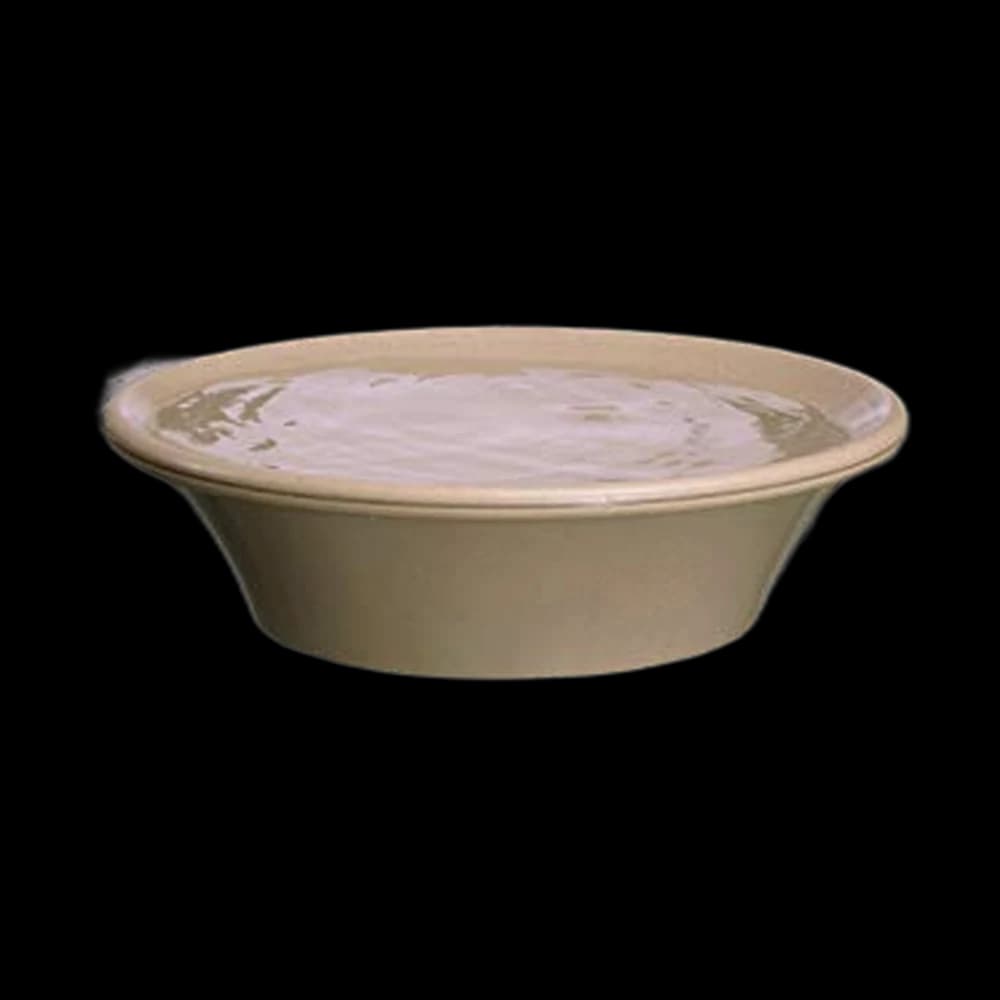 Allied Precision Industries 14B Four Seasons Heated Bird Bath with… Allied Precision Industries 14B Four Seasons Heated Bird Bath with… | Ice-free water through northern winters. | ★ 4.2 Amazon | $119.99 | Buy on Amazon |
In freezing climates, a heated bird bath is worth it — because open water in winter is one of the scarcest resources a yard can offer. When ponds and puddles lock up, a bath that stays liquid becomes a magnet through the coldest months. In mild-winter regions, you don't need one.
It's a draw, not a lifeline. The Cornell Lab notes that birds can usually get the water they need from snow and dripping icicles, and that the simplest winter option is a plain bowl set out each day and brought in when ice forms. A heated bath saves you that daily routine and keeps water open all day.
When a heated bath is worth it
The deciding factor is simple: how long does water stay frozen in your yard?
Buy one if you live in:
- The northern US or most of Canada, or any spot where water freezes solid for days at a time.
- A transition zone with hard cold snaps but frequent thaws — a de-icer you switch on as needed fits well here.
Save your money if you live in:
- Mild-winter regions — Pacific Northwest lowlands, the South, coastal California — where water rarely freezes.
Which winter birds it brings in
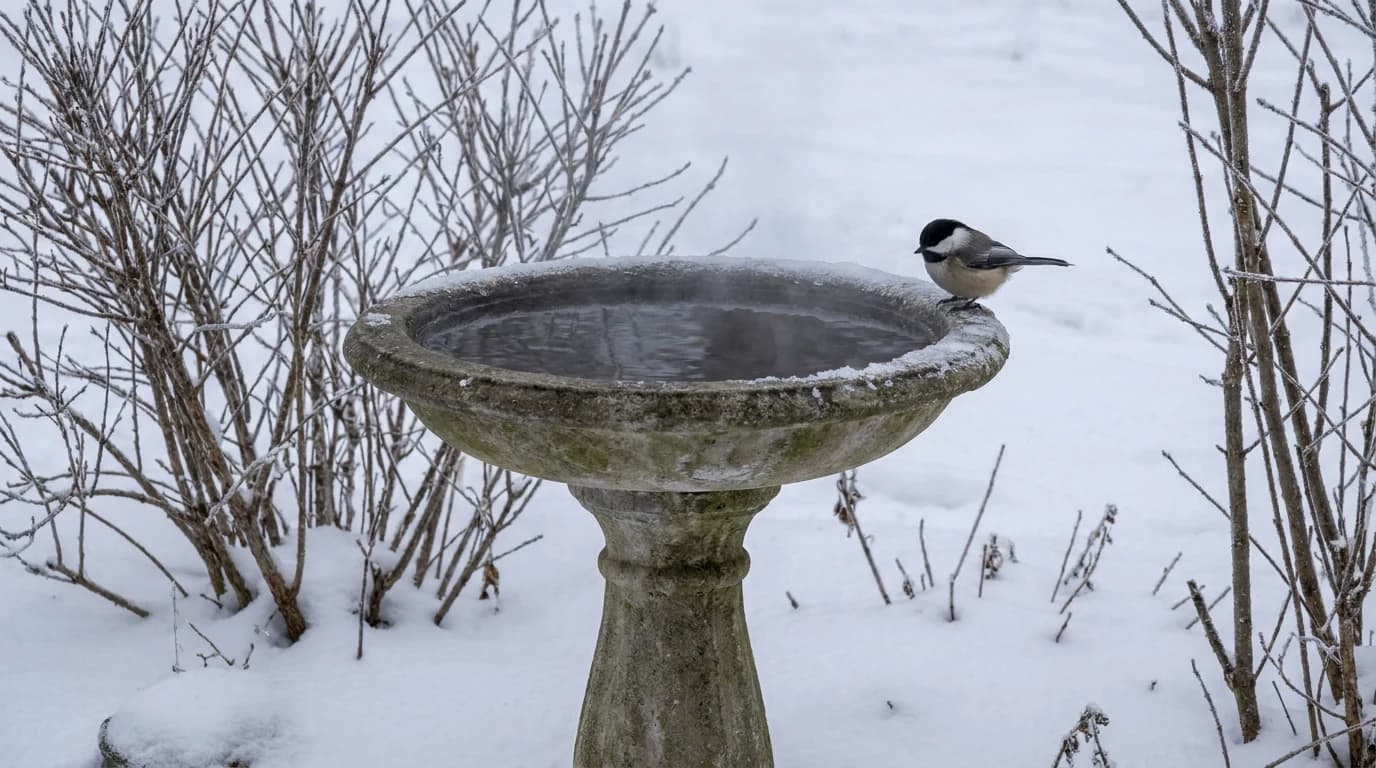
Open water pulls in the hardy species that tough out cold-region winters — often the same birds that keep your feeders busy.
- Chickadees, nuthatches and titmice visit constantly through the day.
- Cardinals, jays and finches drop in, especially in late afternoon.
- Woodpeckers, juncos and winter sparrows all make use of reliable water.
- On a hard-freeze morning, a liquid bath can be the only open water for blocks — which is exactly why it works.
How heated baths and de-icers work
Both do the same job — keep water from freezing — in two different form factors. A heated bird bath is a complete basin with a heating element built in: set it up and plug it in. A de-icer is a small submersible heater you drop into a bath you already own, so you don't replace your summer setup.
Neither is meant to make water warm. They only keep it from freezing, which is all birds need. A deck-rail or pole mount keeps the bath at a good height and away from ground slush and predators.
The trap: in hard cold, make the bath drinkable but hard to bathe in. Wet plumage in deep-freeze conditions is a real risk — observers have documented birds grounded with frozen feathers after bathing in winter. Drop in a few flat stones or a nonmetallic grille so birds can reach the water to drink without fully submerging. Drinking water is the goal; a midwinter bath is not.
Heated bath vs de-icer vs unheated
| Option | Upfront cost | When it's worth it | Best climate |
|---|---|---|---|
| Heated bath | $$ (all-in-one) | You want a dedicated winter bath, plug-and-go | Cold, long freezes |
| De-icer | $ (add to existing bath) | You already own a bath, want winter-only heat | Cold with thaws |
| Unheated bath | $ | Water rarely freezes; three-season use | Mild winters |
Thermostat, safety, and energy use
The good news: a thermostatic model is cheap to run, because it only works when it has to.
- Thermostat-controlled units only heat near freezing and idle otherwise, so they sip electricity rather than run constantly. The Farm Innovators Heated uses a 75W element that only kicks on when needed.
- Always-on units like the API Four Seasons Heated, which has no thermostat, are simpler but run more in deep cold.
- Use an outdoor-rated, grounded outlet (GFCI) and a heavy-duty outdoor extension cord — never an indoor cord.
- Keep cords off the ground and away from mowers, and check them each fall.
To estimate cost, multiply kilowatts by the hours it actually heats and your rate: a 75-watt element running flat-out for 24 hours uses 1.8 kWh, about 36 cents a day at an assumed 20 cents per kWh. A thermostatic bath idles on milder days, so the real figure is usually lower; a long, hard freeze pushes it up.
The bottom line by region
In the hard-freeze north, yes: a thermostatic heated bath or de-icer is one of the highest-impact winter additions you can make. In a mixed climate, a de-icer you run only during cold snaps is the flexible pick. And with mild winters, save your money — a standard bath kept clean is plenty.
Whatever you choose, keep the same shallow-water and cleaning rules that apply year-round — 1–2 inches deep, refreshed often. Heat keeps it liquid; it doesn't keep it clean. For the feeders to set beside it, see our best bird feeders for winter.
Frequently asked
Do birds need heated water in winter?+
They don't strictly need it. The Cornell Lab notes birds can usually get what they need from snow and dripping icicles, and a plain bowl set out each day and brought in when it freezes also works. In hard-freeze regions, though, reliable open water is a real draw. In mild-winter areas, it's unnecessary.
Are heated bird baths safe?+
Yes, when used correctly. Choose a unit made for bird baths, plug it into a grounded outdoor GFCI outlet with a heavy-duty outdoor cord, and keep cords off the ground. Never add antifreeze or glycerin. In severe cold, set stones or a nonmetallic grille in the water so birds can drink without soaking their feathers.
How much electricity does a heated bird bath use?+
Less than most people expect. Multiply the heater's kilowatts by the hours it actually runs and your rate: a 75-watt element running flat-out for 24 hours uses 1.8 kWh, about 36 cents at an assumed 20 cents per kWh. A thermostatic model idles whenever it isn't freezing; always-on models run more in deep cold.
Heated bath vs de-icer — which should I get?+
Get a heated bath if you want a dedicated, plug-and-go winter basin. Get a de-icer if you already own a bird bath and just want to add winter heat, or if your winters have frequent thaws and you'll run it only during cold snaps. Both simply keep water from freezing.
Sources & further reading
We research from primary and authoritative sources. Where our guidance rests on a fact, here's where it comes from.
- Attract Birds With Birdbaths — Winter Birdbaths | Cornell Lab of Ornithology (All About Birds) — Primary source for how winter baths work: thermostatically controlled built-in heaters and submersible immersion heaters, plugging into a ground-fault-interrupted circuit, and never adding antifreeze or glycerin.
- Winterize Your Yard for Birds | Audubon — Supports the premise that many kinds of birds drink and bathe in open water in frigid weather, and the two hardware paths — a birdbath with a built-in heater or adding a heater to an existing summer bath.
- Bird Feeding Best Practices | Mass Audubon — Supports the regional case for a heated bath: water is scarcest in winter, so unfrozen water is heavily used, kept open by frequent refilling or an electric heater designed for the purpose.
- Water for Wildlife: Bird Baths and Backyard Ponds | Penn State Extension — University extension source for the winter options compared in this guide — submersible de-icers dropped into an existing bath, all-in-one heated baths needing an outdoor outlet, and solar units.
- Should You Provide Water for Birds in Winter? | The Nature Conservancy — Documents birds grounded by frozen plumage after winter bathing; recommends a nonmetallic grille or stones so birds drink without submerging.
- Classic Heated Birdbaths | Farm Innovators — Manufacturer documentation for BD-75/GBD-75 thermostatic operation; running-cost example uses an explicitly assumed electricity rate.
Prices and BirdingScores reflect our most recent research and refresh on a cycle; confirm the live price before buying. We may earn a commission from affiliate retailers — it never changes our recommendations. See how we review.