
Bird Baths (incl. Heated)
Water doubles your yard list — and open water in February is the rarest resource of all.
Content updated October 21, 2026
The 30-second answer
The Best Choice 28-inch pedestal is the easy pick for a first bath in mild climates, but if your winters freeze, spend up for the thermostatic Farm Innovators Heated bath so your water stays open when it counts.
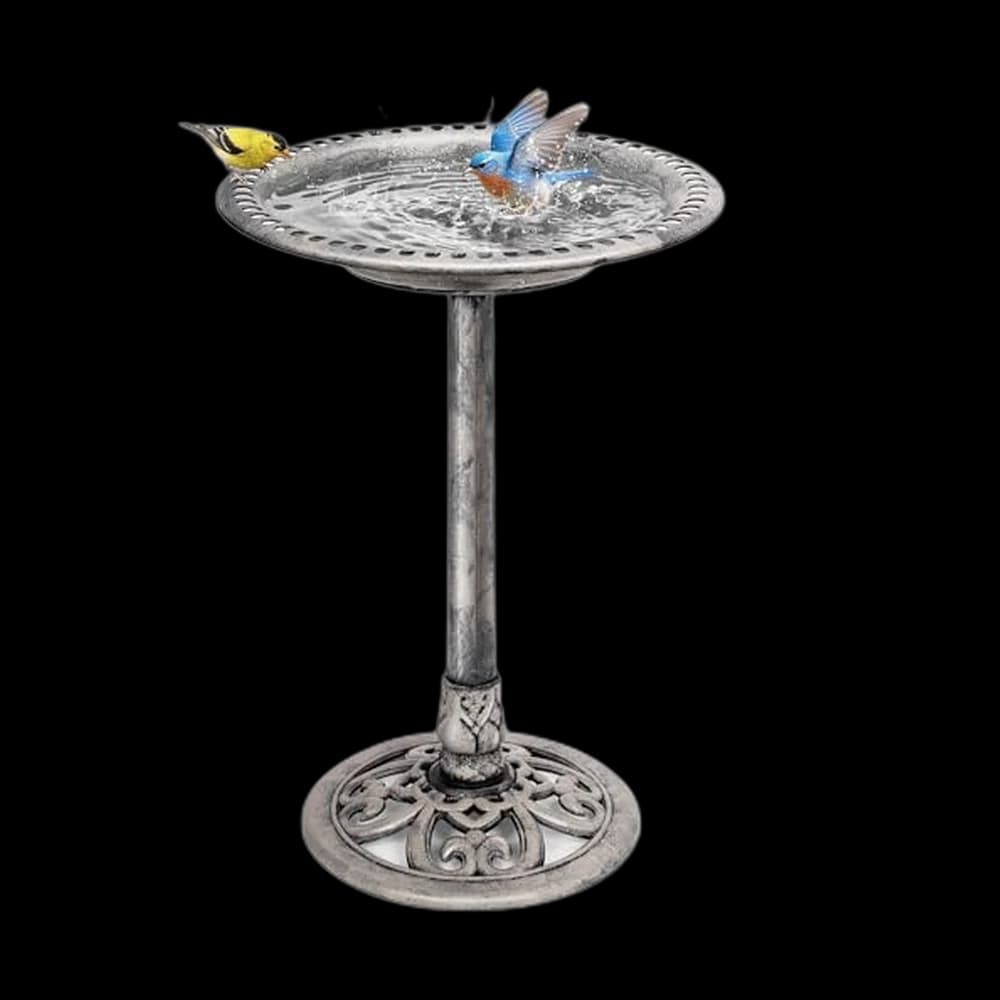
Top pickBest Choice 28in Pedestal
Budget gardeners wanting a decorative 28-inch resin pedestal bath holding 0.8 gallons.
Buy on Amazon$31.99
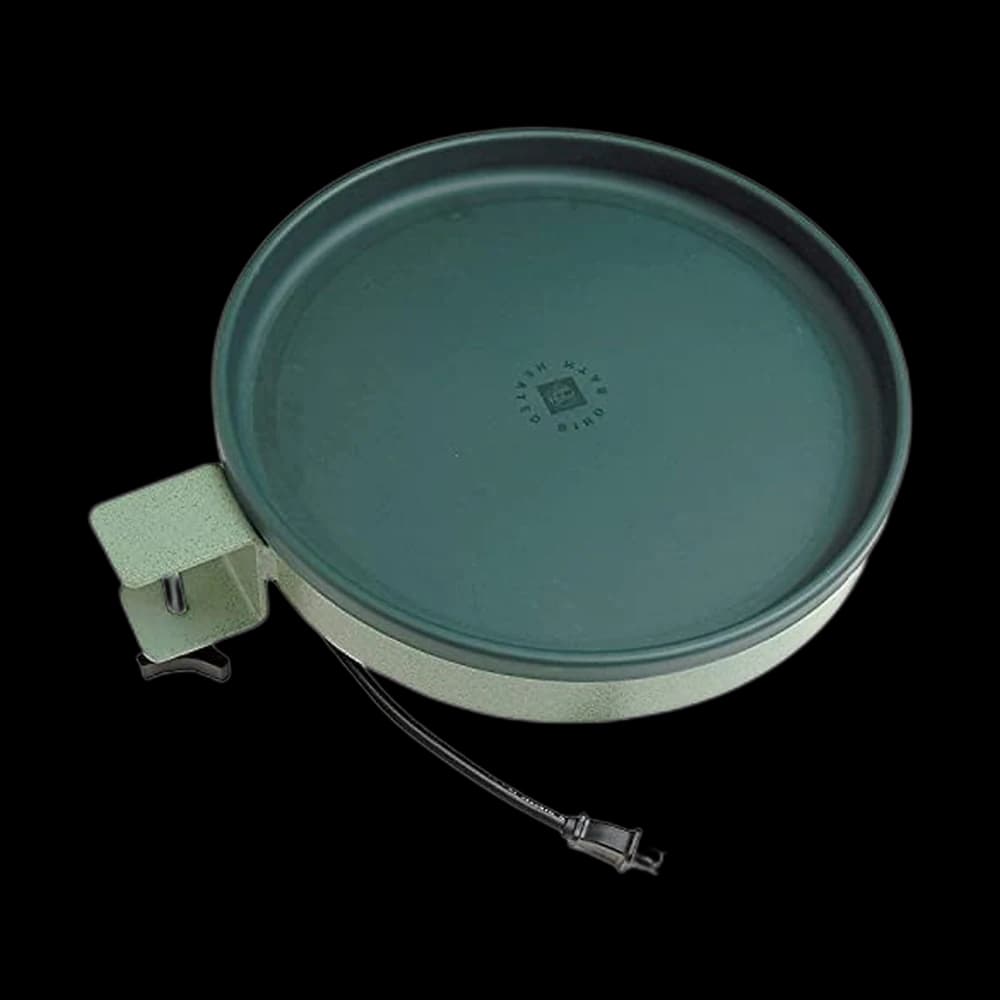
Great valueFarm Innovators Heated
Cold-climate birders wanting a thermostatic 75W deck-rail bath that only heats when needed.
Buy on Amazon$59.99
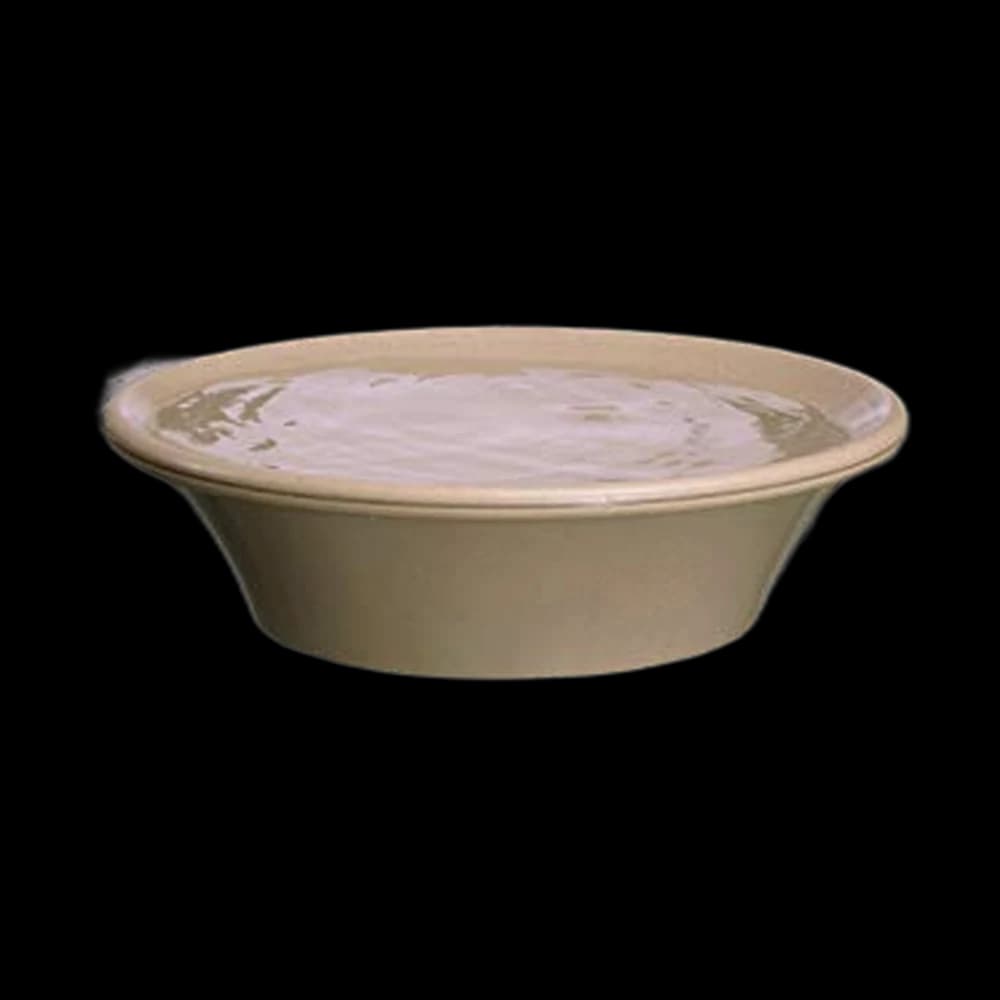
Cheapest alternativeVIVOHOME Solar Fountain
Birders wanting moving water to draw more visitors, with a solar fountain and gentle 2.4-inch bathing depth.
Buy on Amazon$52.98
Owner ratings come from Amazon; BirdingScore is our separate research score.
Compare two picks
Tap an unselected chip to compare it with your current right-hand pick — all 4 picks available.
BirdingScore
83/100
65/100
Skip it if
Wind is an issue, since the lightweight resin needs filling to stay stable and draws durability concerns.
You want a deep bath, since the 1-quart shallow saucer draws capacity and depth complaints. Rated 4.1 stars on about 1,900 ratings, just under our usual 4.3 bar.
Type
Pedestal birdbath
Saucer heated bath
Material
Polyresin
Powder-coated metal
Water capacity
0.8 gallons
1 quart
Basin depth
—
Shallow (saucer)
Heated
No
Yes (75W, thermostatic)
Mounting
Freestanding pedestal
Deck, clamp or ground

Who it's for
Any backyard birder who wants to grow their yard list fast — reliable water pulls in species that seed feeders never will, and open water in a hard February is the rarest resource a yard can offer.
Who should skip
Skip a decorative pedestal if you live where winter freezes solid and want year-round action — buy a heated model instead — and skip a bath entirely if you can't refresh and clean it every few days.
What matters when buying
- Shallow depth (about 1-2.5 inches) — small songbirds won't wade into deep basins, so the gentle 2.4-inch bathing depth on the VIVOHOME matters more than overall size.
- Winter heating — a thermostatic heater like the Farm Innovators unit only draws power when it's freezing, keeping water open when birds need it most.
- Material and stability — resin is cheap and light but tips in wind; a wide base or deck-rail mount keeps it upright.
- Moving water — a solar fountain or dripper adds motion and sound that draws far more visitors than a still basin.
Common mistakes
- Buying a basin too deep — birds ignore anything they can't stand in; depth, not diameter, is what brings them down.
- Assuming a decorative pedestal works in winter — unheated resin freezes solid exactly when open water is most valuable.
- Choosing looks over cleanability — a bath that's hard to scrub and refill grows algae and gets abandoned.
How we chose: We ranked five picks by our BirdingScore, weighing owner satisfaction and real backyard value from product specs and thousands of owner reviews. This is research, not hands-on testing — the ranking reflects depth, material durability, and genuine year-round usefulness.
The constraint-stacked answer
Depth decides who uses it, and winter decides whether it works at all. Small songbirds want an inch or two of standing water; the VIVOHOME records a 2.4-inch bathing depth and adds solar fountain motion. If your water freezes solid, an unheated resin pedestal sits idle through the months open water is worth most, which is the entire case for the heated models here.
Every pick, reviewed
83Bird
Best Choice Products
Best Choice 28in Pedestal
Decorative pedestal on a budget.
Skip it if: Wind is an issue, since the lightweight resin needs filling to stay stable and draws durability concerns.
4.4 Amazon(13,839)$31.99
65Bird
Farm Innovators, Inc.
Farm Innovators Heated
Thermostat-controlled deck-rail bath.
Skip it if: You want a deep bath, since the 1-quart shallow saucer draws capacity and depth complaints. Rated 4.1 stars on about 1,900 ratings, just under our usual 4.3 bar.
4.1 Amazon(1,923)$59.99
63Bird
VIVOHOME
VIVOHOME Solar Fountain
Moving water draws more birds.
Skip it if: You need a rock-steady, reliable bath, since buyers flag stability, durability, and pump reliability. Rated 4.0 stars on about 12,000 ratings, under our usual 4.3 bar.
4 Amazon(12,356)$52.98
62Bird
API
API Four Seasons Heated
Ice-free water through northern winters.
Skip it if: You want a thermostat or large basin, since it runs constantly and buyers flag stability and capacity. Rated 4.2 stars on about 200 ratings, just under our usual 4.3 bar.
4.2 Amazon(200)$119.99
From the birding community
What birders actually say about bird baths (incl. heated)
Recurring themes we found across 119 public discussion threads in r/birding, r/birdfeeding, read in July 2026. We summarise what comes up repeatedly and link the threads — we never quote or identify anyone, and these forums don't give us vote counts, so treat this as the shape of the conversation rather than a measured majority.
Comes up again and again
Moving water is the single biggest upgrade
Adding a dripper, wiggler or fountain is described again and again as a night-and-day change, because birds locate water by sound. Several people report species arriving that never came to a still bath.
Comes up again and again
Shallow is the specification that matters
Depth comes up constantly as the reason a bath goes unused. Small songbirds want an inch or two and a rough, grippable surface, and adding stones to a bath that is too deep is the standard fix.
Comes up again and again
In freezing regions a heated bath is treated as a genuine service
Winter water is described as harder for birds to find than winter food. A useful distinction that recurs: a drop-in de-icer works in any suitable basin and costs less than a heated bath, though it is one more cord to run.
The recurring complaint
Solar fountains underdeliver in predictable ways
Owners report solar pumps needing direct sun to run properly and stopping whenever a cloud passes. A separate note is that too strong a spray can put smaller birds off entirely.
The recurring complaint
Concrete baths crack if you leave them out in a freeze
Freeze damage to concrete and ceramic is a recurring seasonal complaint, and the advice is to empty and store them or switch to a purpose-built winter setup before the first hard frost.
What we didn't pick
Options we researched and catalogued but left off the list above, with the reason each one is being held back.
- Alpine 3-Tier Pedestal FountainHidden 2026-10-22: rated 3.8 stars on about 4,800 ratings, under our floor.
Guides for buying Bird Baths (incl. Heated)
Frequently asked
What is the single best upgrade to a bird bath?+
Moving water. Adding a dripper, wiggler or fountain is described again and again as a night-and-day change, because birds locate water by sound — several people report species arriving that never visited before.
How deep should a bird bath be?+
Shallow. Depth is the usual reason a bath goes unused: small songbirds want an inch or two and a rough, grippable surface. Adding stones to a bath that is too deep is the standard fix.
Do I need a heated bath in winter?+
In freezing regions it is treated as a genuine service, because winter water is harder for birds to find than winter food. A drop-in de-icer works in any suitable basin and costs less than a dedicated heated bath. Empty and store concrete or ceramic baths before a hard frost.
Sources & research (11)Show
- Cornell Lab of Ornithology — Attract Birds With Birdbaths — Depth of 1 inch at the edges to 2 inches in the middle; concrete baths are often too deep, glazed ones slippery, and concrete may crack below freezing; change water every day or two; never use antifreeze or glycerin
- Cornell Lab of Ornithology — Providing Water for Birds (BirdNotes, PDF) — Choose a basin you can clean easily with a gentle slope; concrete crevices must be scrubbed extra hard; raise the bath two or three feet where cats are a concern; dripping water draws birds
- Cornell Lab of Ornithology — What should I do if I find algae in my birdbath? — Scrub immediately with very hot water and a scouring brush; change water at least every three days; mosquitoes that breed in birdbaths are those most likely to carry West Nile virus
- National Wildlife Federation — Birdbaths — No more than three inches deep, textured interior surface for foothold, line with gravel or stones if too deep or slippery, and change standing water to avoid mosquito breeding
- Water for Wildlife: Bird Baths and Backyard Ponds | Penn State Extension — University extension source for the rough-versus-slick bottom (concrete and terra-cotta beat glazed pottery and smooth plastic), siting a bath 10–15 feet from cover so birds can spot cats, and drippers/misters as attractants.
- Birdbath Tips: Help Wild Birds by Creating a Clean Water Source in Your Yard | Sacramento Audubon Society — Backs the 1–2 inch water depth, adding gravel and flat rocks for grip and perching, refreshing water every 1–2 days, and the 1:9 vinegar-to-water scrubbing solution.
- How to Make a Birdbath | Audubon — Supports the shallow target depth (about 1 to 1.5 inches, pans no more than 2 inches) and adding pebbles or a flat stone so birds can judge the depth and enter confidently.
- Winterize Your Yard for Birds | Audubon — Supports the premise that many kinds of birds drink and bathe in open water in frigid weather, and the two hardware paths — a birdbath with a built-in heater or adding a heater to an existing summer bath.
- Bird Feeding Best Practices | Mass Audubon — Supports the regional case for a heated bath: water is scarcest in winter, so unfrozen water is heavily used, kept open by frequent refilling or an electric heater designed for the purpose.
- Should You Provide Water for Birds in Winter? | The Nature Conservancy — Documents birds grounded by frozen plumage after winter bathing; recommends a nonmetallic grille or stones so birds drink without submerging.
- Classic Heated Birdbaths | Farm Innovators — Manufacturer documentation for BD-75/GBD-75 thermostatic operation; running-cost example uses an explicitly assumed electricity rate.
Keep narrowing the choice
Prices and ratings shown are the most recent values we pulled from affiliate retailers and refresh on a recurring cycle; confirm the live price before buying. See how we score.