
How to Choose a Bird Bath: What Actually Matters
The ornamental concrete pedestal is the bird bath most people buy and the one Cornell steers you away from. Depth, texture and cleanability decide it.
Key takeaways
- Slope beats depth. Cornell's target is 1 inch at the edges sloping to 2 inches in the middle — a sloped basin offers every depth, a flat one offers just the wrong one.
- Buy for the brush. You are committing to changing the water every day or two, so a basin you cannot lift, tip and scrub in a minute will not get cleaned.
- Concrete is a consumable where it freezes. It cracks when the water inside it freezes, and its crevices hold algae. Resin is the forgiving pick.
- A dripper does more than a nicer pedestal. Moving water is the single cheapest upgrade to how many species show up.
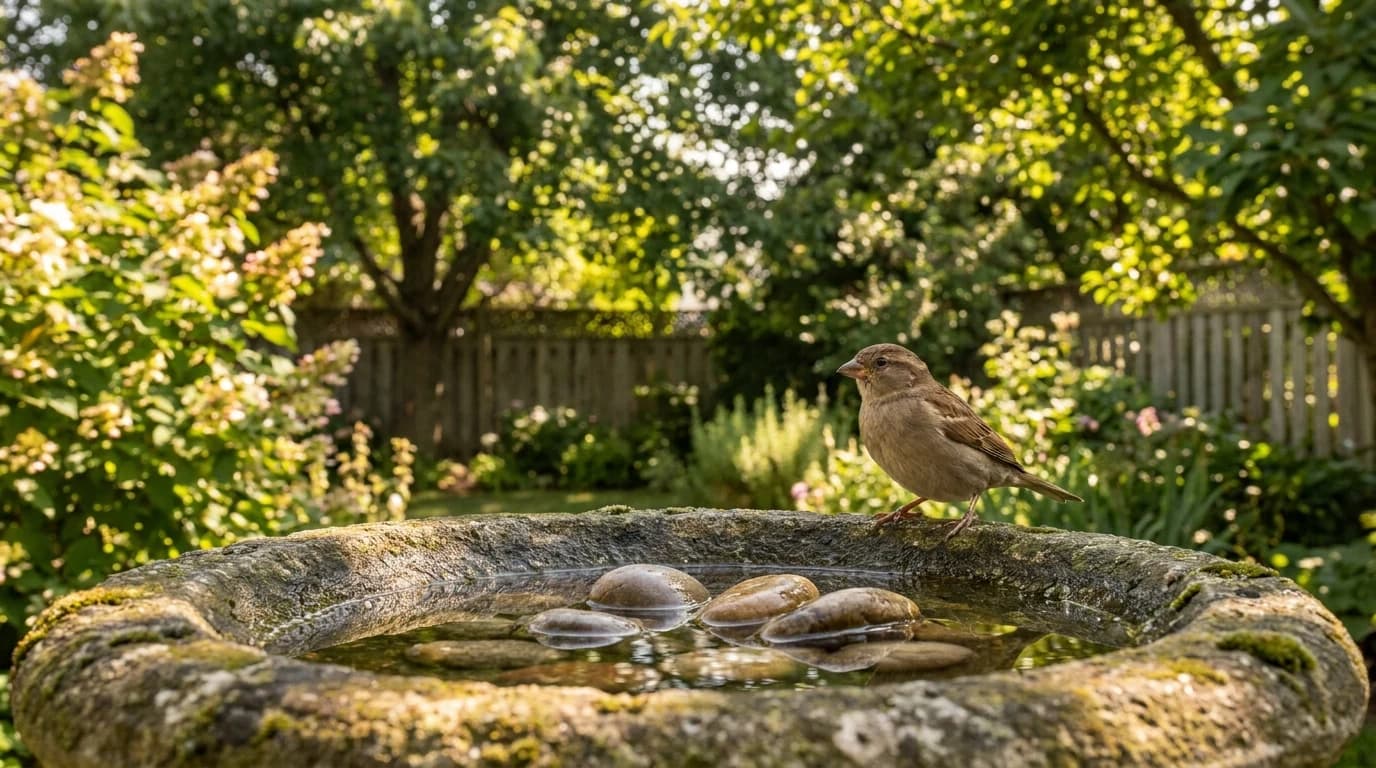
Walk into any garden center and the bird baths on display are nearly all the same object: a wide concrete basin on a fluted pedestal. It photographs beautifully. It is also the one design the Cornell Lab of Ornithology steers people away from.
That reframes the purchase. A bird bath is not sculpture that holds water — it is an artificial puddle you are asking wild animals to trust, and four unglamorous properties decide whether they ever will.
Why the classic pedestal is the wrong default
Cornell is blunt: the traditional concrete bath makes a nice lawn ornament but is not the best type for birds. Four failure modes stack up in one product:
- Too deep. Cornell's target is no deeper than 1 inch at the edges, sloping to a maximum of 2 inches in the middle; the National Wildlife Federation caps it at three. Ornamental basins are shaped to look generous, not to imitate a puddle.
- Too slippery. Glazed finishes are easy to wipe down and offer nothing to grip.
- Hard to clean. The Lab's water guide notes that concrete's tiny nooks and crevices must be scrubbed extra hard to dislodge algae and sediment.
- It cracks. Concrete splits when the water inside it freezes, which makes it a consumable in any cold climate.
Rule of thumb: shop the basin, not the pedestal. If it does not slope from nothing down to about two inches, you are buying a bowl with one depth — and adding stones to it on day one.
Depth is a slope, not a number
The spec that matters is not maximum depth. It is whether the basin slopes.
A flat-bottomed basin has one depth, so if that number is wrong the whole bath is wrong. A sloped basin offers every depth between zero and its maximum, letting a chickadee and a jay each find a place to stand. Cornell's advice is exactly that: look for a gentle slope birds can wade in from.
This is why no bath is quite right out of the box. Researching our bird bath shortlist, even the VIVOHOME solar fountain bath — which advertises its bathing depth as a selling point — lists it at 2.4 inches, above Cornell's ceiling. Stones are not a clever hack; they are standard equipment. The NWF says so directly: if a container is too deep or too slippery, line the bottom with gravel or stones.
Texture is a spec, and it is never on the box
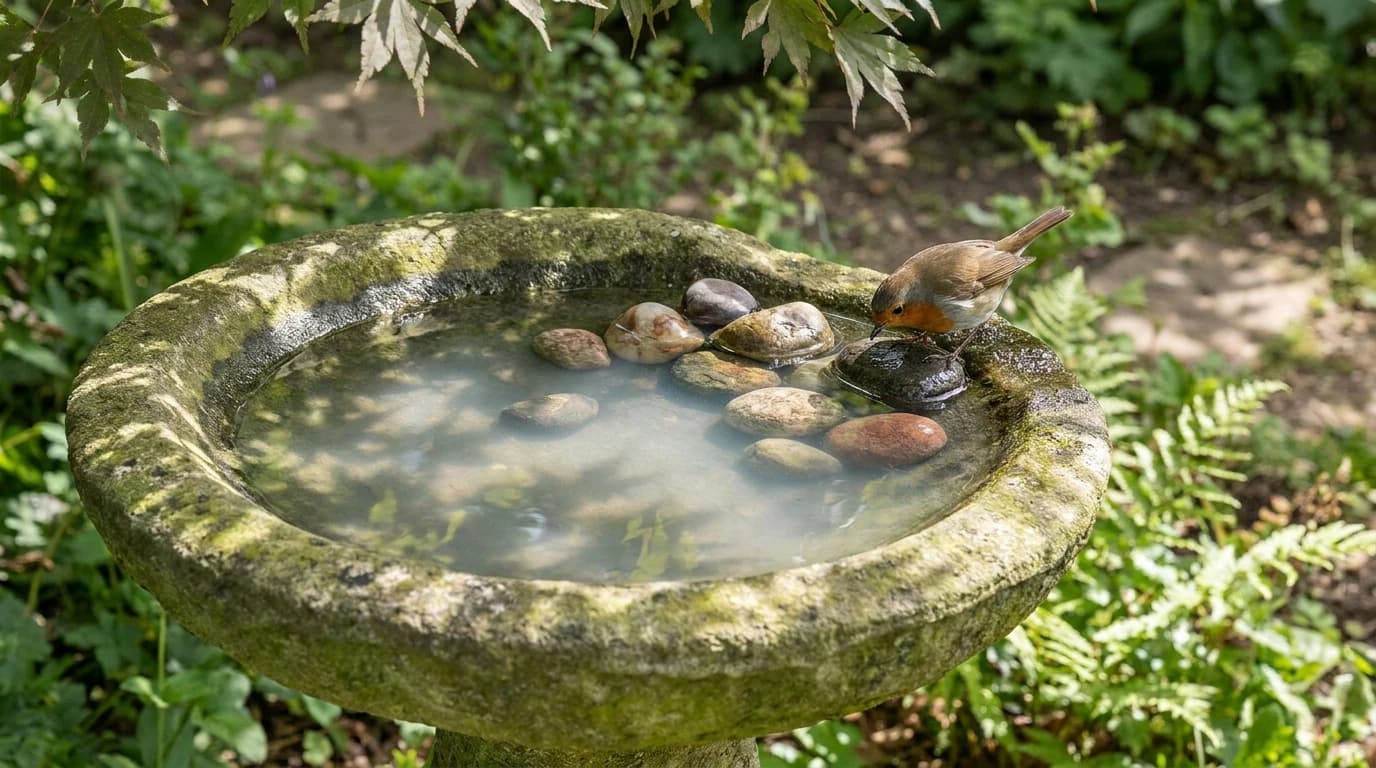
The NWF is explicit that the interior should be textured so birds get a foothold. No listing states this — you read it off the photograph, and the trade-offs run opposite to what looks appealing:
- A wide basin photographs generously — and means nothing if it is uniformly deep.
- A glazed finish wipes clean in seconds — and turns slick the moment it is wet.
- A smooth resin bowl resists staining — and gives claws nothing to hold.
- A rough, matte interior looks unfinished in a catalogue — and is the one birds use.
Cornell's fix for a slick basin is its fix for a deep one: sand in the bottom for footing.
What each material actually does
| Material | How it fails | Worth buying when |
|---|---|---|
| Concrete | Cracks when water freezes; crevices trap algae and take hard scrubbing | You are in a frost-free climate and will scrub it often |
| Glazed ceramic | Slick when wet; also cracks in a hard freeze | You can add sand or stones and bring it in for winter |
| Resin / polyresin | Light enough to blow over when empty | You want freeze tolerance and easy lifting — the most forgiving pick |
| Metal | Rarely sold as a plain basin — it arrives as a powered unit | You want winter water clamped to a deck rail |
Our shortlist skews to resin, matching Cornell's advice to pick a bath tough enough not to break if the water freezes or a dog knocks it over. The trade-off is real: a light basin must stay full to stay stable, a caveat the budget resin pedestal bath we researched carries.
Buy for the brush, not the bowl
This is the criterion most buying guides skip and the one you live with. Cornell says to change the water every day or two and to scrub immediately if algae appear, using very hot water and a scouring brush — every three days being the floor, more in warm weather.
That is a chore several times a week, and a health issue both ways: bathing birds leave droppings behind, and mosquitoes — including species carrying West Nile virus — lay eggs in standing bird bath water. Frequent changes stop them hatching.
So apply one test before buying:
- Can you lift it, or does the basin detach?
- Can you tip it out in one motion?
- Will a scouring brush reach the whole interior?
- Are there moulded grooves or tiers a brush cannot reach?
A bath that fails this test gets cleaned when you notice it is green, not every other day. Multi-tier fountains fail it almost universally.
Movement is the cheapest upgrade you can buy
Many birds find moving water irresistible, and Cornell singles out dripping water as what catches their attention. Between two baths, the one that takes a dripper beats the one with the nicer plinth. Three ways to get it:
- A commercial dripper or mister above the basin.
- A solar-fountain bath with the pump built in — convenient, though pump reliability is the common complaint here, and a solar pump stops in shade.
- Cornell's DIY version: punch a tiny hole in a bucket and hang it above the bath.
Winter changes the answer — but less than you think
Before spending on a heated model: Cornell says keeping a bath ice-free is not critical, because birds can usually get what they need from snow and dripping icicles. Open water in a hard freeze is a draw, not a necessity — we cover that trade in heated bird baths: do you actually need one?
If you do buy for winter, choose a thermostatically controlled heater on a ground-fault interrupted circuit — and put nothing in the water but water. Cornell is unambiguous: antifreeze is poisonous to all animals, birds included, and glycerin mats a bird's feathers, destroying the insulation that keeps it alive.
Never in the water: antifreeze, which is poisonous to birds and every other animal, and glycerin, which mats the feathers a bird depends on to stay warm.
Pick by your situation
Two buying levers fall out of where the bath ends up. Birds prefer water at ground level, where they meet it in nature — but Cornell suggests raising a bath two or three feet where cats are around. Height is a purchase decision, not only a placement one.
| If you… | Buy | Because |
|---|---|---|
| Live where water freezes solid | Resin, or a purpose-built heated bath | Concrete and ceramic crack; resin survives the freeze |
| Have cats around | A raised bath with open ground about it | Cornell suggests two or three feet of height |
| Want the widest range of species | Anything that takes a dripper | Moving water out-draws a still basin |
| Want the least maintenance | A shallow detachable basin | The only shape you can dump and scrub in under a minute |
| Are testing whether birds come at all | A plant saucer on the ground | Birds prefer water at ground level, and it costs almost nothing |
The honest summary: buy the shallowest, roughest, most easily dumped basin you can stand to look at, then spend the difference on a dripper. Getting birds to use it is a separate skill — and the cleaning discipline you'd give a bird feeder applies here, only more often.
Bath chosen — now get birds into it.
Frequently asked
What is the best depth for a bird bath?+
Cornell Lab of Ornithology puts it at no deeper than 1 inch at the edges, sloping to a maximum of 2 inches in the middle. The National Wildlife Federation caps it at three inches. What matters more than the maximum is that the basin slopes, so birds of different sizes can each find a spot to stand. If your bath is too deep, line the bottom with gravel or stones.
Are concrete bird baths bad for birds?+
They are the least suitable common type. Cornell notes that traditional concrete baths make nice lawn ornaments but are not the best choice for birds: they are often too deep, their crevices must be scrubbed hard to remove algae and sediment, and concrete cracks if the water in it freezes. A shallow, sloped, easily cleaned basin is a better buy at any price.
How often should I change bird bath water?+
Every day or two, according to Cornell, and at least every three days as an absolute floor — more often in warm weather. Frequent changes matter for two reasons: bathing birds leave droppings and dirty feathers behind, and mosquitoes, including species that carry West Nile virus, lay eggs in standing bird bath water.
Do I need a bird bath with a fountain?+
You do not need one, but moving water is the most effective upgrade available. Many birds find the sight and sound of moving water irresistible, and Cornell highlights dripping water in particular. A separate dripper works as well as a built-in pump and does not fail the way a solar pump can in shade.
Should I buy a heated bird bath?+
Only if your water freezes solid for long stretches. Cornell notes that keeping a bird bath ice-free in winter is not critical, because birds can usually get the water they need from snow and dripping icicles. If you do buy one, choose a thermostatically controlled heater and use a ground-fault interrupted circuit. Never add antifreeze or glycerin to the water.
Sources & further reading
We research from primary and authoritative sources. Where our guidance rests on a fact, here's where it comes from.
- Cornell Lab of Ornithology — Attract Birds With Birdbaths — Depth of 1 inch at the edges to 2 inches in the middle; concrete baths are often too deep, glazed ones slippery, and concrete may crack below freezing; change water every day or two; never use antifreeze or glycerin
- Cornell Lab of Ornithology — Providing Water for Birds (BirdNotes, PDF) — Choose a basin you can clean easily with a gentle slope; concrete crevices must be scrubbed extra hard; raise the bath two or three feet where cats are a concern; dripping water draws birds
- Cornell Lab of Ornithology — What should I do if I find algae in my birdbath? — Scrub immediately with very hot water and a scouring brush; change water at least every three days; mosquitoes that breed in birdbaths are those most likely to carry West Nile virus
- National Wildlife Federation — Birdbaths — No more than three inches deep, textured interior surface for foothold, line with gravel or stones if too deep or slippery, and change standing water to avoid mosquito breeding
Prices and BirdingScores reflect our most recent research and refresh on a cycle; confirm the live price before buying. We may earn a commission from affiliate retailers — it never changes our recommendations. See how we review.