
How to Clean a Bird Feeder (The Right Way)
Clean feeders every ~2 weeks with a 1:9 bleach-water soak, scrub, rinse, and dry fully before refilling. Dirty feeders spread deadly bird disease.
The short answer
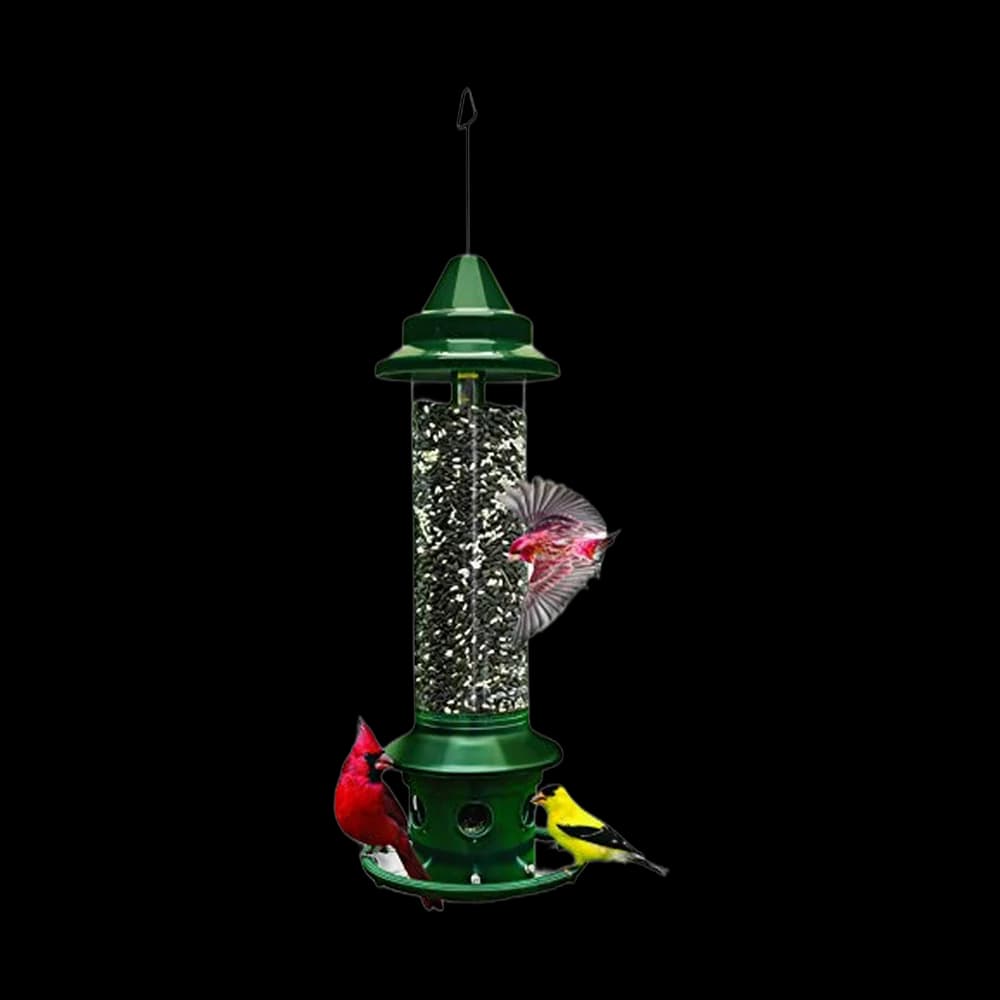
- Serious backyard feeders wanting the gold-standard 5.1 lb, 6-port squirrel-proof feeder with an adjustable weight spring.
- Skip if a premium squirrel-proof feeder price feels steep, since some buyers question the value and long-term durability.
Key takeaways
- Clean every ~2 weeks — bump to weekly in hot, humid summer weather, and every refill for nectar feeders.
- Use a 1:9 bleach-to-water soak for ~10 minutes, then scrub, rinse thoroughly, and dry fully before adding seed.
- Dirty feeders spread disease — salmonella and other outbreaks can kill birds, so hygiene is a safety issue, not just tidiness.
- Easy-clean designs help you actually do it — snap-apart bases and saucer feeders make the chore quick enough to keep up.
Pick by your situation
| If your situation is… | Pick | Why |
|---|---|---|
| You dread cleaning and skip it | A feeder that comes apart by hand, like the Squirrel Buster Plus | Stripping it down without tools removes the friction that makes people neglect the job |
| You've seen a sick or fluffed-up bird | Full 1:9 bleach soak, or take the feeder down 1-2 weeks | Bleach disinfects where vinegar can't, and a pause breaks the disease cycle |
| You run nectar feeders in summer heat | Clean at every refill, every 2-3 days | Sugar water ferments and grows mold fast, which can sicken hummingbirds |
A shortcut by situation — start from the row that sounds like you.
Tube & Hopper Feeders: our picks
| Pick | Best for | Rating | Price | |
|---|---|---|---|---|
| TopSquirrel Buster Plus Squirrel-proof Bird Feeder w/Cardinal Ring and… | The squirrel-proof gold standard. | ★ 4.7 Amazon | — | Check price → |
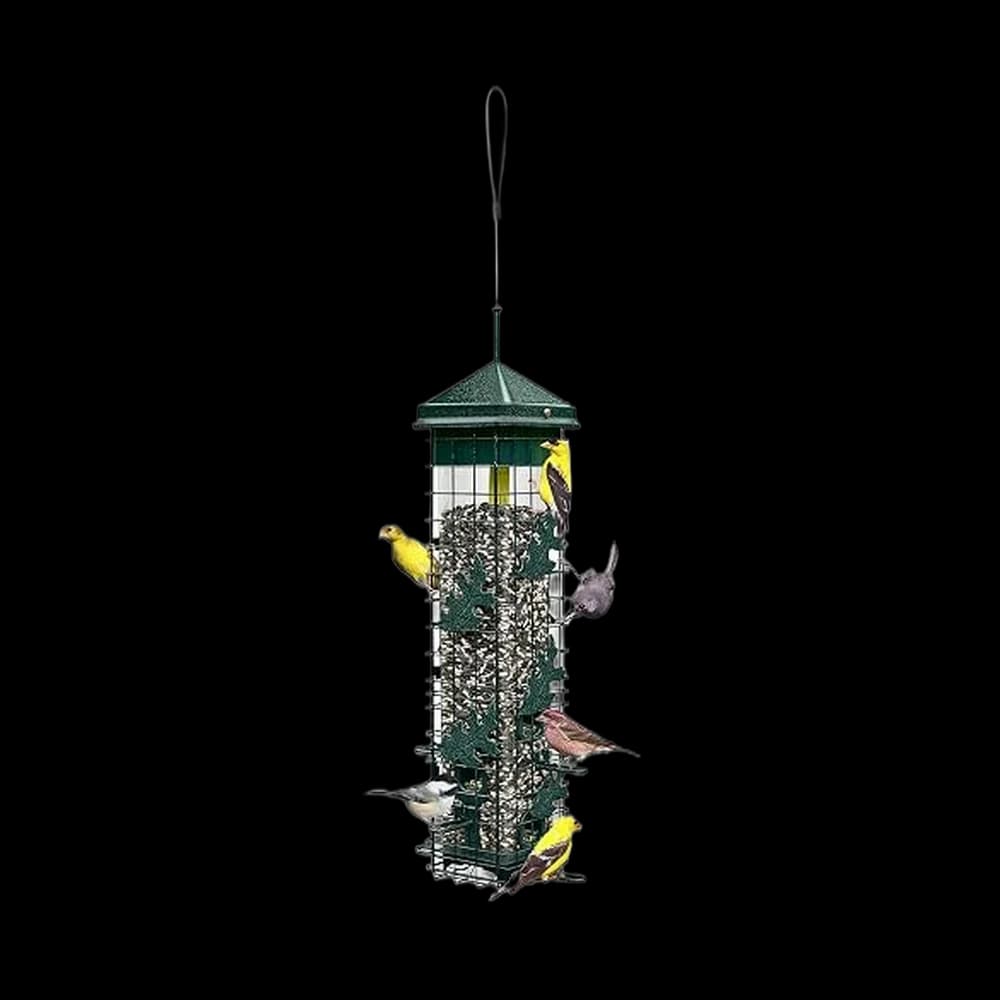 Squirrel Solution200 Squirrel-proof Bird Feeder w/6 Feeding Ports Squirrel Solution200 Squirrel-proof Bird Feeder w/6 Feeding Ports | Six ports and 3.4 lb behind a squirrel-closing shroud. | ★ 4.5 Amazon | $65.00 | Buy on Amazon |
Clean a bird feeder by taking it apart, soaking it for about 10 minutes in a 1 part bleach to 9 parts water solution, scrubbing every surface, rinsing thoroughly, and drying it completely before you refill. Do this every couple of weeks — more often in summer.
It sounds fussy, but it's the single most important thing you can do for the birds in your yard.
Why cleaning matters (this is serious)
A feeder crowds many birds onto shared surfaces, so it's a perfect place to pass around disease.
Worth knowing: a moldy, crusted feeder can spread salmonella, avian pox, and trichomonosis — outbreaks that can kill songbirds by the dozens. When in doubt, take it down and clean it.
The signs it's overdue
Watch for clumped or sprouting seed, black mold, a sour smell, or a sick, fluffed-up bird lingering at the feeder. If you see obviously ill birds, take the feeder down for a week or two to break the cycle.
How often to clean each feeder type
Frequency depends on the feeder and the weather. Wet food spoils faster, and sugar water ferments fast in heat.
| Feeder type | Cleaning frequency | Method |
|---|---|---|
| Tube / seed feeder | Every ~2 weeks (weekly in summer) | Bleach soak, scrub, rinse, dry |
| Hopper / platform | Every ~2 weeks | Same, plus sweep out old seed daily |
| Suet feeder | Every 2-4 weeks | Hot soapy water; degrease the cage |
| Nectar (hummingbird) | Every refill (every 2-3 days in heat) | Hot water, rinse; deep-clean weekly |
| Bird bath | Every 2-3 days | Scrub, refill with fresh water |
The step-by-step method
- Empty it and discard any old or clumped seed — don't top up over old food.
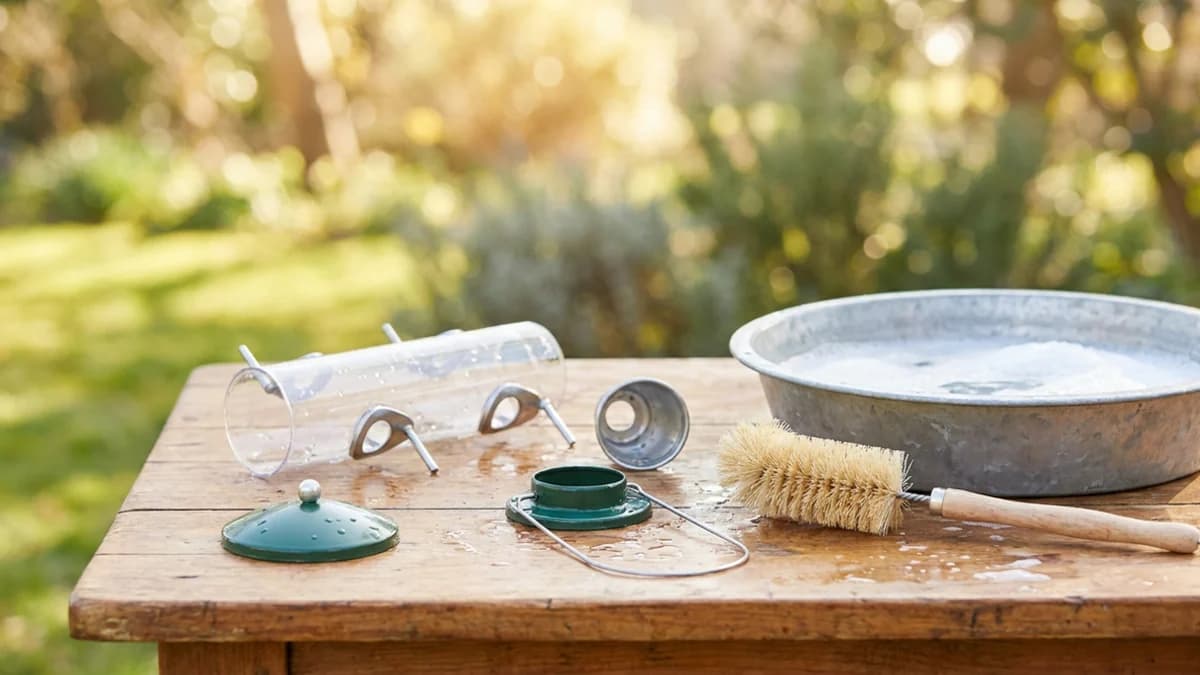
- Take it apart as far as it comes. Removable bases and perches are where gunk hides.
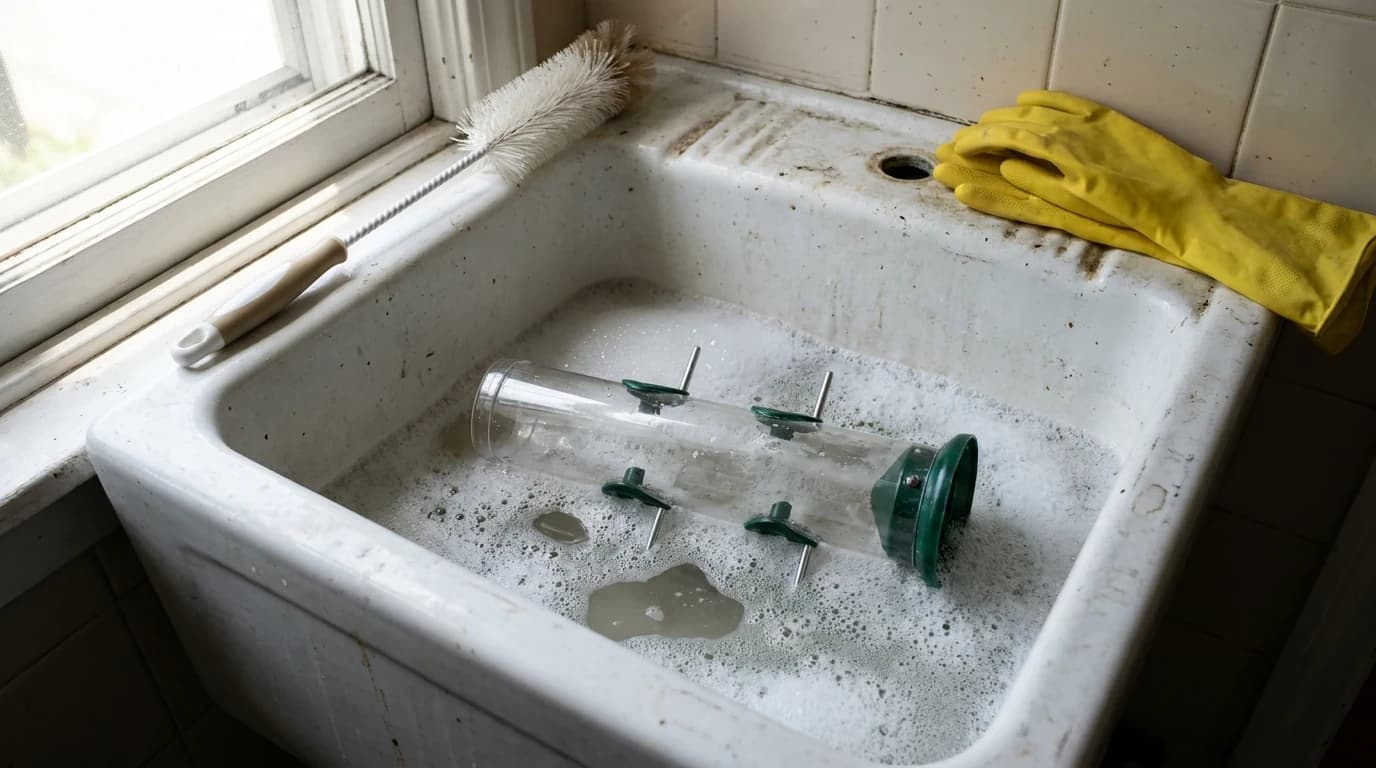
- Soak ~10 minutes in the 1:9 bleach-water solution (or hot soapy water for a lighter clean).
- Scrub every surface with a bottle brush — ports, perches, seams, and the base tray.
- Rinse thoroughly until there's no bleach smell at all.
- Dry completely, ideally in the sun, before refilling. Damp seed molds fast.
Wear gloves, and clean feeders outside or in a utility sink — not where you prep food.
Bleach vs. vinegar: what actually works
Diluted bleach (1:9) is the consensus disinfectant because it reliably kills bacteria and mold, then rinses away clean.
Use this on a feeder that's had sick birds around it:
- Diluted bleach at 1:9 — the only option here; vinegar is not a substitute.
- Plain dish soap and hot water as the lighter routine clean between deep cleans.
Don't reach for these:
- Vinegar on a moldy feeder — it cuts light grime, but birders report it's not a true disinfectant.
- Harsh detergents that leave residue behind on the ports and perches.
Easy-clean designs make the chore stick
The best feeder is the one you'll actually clean
Snap-apart bases turn a 15-minute job into a 3-minute one, and that difference is what decides whether the feeder gets cleaned in August.
The Squirrel Buster Plus dismantles by hand, without tools, for cleaning, so you get genuine access to the bottom, where mold starts. The Squirrel Solution 200 uses the same tool-free idea: Brome says it dismantles by hand into individual components, so each part can soak on its own.
Humid summers are the danger window
Across the US and Canada, that's when spoilage moves fastest — so a feeder that's easy to open is one you'll keep hygienic when it matters most.
Frequently asked
How often should you clean a bird feeder?+
Every couple of weeks as a baseline, and weekly during hot, humid summer weather when mold and bacteria grow fast. Nectar (hummingbird) feeders need cleaning at every refill — every 2-3 days in the heat. If you spot a sick bird, clean immediately or take the feeder down.
Can you use vinegar instead of bleach to clean a feeder?+
Vinegar is fine for routine light grime, but it isn't a reliable disinfectant. For a moldy feeder or one that's had sick birds nearby, use a 1 part bleach to 9 parts water solution, which the consensus recommends because it kills bacteria and mold and rinses away cleanly.
How do you clean a hummingbird feeder?+
Take it fully apart and wash with hot water at every refill, using a small brush to clear the feeding ports where mold hides. Rinse well and skip soap residue. Deep-clean weekly with a 1:9 bleach soak. Never use honey or red dye in the nectar — just 4 parts water to 1 part white sugar.
Do you need to take feeders down to clean them?+
Yes — a proper clean means taking the feeder apart and soaking it, which you can't do while it hangs. Taking it down also lets seed and droppings dry off the ground below. If sick birds appear, keep it down for a week or two to stop disease from spreading.
Sources & further reading
We research from primary and authoritative sources. Where our guidance rests on a fact, here's where it comes from.
- Preventing disease: What's the best way to clean your bird feeders? — Cornell Project FeederWatch study backing the 1:9 bleach solution, 10-minute soak, rinse, and full dry protocol.
- Sick Birds and Bird Diseases — Supports the claim that dirty feeders spread salmonella, avian pox, and trichomonosis, and that you should take feeders down when birds look ill.
- Is Your Bird Feeder Safe? (USGS National Wildlife Health Center) — USGS guidance that dirty feeders transmit disease and should be cleaned/disinfected regularly.
- Epidemiology of a Salmonella Typhimurium strain associated with a songbird outbreak (USGS) — Documents feeder-linked salmonella outbreaks killing songbirds, backing the 'outbreaks can kill songbirds by the dozens' claim.
Prices and BirdingScores reflect our most recent research and refresh on a cycle; confirm the live price before buying. We may earn a commission from affiliate retailers — it never changes our recommendations. See how we review.