
Best Hummingbird Feeders: Why Easy Cleaning Wins
Roundups rank hummingbird feeders by capacity. Authorities say clean yours every 1–3 days all summer — so cleanability is the spec that decides it.
The short answer
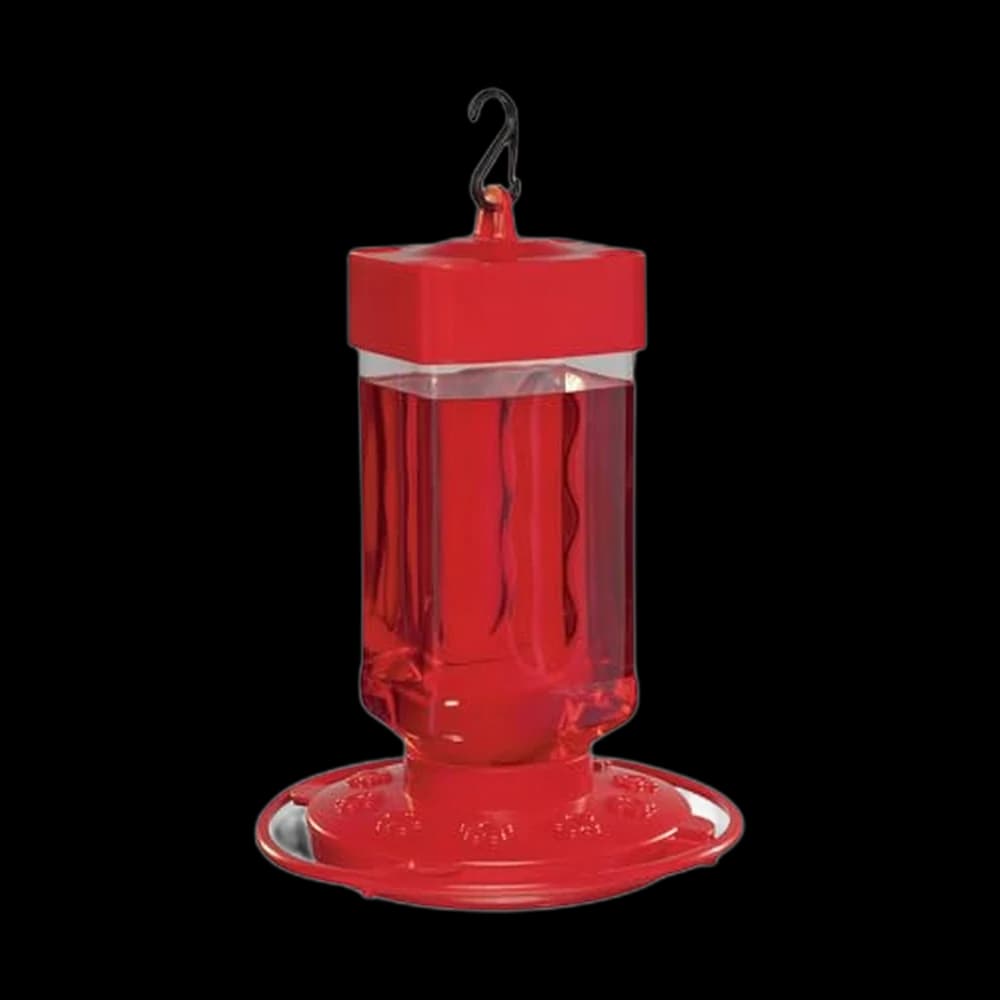
- Value-minded hosts of busy hummingbird traffic wanting a 32oz, 10-port feeder that's easy to clean.
- You want a dedicated ant or bee guard, or worry about long-term durability buyers flagged.
Key takeaways
- Cleanability is the spec, because you repeat it 24–120 times a season. Audubon says empty and clean every day or two in hot weather; Cornell Lab sets a floor of every 3–5 days; Project FeederWatch says ideally every refill.
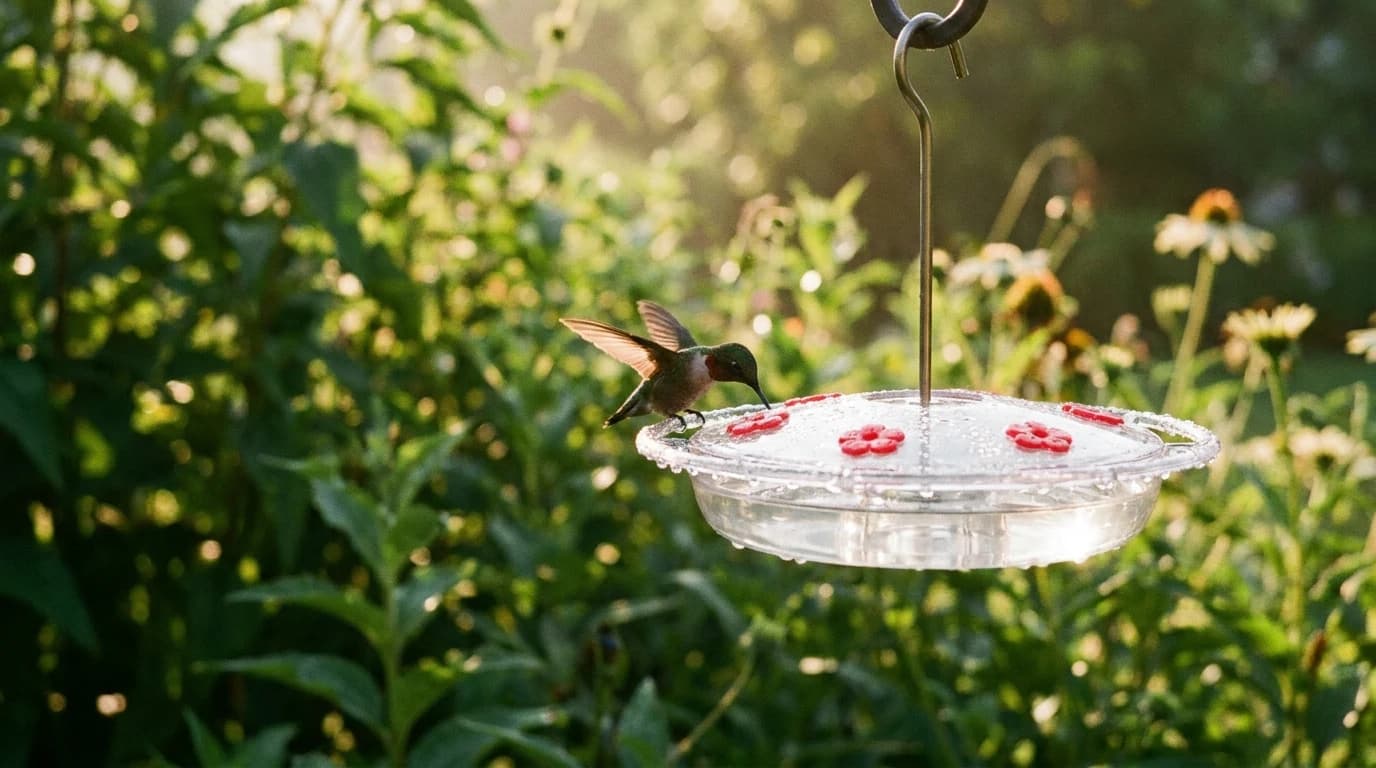
- An open saucer has no neck to reach. Cornell's cleaning instruction names a bottle brush because a classic inverted bottle needs one — that single design difference is what you are multiplying across a whole summer.
- Capacity is usually a liability. Audubon says discard unused nectar at every cleaning, so a 32 oz feeder in a quiet yard just means pouring more away. Buy volume only once the birds are draining what you have.
- A feeder nobody drinks from still spoils. A 2019 Royal Society study found visited and unvisited sugar solutions alike accumulated abundant microbes and shifted pH — low traffic is not a reason to stretch the schedule.
Pick by your situation
| If your situation is… | Pick | Why |
|---|---|---|
| If you want the least work per season | An open saucer design like the Aspects HummZinger HighView | Two reachable parts and no reservoir neck, so the wash that repeats dozens of times stays a rinse-and-scrub rather than a project |
| If your yard is genuinely busy | The First Nature 3055 | Ten ports cut squabbling and the wide-mouth reservoir keeps the capacity from costing you access — the only case where big is not a liability |
| If you want glass on the porch | The More Birds Vintage, and buy a bottle brush with it | A decorative bottle is a narrow neck by definition; owners flag leakage, so plan for the tool rather than discovering you need it in August |
| If you cannot commit to cleaning every few days in heat | Plant tubular flowers instead of hanging a feeder | Project FeederWatch's own advice is to shorten the season or garden for birds rather than run a feeder you cannot keep clean |
A shortcut by situation — start from the row that sounds like you.
Hummingbird Feeders: our picks
| Pick | Best for | Rating | Price | |
|---|---|---|---|---|
| TopFirst Nature Hummingbird Feeder with Wide-Mouth Reservoir and… | Cheap, big, and easy to fill. | ★ 4.5 Amazon | — | Check price → |
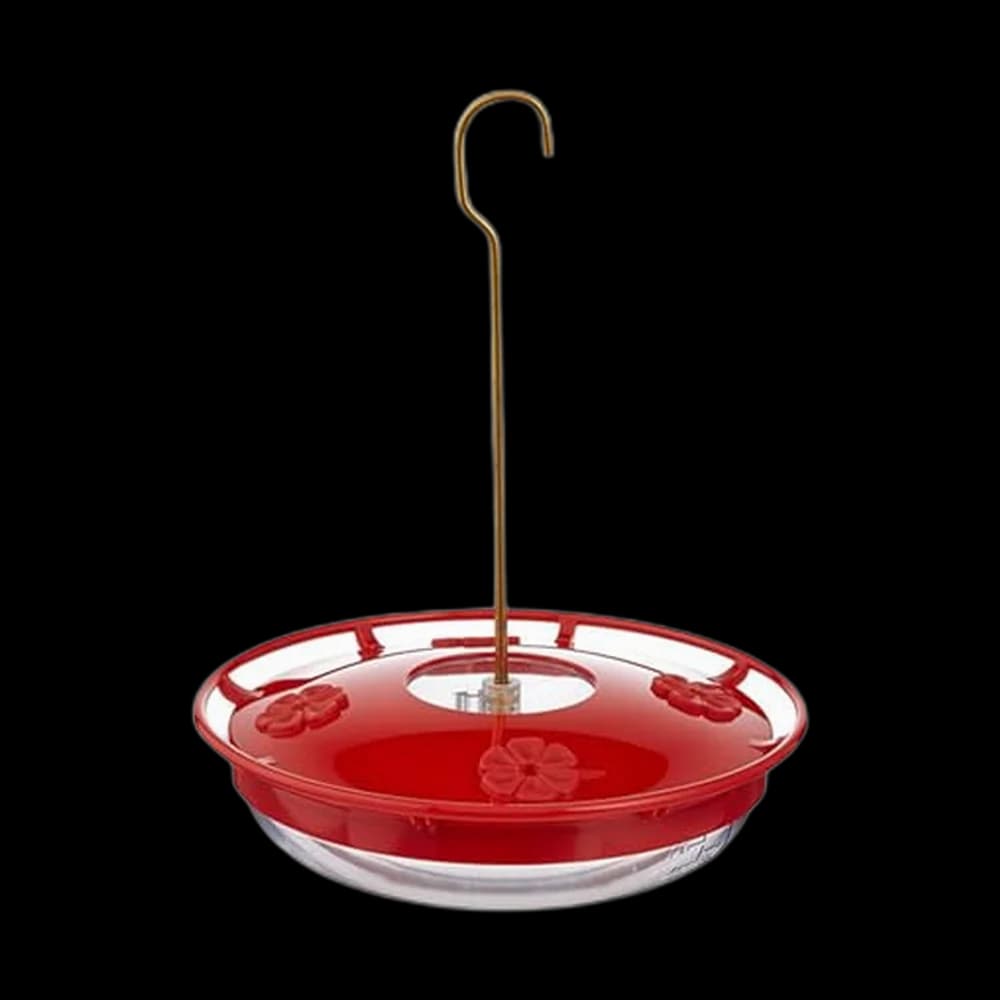 Aspects HummZinger HighView 12 Oz Hanging Hummingbird Feeder - 429,… Aspects HummZinger HighView 12 Oz Hanging Hummingbird Feeder - 429,… | The easy-clean saucer benchmark. | ★ 4.6 Amazon | — | Check price → |
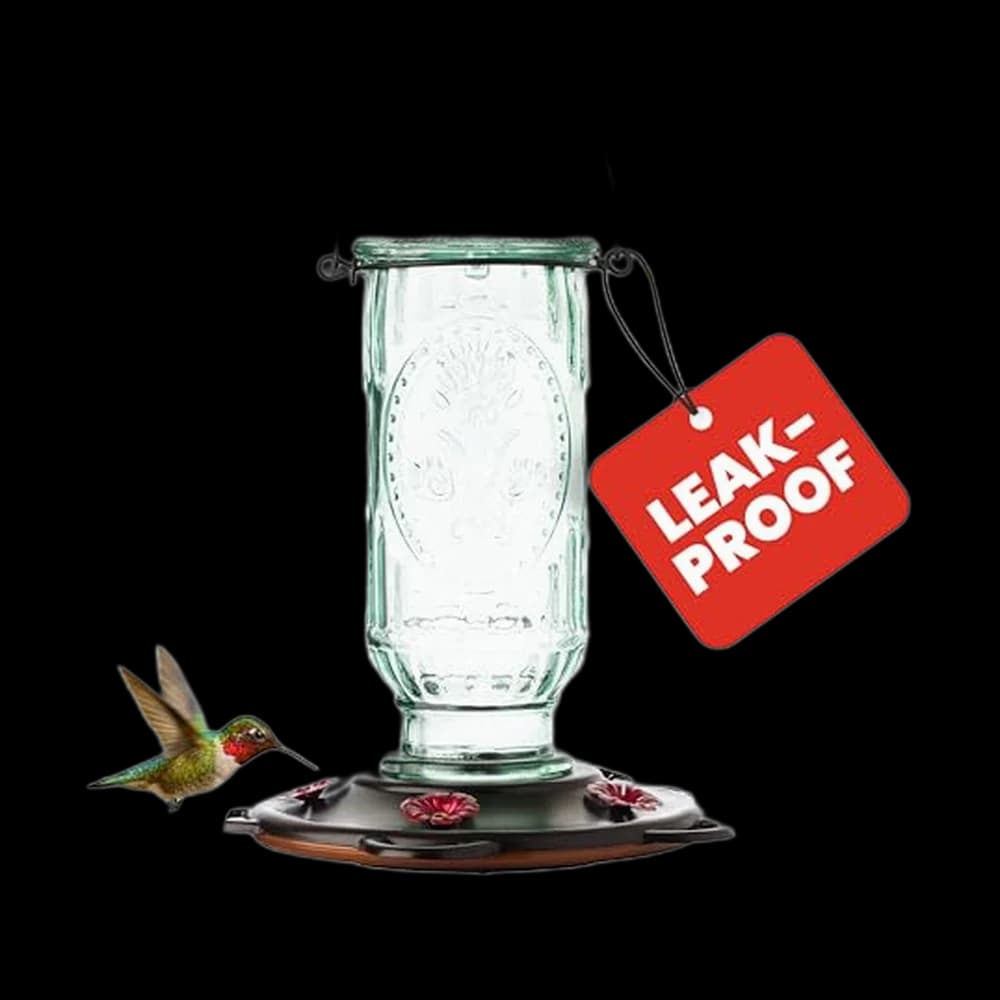 More Birds Vintage Glass Hummingbird Feeder, 20 oz Nectar Capacity More Birds Vintage Glass Hummingbird Feeder, 20 oz Nectar Capacity | Decorative glass with real ports. | ★ 4.3 Amazon | $31.98 | Buy on Amazon |
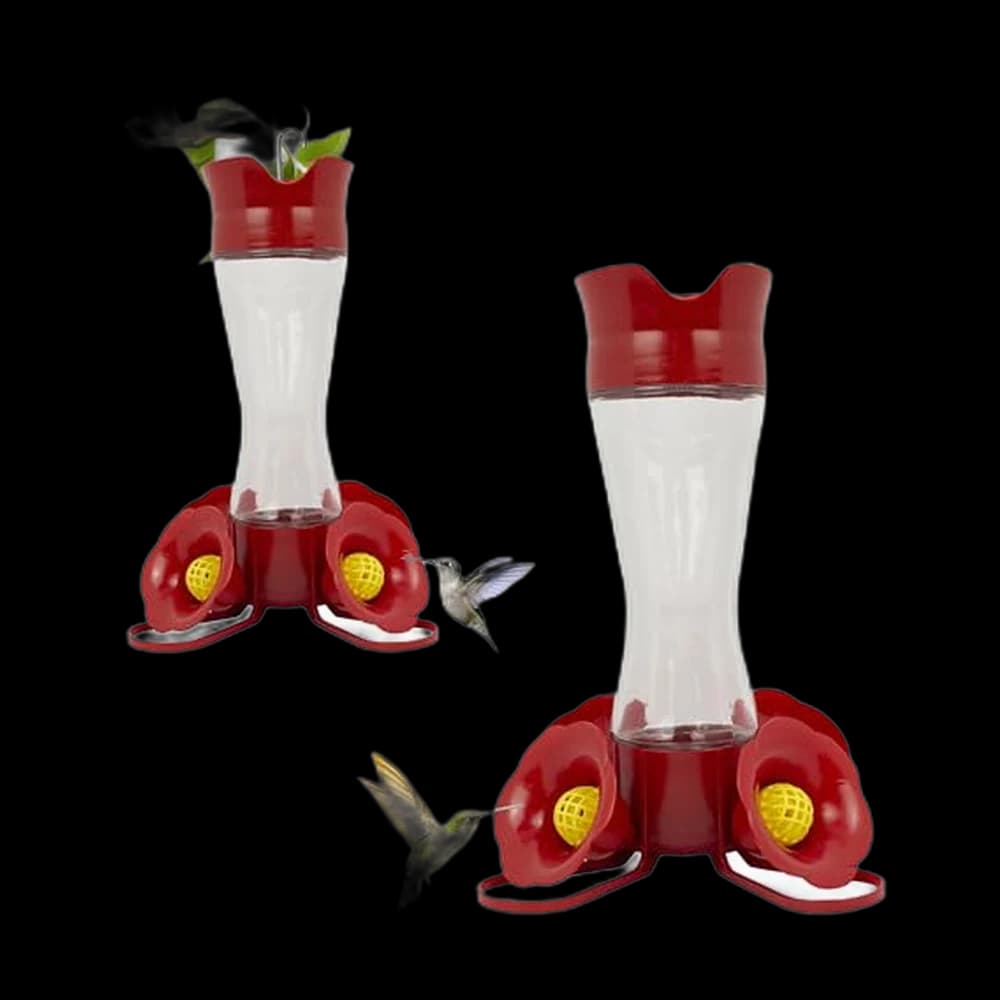 Perky-Pet Glass Hummingbird Feeders for Outdoors, 8 oz Nectar Capacity Perky-Pet Glass Hummingbird Feeders for Outdoors, 8 oz Nectar Capacity | Classic glass bottle look. | ★ 4 Amazon | $14.95 | Buy on Amazon |
Every hummingbird feeder roundup ranks the same four things: capacity, port count, material, looks. Then you read what ornithologists publish about running one, and it is the same instruction three ways — take it apart and wash it, every one to three days, all summer.
That is the real spec. A plain feeder you will disassemble a hundred times between June and September beats a beautiful one you quietly stop opening in July.
| Feeder | Design | Cleaning reality | Score | Price |
|---|---|---|---|---|
| First Nature 3055 | Bottle on a saucer base, 32 oz, 10 ports | Wide mouth, so a hand and a brush both fit | 85 | — · Amazon |
| Aspects HummZinger HighView | Saucer dish, 12 oz, 4 ports | Open basin, two parts, built-in ant moat | 79 | — · Amazon |
| More Birds Vintage | Glass bottle, 20 oz, 5 ports | Narrow glass neck, so bottle brush | 75 | $31.98 · Amazon |
| Perky-Pet pinch-waist glass | Glass bottle, 8 oz, 4 ports | Small, so it empties fast, but still a neck | 62 | $14.95 · Amazon |
Score is our BirdingScore, blending owner satisfaction with field value — how we score. We research feeders from specs and owner reports; we do not lab-test them.
The number that should decide this for you
Three authorities publish a cadence, and they bracket the same range.
| Source | Change the nectar | Deep clean |
|---|---|---|
| Audubon | Every 1–2 days in heat, every 3 in temperate, twice weekly when cool | At once on any mold, sick bird or insects |
| Cornell Lab | At least every 3–5 days, more in heat | Weekly, hot water and a bottle brush |
| Project FeederWatch | Every couple of days | Ideally every time you refill |
Now do the arithmetic nobody puts in a buying guide. A June-to-September season runs about 120 days. At Cornell's slackest published interval that is roughly 24 nectar changes; at Audubon's hot-weather cadence it is 60 to 120.
Why cleanability outranks everything: whatever the difference is between two designs — one extra part, one neck your fingers cannot reach — you are about to multiply it by a three-digit number. That is the entire argument for ranking feeders by cleanability first.
Project FeederWatch says the quiet part out loud: do not use feeders that cannot be thoroughly washed, and if you cannot keep up, shorten the season or plant for birds instead. An authority telling you not to buy the thing is worth taking literally.
Saucer versus bottle is a plumbing argument
An inverted bottle holds nectar in a sealed reservoir above the ports; a saucer holds it in an open dish below them. Almost every practical difference falls out of that. Cornell's cleaning instruction names a bottle brush — the tool is in the sentence because a classic bottle has a neck narrower than a hand.
What an open saucer buys you
- Two or three parts, all of them reachable without a tool.
- Nectar sitting below the ports, so gravity is not pushing it out of a leaky seal.
- A moat and bee-resistant ports are usually molded in, not bolted on.
What an inverted bottle buys you
- Far more volume per fill, which matters only if the traffic drains it.
- The look most people picture when they picture a hummingbird feeder.
- A visible nectar level you can read from the kitchen window.
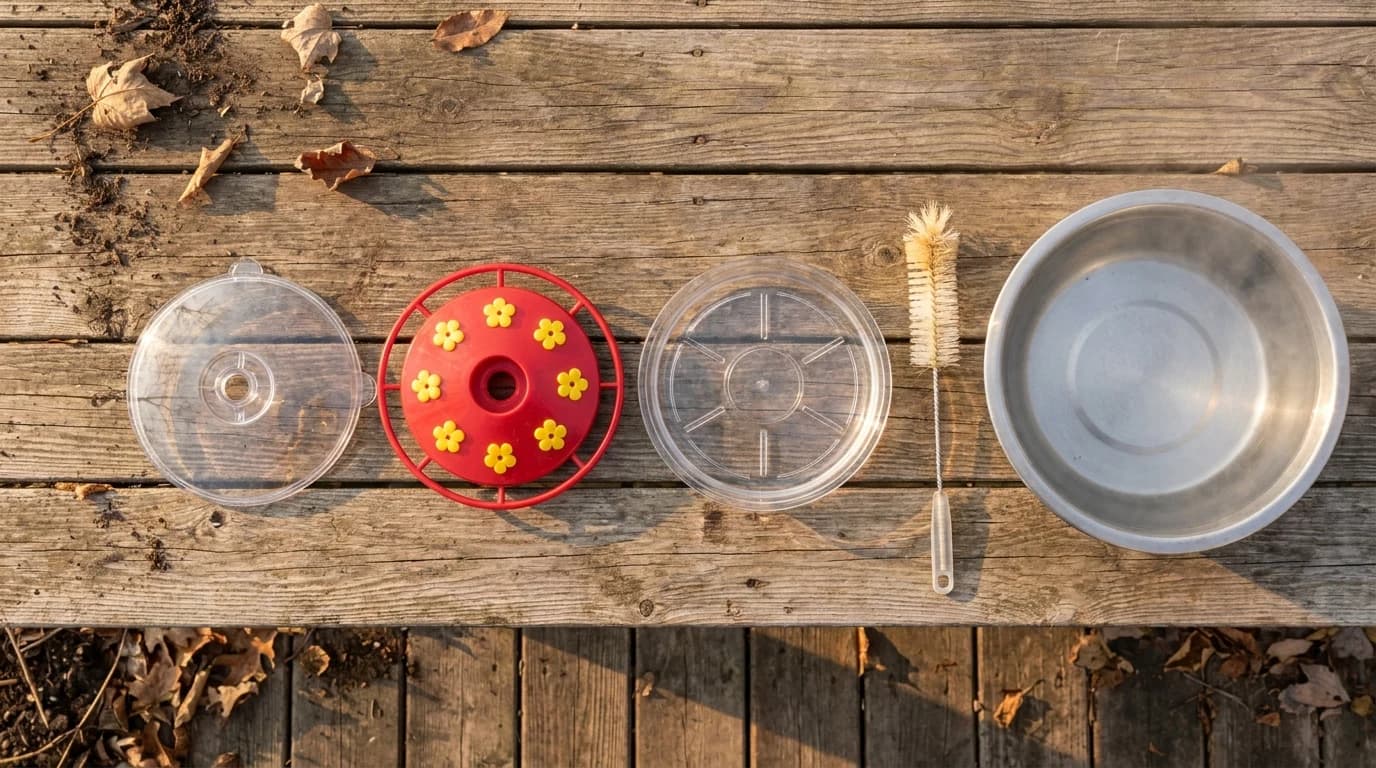
The First Nature splits the difference and that is why it scores highest here: it is an inverted reservoir with a wide mouth, so the capacity does not cost you the access.
Capacity is usually a liability
Audubon's guidance carries a line most listings would rather you skipped: always discard unused nectar when you take the feeder down to clean. Every ounce you buy is an ounce you may pour away every second day.
Rule of thumb: a 32 oz feeder in a two-hummingbird yard is not a bigger feeder. It is the same feeder with a larger disposal bill and more wetted surface to scrub.
Buy volume only where the birds already empty what you have — which inverts how every roundup ranks the field.
The lab result that changes the math
A 2019 study in Proceedings of the Royal Society B sampled feeders directly and found something the folk advice misses: both bird-visited and unvisited sugar solutions accumulated abundant microbial populations that shifted the solution's pH. A feeder nobody is drinking from is still going off on schedule.
A 2023 paper in Royal Society Open Science put a number on the fermentation, measuring ethanol in real hummingbird feeders peaking at about 0.05%, and found Anna's Hummingbirds drank 1% ethanol solutions as readily as plain sucrose while cutting consumption at 2%.
Where honesty is due: that same paper calls the taxa it recovered primarily non-pathogenic and says plainly the health consequences are unknown. The confident line you read everywhere — that a moldy feeder causes a fatal tongue infection — is one we could not trace to any published study. Clean on the published cadence because spoilage is measurable and the risk is unquantified, not because a blog statistic said it kills.
Ports, moats and guards: what is actually load-bearing
- Port count is a traffic feature, not a quality one. Ten ports cut squabbling in a busy yard and do nothing in a quiet one.
- An ant moat is a cup of water — a physical barrier that works, which is why the molded-in kind beats a bolted-on one.
- Bee guards are a geometry problem: a port deep enough for a bill and not a proboscis. In our owner-sentiment data the HummZinger is praised for bee resistance and neither glass bottle is.
- Never grease the hanger or ports. Cornell is explicit that oil and sticky substances risk contaminating the nectar. Move the feeder instead.
The one point two authorities contradict each other on
Worth knowing before you buy something fiddly, because it decides how long a wash takes. Audubon advises avoiding dish soaps, which can leave harmful residue in the feeder. Cornell's All About Birds says not to use soap or a detergent. Project FeederWatch — also a Cornell Lab program — says to wash the parts with warm water and dish soap and rinse thoroughly.
The safe common denominator: all three agree on hot water and a brush, and all three accept a dilute bleach soak with a thorough rinse and full air-dry. Stand there, and the feeder to own is the one that makes it painless.
The full routine is in cleaning a bird feeder.
Fill it one part plain white sugar to four parts water — Audubon's ratio, no red dye, no honey. Our nectar calculator scales any batch, and how to attract hummingbirds covers placement.
And late August is the wrong moment to retire a feeder: migrants are moving through and need the fuel, and yours cannot hold a bird back — the regional answer is in when to take down hummingbird feeders.
Ready to compare the full field?
Frequently asked
How often do hummingbird feeders really need cleaning?+
The published cadences bracket a range. Audubon says empty and clean the feeder every day or every other day in hot weather, every three days in temperate weather and twice a week when it is cool — and immediately if you see mold inside, a sick bird, or insects getting in. Cornell Lab's All About Birds sets a floor of changing the sugar water at least every three to five days with a weekly deep clean. Project FeederWatch goes furthest, saying every couple of days and ideally every time you refill. Across a four-month season that is somewhere between roughly 24 and 120 cleanings.
Is a saucer feeder really easier to clean than a bottle feeder?+
Structurally, yes. A saucer holds nectar in an open dish below the feeding ports, so every wetted surface is reachable by hand. An inverted bottle holds it in a sealed reservoir above the ports, and a traditional one has a neck narrower than your hand — which is why Cornell Lab's cleaning instruction specifically names a bottle brush. A wide-mouth reservoir, like the one on the First Nature 3055, closes most of that gap while keeping the capacity.
Does a bigger hummingbird feeder save me work?+
Usually the opposite. Audubon's guidance is to discard any unused nectar whenever you take the feeder down to clean, and the cleaning schedule is set by temperature rather than by how empty the feeder is. So in a light-traffic yard a large feeder means pouring more nectar away on the same cadence, plus more surface area to scrub. Buy extra capacity only once your birds are visibly draining what you already have.
Should I use dish soap on a hummingbird feeder?+
The authorities genuinely disagree here. Audubon advises avoiding dish soaps because they can leave harmful residue in the feeder, and Cornell Lab's All About Birds says not to use soap or detergent. Project FeederWatch, which is also a Cornell Lab program, says to take the feeder apart and wash the parts with warm water and dish soap, then rinse thoroughly. All three agree on hot water and a brush, and all three accept a dilute bleach soak followed by a thorough rinse and complete air-drying, so that is the common ground to stand on.
Does mold in a hummingbird feeder actually kill birds?+
It is asserted constantly and sourced rarely. The clearest published work we found is a 2019 Proceedings of the Royal Society B study, which showed feeders accumulate abundant microbial populations and shift the solution's pH — but described the taxa it recovered as primarily non-pathogenic and stated outright that the effect on hummingbird health is unknown. The widely repeated claim that mold causes a fatal tongue infection is one we could not trace to a published study. Fermentation is measurable and spoilage is real, so clean on the published cadence; just do not repeat a statistic nobody can source.
Sources & further reading
We research from primary and authoritative sources. Where our guidance rests on a fact, here's where it comes from.
- Hummingbird Feeding FAQs | Audubon — Cleaning cadence (every day or two in hot weather, every three days in temperate, twice weekly when cool, and immediately on mold, a sick bird or insect encroachment); 1:4 white sugar to water; no red dye; avoid dish soaps because of residue; always discard unused nectar when taking the feeder down to clean.
- How to Clean Your Bird Feeder | All About Birds, Cornell Lab of Ornithology — Change hummingbird nectar at least every 3–5 days to prevent mold and fermentation, more often in hot weather; clean at least weekly with hot water and a bottle brush; do not use soap or detergent; do not put oil or sticky substances around feeding ports to deter bees.
- Feeding Birds — Project FeederWatch, Cornell Lab of Ornithology — Clean hummingbird feeders every couple of days, ideally every time you refill; take apart and wash with warm water and dish soap, rinsing thoroughly; do not use feeders that cannot be thoroughly washed; if you cannot keep up with feeder care, feed for a shorter season or garden for birds instead.
- Microbial communities in hummingbird feeders are distinct from floral nectar and influenced by bird visitation (Proc. R. Soc. B, 2019) — Bird-visited and unvisited feeder solutions both accumulated abundant microbial populations that changed solution pH; the taxa recovered were primarily non-pathogenic bacteria and fungi, and the paper states the impact on hummingbird health is unknown.
- Hummingbird ingestion of low-concentration ethanol within artificial nectar (R. Soc. Open Sci., 2023) — Ethanol measured within hummingbird feeders peaked at about 0.05%; Anna's Hummingbirds did not discriminate between 0% and 1% ethanol solutions but significantly reduced consumption of a 2% solution.
Prices and BirdingScores reflect our most recent research and refresh on a cycle; confirm the live price before buying. We may earn a commission from affiliate retailers — it never changes our recommendations. See how we review.