
How to Attract Hummingbirds: Nectar Recipe + Feeder Tips
Attract hummingbirds with the right nectar: 4 parts water to 1 part white sugar, no red dye, no honey. Here's the full setup.
The short answer
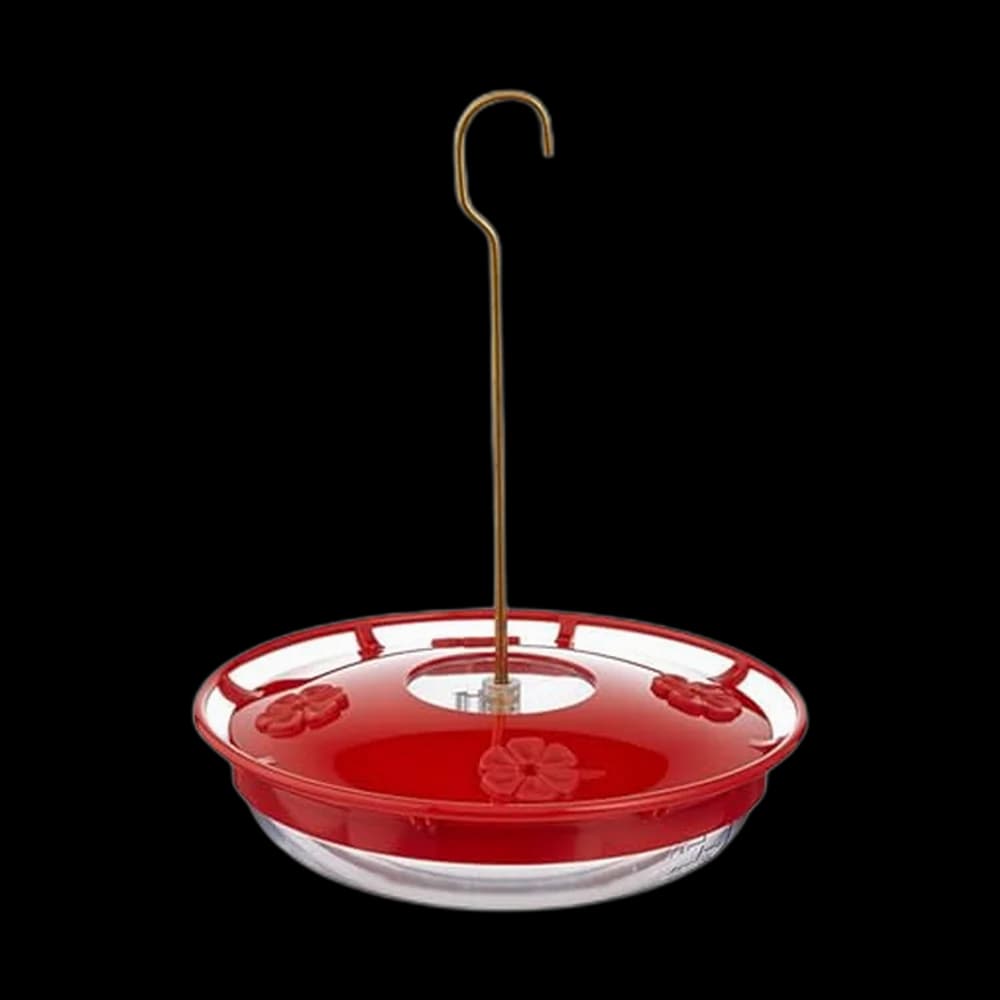
- Birders wanting the easy-clean saucer benchmark: unbreakable polycarbonate, built-in ant moat, and bee-resistant ports.
- You need high capacity: it holds just 12oz across 4 ports for busy yards.
Key takeaways
- The nectar recipe is 4:1 — four parts water to one part plain white sugar. Nothing else.
- Use plain white sugar; skip honey and dye. Honey can support bacterial and fungal growth when diluted, and red coloring is unnecessary.
- Clean thoroughly at every refill. Replace nectar within 2–3 days, daily in very hot weather, and sooner if cloudy or moldy.
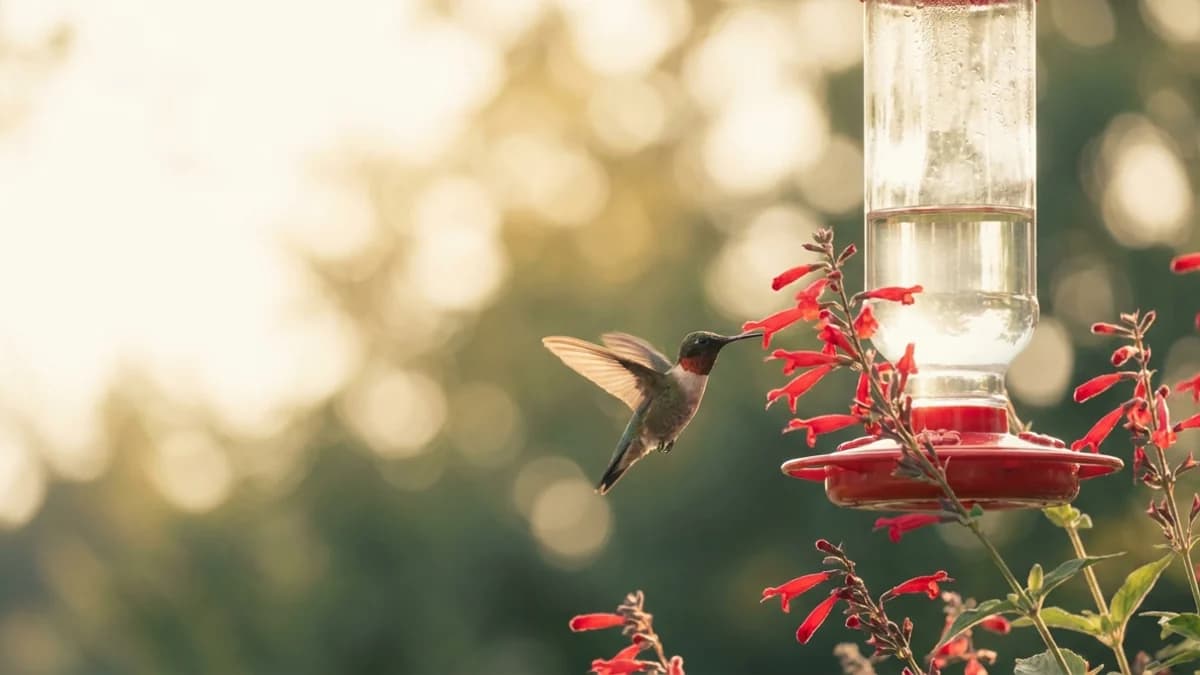
- Red attracts them, flowers keep them. A red feeder plus red tubular blooms is the winning combo.
Pick by your situation
| If your situation is… | Pick | Why |
|---|---|---|
| If you want the easiest feeder to keep clean | A saucer-style feeder like the HummZinger | A saucer has no bottle to scrub, so reaching every port at each refill is quick |
| If you're on a tight budget | The First Nature 32 oz | Cheap, big (10 ports) and easy to fill — fine for getting started |
| If ants and bees keep invading | A feeder with a built-in ant moat and bee guards | Physical barriers keep insects out of the nectar ports |
A shortcut by situation — start from the row that sounds like you.
Hummingbird Feeders: our picks
| Pick | Best for | Rating | Price | |
|---|---|---|---|---|
| TopAspects HummZinger HighView 12 Oz Hanging Hummingbird Feeder - 429,… | The easy-clean saucer benchmark. | ★ 4.5 Amazon | $33.95 | Buy on Amazon |
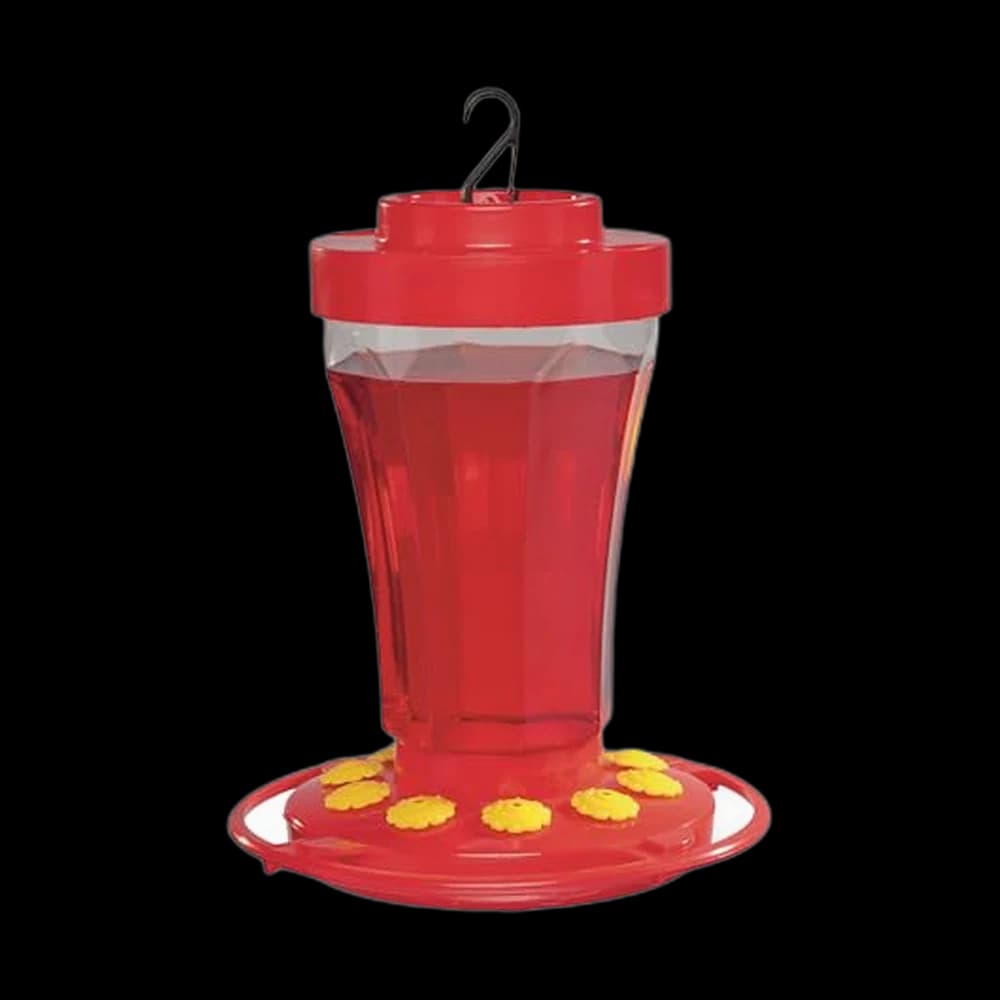 First Nature 32 oz Hummingbird Flower Feeder First Nature 32 oz Hummingbird Flower Feeder | Cheap, big, and easy to fill. | ★ 4.5 Amazon | $16.49 | Buy on Amazon |
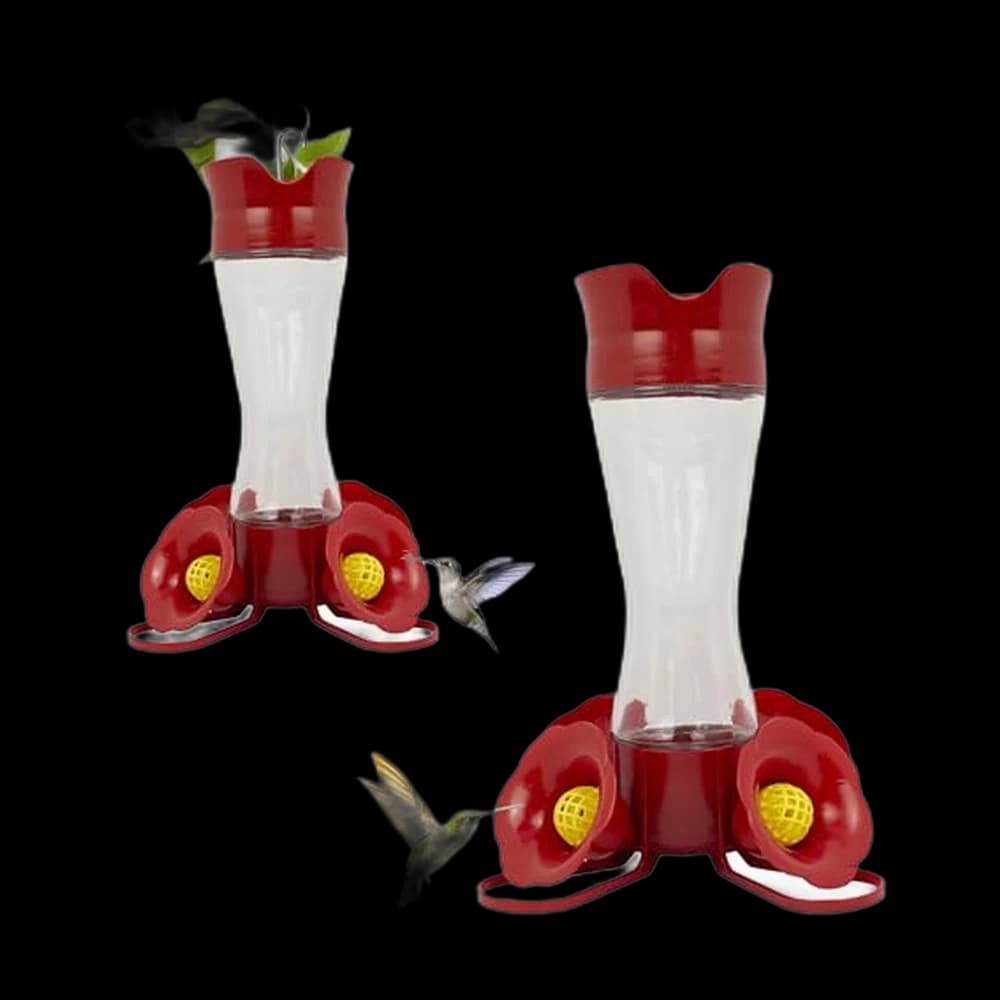 Perky-Pet Glass Hummingbird Feeders for Outdoors, 8 oz Nectar Capacity Perky-Pet Glass Hummingbird Feeders for Outdoors, 8 oz Nectar Capacity | Classic glass bottle look. | ★ 4.1 Amazon | $16.15 | Buy on Amazon |
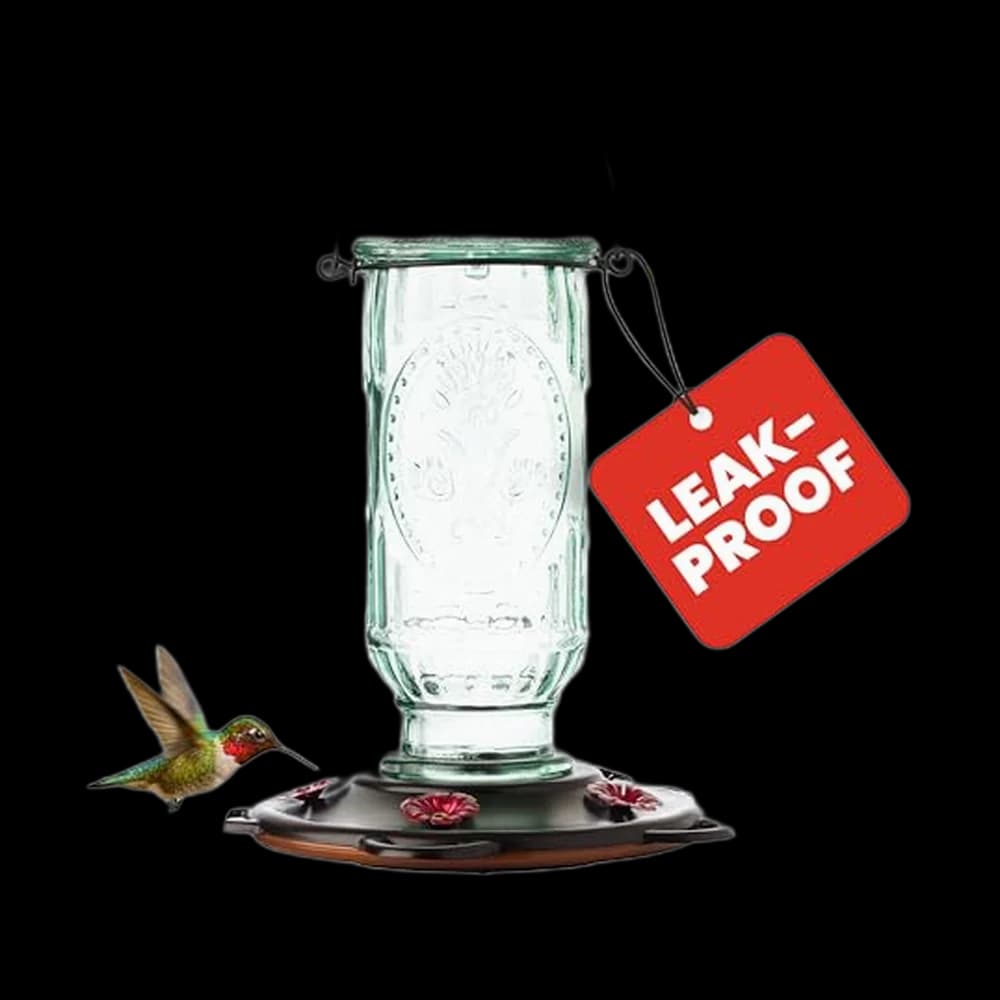 More Birds Vintage Glass Hummingbird Feeder, 20 oz Nectar Capacity More Birds Vintage Glass Hummingbird Feeder, 20 oz Nectar Capacity | Decorative glass with real ports. | ★ 4.6 Amazon | $31.98 | Buy on Amazon |
The recipe is the easy part (work out any batch size); freshness is what keeps hummingbirds coming back. Nectar spoils, so the real commitment is replacing it within two or three days — daily in very hot weather — and washing the feeder each time. Shade slows spoilage, so hang it out of direct sun.
Hummingbirds burn enormous energy and remember reliable feeders, so a clean feeder with fresh nectar, plus a little red in the garden, can become a regular stop through spring and summer.
The only nectar recipe you need
Use 4 parts water to 1 part refined white granulated sugar, and that's it. Smithsonian's recipe and Audubon's recipe agree on that everyday 4:1 ratio. Measure the water first: the table lists ingredients, not the volume of nectar you end up with.
| Measured water | White sugar |
|---|---|
| 1/2 cup | 1/8 cup |
| 1 cup | 1/4 cup |
| 2 cups | 1/2 cup |
| 4 cups | 1 cup |
Use the nectar calculator for other batch sizes. Mix it separately rather than by the feeder's capacity, and make only as much as the feeder will empty before it's due for a change.
Stir until the sugar fully dissolves. Smithsonian says boiling isn't necessary and tap water is fine; Audubon's version uses boiling water, then cools it. If you heat it, let it cool before filling. You can refrigerate a spare batch for up to a week, Smithsonian's limit; discard it if it turns cloudy or moldy.
Never use honey, brown or raw sugar, artificial sweeteners, or red food coloring. Diluted honey can grow bacteria and fungus, and dye is unnecessary — a red feeder does the attracting.
Keep it fresh or lose the birds
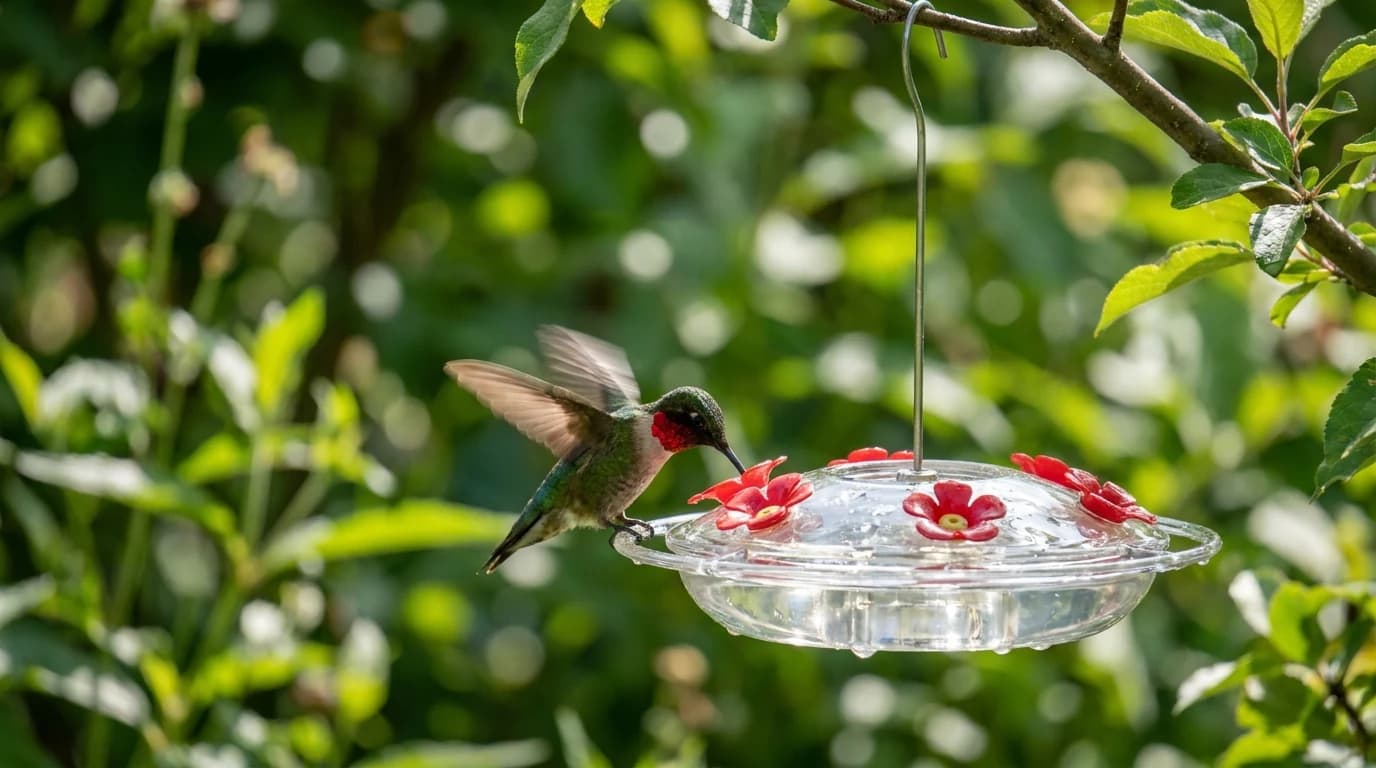
Nectar spoils, and cloudy liquid or black specks means it's fermenting or growing mold. The Cornell Lab recommends replacing nectar within two or three days and daily in very hot weather; Smithsonian's schedule is every other day. Change it sooner if it looks cloudy, and clean the feeder thoroughly at every change, ports and crevices included, with hot water and a bottle brush. A quick rinse isn't enough.
An easy-clean saucer feeder makes this painless. The Aspects HummZinger HighView is the easy-clean saucer benchmark: a polycarbonate dish with no bottle to scrub, plus a built-in ant moat and bee-resistant ports. Whatever you buy, pick one you can open up and scrub at every port.
Use the color that pulls them in
Hummingbirds see red and orange from a distance. You don't need to dye the nectar — the feeder and your flowers supply the color.
Red tubular flowers that attract hummingbirds:
- Trumpet vine and trumpet honeysuckle
- Bee balm (Monarda)
- Cardinal flower
- Salvia (especially red varieties)
- Columbine
- Fuchsia and penstemon
Planting a few of these near the feeder turns a one-off visit into a regular route.
Place feeders smartly
Hummingbirds are territorial, so spacing matters, and a few small placement choices decide whether they settle in.
What keeps them coming back:
- Hang in partial shade — nectar in full sun spoils faster.
- Put up multiple feeders out of sight of each other so one bully can't guard them all.
- Add an ant moat and bee guards to keep insects out of the ports.
- Leave a few thin, bare twigs nearby — they perch constantly between feeding to guard their territory.
- Set up a small mister near foliage they can perch on afterward; hummingbirds prefer a fine mist or shallow moving water to a deep bath.
What drives them off:
- Nectar left too long in the heat, going cloudy in a sunny spot.
- One dominant bird guarding the only feeder in the yard.
- Oil smeared on the hanger to stop ants — never use it, it can harm the birds.
Fix common hummingbird problems
Nectar spoiling fast? Move the feeder into shade and refresh it more often. One bird chasing all others off? Add extra feeders out of sight of each other. Ants or bees swarming? Use an ant moat and bee-guard ports. And if you have no visitors yet, give it time and add red flowers — a fresh feeder can take a couple of weeks to be found.
Budget-friendly picks include the big, easy-fill First Nature 32 oz and the glass More Birds Vintage feeder.
Timing across the US and Canada
Put feeders out a week or two before hummingbirds typically arrive in your region — roughly March in the southern US, later April into May farther north and across Canada. Leaving one up in early fall helps late migrants fuel up.
Keep it clean, keep it fresh, and plant a little red. That's the whole game.
Frequently asked
What color attracts hummingbirds the most?+
Red, followed by orange and pink. Hummingbirds spot these warm colors from a distance, which is why most feeders are red. You don't need to color the nectar itself — the feeder and red tubular flowers do the attracting.
When should I put my hummingbird feeder out?+
A week or two before hummingbirds usually arrive in your area — around March in the southern US, and April into May farther north and in Canada. Leaving a feeder up into early fall helps late migrants refuel.
Do you have to boil hummingbird nectar?+
Smithsonian says boiling is unnecessary if the sugar fully dissolves. Audubon uses boiling water in its recipe, then lets it cool. Either way, use the same 4:1 water-to-white-sugar ratio and let heated nectar cool before filling.
Is red dye safe for hummingbirds?+
Skip it. Red dye offers no nutritional benefit and its safety is unproven, so the consensus is to leave it out entirely. A red feeder attracts hummingbirds perfectly well without coloring the nectar.
Sources & further reading
We research from primary and authoritative sources. Where our guidance rests on a fact, here's where it comes from.
- How to Make Hummingbird Nectar | Audubon — Confirms the 4:1 water-to-plain-white-sugar recipe and warns against honey (dangerous fungal growth) and red dye.
- Hummingbird Nectar Recipe | Smithsonian's National Zoo & Conservation Biology Institute — Confirms the 4:1 default, no-boil option, tap water, refrigerator limit and thorough cleaning at refills.
- Hummingbird Feeding FAQs | Audubon — Supports changing nectar every few days (more often in heat), watching for cloudy/moldy nectar, and cleaning routine.
- Feeding Hummingbirds | Cornell Lab — Supports the 4:1 normal mixture, changing within two or three days and daily in very hot weather; also describes a richer cold/rainy/foggy exception, not a general migration recipe.
Prices and BirdingScores reflect our most recent research and refresh on a cycle; confirm the live price before buying. We may earn a commission from affiliate retailers — it never changes our recommendations. See how we review.