
Best Hummingbird Feeders
Easy-to-clean nectar feeders — because cleaning, not capacity, is what keeps hummingbirds coming.
Content updated October 21, 2026
The 30-second answer
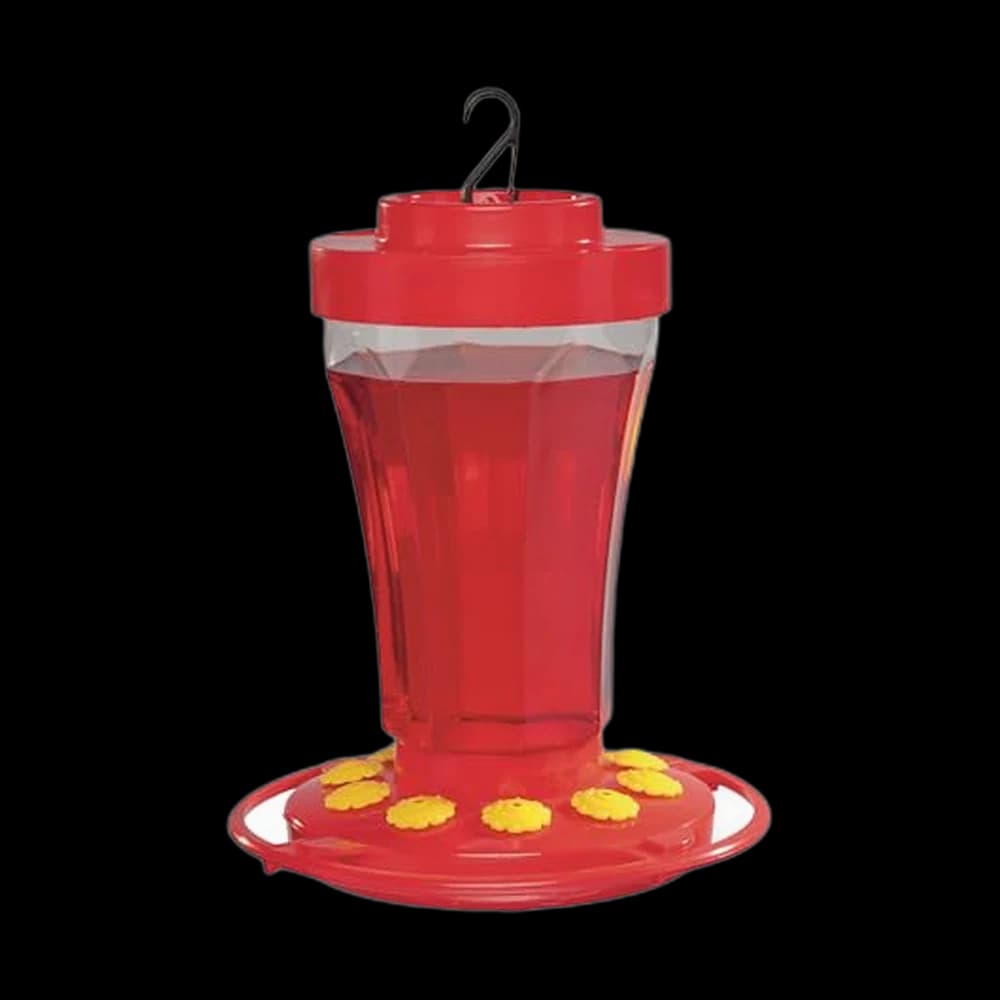
For most yards the First Nature 32 oz flower feeder wins on value and traffic capacity, but the Aspects HummZinger HighView is the easy-clean saucer worth paying up for if hygiene is your priority.
Top pickFirst Nature 32 oz
Value-minded hosts of busy hummingbird traffic wanting a 32oz, 10-port feeder that's easy to clean.
Buy on Amazon$16.49
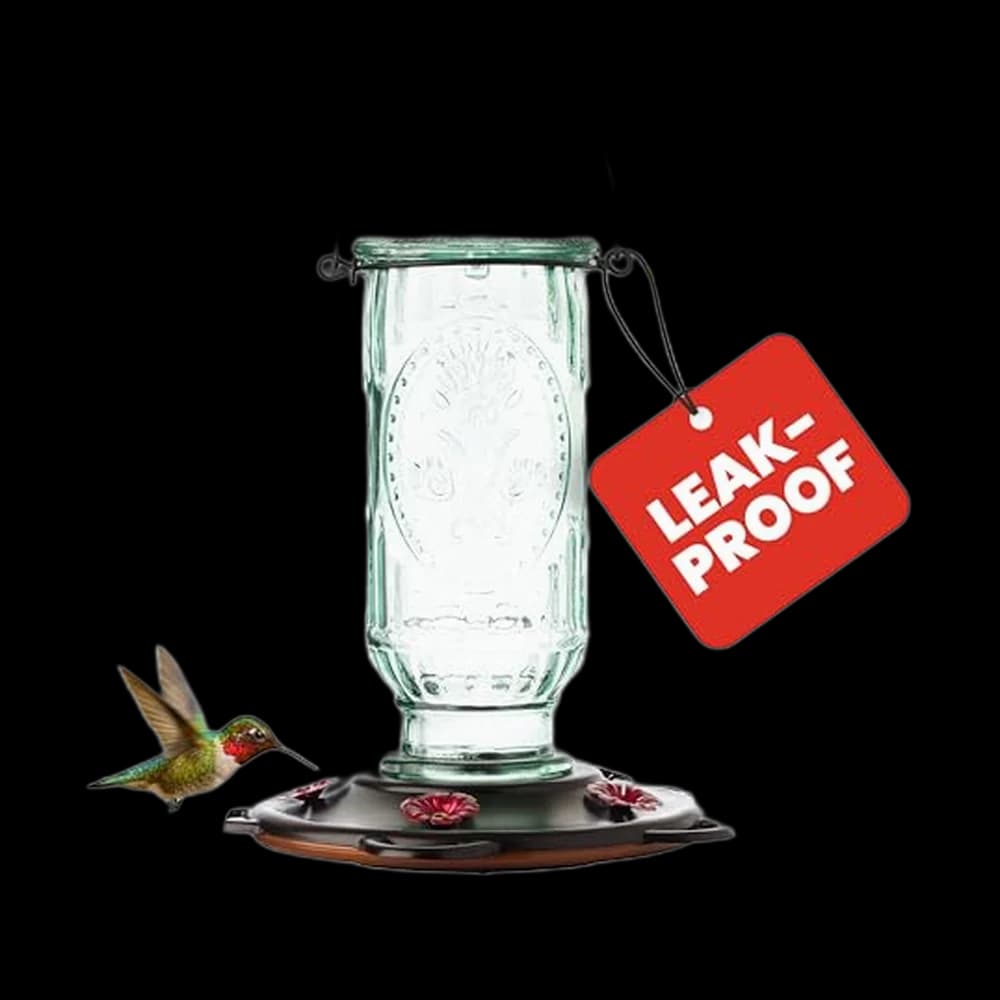
Great valueMore Birds Vintage 20 oz
Decor-conscious birders wanting a 20oz vintage glass feeder with 5 real flower ports.
Buy on Amazon$31.98
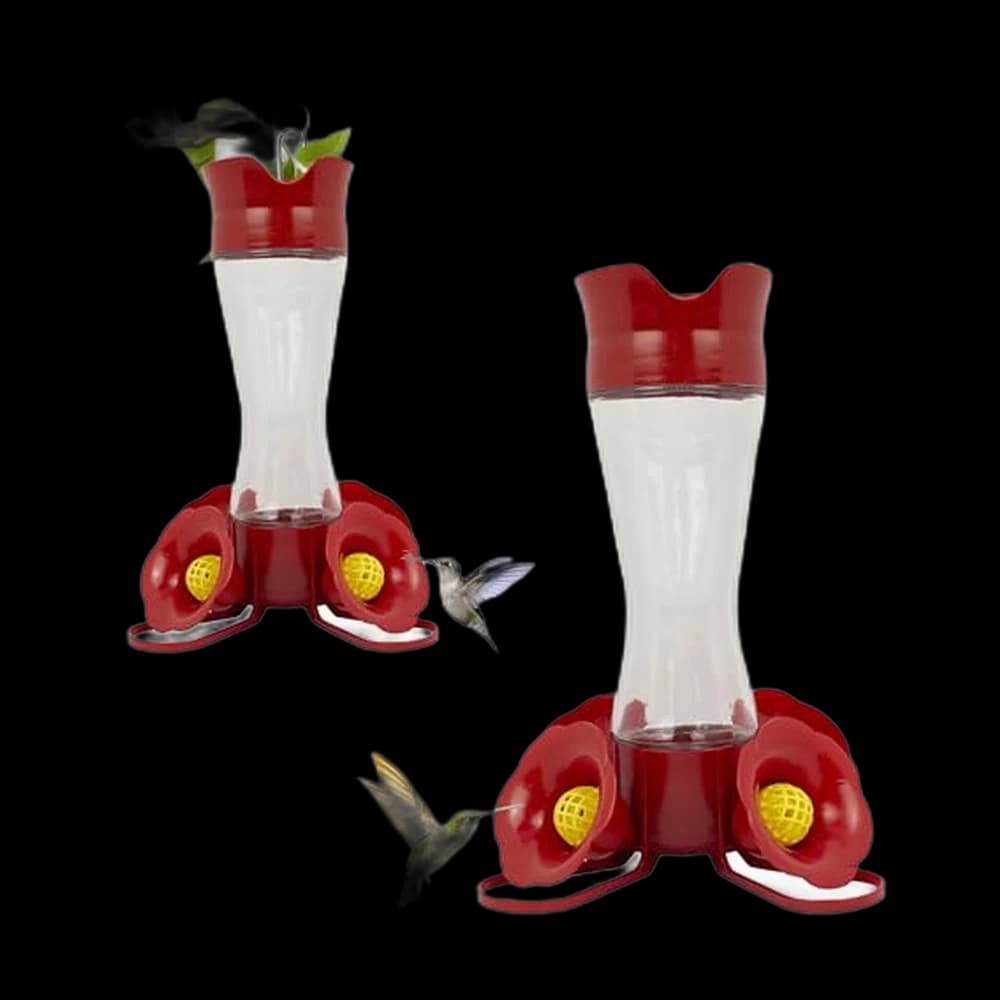
Cheapest alternativePerky-Pet Glass 8 oz
Small-yard birders wanting a classic glass bottle 2-pack with ant moat and bee guards.
Buy on Amazon$16.15
Owner ratings come from Amazon; BirdingScore is our separate research score.
Compare two picks
Tap an unselected chip to compare it with your current right-hand pick — all 4 picks available.
BirdingScore
82/100
80/100
Skip it if
You want a dedicated ant or bee guard, or worry about long-term durability buyers flagged.
You want built-in pest guards or worry about leakage and glass durability buyers flagged.
Nectar capacity
32 oz
20 oz
Feeding ports
10 ports
5 ports
Style
Inverted bottle + saucer base
Vintage glass bottle
Material
Polymer (plastic)
Glass + metal
Bee / ant guard
No dedicated guard (leakproof base)
—
Perch
Yes — circular perch
Yes
Dishwasher-safe
—
—
Who it's for
Anyone who wants hummingbirds close and is willing to swap fresh nectar every few days, especially in warm weather.
Who should skip
Skip if you can't commit to twice-weekly cleaning in summer heat — a neglected feeder ferments and harms the birds, so a birdbath may suit you better.
What matters when buying
- Easy to clean (saucer beats bottle) — saucer designs like the HummZinger come apart in seconds; bottle types trap mold in the neck
- Bee and ant guards — built-in ant moats and bee-resistant ports keep insects out of the nectar
- Capacity vs. how fast you'll use it — a 32oz feeder that sits half-full for a week is worse than a small one you empty and refill often
- Port count vs. your traffic — more ports (as on the First Nature) reduce squabbling when many birds visit
Common mistakes
- Buying the biggest feeder for a light-traffic yard — nectar spoils before it's used
- Choosing a decorative bottle feeder you'll dread scrubbing, so it goes uncleaned
- Using red dye or leaving old nectar out in heat, both of which endanger the birds
How we chose: Our BirdingScore blends owner satisfaction with real field value, drawn from product specs and thousands of owner reviews. We don't lab-test feeders ourselves; we weigh cleanability, insect defenses, and how the design holds up season after season.
The constraint-stacked answer
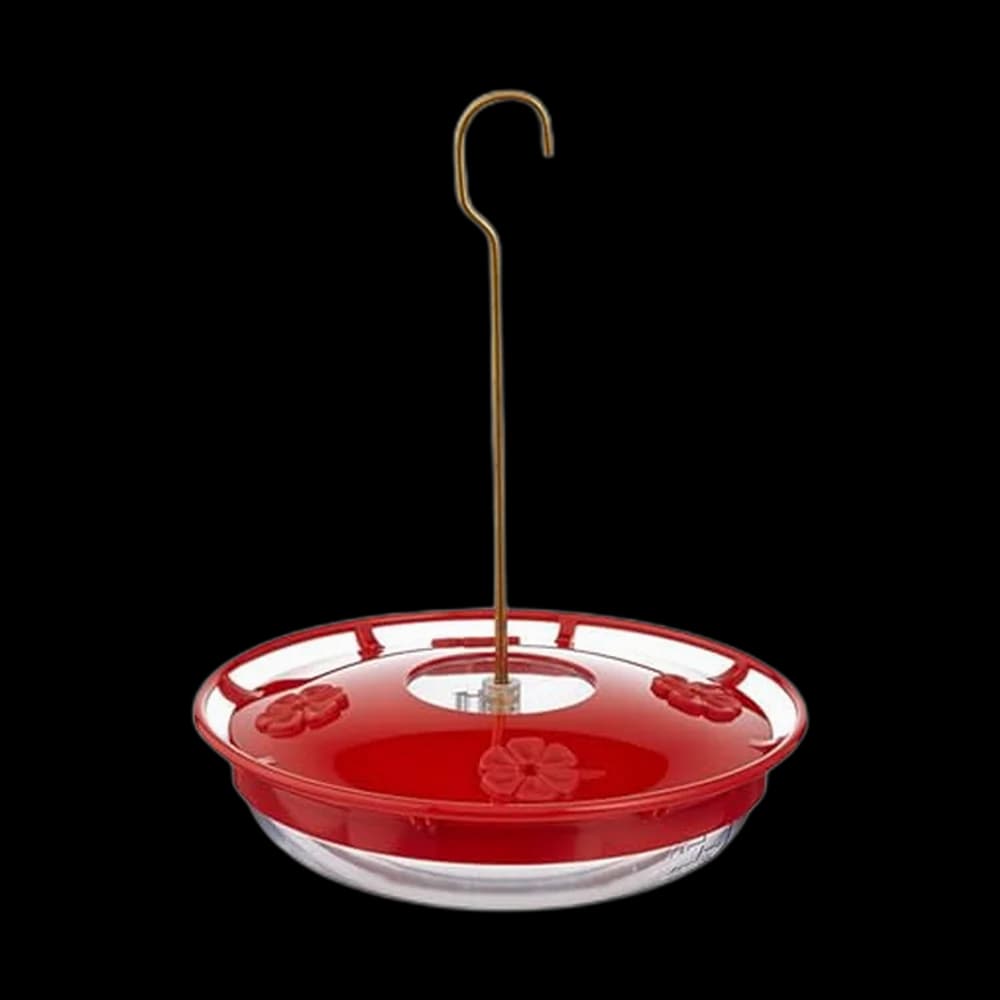
Buy for how often you will wash it, not for capacity. Nectar needs changing every few days in summer heat, so 32 oz in a quiet yard is mostly nectar you tip away. The HummZinger HighView is the saucer that comes apart — 12 oz across four ports, with a built-in ant moat and bee-resistant ports. First Nature's 32 oz and many ports is right only for genuinely busy traffic.
Every pick, reviewed
82Bird
FIRST NATURE
First Nature 32 oz
Cheap, big, and easy to fill.
Skip it if: You want a dedicated ant or bee guard, or worry about long-term durability buyers flagged.
4.5 Amazon(10,351)$16.49
80Bird
More Birds
More Birds Vintage 20 oz
Decorative glass with real ports.
Skip it if: You want built-in pest guards or worry about leakage and glass durability buyers flagged.
4.6 Amazon(6,610)$31.98
76Bird
Aspects
Aspects HummZinger HighView
The easy-clean saucer benchmark.
Skip it if: You need high capacity: it holds just 12oz across 4 ports for busy yards.
4.5 Amazon(6,719)$33.95
62Bird
Perky-Pet
Perky-Pet Glass 8 oz
Classic glass bottle look.
Skip it if: You have busy traffic needing more than 8oz, or worry about leakage and durability buyers flagged. Rated 4.1 stars on about 13,000 ratings, just under our usual 4.3 bar.
4.1 Amazon(13,382)$16.15
From the birding community
What birders actually say about hummingbird feeders
Recurring themes we found across 129 public discussion threads in r/hummingbirds, r/birdfeeding, read in July 2026. We summarise what comes up repeatedly and link the threads — we never quote or identify anyone, and these forums don't give us vote counts, so treat this as the shape of the conversation rather than a measured majority.
Comes up again and again
Saucer feeders do not leak, bottle feeders do
This is the clearest single verdict in the category. Because a basin design is not gravity-fed, it does not drip as the day warms, which also means fewer ants and less mess under the feeder.
Comes up again and again
Ease of cleaning outranks every other feature
Nectar spoils quickly in warm weather, so a feeder that comes apart completely and has no narrow crevices is treated as the real buying criterion. Inexpensive models get recommended precisely because they disassemble easily.
Comes up again and again
Buy small, or buy several small ones
Matching capacity to the number of birds actually visiting is repeatedly recommended, since a large reservoir means nectar sits and ferments. Keeping a duplicate to swap in while the first is drying is a common habit.
The dissenting view
The feeder does not have to be red
Against the common belief, owners report hummingbirds using blue and purple feeders happily. The consensus correction is that red at the ports is enough, and that red dye in the nectar is unnecessary.
The recurring complaint
Cheap feeders are seasonal items in hard weather
In high wind, sun and extreme cold, budget plastic feeders are described as lasting a season or two, while one well-made feeder is reported still working after years. Climate decides which is the false economy.
What we didn't pick
Options we researched and catalogued but left off the list above, with the reason each one is being held back.
- Juegoal Hummingbird 12 ozRemoved from the ranked picks after Amazon positively stated that it is unavailable and gave no return date on September 3, 2026.
Guides for buying Hummingbird Feeders
Frequently asked
Saucer or bottle feeder?+
Saucer, and this is the clearest single verdict in the category. A basin design is not gravity-fed, so it does not drip as the day warms — which also means fewer ants and less mess underneath.
Which hummingbird feeder should I buy?+
The First Nature 32 oz flower feeder is our top-scored pick: a large, many-ported feeder that is genuinely easy to clean. Ease of cleaning outranks every other feature here, because nectar spoils quickly in warm weather.
Does the feeder have to be red, and how big should it be?+
It does not — owners report hummingbirds using blue and purple feeders happily, and red at the ports is enough. Never add red dye. Buy small, or buy several small ones, so nectar is not sitting long enough to ferment.
Sources & research (18)Show
- Hummingbird Feeding FAQs | Audubon — Cleaning cadence (every day or two in hot weather, every three days in temperate, twice weekly when cool, and immediately on mold, a sick bird or insect encroachment); 1:4 white sugar to water; no red dye; avoid dish soaps because of residue; always discard unused nectar when taking the feeder down to clean.
- How to Clean Your Bird Feeder | All About Birds, Cornell Lab of Ornithology — Change hummingbird nectar at least every 3–5 days to prevent mold and fermentation, more often in hot weather; clean at least weekly with hot water and a bottle brush; do not use soap or detergent; do not put oil or sticky substances around feeding ports to deter bees.
- Feeding Birds — Project FeederWatch, Cornell Lab of Ornithology — Clean hummingbird feeders every couple of days, ideally every time you refill; take apart and wash with warm water and dish soap, rinsing thoroughly; do not use feeders that cannot be thoroughly washed; if you cannot keep up with feeder care, feed for a shorter season or garden for birds instead.
- Microbial communities in hummingbird feeders are distinct from floral nectar and influenced by bird visitation (Proc. R. Soc. B, 2019) — Bird-visited and unvisited feeder solutions both accumulated abundant microbial populations that changed solution pH; the taxa recovered were primarily non-pathogenic bacteria and fungi, and the paper states the impact on hummingbird health is unknown.
- Hummingbird ingestion of low-concentration ethanol within artificial nectar (R. Soc. Open Sci., 2023) — Ethanol measured within hummingbird feeders peaked at about 0.05%; Anna's Hummingbirds did not discriminate between 0% and 1% ethanol solutions but significantly reduced consumption of a 2% solution.
- Ask Kenn Kaufman: Will My Feeder Keep Birds From Migrating? | Audubon — Feeders do not change the habits of summer residents or normal migrants; Short-billed Dowitchers leave the Arctic by late June and Orchard Orioles by 1 August, at peak food; the eastern Pennsylvania Anna's Hummingbird of October 2010 that wintered on neighbourhood feeders.
- How to Create a Hummingbird-Friendly Yard | Audubon — In fall, keep feeders up for two weeks after you see the last bird using one.
- Do you know when to take down your hummingbird feeder? | Ohio State University Extension — Calls the migration-delay belief a common misconception; leave feeders up through October or until visits stop; a full feeder supplies fuel for the journey.
- Hummingbird visitors to Pacific Northwest gardens | Oregon State University Extension — Peer-reviewed OSU Extension publication (Feb 2025): Anna's seen year-round in the Pacific Northwest and expanding on urban plantings and warming temperatures; torpor drops a 102F body temperature by 20F shallow, 40F deep; migrants fatten from about 3g to over 5g; feeders are believed to add to food supply rather than create dependence.
- Anna's Hummingbirds Are Expanding Their Range With Human Help | Audubon — Once found only in southern California and Baja; since the 1930s north to British Columbia and east to Texas; a study found colonisation of new, even cold, sites tracks housing density plus flowery landscaping and nectar feeders.
- Rufous Hummingbirds Turning Up in Unusual Places | Audubon — Early expert advice warned against leaving feeders out past fall; bander Nancy Newfield questioned it; Christmas Bird Counts logged only two or three western hummingbirds a season before the 1970s, rising through the 1980s-90s.
- How to Make Hummingbird Nectar | Audubon — Confirms the 4:1 water-to-plain-white-sugar recipe and warns against honey (dangerous fungal growth) and red dye.
- Hummingbird Nectar Recipe | Smithsonian's National Zoo & Conservation Biology Institute — Confirms the 4:1 default, no-boil option, tap water, refrigerator limit and thorough cleaning at refills.
- Feeding Hummingbirds | Cornell Lab — Supports the 4:1 normal mixture, changing within two or three days and daily in very hot weather; also describes a richer cold/rainy/foggy exception, not a general migration recipe.
- Journey North Hummingbird Migration Tracking — Live crowdsourced spring migration map cited in the post as a way to track when the wave reaches your region.
- All About Ruby-throated Hummingbird Migration (Journey North) — Backs the slow northward wave, ~20 miles/day pace, and males arriving ahead of females.
- When to Expect Hummingbirds at Your Feeders and Flowers This Spring (Audubon) — Supports the region-by-region arrival windows (e.g. put nectar out by early March in the Southeast, late April in the Northeast).
- Ruby-throated Hummingbird Overview (Cornell Lab, All About Birds) — Supports Ruby-throated being the sole breeding hummingbird of eastern North America (east vs. west species split).
Keep narrowing the choice
Prices and ratings shown are the most recent values we pulled from affiliate retailers and refresh on a recurring cycle; confirm the live price before buying. See how we score.