
Tube & Hopper Feeders
The everyday workhorses — metal ports, easy cleaning, and a decade of service.
Content updated October 21, 2026
The 30-second answer
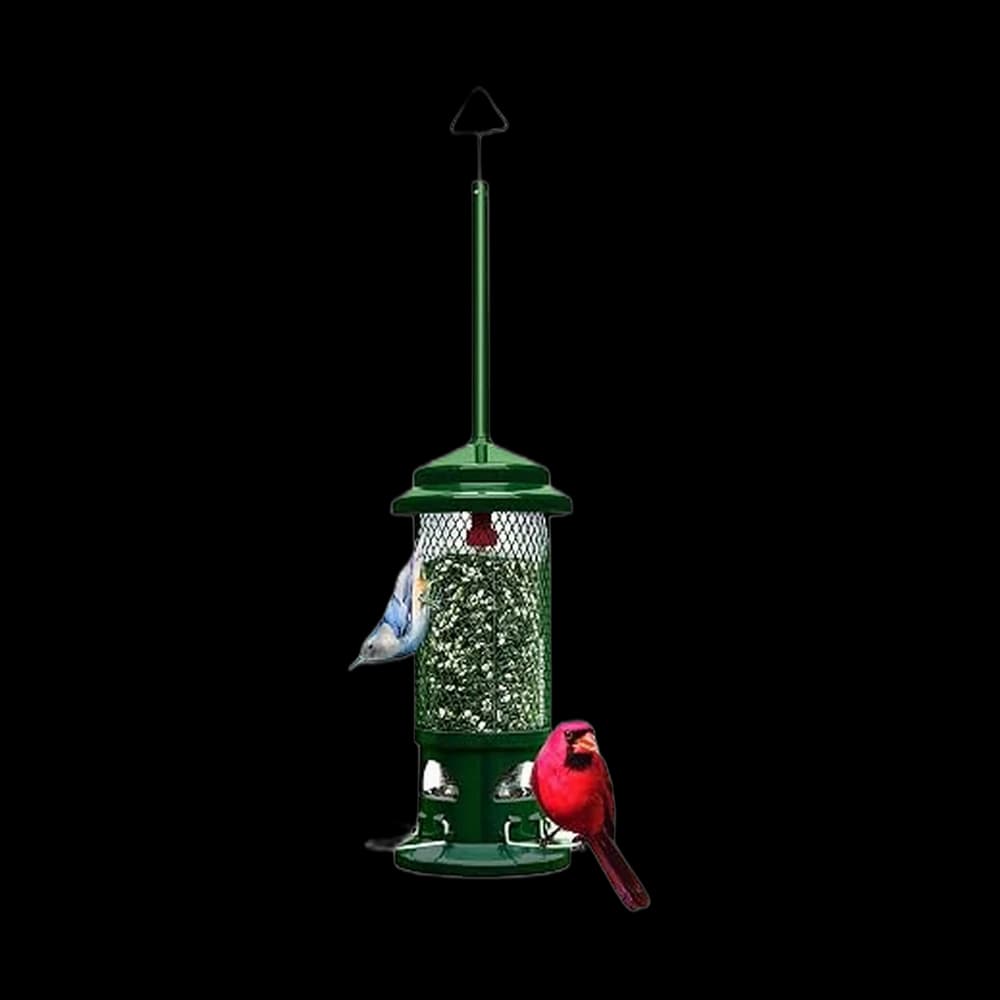
The Squirrel Buster Standard leads on owner satisfaction — a compact four-port tube whose shroud closes under a squirrel's weight — with the six-port Squirrel Solution 200 for busier yards and the Gray Bunny Metal Tube as the budget pick with chew-resistant metal ports.
Top pickSquirrel Buster Standard
Small yards with squirrels that want a compact four-port tube whose shroud closes under a squirrel's weight, with a spring you can adjust and a design Brome says strips down by hand for cleaning.
Buy on Amazon$53.99
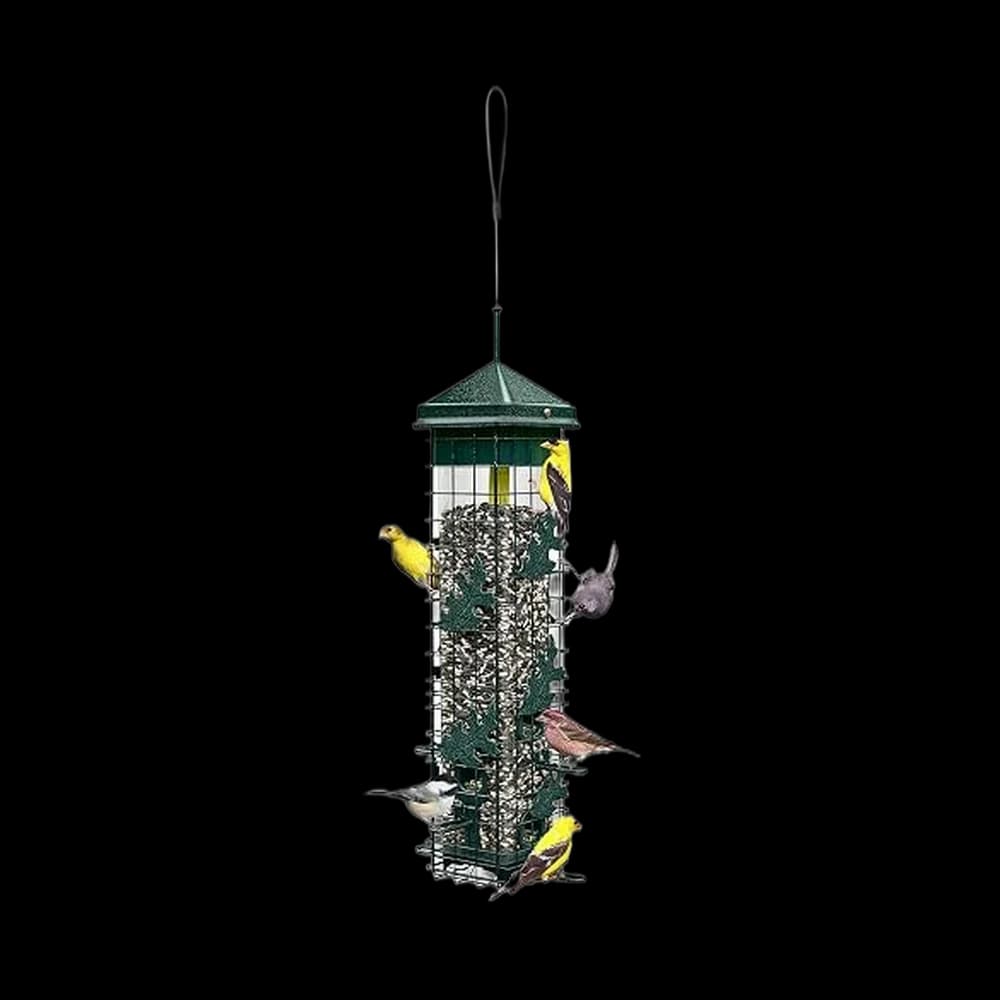
Great valueSquirrel Solution 200
Busier yards that want 3.4 lb of seed across six ports behind a shroud that closes under a squirrel's weight, and a feeder that comes apart by hand for cleaning.
Buy on Amazon$65.00
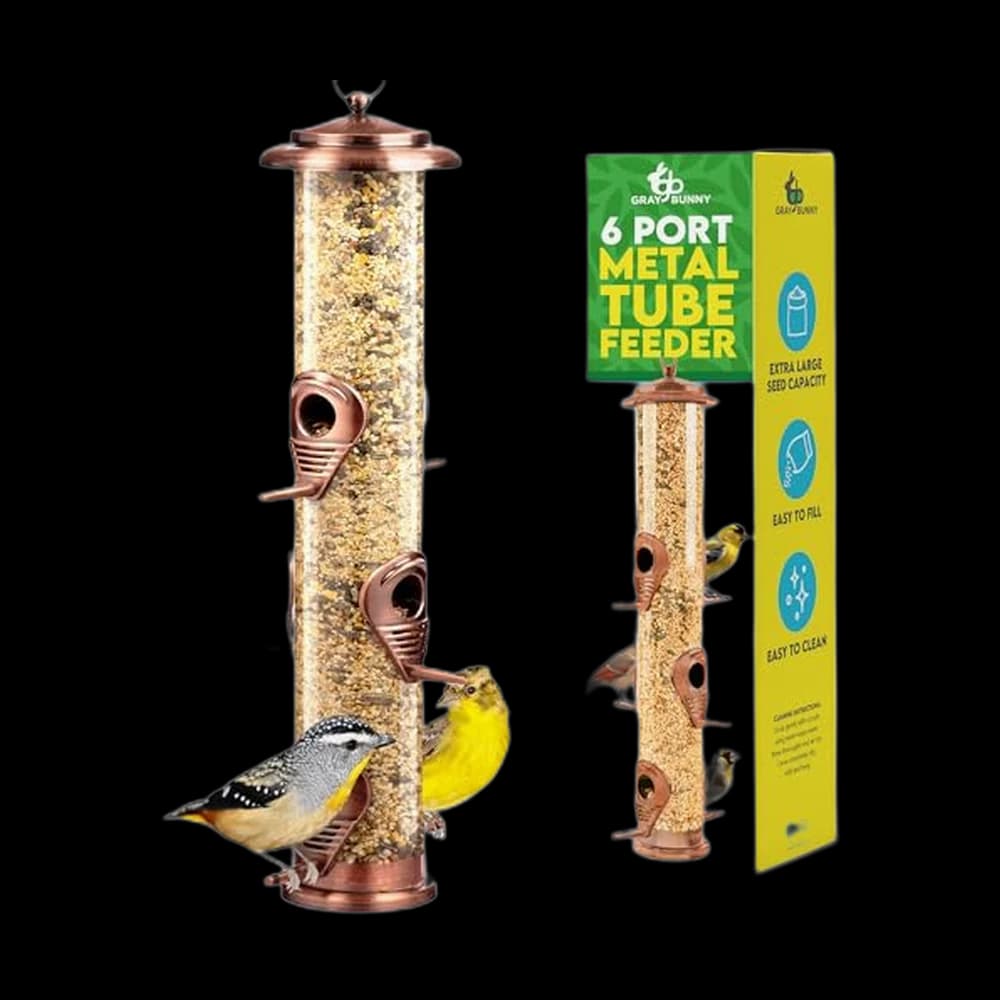
Cheapest alternativeGray Bunny Metal Tube
First-time or budget feeders wanting an all-metal 6-port tube holding 4 cups of seed at $18.98.
Buy on Amazon$18.98
Owner ratings come from Amazon; BirdingScore is our separate research score.
Compare two picks
Tap an unselected chip to compare it with your current right-hand pick — all 3 picks available.
BirdingScore
83/100
77/100
Skip it if
You feed a big flock, since 1.3 lb empties fast, or if grackles, starlings, chipmunks or raccoons are the problem, which Brome says it will not deter.
You cannot give it about 18 inches of clearance, which Brome says it needs to keep squirrels off, or you want to tune the trigger weight, since this model is non-adjustable.
Seed capacity
1.3 lb seed
3.4 lb seed
Feeding ports
4 ports (stainless steel perches)
6 ports
Material
Chew-proof parts, wire shroud
RoxResin, chew-proof parts
Best seed
—
Sunflower, safflower, dried mealworms
Squirrel-resistant
Weight-activated shroud closes ports (adjustable)
Weight-activated shroud closes ports (non-adjustable)
Mounting
Hang
Hang
Show buy options for all 3 picks
Who it's for
Everyday birders who want a reliable workhorse feeder that draws finches, chickadees, and cardinals for years.
Who should skip
Skip the open budget tube if squirrels dominate your yard — choose one of the two Brome picks, whose shrouds close the ports under a squirrel's weight, and hang it on a baffled pole.
What matters when buying
- Metal ports (chew-proof) — metal feeding ports resist squirrel and chipmunk gnawing that destroys plastic
- Easy disassembly for cleaning — a feeder that comes fully apart lets you scrub out mold that sickens birds
- Capacity vs. refill patience — bigger hoppers (Woodlink cedar) feed flocks longer but weigh more when full
- Squirrel defence — a weight-activated shroud (both Brome picks) closes the ports when a squirrel climbs on, which an open tube cannot do
Common mistakes
- Buying a tube you can't fully take apart, so it never gets properly cleaned
- Choosing all-plastic ports in a squirrel-heavy yard and watching them get chewed open
- Oversizing the hopper so seed sits and spoils in a low-traffic yard
How we chose: BirdingScore weighs owner satisfaction and field value drawn from specs and thousands of owner reviews, not hands-on lab testing. Cleanability, port durability, and years-of-service reputation counted most.
The constraint-stacked answer
Two things separate these: whether squirrels can get at the seed, and whether the feeder comes apart for scrubbing. Both Brome picks close their ports under a squirrel's weight and dismantle by hand — the Squirrel Buster Standard holds 1.3 lb, the Squirrel Solution 200 holds 3.4 lb. The budget all-metal tube gets you chew-resistant ports, but nothing stops a squirrel reaching the seed.
Every pick, reviewed
83Bird
Brome
Squirrel Buster Standard
Compact, squirrel-proof, strips down by hand.
Skip it if: You feed a big flock, since 1.3 lb empties fast, or if grackles, starlings, chipmunks or raccoons are the problem, which Brome says it will not deter.
4.6 Amazon(12,130)$53.99
77Bird
Brome
Squirrel Solution 200
Six ports and 3.4 lb behind a squirrel-closing shroud.
Skip it if: You cannot give it about 18 inches of clearance, which Brome says it needs to keep squirrels off, or you want to tune the trigger weight, since this model is non-adjustable.
4.5 Amazon(5,652)$65.00
75Bird
Gray Bunny
Gray Bunny Metal Tube
Cheap all-metal starter tube.
Skip it if: You want true squirrel-proofing or fuss-free use, since both draw mixed feedback. Rated 4.2 stars on about 6,100 ratings, just under our usual 4.3 bar.
4.2 Amazon(6,125)$18.98
From the birding community
What birders actually say about tube & hopper feeders
Recurring themes we found across 137 public discussion threads in r/birdfeeding, read in July 2026. We summarise what comes up repeatedly and link the threads — we never quote or identify anyone, and these forums don't give us vote counts, so treat this as the shape of the conversation rather than a measured majority.
Comes up again and again
If it does not come apart, it does not get cleaned
Disassembly is the criterion experienced feeders buy on, because mouldy seed is a genuine disease risk. The habit described is a quick rinse regularly and a full strip-down scrub two or three times a year.
The recurring complaint
Drainage holes are the detail that ruins otherwise good feeders
A recurring failure is seed below the lowest port going damp, packing down and moulding, so the last portion is wasted every fill. Owners specifically look for large drain holes in the base after being caught once.
The dissenting view
Large capacity is often the wrong goal
Big tubes are described as leaving seed sitting long enough to spoil, and the advice that recurs is to fill a smaller feeder more often, matching capacity to how fast your birds actually empty it.
The recurring complaint
Plastic tubes are chew targets
Squirrels widening ports and cracking plastic is a repeated complaint, and metal-ported or fully metal designs come up as the durable answer, again on a baffled pole rather than hanging from a branch.
What we didn't pick
Options we researched and catalogued but left off the list above, with the reason each one is being held back.
- Aspects Quick Clean Big TubeDe-listed 2026-10-01: Amazon shows the listing as currently unavailable with no return date and no featured offer, and no same-product replacement exists, so it is held back rather than linked.
- Woodlink Cedar Large HopperDe-listed 2026-09-04: the bundle listing has no featured offer on Amazon and no same-product replacement exists, so it is held back rather than linked.
Guides for buying Tube & Hopper Feeders
Frequently asked
What is the most important feature in a tube feeder?+
Whether it comes apart. Experienced feeders buy on disassembly, because mouldy seed is a genuine disease risk — a quick rinse regularly and a full strip-down scrub a few times a season is the routine described.
Which tube feeder is our top pick?+
The Squirrel Buster Standard — a compact tube holding 1.3 lb of seed behind four ports, with a shroud that closes the ports when a squirrel climbs on and a spring you can adjust. Brome says it strips down by hand for cleaning.
Should I buy the biggest capacity I can?+
Usually not. Big tubes leave seed sitting long enough to spoil, and the advice that recurs is to fill a smaller feeder more often. Check for large drain holes too: damp seed packing down below the lowest port is a recurring waste.
Sources & research (4)Show
- Preventing disease: What's the best way to clean your bird feeders? — Cornell Project FeederWatch study backing the 1:9 bleach solution, 10-minute soak, rinse, and full dry protocol.
- Sick Birds and Bird Diseases — Supports the claim that dirty feeders spread salmonella, avian pox, and trichomonosis, and that you should take feeders down when birds look ill.
- Is Your Bird Feeder Safe? (USGS National Wildlife Health Center) — USGS guidance that dirty feeders transmit disease and should be cleaned/disinfected regularly.
- Epidemiology of a Salmonella Typhimurium strain associated with a songbird outbreak (USGS) — Documents feeder-linked salmonella outbreaks killing songbirds, backing the 'outbreaks can kill songbirds by the dozens' claim.
Keep narrowing the choice
Prices and ratings shown are the most recent values we pulled from affiliate retailers and refresh on a recurring cycle; confirm the live price before buying. See how we score.