
Suet for Birds: What It Is, When to Start, Which Feeder
Nearly half of Cornell's 98 common feeder birds take suet, and three will use nothing but a cage. What it is, when to start, and which feeder to hang.
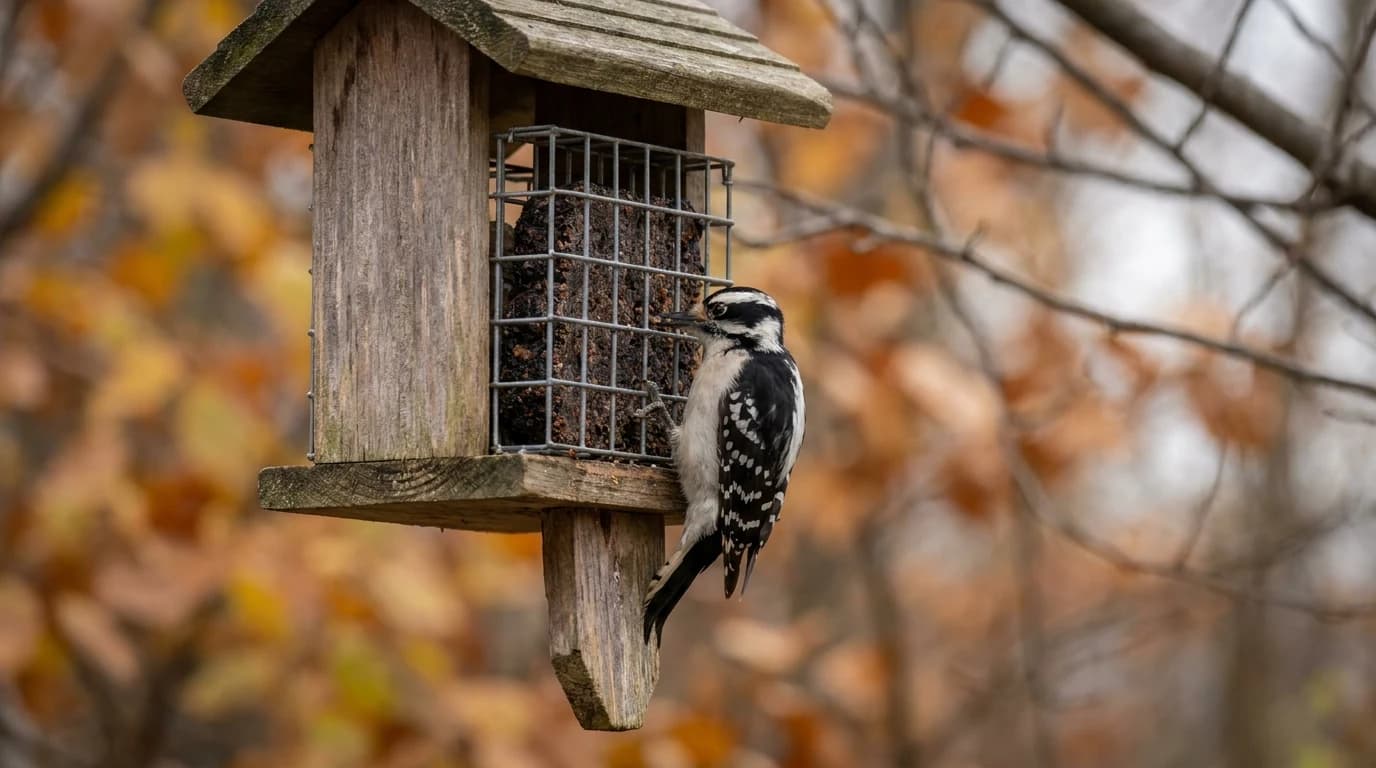
Key takeaways
- "Suet" and "suet cake" are different products. Cornell defines suet as the hard fat around the kidneys and loins in beef and mutton; a cake is that fat, or a substitute, blended with corn, nuts or fruit — and the two behave very differently in heat.
- Bottom access is the starling fix. Cornell's advice is a feeder that makes birds hang upside down: woodpeckers, chickadees and nuthatches manage it, starlings cannot.
- Nobody publishes a melting temperature for ordinary rendered suet. Cornell says raw suet spoils above freezing and rendered suet can still soften — but names no degree. Judge the cake, not the forecast.
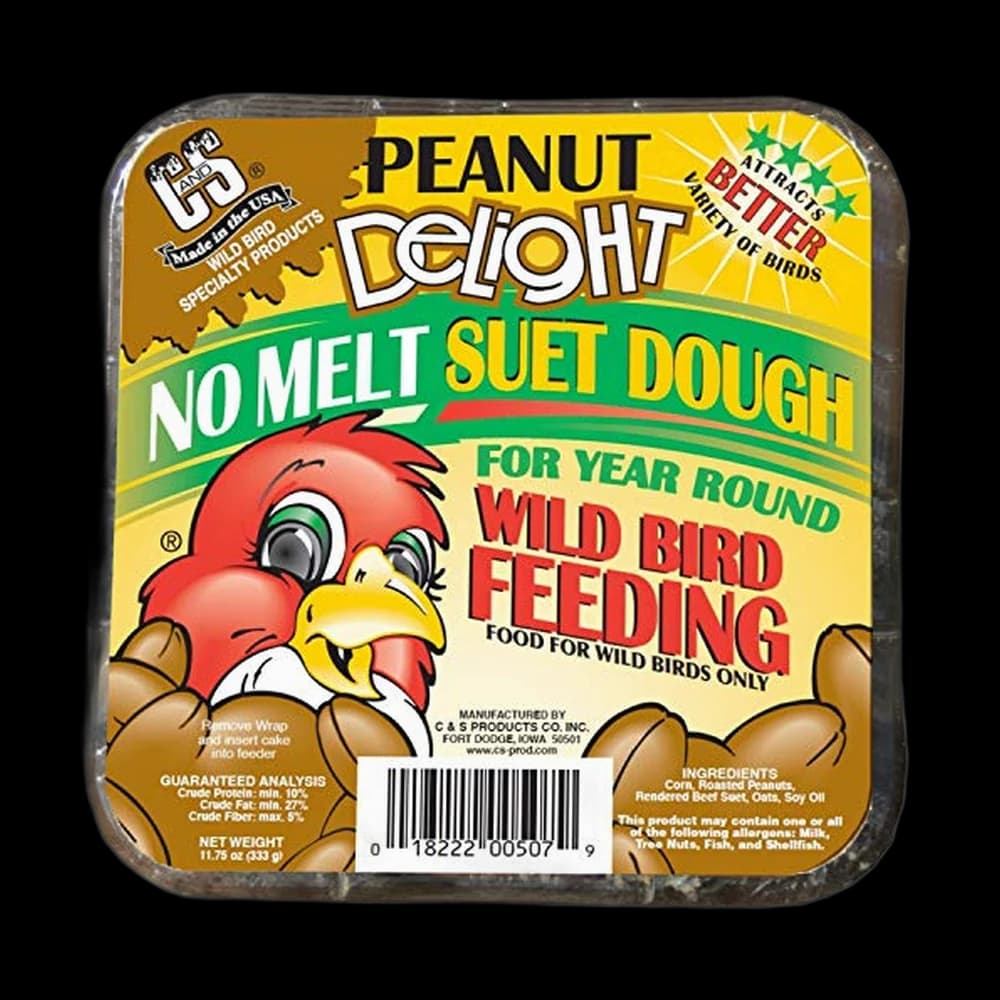
- No-melt dough is mostly grain. C&S lists corn first and rendered beef suet third, with a minimum of 20% crude fat — sensible for August, an odd default for January.
Pick by your situation
| If your situation is… | Pick | Why |
|---|---|---|
| Starlings clear every cake in a day | A bottom-access (inverted) cage | Cornell's specific advice: woodpeckers, chickadees and nuthatches feed upside down, starlings cannot. |
| You want Pileated Woodpeckers or flickers | A feeder with a tail prop | Large woodpeckers brace on their tail feathers, and a prop gives them somewhere to do it. |
| Daytime highs still soften the cake | A no-melt suet dough | C&S formulates its dough to a melting point of up to 100°F; ordinary cakes carry no stated ceiling. |
| You want bluebirds, robins or orioles on suet | A tray, not a cage | FeederWatch lists all three as suet eaters but not as suet-cage users — every one of them is a platform feeder instead. |
| You live in bear country | No suet until bears hibernate | FeederWatch advises against feeding while bears are active; check your local wildlife authority for the dates. |
A shortcut by situation — start from the row that sounds like you.
Hang a block of fat and your yard picks up birds a sunflower tube will never reach — the Brown Creeper and the Ruby-crowned Kinglet are not listed on a tube feeder at all. SuetA high-energy cake of rendered fat (often with seeds) that draws woodpeckers, nuthatches, and chickadees. is also the food people get wrong three ways at once: wrong month, a cake that isn't really suet, and a cage that hands the whole block to starlings. Three decisions, then: what to buy, when to hang it, and which feeder.
What suet actually is, and what a suet cake isn't
The Cornell Lab of Ornithology defines suet narrowly: the hard fat around the kidneys and loins in beef and mutton, though in common usage most beef fat gets the name. A suet cake is a different object — that fat, or a thick substitute, mixed with corn meal, peanuts, fruit or dried insects. The aisle stacks all three side by side and labels them almost identically.
| What you're buying | What the source says | When it belongs outside |
|---|---|---|
| Raw suet from a butcher | Cornell: grows rancid quickly above freezing, so don't offer it except in winter | Deep winter only |
| Rendered suet cake or treat | Cornell: melted and cleaned, so it keeps far better — but still softens in warm weather | The cold half of the year |
| No-melt suet dough | C&S states its dough is formulated to a melting point of up to 100°F | Warm months and climates |
Rule of thumb: if the label says dough, it was built for heat; cake or treat means it was built for cold. Both are fine through autumn — only one is designed for a hot month.
Which birds suet actually brings
Project FeederWatch, also from the Cornell Lab, publishes a preference table for the 98 species that most commonly visit North American feeders. Filter it to suet and 47 of the 98 come up — very nearly half. Filter to the suet cage and you get 34.
Three list a suet cage as their only feeder type: Brown Creeper, Pileated Woodpecker and Yellow-bellied Sapsucker. The table offers no other way to feed them.
Will come to a hanging suet cage:
- Every woodpecker in the tool — Downy, Hairy, Red-bellied, Pileated, Northern Flicker and Yellow-bellied Sapsucker
- All four nuthatches, all five chickadees and all four titmice
- Brown Creeper, and all three wrens listed — Carolina, Bewick's and Cactus
- Pine Warbler, Yellow-rumped Warbler and Ruby-crowned Kinglet
Eats suet, but not from a cage: Eastern Bluebird, Baltimore Oriole, American Robin, Northern Mockingbird, Brown Thrasher and Varied Thrush are all listed as suet eaters and none as suet-cage users. Every one of them is a platform feeder instead — so if bluebirds are the goal, crumble it onto a tray.
Pick the feeder for the bird you want, and the pest you don't
Two design decisions do nearly all the work.
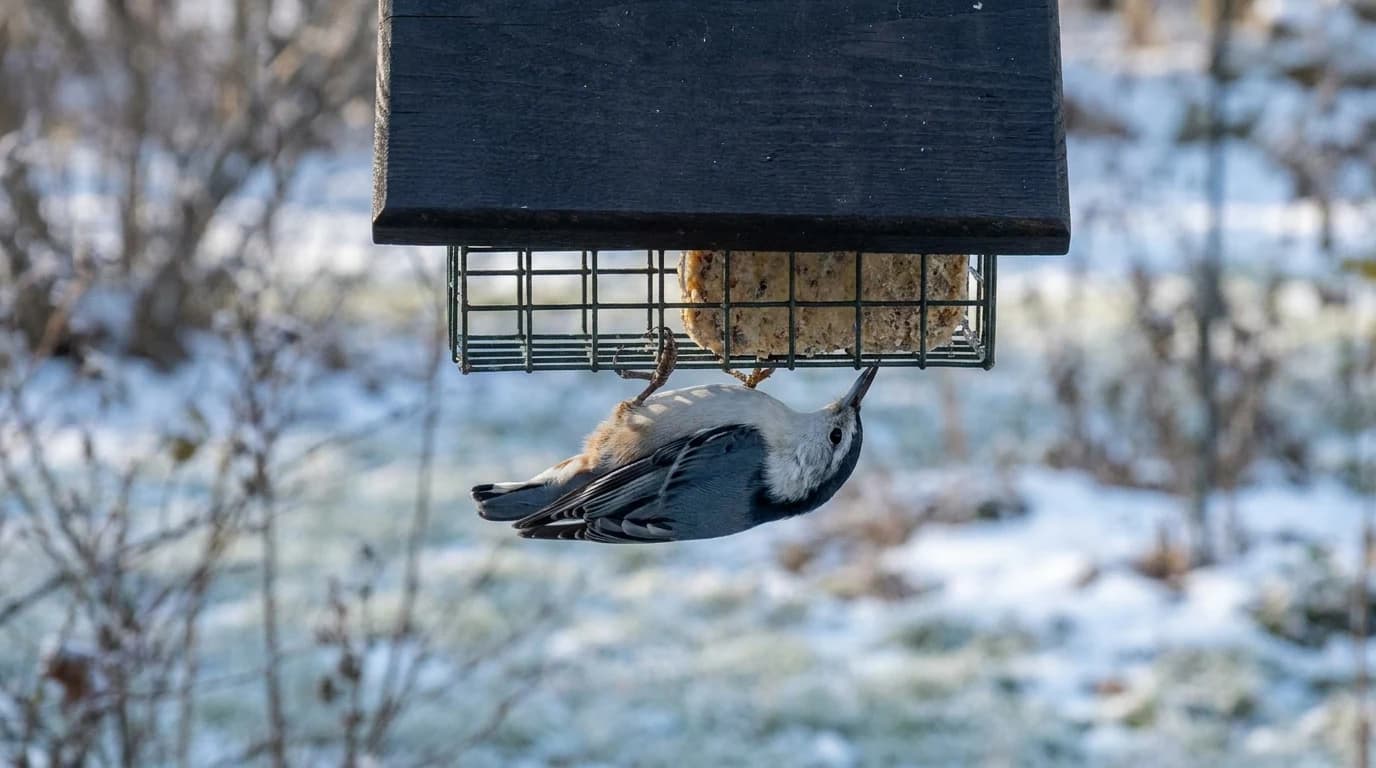
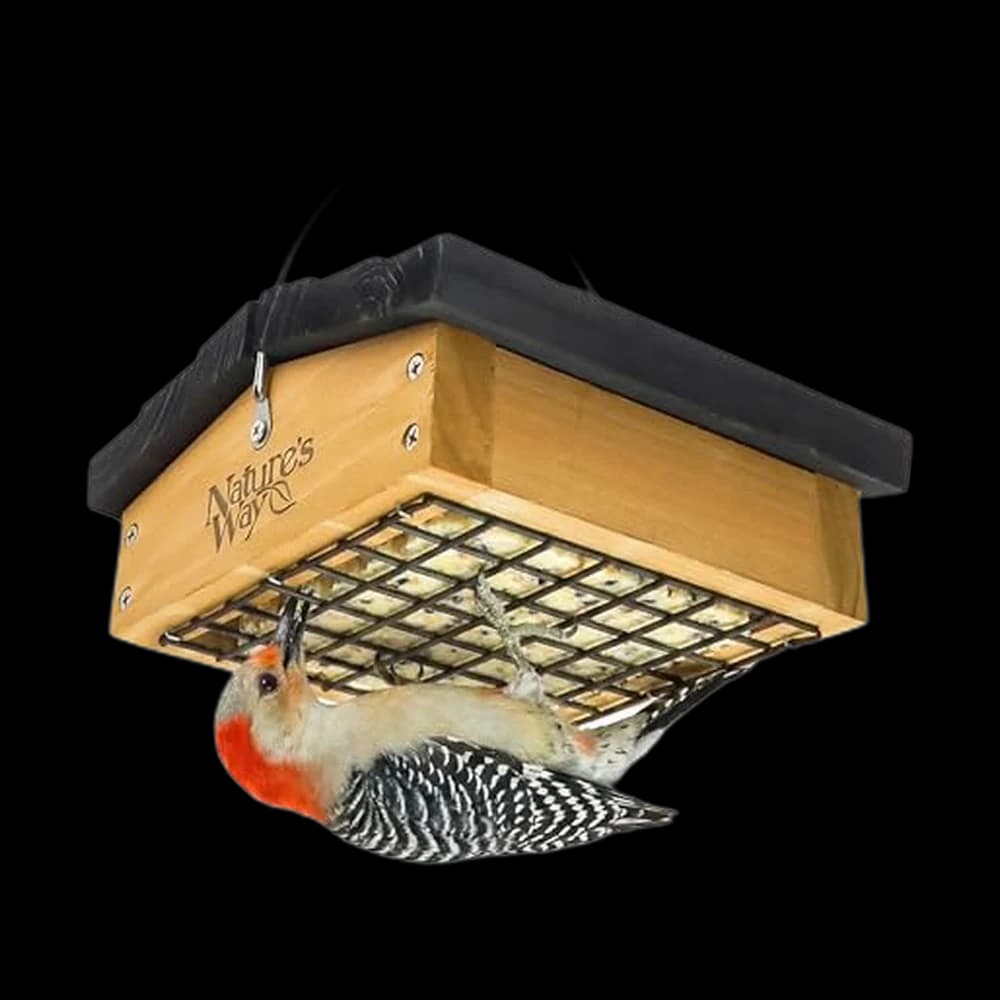
Bottom access. Cornell's starling advice is unusually specific: offer suet in a feeder that requires birds to feed hanging upside down. Woodpeckers, chickadees and nuthatches access it easily; starlings cannot. FeederWatch repeats it for overrun feeders — allow access only from the bottom. That is the whole pitch of an inverted design like the Nature's Way cedar inverted cage.
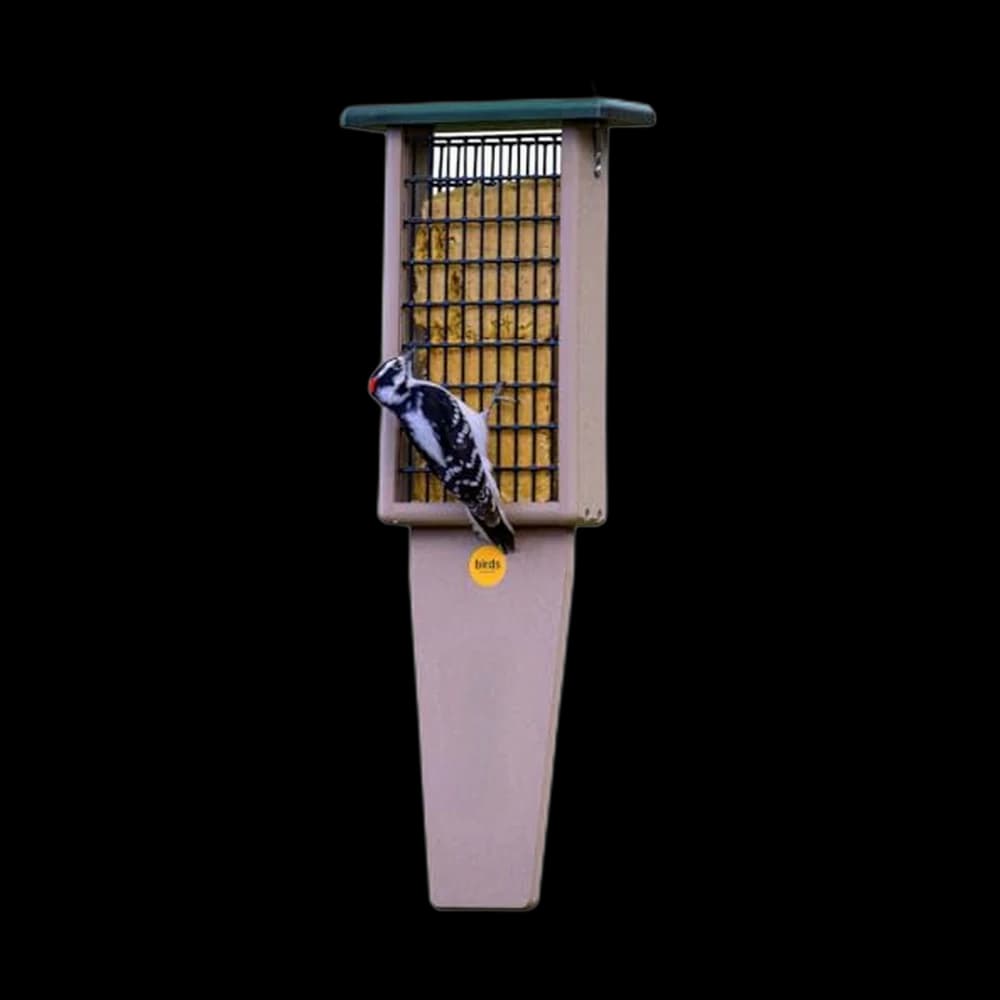
A tail prop. Big woodpeckers brace on their tail feathers as they work, and a prop is the back panel extended below the cage to give them something to brace on. Birds Choice puts a 9.5-inch prop on its Pileated tail-prop feeder and describes the job in one line: woodpeckers will rest their tails on it.
Worth knowing before you spend on exclusion: FeederWatch lists Common Grackles as suet eaters but not as suet-cage users — ground, large hopper and platform only. A hanging cage is already most of the grackle answer. What the table does put on a cage is the European Starling, and every jay in it — which is why the starling fix is bottom access rather than a sturdier cage.
- Plain wire basket — one cake, no roof, no exclusion. It works; it just works for everyone.
- Bottom-access or inverted cage — the starling answer.
- Tail-prop feeder — for flickers and Pileateds, which need the brace.
- An onion bag, or suet smeared into a knothole — FeederWatch lists both, and tying it straight to a tree. Free.
When to start, and the number nobody publishes
Autumn is the on-ramp, and the reason is temperature, not the calendar. Cornell is precise about the low end and silent about the high end. Raw suetA high-energy cake of rendered fat (often with seeds) that draws woodpeckers, nuthatches, and chickadees. grows rancid quickly above freezing. Rendered suet keeps better but can still get soft — and soft suet is a real hazard: it coats belly feathers, which matters most in spring and summer, when the tiny pores in an incubating bird's eggs can clog and leave the embryo short of oxygen.
What Cornell never gives is a degree. Neither does FeederWatch, which says only to be careful in hot weather because suet may go rancid unless it has been specially processed. The tidy thresholds repeated across the web, we could not trace to a primary source — the only published figure we found belongs to the heat-resistant product, not the ordinary one.
So the honest rule is a behaviour, not a thermometer reading:
- Start rendered cakes when a block left out overnight is no longer greasy to the touch by mid-afternoon.
- Switch to dough, or stop, the first week a cake sweats — certainly before nesting season.
- Never leave raw butcher suet out above freezing. The one hard line Cornell draws.
- Bear country overrides all of it. FeederWatch advises against any feeding except while bears hibernate; check your local wildlife authority for the dates.
The number nobody publishes: Cornell says raw suet spoils above freezing and that rendered suet can still soften in warm weather — and names no temperature for either. Judge the cake, not the forecast.
The no-melt trade nobody mentions
Read the ingredient panel and the trick stops being mysterious. C&S lists its Peanut Delight dough, in order, as corn, roasted peanuts, rendered beef suet, oats, soybean oil. Suet is the third ingredient, and the guaranteed analysis is a minimum of 20% crude fat.
That is not a criticism — it is the mechanism. A dough resists heat because the grain holds the fat in place: it survives August because it is not mostly fat. Which makes a no-melt dough an odd default in January, when Cornell's whole reason for offering suet is that animal fat is a high-energy food especially valuable in cold weather. Buy dough for the warm half of the year, rendered suet cakes for the cold.
Keep it fresh, and out of the wrong mouths
- Clean it every week or two, more often in heavy use or wet weather — FeederWatch's cadence, and the same discipline as cleaning a bird feeder.
- Check that it can actually be washed. FeederWatch advises against feeders that cannot be thoroughly washed, and names wood. A cedar-roofed cage is fine if the cage lifts out; a wooden feeder you cannot scrub is not.
- Refrigerate corn- and peanut-based cakes until use. Cornell calls that prudent, because corn and peanuts are a growth medium for dangerous bacteria.
- Secure the lid. FeederWatch's warning is blunt: an animal can get stuck inside an unsecured suet cage.
Skip these
Cornell's not-recommended list: bacon drippings, because bacon virtually always carries detectable nitrosamines — carcinogenic compounds formed by its preservatives and the high frying temperatures — and kitchen leftovers, which spoil and pull in European Starlings, House Sparrows, rats, mice and raccoons.
What actually thins a starling crowd:
- A cage a bird can only reach from underneath — the one point Cornell and FeederWatch both make outright.
- Moving suet off wide perches. Starlings are listed on the ground, the platform and the large hopper as well as the cage.
What doesn't:
- A sturdier cage. Starlings sit on the suet cage in FeederWatch's own table; the fix is the angle, not the metal.
- Hot-pepper suet. Squirrels may be deterred by capsaicin, but FeederWatch says it is unaware of any research on the effect of high doses on birds, and discourages untested additives.
Suet is the cheapest upgrade most likely to add a species you have never had. Our bird seed guide covers the rest of the menu, and how to attract woodpeckers picks up where this leaves off.
Useful gear for this guide
Optional, subject-matched picks from our live catalog—not a requirement for doing the advice above.
Frequently asked
Is it OK to feed suet in summer?+
Rendered suet can still soften in warm weather, and the Cornell Lab warns that soft suet coats belly feathers — a real problem in spring and summer, when it can clog the tiny pores in a nesting bird's eggs and leave the embryo short of oxygen. Raw butcher suet is winter-only, because it grows rancid quickly above freezing. If you want to feed through summer, use a no-melt dough — C&S formulates its own to a melting point of up to 100°F — and keep the feeder out of direct sun.
Will suet attract squirrels or rats?+
Squirrels take suet, and so do raccoons. Project FeederWatch's answer is mechanical rather than chemical: baffles between the animal and the feeder, a cable strung between two trees, or bringing the feeder in at dusk. Keep the ground underneath swept, because scattered food is what draws rodents, and skip kitchen leftovers entirely — Cornell notes they attract rats, mice and raccoons. Hot-pepper products may deter squirrels, but FeederWatch says it is unaware of any research on high doses of capsaicin in birds and discourages untested additives.
Why won't birds eat my suet?+
Three usual reasons. Your regulars may not be suet birds at all — not one sparrow, dove or junco in FeederWatch's preference table takes suet, while 47 of its 98 common feeder species do. Placement matters too: FeederWatch suggests siting feeders close to natural cover so birds have somewhere to wait their turn, while keeping about ten feet between the feeder and any branch a squirrel or cat could launch from. And the cake itself may be the problem, because suet that has gone rancid or mouldy gets refused, and a block that sat out in warm weather is the likely culprit.
Can I make my own suet cakes?+
Yes, and Cornell actively suggests making your own or buying from reputable dealers, because the corn and peanuts in commercial cakes can be a growth medium for dangerous bacteria. Penn State Extension publishes a simple no-cook version it calls Marvel Meal: one cup peanut butter, one cup vegetable shortening, four cups cornmeal, one cup flour, and a handful of sunflower seeds if you like. Press it into a log feeder, smear it on bark, or freeze it into blocks for a suet cage.
Sources & further reading
We research from primary and authoritative sources. Where our guidance rests on a fact, here's where it comes from.
- Cornell Lab of Ornithology — About Suet, Mealworms, and Other Bird Foods — Suet defined as the hard fat around the kidneys and loins in beef and mutton; raw suet grows rancid quickly above freezing; rendered suet can still soften and coat belly feathers, clogging egg pores; animal fat is a high-energy food especially valuable in cold weather; suet cakes blend suet with corn meal, peanuts or fruit and are worth refrigerating; offer suet in an upside-down feeder to exclude starlings; bacon drippings and kitchen leftovers not recommended
- Project FeederWatch (Cornell Lab) — Feeding Birds — Suet cages accessible only at the bottom are starling-resistant; suet can also go in an onion bag, be tied to trees or smeared into knotholes; clean seed and suet feeders every week or two; avoid feeders that cannot be thoroughly washed, such as wood; secure the suet cage lid; be careful offering suet in hot weather unless it is specially processed; site feeders near cover, about ten feet from squirrel launch points; no feeding in bear country except while bears hibernate; baffles and cables for raccoons; capsaicin additives discouraged as untested in birds
- Project FeederWatch (Cornell Lab) — Common Feeder Birds — Interactive preference table for 98 common North American feeder species; filtering by the suet food type and the suet-cage feeder type is the source of the 47, 34 and three-species counts in this guide, and of the per-species lists
- Penn State Extension — Winter Bird Feeding: The Basics — Suet is a high-quality animal fat particularly attractive to woodpeckers, chickadees, nuthatches and titmice, with Carolina wrens and brown creepers also taking it; processed suet cakes are made not to turn rancid in warmer weather; the Marvel Meal recipe quoted in the FAQ
- C&S Products — Peanut Delight No Melt Suet Dough — Manufacturer product page: no-melt suet is processed and formulated to a higher melting point of up to 100°F; ingredients listed as corn, roasted peanuts, rendered beef suet, oats, soybean oil; guaranteed analysis 20% minimum crude fat
- Birds Choice — Suet Feeder with Tail Prop for Two Cakes — Manufacturer listing for the tail-prop feeder: tail prop is 9.5 inches long, and woodpeckers will rest their tails on it
Prices and BirdingScores reflect our most recent research and refresh on a cycle; confirm the live price before buying. We may earn a commission from affiliate retailers — it never changes our recommendations. See how we review.