
How to Attract Woodpeckers to Your Yard
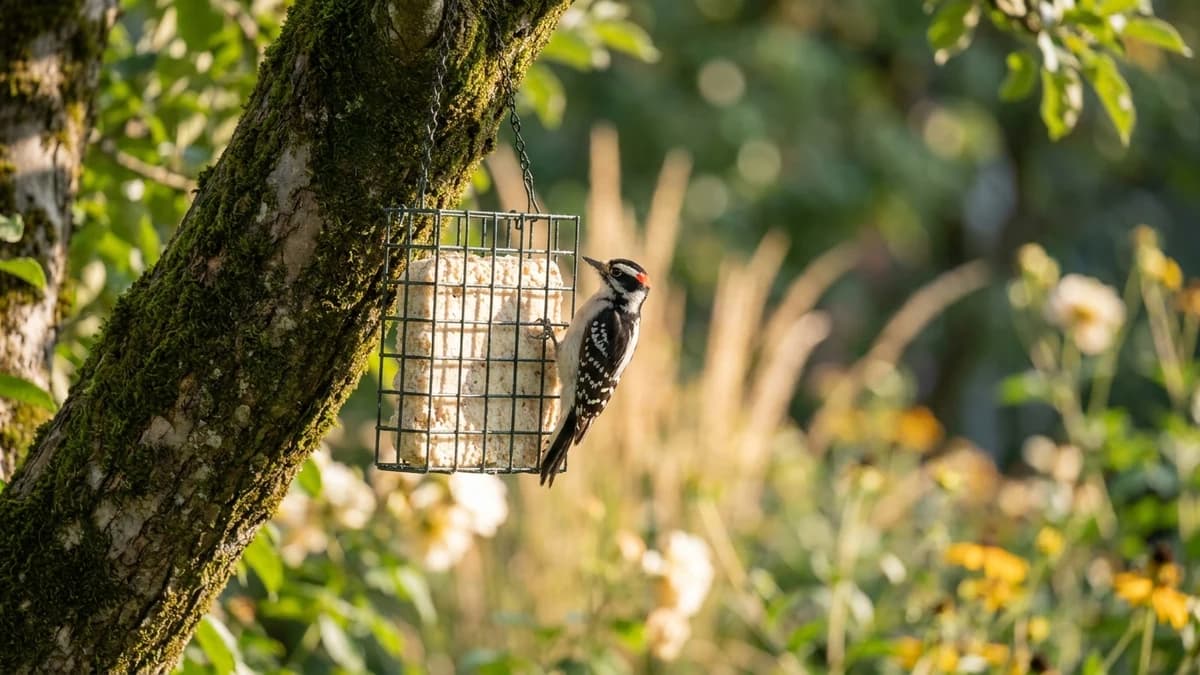
Woodpeckers are easier to bring in than you'd think. The short version: put up suet, add a few peanuts, and leave a dead branch standing if you safely can.
Key takeaways
- Suet is the number-one draw; use a no-melt blend in summer heat so it doesn't turn greasy.
- Peanuts, black-oil sunflower, and mealworms round out the menu, and flickers often feed on the ground on ants.
- A tail-prop suet feeder lets woodpeckers brace with their stiff tail the way they do on a tree trunk.
- A safe standing dead tree or snag is the best natural draw there is, giving them insects to forage and cavities to nest in.
Pick by your situation
| If your situation is… | Pick | Why |
|---|---|---|
| You want to start attracting woodpeckers with one simple step | Put up a suet feeder | Suet is the fastest, most reliable draw, and a tail-prop design feels natural to how woodpeckers brace and feed. |
| It is hot summer weather | Switch to a no-melt suet blend | Plain suet turns soft and can go rancid in heat, while no-melt blends hold up and stay appealing. |
| You have a dead tree that is not a safety hazard | Leave the snag standing | A snag offers insects to forage and cavities to nest in, making it the single best natural draw for woodpeckers. |
| A woodpecker is drumming on your siding in spring | Try gentle reflective deterrents and wait it out | Spring drumming is usually territorial courtship, not damage-seeking, and it typically settles down on its own. |
A shortcut by situation — start from the row that sounds like you.
If you've ever watched a woodpecker hitch its way up a tree trunk, you already know they're some of the most fun birds to have around. The good news for anyone just starting out: they're not fussy, and you don't need special gear or expert know-how to bring them in. A little suetA high-energy cake of rendered fat (often with seeds) that draws woodpeckers, nuthatches, and chickadees. and a bit of patience go a long way.
Which woodpeckers might visit
Which woodpeckers visit depends on your region and habitat. Use this as a starting list, then check local range maps.
- Downy Woodpecker — the smallest and boldest at feeders, and the one you're most likely to see first.
- Hairy Woodpecker — the Downy's bigger lookalike, and a regular visitor too.
- Red-bellied Woodpecker — an eastern woodland and backyard bird with a black-and-white barred back; its red head markings differ by sex. Check its range before expecting one in a western yard.
- Northern Flicker — a bit different, often feeding on the ground hunting ants, so don't be surprised to see one poking around your lawn.
- Pileated Woodpecker — crow-sized, and a possibility if you live near big woods.
Not sure who's who? Our common backyard birds ID guide and how to identify an unknown bird walk you through it, no experience required.
The number-one draw: suet
If you do just one thing, put up suet. It's a high-fat food that woodpeckers work hard for, and nothing pulls them in faster, especially from fall through early spring when they're burning calories to stay warm. In summer heat, plain suet can go soft and rancid, so reach for a no-melt blend (often labeled "no-melt" or "summer" suet) that holds up in warm weather.
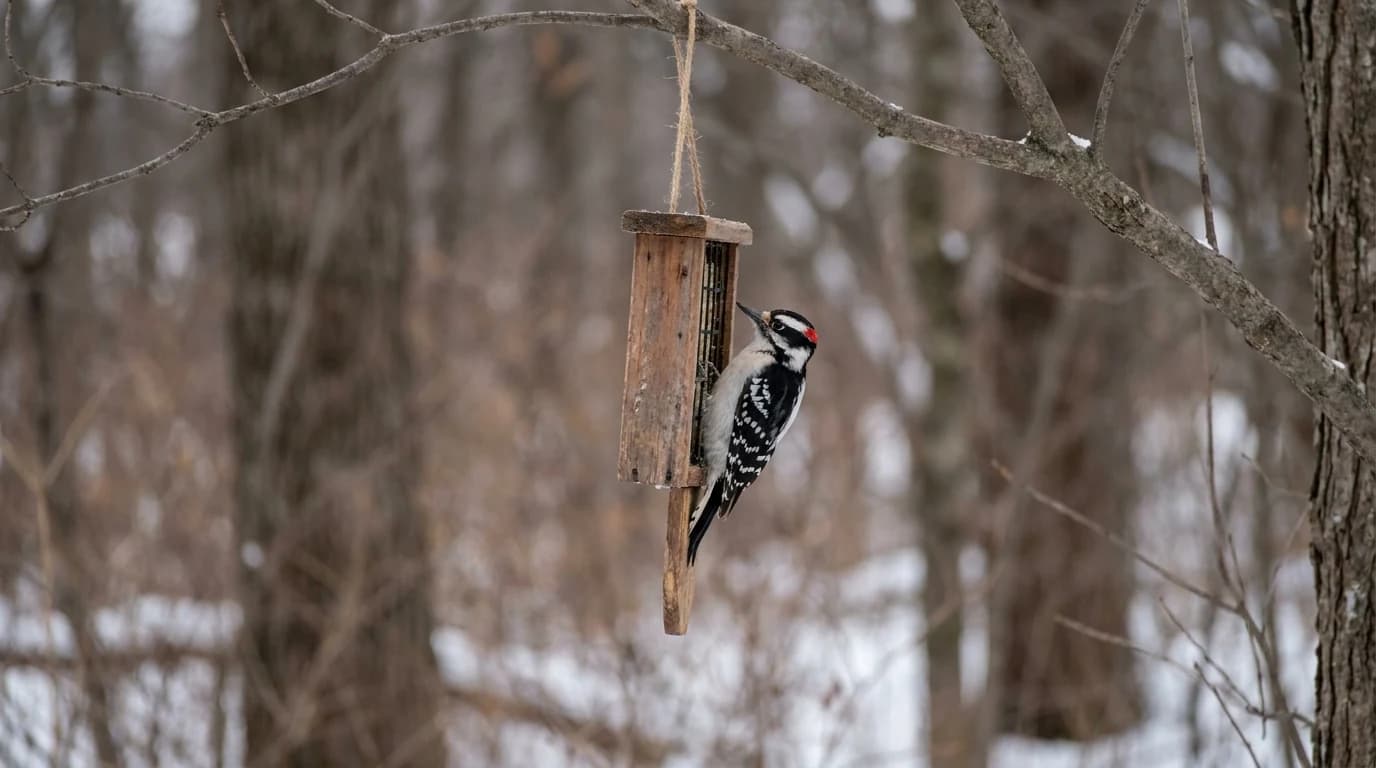
Why the tail-prop matters: the little extension at the bottom of a tail-prop suet feeder lets a woodpecker press down with its stiff tail feathers and brace itself, exactly the way it does against a tree trunk. That bracing posture is how they're built to feed, so the design makes your feeder feel natural to them.
You can compare styles on our suet feeders page. If you want the short version: the Birds Choice tail-prop feeder (on Amazon) is the tail-prop design described above, and a bulk suet refill pack (on Amazon) keeps it stocked.
Beyond suet: peanuts, sunflower, and mealworms
Woodpeckers happily eat more than suet:
- Peanuts — in the shell or in a peanut feeder. Red-bellied Woodpeckers in particular are big fans.
- Black-oil sunflower — an all-around favorite that plenty of woodpeckers will take.
- Mealworms — a protein-rich treat, especially welcome in nesting season.
If you're new to choosing food, our bird seed guide breaks down what each type does, and the seed selector tool can point you to a good starting mix.
What woodpeckers want: quick reference
| Need | What to offer |
|---|---|
| Food | Suet (no-melt in summer), peanuts, black-oil sunflower, mealworms |
| Feeder | Tail-prop suet feeder; peanut feeder; ground space for flickers |
| Habitat | A safe standing dead tree or snag for foraging and nesting |
| Water | A shallow bird bath, kept clean and topped up |
Habitat and water matter too
The best natural draw isn't a feeder at all, it's a dead tree or snag. Woodpeckers forage for insects in decaying wood and excavate cavities to nest in. If you have a dead tree that isn't a hazard, leaving it standing is one of the kindest things you can do for them (the Cornell Lab notes Downy Woodpeckers rely on dead limbs and snags for both food and nest sites). If a full snag isn't safe, even a dead limb left in place helps.
Water seals the deal. A shallow, clean bird bath gives woodpeckers a place to drink and bathe, and it draws in everyone else too, our bird bath guide covers placement and upkeep. For the big-picture basics, how to attract birds to your yard ties it all together.
"But one is drumming on my house"
A woodpecker can use siding for drumming, insect feeding, nest or roost excavation, or food storage. Do not assume every visit is harmless courtship. Cornell's explanation, checked October 12, 2026, distinguishes these behaviors:
- Loud rapid tapping without a growing hole can be territorial drumming.
- Small irregular holes may indicate insects in the siding.
- A larger rounded cavity may be a nest or roost; never seal an occupied hole.
Reflective streamers help at some sites, but no deterrent works everywhere. Avoid sticky repellents, and get advice before disturbing an active nest.
Useful gear for this guide
Optional, subject-matched picks from our live catalog—not a requirement for doing the advice above.
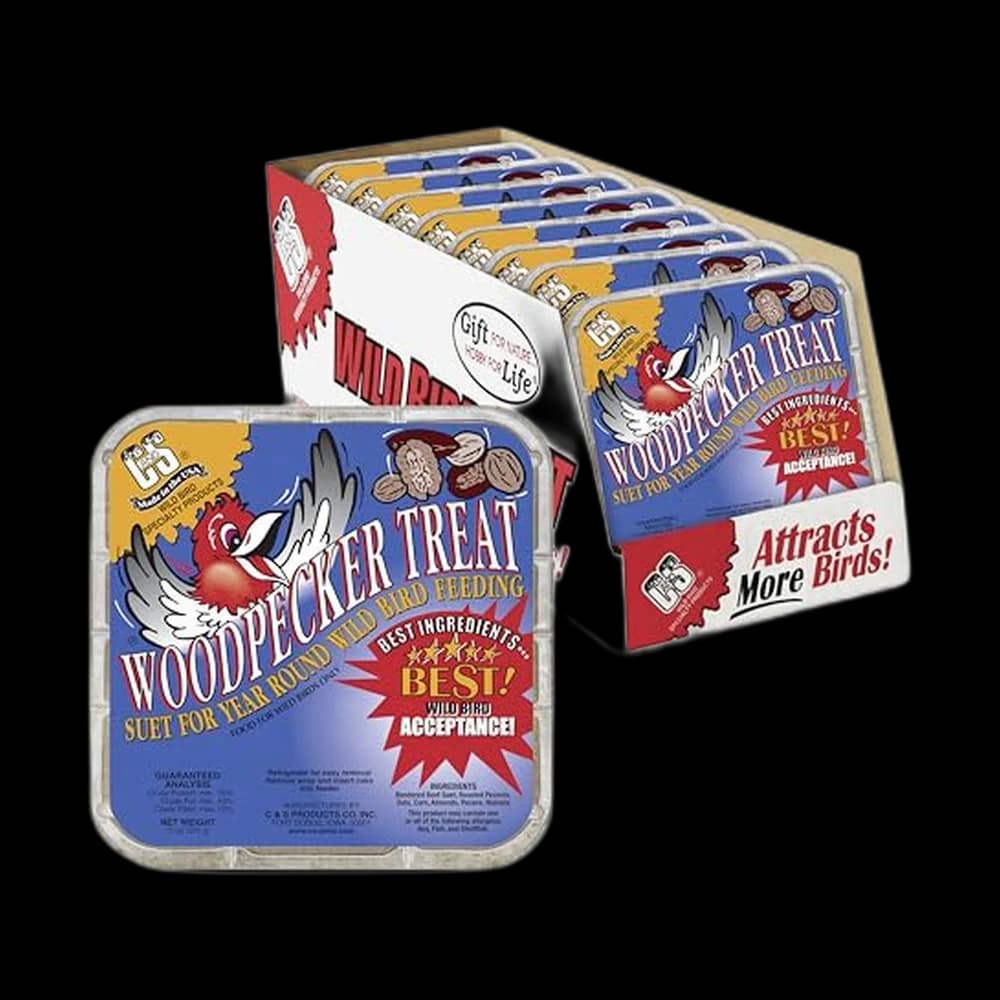
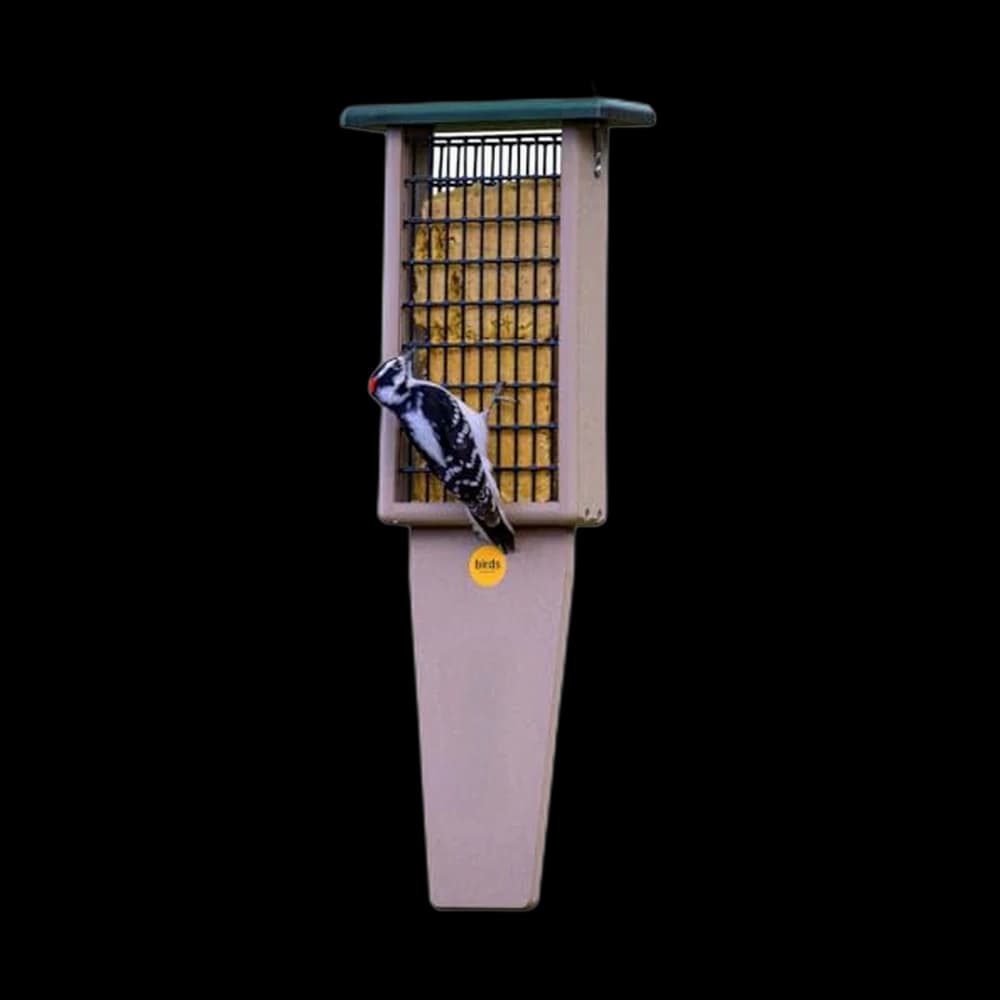
Woodpeckers want suet — here's what to hang it in.
Frequently asked
What is the best food to attract woodpeckers?+
Suet is the top draw by a wide margin. Use a no-melt blend in summer heat. Peanuts, black-oil sunflower, and mealworms are all popular too.
What kind of feeder do woodpeckers like?+
A tail-prop suet feeder is ideal because it lets a woodpecker brace with its stiff tail the way it does on a tree trunk. Peanut feeders also work well, and Northern Flickers often prefer feeding on the ground.
Why is a woodpecker drumming on my house?+
It may be territorial drumming, but holes can also come from feeding on insects, excavating a nest or roost, or storing food. Check what the bird is doing before choosing a response. Reflective streamers can help, but are not guaranteed; do not seal an occupied cavity or use sticky repellents.
Do I need a dead tree to attract woodpeckers?+
No, but it helps a lot. A safe standing dead tree or snag gives woodpeckers insects to forage and cavities to nest in, so leaving one up is the best natural draw. A dead limb left in place is a smaller version of the same idea.
Which woodpeckers visit backyards?+
Downy and Hairy Woodpeckers and Northern Flickers occur across broad parts of North America. Red-bellied Woodpeckers are primarily eastern; Pileated Woodpeckers need suitable wooded habitat. Check a local range map rather than expecting every species in the list.
Sources & further reading
We research from primary and authoritative sources. Where our guidance rests on a fact, here's where it comes from.
- Downy Woodpecker Life History | All About Birds (Cornell Lab) — Supports woodpecker diet (suet, insects, seeds), reliance on dead limbs and snags for foraging and nesting, and drumming behavior
- Why do woodpeckers like to hammer on houses? | Cornell Lab — Distinguishes drumming, insect feeding, cavity excavation and food storage; explains deterrent limits and cautions against sticky repellents.
- Red-bellied Woodpecker Identification | Cornell Lab — Supports the eastern woodland scope and plumage distinctions.
Prices and BirdingScores reflect our most recent research and refresh on a cycle; confirm the live price before buying. We may earn a commission from affiliate retailers — it never changes our recommendations. See how we review.