
How to Learn Bird Songs by Ear: A Practical Method
Birding by ear is a memory skill, not a musical gift. Learn 10 local singers first, describe sounds by quality, and use Merlin the honest way.
The short answer
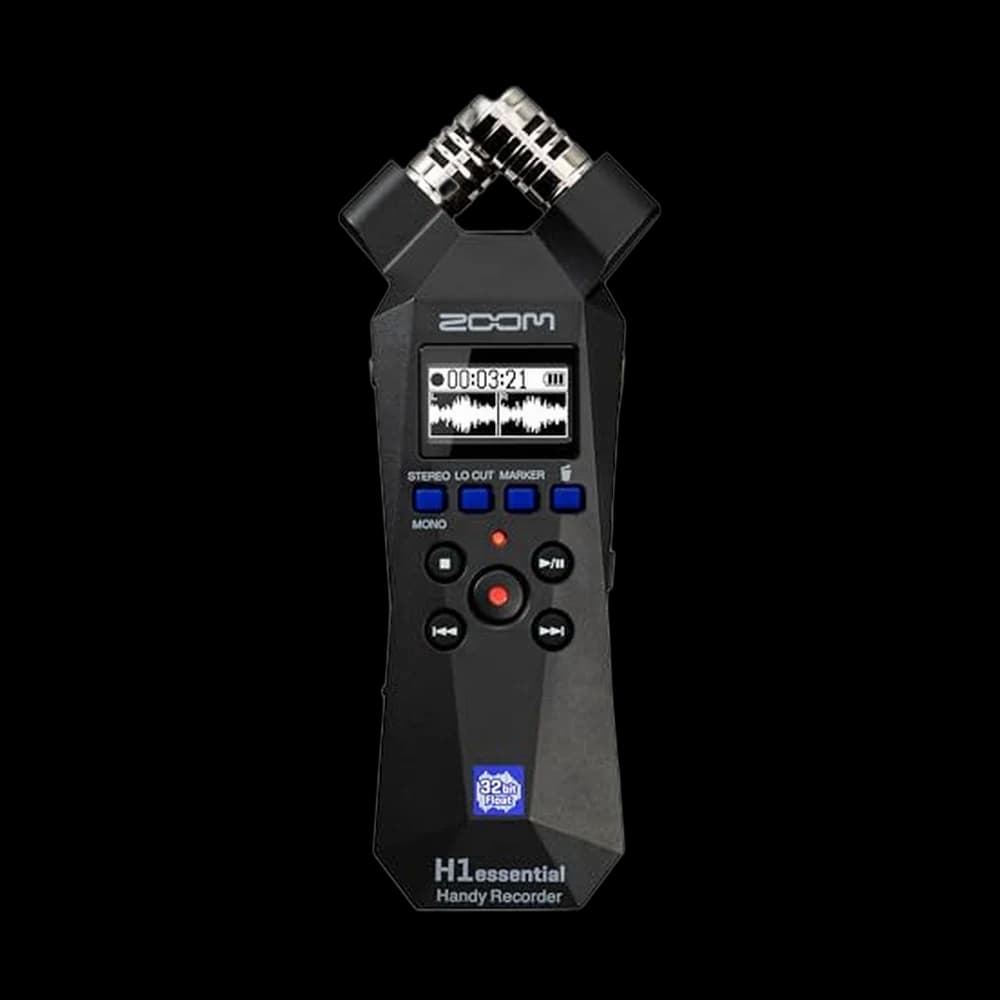
- Hands-on birders wanting a simple, affordable stereo field recorder for dawn-chorus captures.
- You expected automatic species ID: this only records audio, and buyers flag noise in quiet settings. Rated 4.1 stars on about 1,400 ratings, just under our usual 4.3 bar.

Key takeaways
- Sound helps you find hidden birds. Ear skills complement your eyes, especially in dense foliage; there is no fixed doubling of sightings.
- Learn 10 local singers first. Once they're automatic background, anything unfamiliar jumps out as "not-that" and tells you where to look.
- Describe quality, not melody. Buzzy, clear whistle, trill, warble, nasal, chip — plus pitch, tempo, and rising or falling.
- Guess first, then check Merlin. Used as a grader instead of an oracle, Sound ID builds skill; used first, it quietly replaces it.
Pick by your situation
| If your situation is… | Pick | Why |
|---|---|---|
| If you're just starting and only want to study birds you already heard | Your phone plus the free Merlin Sound ID app | Costs nothing and covers 2,000+ species offline — at this stage the bottleneck is your practice habit, not your microphone. |
| If distant or quiet songs keep coming back as unusable mush | A pocket field recorder like the Zoom H1 Essential | Better mics and manual gain pull faint song out of wind and traffic, so the recording is still worth studying at home. |
| If you want to learn what's actually in your yard while you're at work | A passive listener like the Haikubox | It logs vocalizations around the clock, which is the fastest honest way to find out which ten species are your real background. |
A shortcut by situation — start from the row that sounds like you.
Bird-Song ID Devices: our picks
| Pick | Best for | Rating | Price | |
|---|---|---|---|---|
| TopZoom H1 Essential Handheld Recorder for Musicians, Podcasters &… | Simple field recorder for dawn-chorus captures. | ★ 4.1 Amazon | $109.99 | Buy on Amazon |
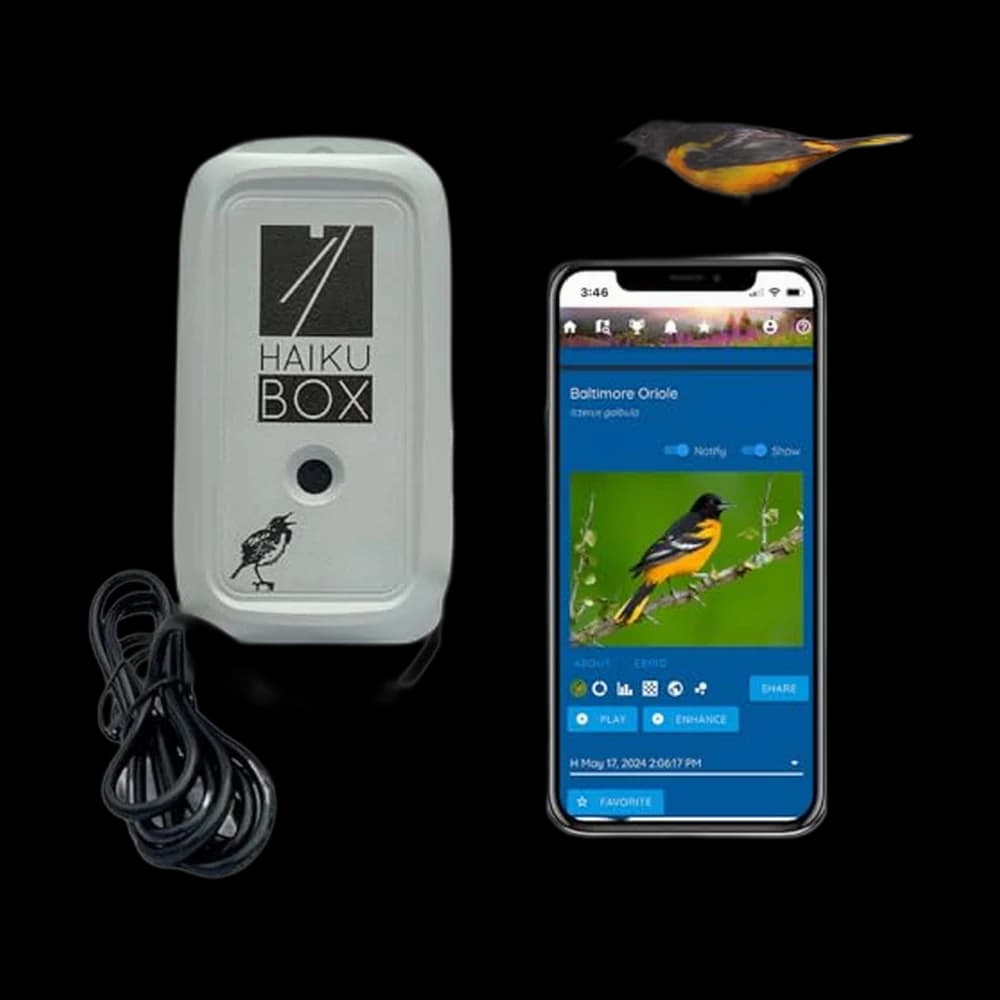 Haikubox Bird Song & Call Identifier: 24/7 backyard sound… Haikubox Bird Song & Call Identifier: 24/7 backyard sound… | The one bird-song station that reliably retails on Amazon. | ★ 4.5 Amazon | $279.00 | Buy on Amazon |
The practice unit is small: ten attentive minutes standing still, a short list of the birds singing near you, and a guess made before Merlin confirms it. Repeated, that routine is what builds song memory — no musical training required.
In leafy habitat, sound can reveal a bird you never see. Ear practice adds another way to notice and identify birds; the benefit depends on habitat, season and hearing.
Why birding by ear changes everything
- Sound goes where sight can't — through canopy, around a bend, an hour before sunrise. Your eyes point one direction; your ears cover 360 degrees.
- You detect birds you'd never spot. A singing Ovenbird 60 yards into the woods is invisible and unmissable at once.
- It's how good field birders actually bird. Most of their list is built from sound, with binoculars used to confirm, not to find.
Birders consistently report that ear skills, not better optics, separated their beginner years from their good ones.

No, you don't have "a bad ear"
Almost everyone who says this has simply never done focused practice. Cornell Lab and Audubon educators both frame song learning as active listening, not talent: you analyze a sound, you don't merely hear it.
Two honest caveats:
- High-frequency hearing loss is real. Blackpoll Warbler and Golden-crowned Kinglet sit near the top of the human range. If those have gone quiet, that's audiology, not effort.
- There is no fixed learning timetable. Repeat a few local sounds and use your notes to judge progress; different species and people take different amounts of practice.
Learn 10 common singers first — treat everything else as "not-that"
This is why most beginners stall: they try to learn 100 songs at once. Instead, learn the ten birds singing in your own neighborhood so well that they become background noise.
Once robin, cardinal, chickadee, titmouse, and house finch are automatic, your brain stops spending attention on them — and anything unfamiliar jumps out of the mix. Audubon frames this exactly right: knowing your local sounds is what unlocks new IDs.
Rule of thumb: your working question stops being "what is that?" and becomes "that's not one of my ten — go look."
Describe the quality, not the tune
Memorizing melodies fails. Describing texture, pitch, and rhythm works, because that's the vocabulary field guides and your own notes are indexed by.
| Quality | What it sounds like | Classic North American example |
|---|---|---|
| Clear whistle | Pure, flute-like, hummable | White-throated Sparrow |
| Buzzy | Insect-like, with a raspy edge | Blue-winged Warbler |
| Trill | One note repeated too fast to count | Chipping Sparrow |
| Warble | Tumbling and bubbly, no fixed pattern | House Finch |
| Nasal | Pinched, like a toy horn | Red-breasted Nuthatch |
| Chip note | A single short call — not a song at all | Northern Cardinal |
Then add three modifiers: pitch (high or low), tempo (fast or slow), and direction (rising, falling, or flat). "High, buzzy, rising" narrows the field faster than any hummed melody.
Mnemonics: useful hooks, real limits
Where they earn their keep:
- The classics genuinely stick: "who cooks for you" (Barred Owl), "drink-your-TEA" (Eastern Towhee), "peter-peter-peter" (Tufted Titmouse), "cheeseburger" (Black-capped Chickadee), "Oh sweet Canada Canada" (White-throated Sparrow).
Where they break down:
- They only work if someone hands them to you — you can't derive one for a bird you've never heard.
- They encode rhythm, not quality. Two very different-sounding birds can fit the same phrase.
- Regional dialects vary. An Alberta White-throated Sparrow may not match the Ontario version you learned.
Use them as scaffolding, then replace them with quality descriptions.
Song vs. call note — learn the difference early
- Song = long, structured, usually a male, usually breeding season, usually from a perch.
- Call notes = short chips, seeps, and chatters, used year-round by both sexes for contact and alarm.
Songs get you through May. Call notes get you through the other ten months, and fall migration is almost entirely call notes. Start with song, but don't stop there.
Use Merlin Sound ID honestly: guess first, then check
Merlin's Sound ID identifies 2,000+ species, works offline, and matches spectrogram patterns learned from Macaulay Library recordings. A remarkable free tool — and easy to misuse into dependence.
The protocol that builds skill instead of eroding it:
- Hear the sound. Say your guess out loud first — even a bad guess.
- Then open Merlin and check yourself.
- Watch the spectrogram scroll while it listens; you're training your eye to see pitch and shape.
- Confirm the bird yourself against range, habitat, and season before accepting it.
Pro tip: eBird's own best-practice guidance is blunt — Merlin can make mistakes, and you shouldn't report a bird you haven't independently considered. Treat every suggestion as a hypothesis, not a verdict. Recording 30+ seconds of continuous audio, close to the bird and out of the wind, sharply improves what it hears.
Ten focused minutes a day, in your own yard
- Short and daily beats long and rare. Ten attentive minutes on the back step, five days a week, outruns one three-hour outing a month.
- Space your repetitions. Re-test last week's birds before adding new ones — song memory decays fast and rebuilds faster.
- Learn where it's quiet. Your yard has eight singers; a May migration morning has forty overlapping ones. Build on easy mode.
- Watch the bird sing. Pairing sight with sound is the strongest memory anchor there is.
Record what you can't place
A phone mic flattens distant song into mush
When something stumps you, capture it and study it later. A phone works in a pinch, but a dedicated recorder's mics pull faint song out of wind and road noise.
A commonly recommended entry-level field recorder is the Zoom H1 Essential — pocketable and simple to run one-handed.
Let something else listen while you're at work
For passive learning at home, a Haikubox listens around the clock and logs what sang while you were out — a good way to find out what your "background" really is.
Last step: upload good recordings to your eBird checklist — they're archived in the Macaulay Library and become part of the research record.
Useful gear for this guide
Optional, subject-matched picks from our live catalog—not a requirement for doing the advice above.
Frequently asked
How long does it take to learn bird songs by ear?+
There is no fixed timetable. Start with a few common local species, listen in short repeated sessions and check your guesses against a bird you can see or a trusted recording. Add another sound when the earlier ones feel familiar; unfamiliar calls and regional variation take further practice.
Is it bad to rely on Merlin Sound ID?+
Merlin is an excellent learning tool but a poor substitute for your own judgment. eBird's best-practice guidance states plainly that Merlin can make mistakes and that you shouldn't report a bird you haven't independently considered. The fix is sequencing: guess out loud first, then check the app, then confirm against range, habitat, and season.
What's the difference between a bird song and a call note?+
A song is long and structured, usually given by a male from a perch during breeding season to hold territory and attract a mate. Call notes are short chips, seeps, and chatters used year-round by both sexes for contact and alarm. Songs carry you through spring; call notes carry you through the rest of the year.
Do I need a recorder, or is my phone enough?+
A phone is fine for close, loud birds and for running Merlin. A dedicated recorder helps when the bird is distant or the background is noisy, because its microphones capture quiet detail a phone tends to flatten. Either way, aim for at least 30 seconds of continuous audio, get as close as you reasonably can without disturbing the bird, and keep the mic out of the wind.
What if I genuinely can't hear high-pitched songs?+
High-frequency hearing loss is common and real, and it does mute birds like Blackpoll Warbler, Cedar Waxwing, and Golden-crowned Kinglet. That's an audiology question, not a motivation one. The great majority of the soundscape sits well below that range, so ear-birding stays fully learnable.
Sources & further reading
We research from primary and authoritative sources. Where our guidance rests on a fact, here's where it comes from.
- How to Start Identifying Birds by Their Songs and Calls — Kenn Kaufman for Audubon: start with a handful of voices, listen actively rather than passively, describe pitch/tone/direction, and pair the sound with a visual of the singing bird.
- Why Knowing Your Local Bird Sounds Is the Key to Unlocking New IDs — Audubon on the 'not-that' effect: once common local songs become mental background, an unfamiliar sound stands out immediately.
- Sound ID (Merlin Bird ID Help Center) — Cornell Lab: Sound ID covers 2,000+ species, works offline, matches spectrogram patterns learned from Macaulay Library recordings, and states that a suggestion is only the beginning — you decide.
- Merlin Sound ID Best Practices — Cornell Lab: Merlin can make mistakes; don't report IDs you haven't independently considered; check range, habitat, behavior and season; record 30+ seconds close to the bird and archive audio in eBird.
- Birding by ear: How to learn the songs of nature's symphony with some simple techniques — Chris Lituma, ornithologist at West Virginia University: start with two or three neighborhood songs, use mnemonics, watch the bird sing, and treat ID apps as supplements rather than primary tools.
Prices and BirdingScores reflect our most recent research and refresh on a cycle; confirm the live price before buying. We may earn a commission from affiliate retailers — it never changes our recommendations. See how we review.