
Bird-Song ID Devices
Always-on listening stations that log every bird by its voice — the newest, nerdiest way to bird your own yard.
Content updated October 21, 2026
The 30-second answer
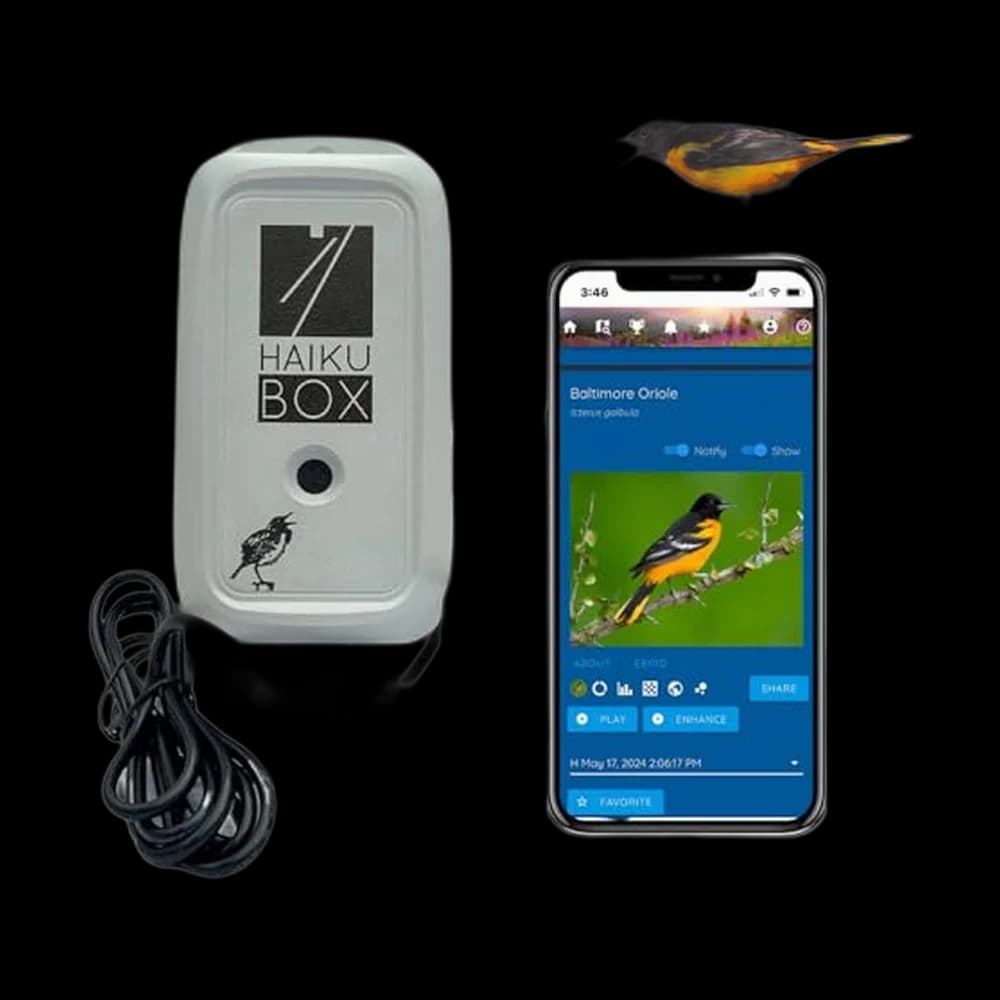
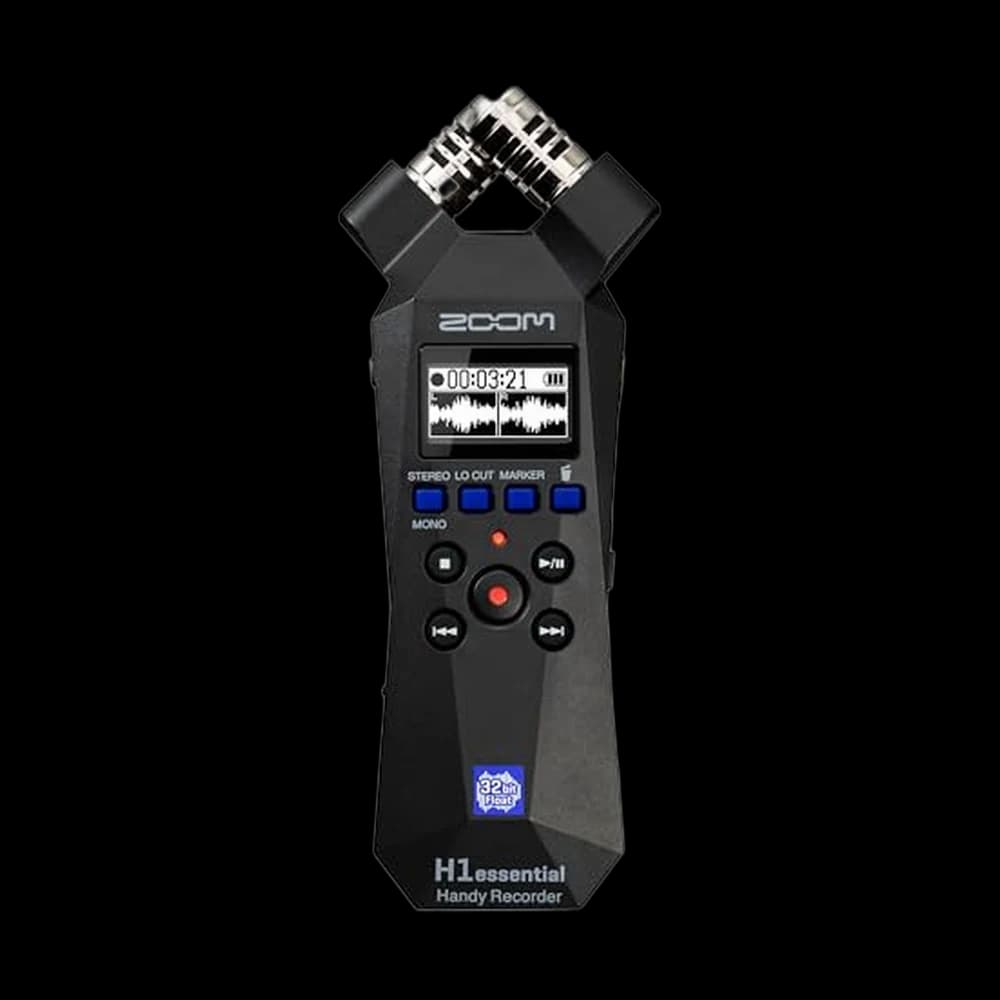
The Haikubox is the pick if you want hardware that identifies birds for you: unattended round-the-clock ID of everything in range. For recording songs yourself, the Zoom H1 Essential is the simple pocket recorder, with no ID built in. Neither is necessary, since the free phone apps do recognition well, and hardware earns its place only for continuous garden monitoring or recording quality. Treat any sound ID as a suggestion — mimics like mockingbirds, starlings and jays break these tools routinely.
Top pickHaikubox
Serious birders wanting 24/7 AI song ID of every bird in range, not just feeder visitors.
Buy on Amazon$279.00
Cheapest alternativeZoom H1 Essential
Hands-on birders wanting a simple, affordable stereo field recorder for dawn-chorus captures.
Buy on Amazon$109.99
Owner ratings come from Amazon; BirdingScore is our separate research score.
Compare two picks
Tap an unselected chip to compare it with your current right-hand pick — all 2 picks available.
BirdingScore
67/100
67/100
Skip it if
You want a no-subscription device: full features need a $59/year membership after the included first year. Only about 20 ratings so far, a thin sample.
You expected automatic species ID: this only records audio, and buyers flag noise in quiet settings. Rated 4.1 stars on about 1,400 ratings, just under our usual 4.3 bar.
ID method
AI acoustic ID (songs & calls)
Manual field recorder (no built-in ID)
Species database
—
—
Screen
No (app/web)
Yes (LCD)
Power
Plug-in (mains)
Batteries / USB-C
Connectivity
Wi-Fi
USB-C
The constraint-stacked answer
The free phone apps already do recognition well, so hardware only earns its place two ways. For unattended round-the-clock logging, the Haikubox is the only pick here that does it — $279, with full features on a $59/year membership after the included first year. For capturing songs yourself, the Zoom H1 Essential is a recorder with no ID built in at all.
Every pick, reviewed
67Bird
Haikubox
Haikubox
The one bird-song station that reliably retails on Amazon.
Skip it if: You want a no-subscription device: full features need a $59/year membership after the included first year. Only about 20 ratings so far, a thin sample.
4.5 Amazon(26)$279.00
67Bird
Zoom
Zoom H1 Essential
Simple field recorder for dawn-chorus captures.
Skip it if: You expected automatic species ID: this only records audio, and buyers flag noise in quiet settings. Rated 4.1 stars on about 1,400 ratings, just under our usual 4.3 bar.
4.1 Amazon(1,462)$109.99
From the birding community
What birders actually say about bird-song id devices
Recurring themes we found across 123 public discussion threads in r/birding, r/birdwatching, r/fieldrecording, read in July 2026. We summarise what comes up repeatedly and link the threads — we never quote or identify anyone, and these forums don't give us vote counts, so treat this as the shape of the conversation rather than a measured majority.
Comes up again and again
Treat a sound ID as a suggestion, not an answer
Experienced birders are consistent that these tools are a starting point to be confirmed by ear or eye. The failure mode described for the wider-scoped engines is proposing species that could not possibly occur in your region.
The recurring complaint
Mimics break sound identification
Mockingbirds, starlings and jays reproducing other species is a specific, repeated cause of false positives, and a long list of species from one session is treated with suspicion for exactly this reason.
The dissenting view
The apps have made a dedicated device a niche purchase
With free phone apps doing recognition well, the reason people give for buying hardware shifts to something else entirely: continuous unattended monitoring of a garden, or recording quality good enough to submit.
Comes up again and again
For recording, the microphone matters more than the recorder
Handheld recorders are well regarded as capable and portable, but the advice that recurs is that a parabolic or shotgun microphone is what actually isolates a distant bird from background noise.
What we didn't pick
Options we researched and catalogued but left off the list above, with the reason each one is being held back.
- Tascam DR-05XPHidden 2026-10-22: no main buy box; the only offers are about 60% over list price. Re-checked monthly.
Guides for buying Bird-Song ID Devices
Frequently asked
Do I need a device, or is a phone app enough?+
For most people the free phone apps are enough. The reasons owners give for buying hardware are different: continuous unattended monitoring of a garden, or recording quality good enough to submit.
Which one should I buy?+
The Haikubox is our top pick if you want round-the-clock automatic ID of everything in range. For recording songs yourself rather than identifying them, the Zoom H1 Essential is the simple pocket recorder.
How much should I trust a sound ID?+
Treat it as a suggestion to confirm by ear or eye. Mimics — mockingbirds, starlings and jays reproducing other species — are a specific and repeated cause of false positives, so a long species list from one session deserves suspicion.
Sources & research (11)Show
- A New Study Knocks Down a Popular Hypothesis About Why Birds Sing at Dawn | NPR — The 2025 research the article cites — challenges the 'sound travels farther at dawn' hypothesis; social factors dominate.
- Study Reveals Why Birds Sing More at Dawn in Tropical Forests | Cornell Lab of Ornithology — Cornell Lab's own writeup of the 2025 study finding territoriality and feeding habits, not acoustics, drive dawn song.
- Who Sings First During the Dawn Chorus—and Why? | All About Birds (Cornell Lab) — Supports the predictable order: large-eyed early risers (robins/thrushes) sing first in dim light, smaller songbirds follow.
- Eye Size in Birds and the Timing of Song at Dawn (Thomas et al.) | Proc. R. Soc. B (PMC) — Peer-reviewed source that large-eyed species sing at lower light intensities, backing the big-eyed-birds-first claim.
- Why Do Birds Sing So Loudly in the Morning in Spring? It's the 'Dawn Chorus' | National Geographic — Supports territory-defense and mate-attraction as the leading reasons and the spring/early-summer breeding peak.
- How to Start Identifying Birds by Their Songs and Calls — Kenn Kaufman for Audubon: start with a handful of voices, listen actively rather than passively, describe pitch/tone/direction, and pair the sound with a visual of the singing bird.
- Why Knowing Your Local Bird Sounds Is the Key to Unlocking New IDs — Audubon on the 'not-that' effect: once common local songs become mental background, an unfamiliar sound stands out immediately.
- Sound ID (Merlin Bird ID Help Center) — Cornell Lab: Sound ID covers 2,000+ species, works offline, matches spectrogram patterns learned from Macaulay Library recordings, and states that a suggestion is only the beginning — you decide.
- Merlin Sound ID Best Practices — Cornell Lab: Merlin can make mistakes; don't report IDs you haven't independently considered; check range, habitat, behavior and season; record 30+ seconds close to the bird and archive audio in eBird.
- Birding by ear: How to learn the songs of nature's symphony with some simple techniques — Chris Lituma, ornithologist at West Virginia University: start with two or three neighborhood songs, use mnemonics, watch the bird sing, and treat ID apps as supplements rather than primary tools.
- My Offline Birds — Official Cornell instructions checked October 5, 2026.
Keep narrowing the choice
Prices and ratings shown are the most recent values we pulled from affiliate retailers and refresh on a recurring cycle; confirm the live price before buying. See how we score.