
How to Attract Cardinals: Feeders, Cover & Water
Attract cardinals with a platform or hopper feeder, dense shrubs for cover, and water. Feed at dawn and dusk — here's the full habitat setup.
The short answer
- Anyone starting out: black-oil sunflower draws the widest variety of birds with thin, easy-open shells.
- You want a tidy patio; in-shell seed leaves hulls and mess below the feeder.
Key takeaways
- Black-oil sunflower + safflower are the two seeds cardinals love most.
- Cardinals need room to perch — platform and hopper feeders beat skinny tubes.
- Dense shrubs and evergreens give them the cover they insist on before feeding.
- They feed at dawn and dusk, so a full feeder early and late catches them best.
Pick by your situation
| If your situation is… | Pick | Why |
|---|---|---|
| If squirrels or grackles keep mobbing your feeder | Switch to safflower seed | Cardinals eat it happily while most pests avoid the bitter taste |
| If cardinals visit but can't seem to perch | A platform or hopper feeder | They need a stable, roomy landing spot that tubes don't provide |
| If you want to watch cardinals up close | An open-tray feeder near a window (3 ft or 10+ ft away) | Trays give clear views and the safe-zone spacing reduces window strikes |
A shortcut by situation — start from the row that sounds like you.
Bird Seed & Blends: our picks
| Pick | Best for | Rating | Price | |
|---|---|---|---|---|
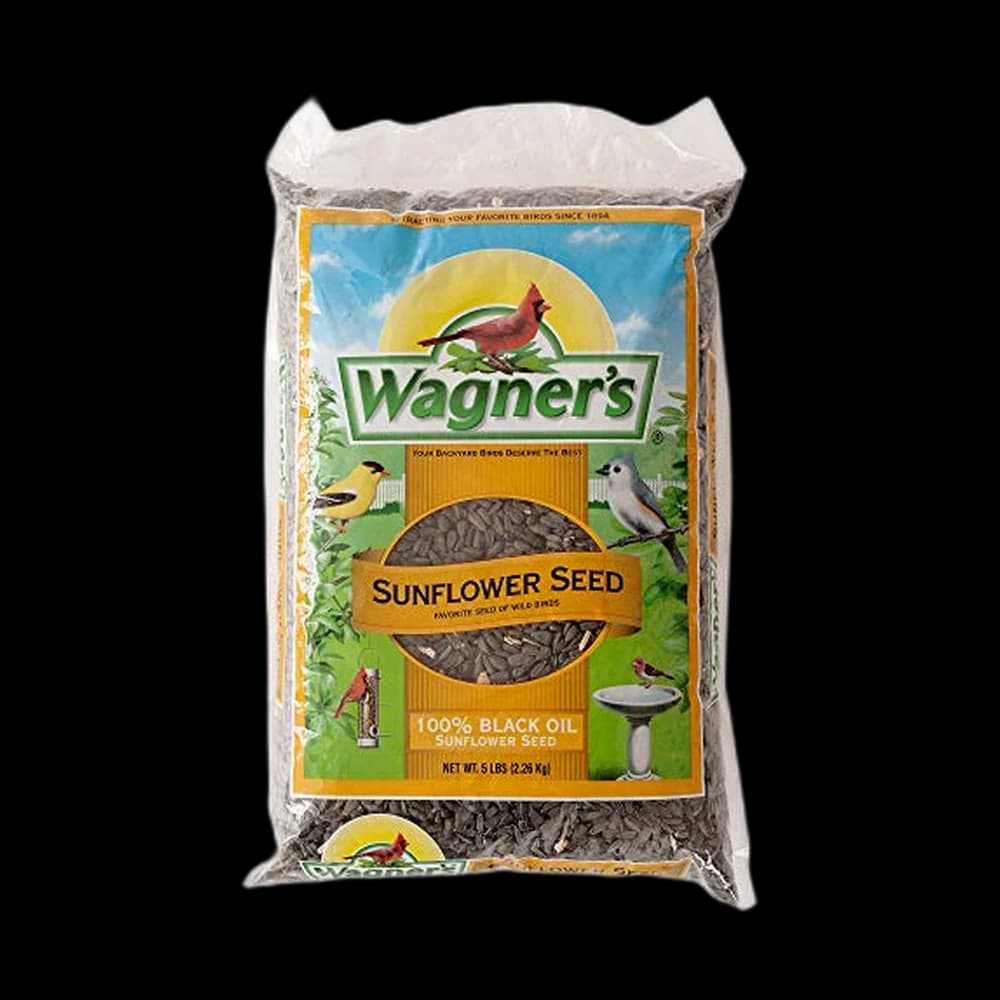
| TopWagner's 52023 Black Oil Sunflower Seed Wild Bird Food, 5-Pound Bag | The one seed that draws the widest crowd. | ★ 4.7 Amazon | $10.98 | Buy on Amazon |
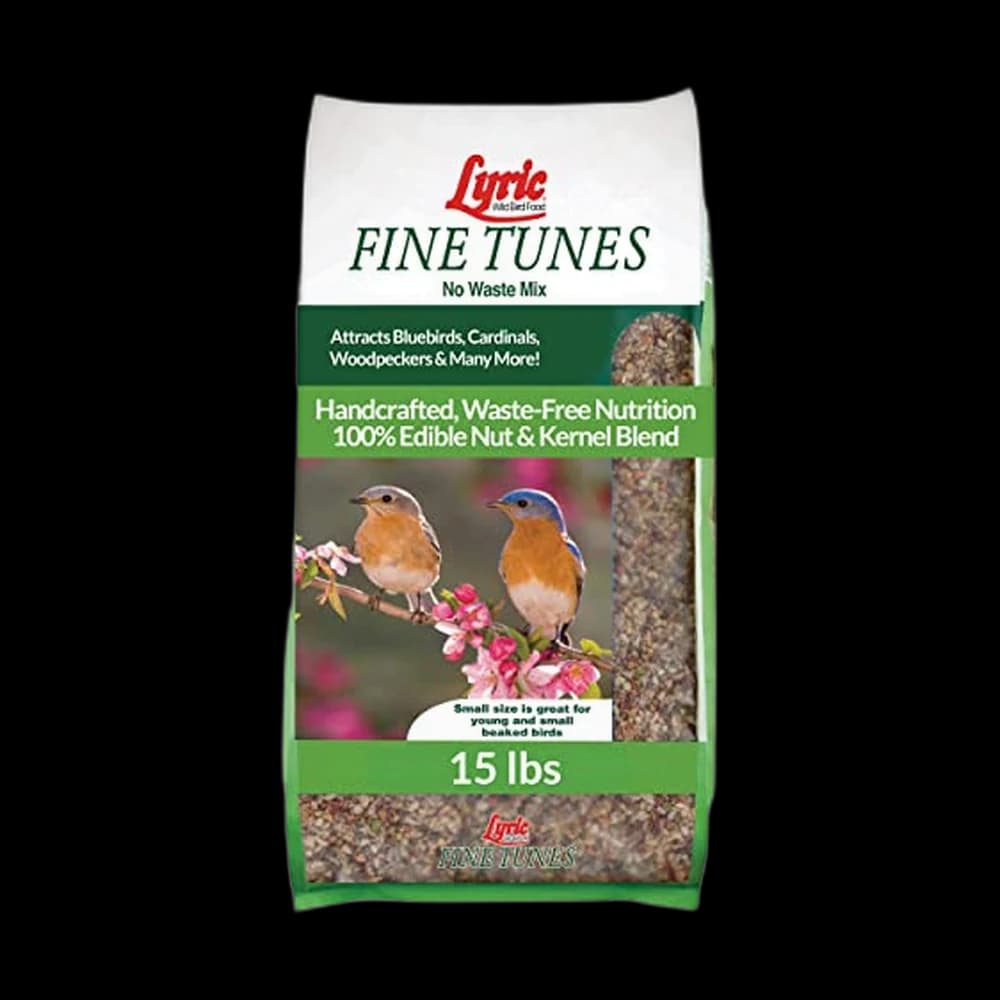 Lyric Fine Tunes Wild Bird Seed Mix - No Waste Bird Food Mix -… Lyric Fine Tunes Wild Bird Seed Mix - No Waste Bird Food Mix -… | Premium no-waste mix of hearts and nuts. | ★ 4.5 Amazon | $39.04 | Buy on Amazon |
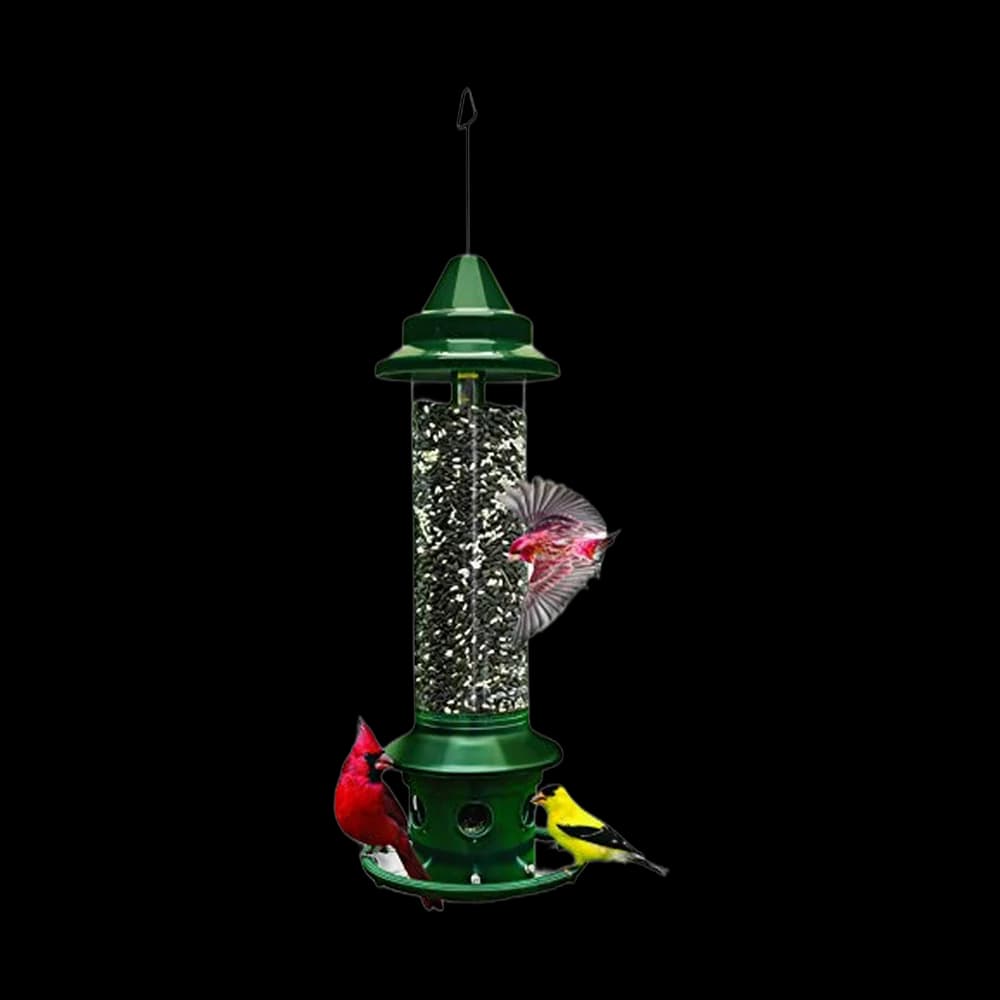 Squirrel Buster Plus Squirrel-proof Bird Feeder w/Cardinal Ring and… Squirrel Buster Plus Squirrel-proof Bird Feeder w/Cardinal Ring and… | The squirrel-proof gold standard. | ★ 4.7 Amazon | — | Check price → |
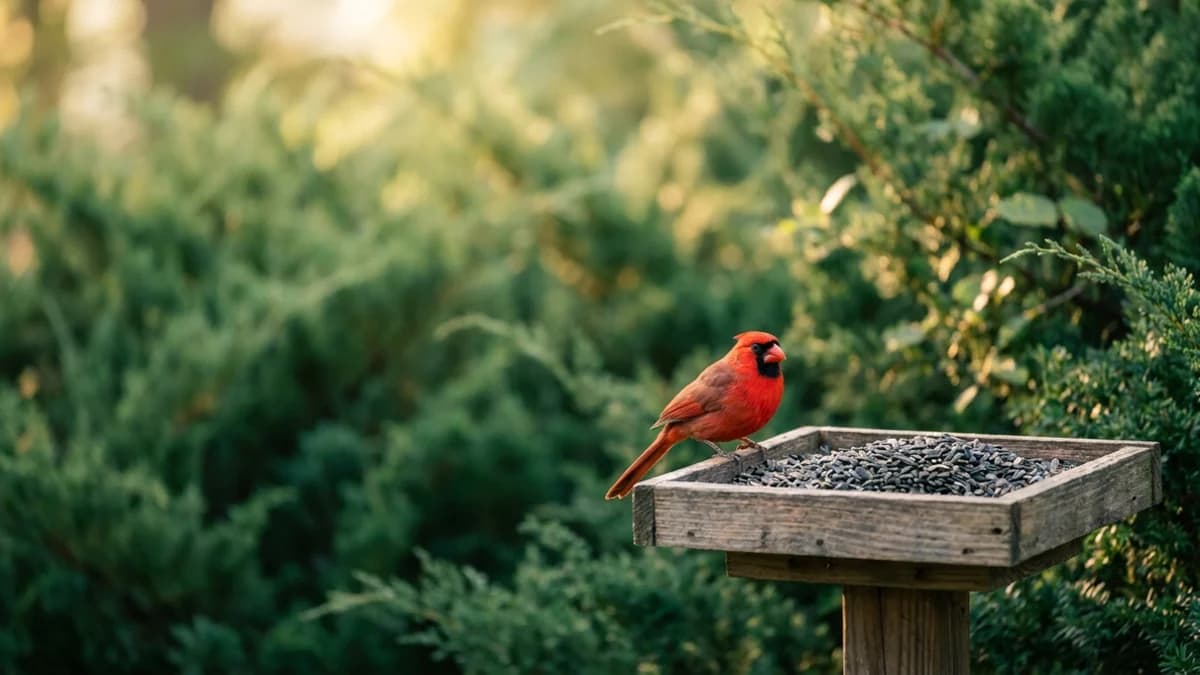
To attract cardinals, put out black-oil sunflower and safflower seed on a platform or hopper feeder with room to perch, and plant dense shrubs nearby for cover. Cardinals are creatures of habit — give them the right food, a sturdy perch, and a safe hedge, and they'll become regulars.
They're ground-and-platform feeders at heart, so the skinny tube that suits finches often frustrates a chunky cardinal.
Cardinal favorite foods
Cardinals have strong, cone-shaped bills built for cracking big seeds. These are the winners.
| Food | Why cardinals love it |
|---|---|
| Black-oil sunflower | High fat, thin shell — their top choice |
| Safflower | Cardinals love it; squirrels and grackles usually don't |
| Sunflower hearts/chips | No-mess, easy to eat |
| Cracked corn | Cheap ground-feeding filler they'll take |
| Peanuts (shelled) | Extra fat, especially in winter |
Start with Wagner's Black Oil Sunflower. A premium no-waste mix of hearts and nuts, like Lyric Fine Tunes, also keeps the ground below the feeder clean.
Safflower is your secret weapon. Cardinals readily eat it, but squirrels, grackles, and starlings tend to avoid its bitter taste — so switching to safflower can hand the feeder back to the cardinals.
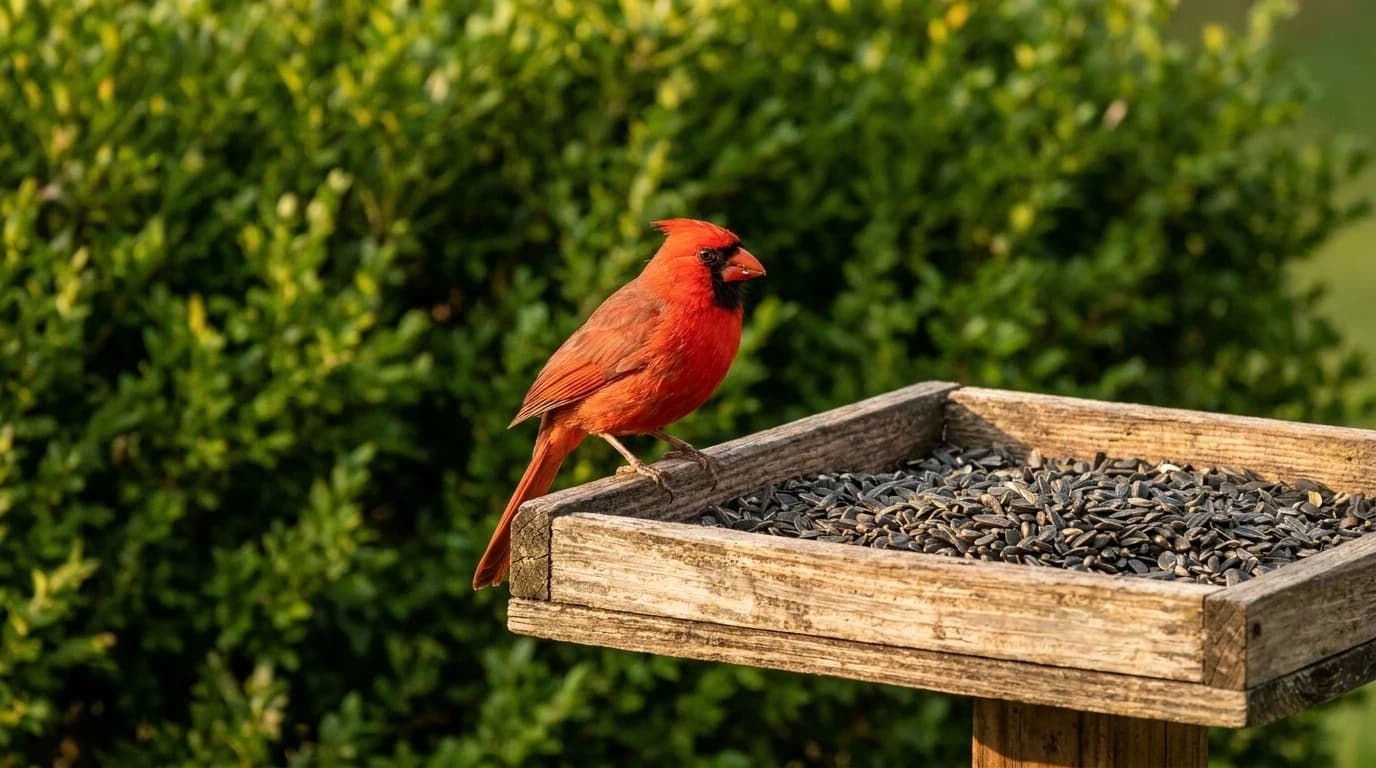
The right feeder for a cardinal's body
Cardinals are bigger than chickadees and need a stable place to stand. Give them one.
Feeders that work:
- Platform / tray feeders — the top pick; wide open, easy to land on.
- Hopper feeders — large perches and capacity for a whole family.
- The ground itself — cardinals happily eat scattered seed below feeders.
Feeders to avoid:
- Small-perch tube feeders, where a cardinal struggles to balance.
- Clinging-only mesh, which gives them nothing to stand on.
A roomy option is the Squirrel Buster Plus: it ships with Brome's Cardinal Ring, a perching ring that gives a chunky cardinal somewhere to stand while it feeds, and its shroud closes under a squirrel's weight.
Give them cover they trust
Cardinals won't feed in the open for long. They dart between feeder and shelter, so cover close by is non-negotiable. Plant dense shrubs and evergreens, which they roost and nest in, and add native berry bushes like dogwood, sumac and viburnum to feed them naturally. Keep a hedge or brush pile within a short flight of the feeder.
Feed on their schedule
Cardinals are often the first birds at the feeder at dawn and the last at dusk, in that low light when other birds have quit. Fill the feeder the evening before so it's stocked at first light, top it off in late afternoon for the dusk visit, and keep water available — a bath earns you repeat visits year-round.
Add winter fat and keep water open
Cardinals don't migrate, so they're in your yard year-round. Keep water available even in winter, when a heated bath is a genuine draw once everything else is frozen. Offer extra fat in cold weather — peanuts and sunflower hearts help them hold body heat — and brush snow off platform feeders after storms so they can still feed at dawn.
Troubleshoot a cardinal-free yard
If you've done everything and still see none, work through this list.
- Are there cardinals in your area at all? Check a local checklist; they're absent from parts of the far West.
- Is there cover nearby? No shrubs means no cardinals — plant or add a brush pile.
- Is the feeder stable and roomy? Swap skinny tubes for a tray or hopper.
- Is the seed fresh and sunflower-based? Ditch filler mixes for black-oil sunflower or safflower. If squirrels or blackbirds are mobbing the feeder, lean on safflower — cardinals eat it happily while many pests pass it up.
Keep them coming back
Consistency is everything with cardinals. A feeder that's reliably full, safe cover a few feet away, and safflower or sunflower on the menu will hold a resident pair through every season across the US and Canada.
Stock it, shelter it, and be patient — once a pair claims your yard, they rarely leave.
Useful gear for cardinals
Start with dependable seed and a feeder large enough for a cardinal to perch comfortably.
Compare all gear & how we scoreFrequently asked
What is a cardinal's favorite food?+
Black-oil sunflower seed is the top favorite, followed closely by safflower. Both suit their strong, cone-shaped bills. Safflower has the bonus of being unpopular with squirrels and grackles, so it helps keep the food for the cardinals.
What feeder do cardinals like?+
Platform (tray) and hopper feeders with room to perch. Cardinals are larger birds that need a stable place to stand, so they struggle with skinny tube feeders and clinging-only mesh. They'll also happily eat seed scattered on the ground.
Why won't cardinals come to my feeder?+
Usually it's a missing piece: no nearby cover, the wrong feeder (small-perch tubes), or filler-heavy seed. Add dense shrubs within a short flight, switch to a platform or hopper with black-oil sunflower or safflower, and give it a week or two — cardinals are cautious and habitual.
Do cardinals eat safflower?+
Yes, cardinals readily eat safflower and it's one of their favorites. It's especially useful because squirrels, grackles, and starlings tend to avoid its bitter taste, so offering safflower gives cardinals a feeder pests leave alone.
Sources & further reading
We research from primary and authoritative sources. Where our guidance rests on a fact, here's where it comes from.
- Northern Cardinal Life History | All About Birds (Cornell Lab) — Backs cardinals' cone bill for cracking seeds, preference for black-oil sunflower, and nesting in dense shrubs/tangles.
- Feeding Birds: A Quick Guide to Seed Types | All About Birds (Cornell Lab) — Supports safflower being eaten by cardinals while grackles, starlings and House Sparrows tend to avoid its thick shell.
- Northern Cardinal | Audubon Field Guide — Supports habitat/cover needs and year-round non-migratory range across the US and Canada.
- Northern Cardinal — Diet and Foraging | Birds of the World (Cornell Lab) — Peer-edited authority on cardinal foods (seeds, fruit, insects) supporting the food recommendations.
Prices and BirdingScores reflect our most recent research and refresh on a cycle; confirm the live price before buying. We may earn a commission from affiliate retailers — it never changes our recommendations. See how we review.