
Raven vs Crow: Check the Tail, Then Listen for the Croak
Raven or crow? A raven's tail is a wedge in flight and it croaks; a crow's tail is squared and it caws. A sourced table adds Fish Crow and Chihuahuan Raven
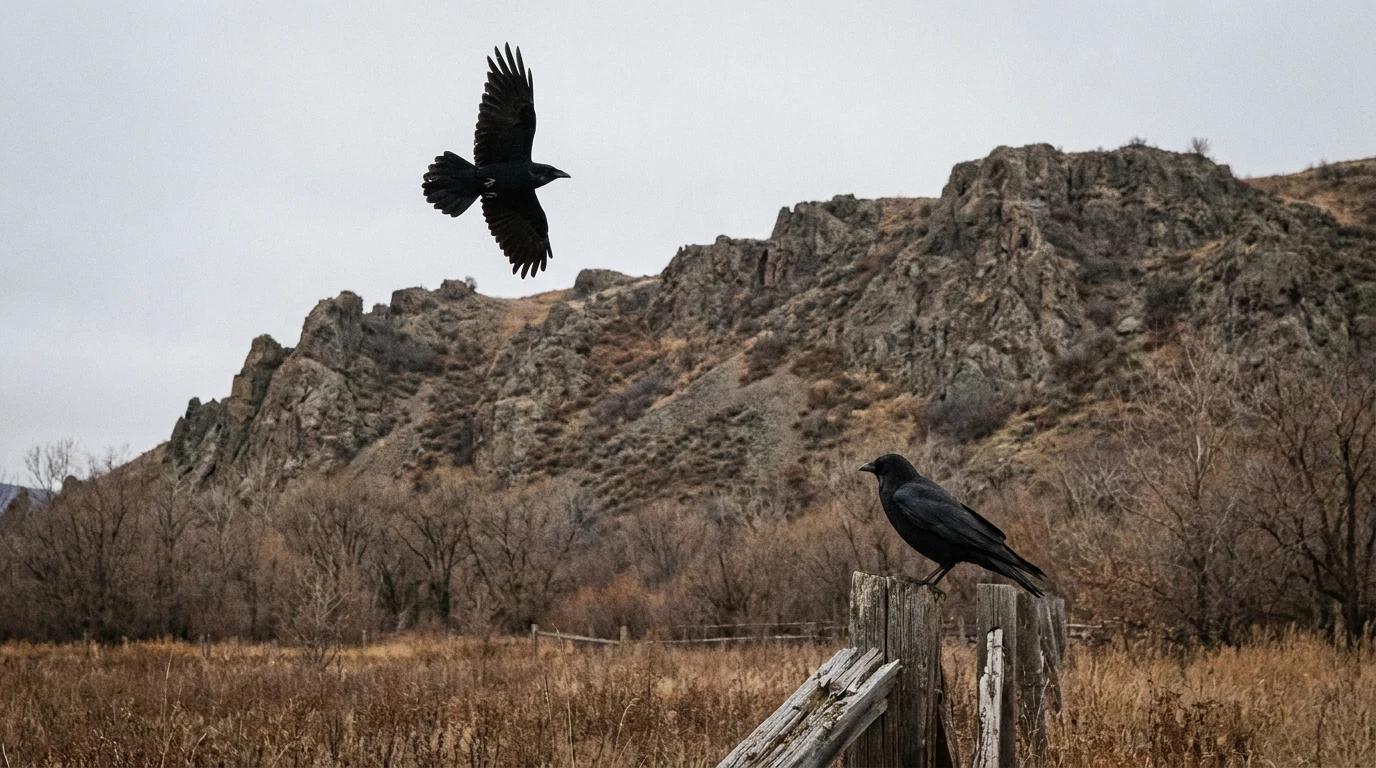
Key takeaways
- Read the tail first. Cornell describes a long, wedge-shaped tail on the Common Raven and a short, rounded or squared tail on the American Crow; it works on a distant flyover.
- Then listen. Audubon gives the raven a deep, guttural croak and the crow its familiar caw-caw.
- Watch the flight. Ravens mix soaring, gliding and slow flaps; crows row along and rarely glide.
- Size needs a reference. A raven is about half again larger than a crow, but a lone bird against the sky gives you nothing to compare.
- Two look-alikes break the rules. The Chihuahuan Raven shares the wedge tail, and the Fish Crow is recognized with certainty only by its nasal call.
Pick by your situation
| If your situation is… | Pick | Why |
|---|---|---|
| Big black bird overhead with a wedge or diamond-shaped tail | Raven | Cornell calls the long wedge-shaped tail the raven's flight mark; crows show a short squared or rounded tail. |
| Black bird circling and gliding on a thermal | Lean raven, confirm the tail | Cornell describes ravens interspersing soaring and gliding with slow flaps, while crows row and rarely glide. |
| A large flock of black birds | American Crow | Cornell describes crows as very social, sometimes in flocks of thousands; ravens are usually alone or in pairs away from food. |
| Crow-like bird near the coast giving a nasal kwok or ah-ah | Possible Fish Crow | Audubon says Fish Crow is recognized with certainty only by sound, though young American Crows give a similar kwok in breeding season. |
| Wedge-tailed raven in Southwest grassland with a higher call | Check for Chihuahuan Raven | Audubon describes it as a grassland raven with a smaller bill and a call higher than the Common Raven's. |
A shortcut by situation — start from the row that sounds like you.
A big black bird crosses the sky. If its tail is a wedge or diamond and it gives a deep croak, it is a Common Raven. If the tail is short and squared off and it says caw, it is an American Crow. Size helps when the two are side by side, but a lone bird against open sky is hard to measure. Tail shape and voice settle most sightings. In the Southwest, and near water in the East and Southeast, a third black corvid can complicate that, and the table below covers it.
Four black corvids, one table
Most raven-versus-crow guides compare two birds. In North America you may be looking at four. Every cell below comes from the Cornell Lab's Common Raven and American Crow ID pages, or from Audubon's field guide accounts of the Fish Crow and Chihuahuan Raven.
| Common Raven | American Crow | Fish Crow | Chihuahuan Raven | |
|---|---|---|---|---|
| Length | 22.1-27.2 in | 15.8-20.9 in | 14-16 in | 18.1-20.5 in |
| Wingspan | 45.7-46.5 in | 33.5-39.4 in | 2 ft 6 in to 2 ft 10 in | 3 ft 3 in to 3 ft 7 in |
| Tail in flight | Long, wedge-shaped | Short, rounded or squared | Rounded or square-tipped | Wedge-shaped |
| Voice | Loud, gurgling croak | Caw-caw | Nasal kwok, or a two-note ah-ah | Harsh kraak, higher than a Common Raven's |
| Flight | Soaring, gliding and slow flaps | Rowing wingbeats, rarely glides | Direct flight, sometimes soars | Direct flight |
| Usually seen | Alone or in pairs | Social; flocks can reach thousands | Flocks while foraging | Flocks outside nesting season |
| Where to expect it | Western and northern North America, spreading back into the Northeast | Fields, woods and towns; avoids hot desert | Near water: coast, tidewater, big river valleys | Dry grassland and scrub of the Southwest, Plains and Texas |
The field test, in the order a flyover gives it
A flying bird shows you its silhouette before anything else, so run the checks in that order.
- The tail. Cornell describes the raven's tail in flight as long and wedge-shaped, and the crow's as short and rounded or squared off. This is the mark you can read on a distant bird.
- The wingtips. Cornell says ravens have longer, narrower wings than crows, with longer, thinner "fingers" at the tips. Crow wings are fairly broad and rounded.
- The way it flies. Ravens are buoyant, mixing soaring, gliding and slow flaps. Crows fly with a rowing motion, and Cornell's photo notes say they rarely glide. A big black bird circling on a thermal with no flapping is worth a second look for raven.
- The call. Audubon describes the raven's voice as a deep, varied, guttural croak and the crow's as the familiar caw-caw. Cornell adds that the raven's croak carries for more than a mile.
- The head and bill, if it lands. Cornell calls the raven's bill heavy, with feathers extending down it, and notes the shaggy throat feathers. Cornell describes the crow's bill as heavy and straight.
The wedge rule: wedge-shaped tail, think raven; squared or rounded tail, think crow. It works overhead, at a distance and in silhouette, which is exactly when size fails you.
Why "ravens are bigger" lets you down
Size is real. Cornell puts the Common Raven at about half again larger than an American Crow, and calls it the world's largest songbird, larger than most Peregrine Falcons. The trouble is judging it. A single bird against the sky has nothing beside it for scale, and a near crow looks bigger than a far raven.
Use size only when it comes with a reference:
- Do compare it with a bird beside it. Cornell gives the crow as nearly twice the size of a Blue Jay and about two-thirds the size of a raven.
- Do judge size when both species are in the same view, such as at a roadside carcass or a landfill.
- Don't call a lone flyover by size. Go to the tail.
- Don't trust a close bird's apparent size. Cornell's length ranges for the two species don't overlap, but a near crow against open sky still looks big.
Where the look-alikes overlap
Two other black corvids share parts of the continent, and each one breaks a different rule.
- Fish Crow. Audubon says it is recognized with certainty only by sound, and describes it as slightly smaller than an American Crow, with slightly more pointed wingtips. Listen for a nasal kwok or ah-ah instead of a caw. It favors water: beaches, marshes, estuaries and the valleys of large rivers. Audubon adds a catch: young American Crows give a similar kwok call in breeding season.
- Chihuahuan Raven. It shares the Common Raven's wedge tail, so the tail test only gets you to "a raven." Audubon describes it as slightly smaller, with a smaller bill and a higher-pitched call, and as mostly a bird of open grassland. In the Southwest, Audubon notes, Common Ravens are mostly in mountains or in drier cactus desert and are seldom in the grasslands.
- Common Raven in the East. Audubon says ravens had disappeared from much of the eastern and midwestern United States before 1900 and have been spreading back, especially in the Northeast. An eastern raven is no longer unusual.
The overlap rule: the tail separates ravens from crows, habitat helps separate Common from Chihuahuan Raven, and only the voice separates Fish Crow from American Crow.
The company it keeps
Behavior is a useful tiebreaker when the tail is hidden or the bird is silent.
- Alone or in pairs: leans raven. Cornell says ravens are less social than crows, except at food sources such as landfills, where they also form communal night roosts.
- A big flock: leans crow. Cornell describes American Crows as very social, sometimes in flocks of thousands.
- Chasing a hawk or owl: leans crow. Cornell notes crows often chase away larger birds, hawks, owls and herons included.
- A pair tumbling high over a ridge: leans raven. Audubon describes the male raven's courtship as soaring, swooping and tumbling in midair.
Put it in your notebook
Write down the tail shape before anything else. It is the observation you can make on almost any flyover, and it holds up when you check it against Merlin or your recordings later. For the bird that lands and lets you see its throat and bill, binoculars do the rest; our 8x42 versus 10x42 guide covers which magnification suits that kind of watching. And if a crow at the coast sounds slightly wrong, log it as a possible Fish Crow, note the call, and let the sound decide. A printed guide helps after the bird has gone: the Kaufman Field Guide to Birds (on Amazon) is photo-based and easy to check a silhouette against. For another pair that rewards a fixed checking order, see House Finch vs Purple Finch.
Useful gear for this guide
Optional, subject-matched picks from our live catalog, not a requirement for doing the advice above.
Compare all gear & how we score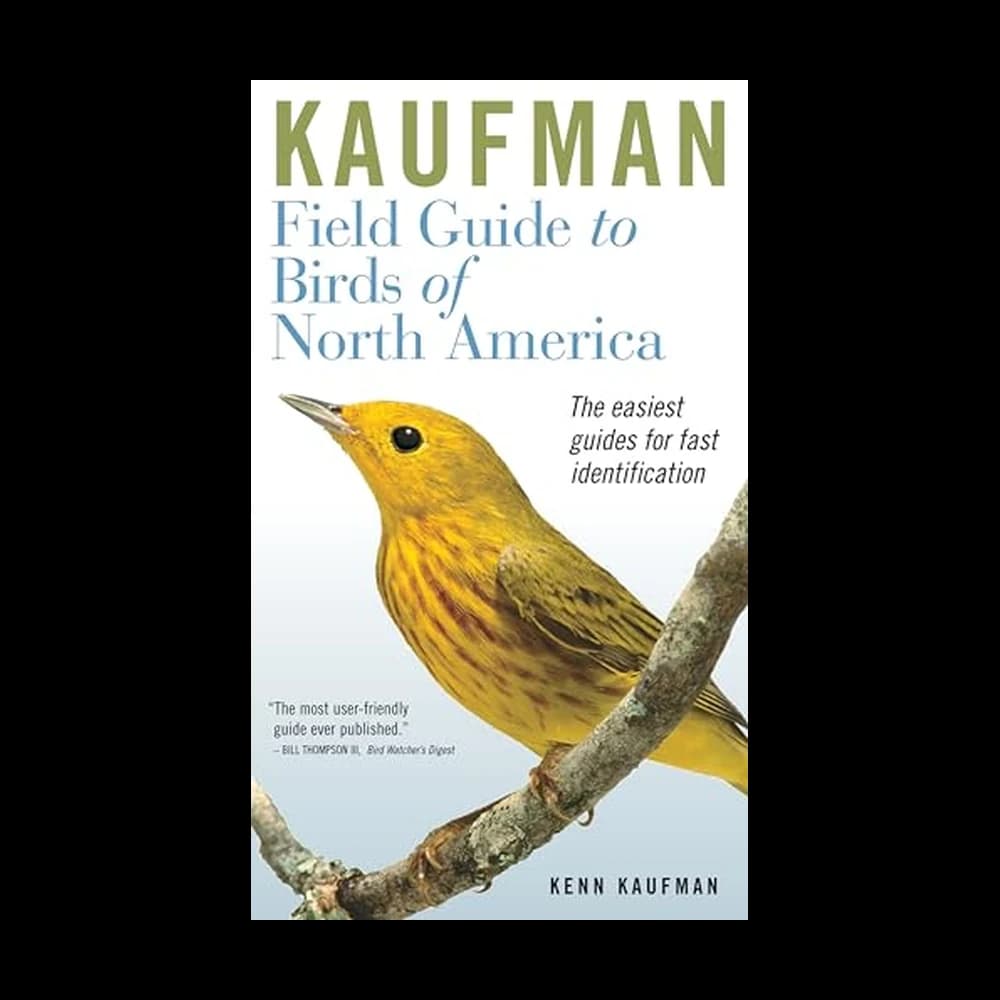

Frequently asked
What is the easiest way to tell a raven from a crow?+
Look at the tail in flight. Cornell describes the Common Raven's tail as long and wedge-shaped and the American Crow's as short and rounded or squared. Then listen: ravens croak, crows caw.
How much bigger is a raven than a crow?+
Cornell gives the Common Raven a length of 22.1 to 27.2 inches and a wingspan of 45.7 to 46.5 inches, against 15.8 to 20.9 inches and 33.5 to 39.4 inches for the American Crow. It describes the raven as about half again larger than a crow.
Do ravens and crows flock together?+
Not usually. Cornell says ravens tend to be seen alone or in pairs except at food sources such as landfills, while American Crows are very social and can form flocks in the thousands.
Are there ravens in the eastern United States?+
Yes. Audubon says the Common Raven disappeared from much of the eastern and midwestern US before 1900 and has been expanding its range again in recent decades, especially in the Northeast.
How do you tell a Fish Crow from an American Crow?+
By voice. Audubon says the Fish Crow is recognized with certainty only by sound: a nasal kwok or a two-note ah-ah rather than a caw. Young American Crows give a similar kwok in breeding season, so listen for adults.
Sources & further reading
We research from primary and authoritative sources. Where our guidance rests on a fact, here's where it comes from.
- Common Raven Identification | All About Birds (Cornell Lab) — Measurements, relative size, wedge-shaped tail, longer narrower wings, flight style, alone or in pairs, gurgling croak audible for more than a mile.
- American Crow Identification | All About Birds (Cornell Lab) — Measurements, relative size, short rounded or squared tail, rowing flight, flocks in the thousands, mobbing hawks and owls.
- Common Raven | Audubon Field Guide — Deep guttural croak, wedge-shaped tail, courtship flight, range loss before 1900 and recent expansion in the Northeast.
- American Crow | Audubon Field Guide — Familiar caw-caw call, square-tipped tail, avoids hot desert zones.
- Fish Crow | Audubon Field Guide — Size, nasal kwok and ah-ah calls, recognized with certainty only by sound, habitat near water.
- Chihuahuan Raven | Audubon Field Guide — Size, wedge-shaped tail, smaller bill, higher-pitched call, dry grassland habitat versus Common Raven in the Southwest.
Prices and BirdingScores reflect our most recent research and refresh on a cycle; confirm the live price before buying. We may earn a commission from affiliate retailers — it never changes our recommendations. See how we review.