
Monocular vs Binoculars for Birding: What Specs Reveal
A 10x25 monocular saves 5 oz over pocket binoculars but gives up field of view and close focus. The spec sheets show when one eye is honestly enough.
Key takeaways
- Buy binoculars if you will own one optic. A monocular works as a second optic, or as a primary for birders with sight in one eye.
- The weight win is real but smaller than it sounds. Against pocket binoculars, the Vortex Solo saves about 5 oz, not a pound.
- Field of view is the real cost. The Solo's 6.0° sits under Audubon's 6.5° floor for birding binoculars.
- Close focus is the surprise. Vortex lists 16.4 ft for the Solo, against 6.5 to 8.2 ft for the three binoculars compared here.
Pick by your situation
| If your situation is… | Pick | Why |
|---|---|---|
| This is your first and only optic | Full-size 8x42 binoculars | Widest usable mix of field of view, close focus and exit pupil in the table. |
| You want something small but plan to watch birds | Pocket 8x25 binoculars | About 5 oz more than the Solo buys a far wider view and half the close-focus distance. |
| It must fit a shirt pocket, and you already own binoculars | A 10x25 monocular | The lightest option here, and the one most likely to be on you. |
| You bird with sight in one eye | A monocular as your primary | Two-eye advantages do not apply, so you stop paying for a second barrel. |
A shortcut by situation — start from the row that sounds like you.
For most birders, binoculars win. A monocular is honestly enough in two cases: it is a second optic that rides in a pocket on walks where binoculars would stay home, or you bird with sight in one eye. If you are buying your only optic, buy binoculars.
Most comparisons stop at "lighter and cheaper, but less comfortable." The spec sheets say something more useful, including one number few of them mention.
Four optics on one spec sheet
We pulled these figures from each manufacturer's page: one pocket monocular and three binoculars from our catalog. Prices are live.
| Optic | Field of view | Close focus | Weight | Exit pupil | Price |
|---|---|---|---|---|---|
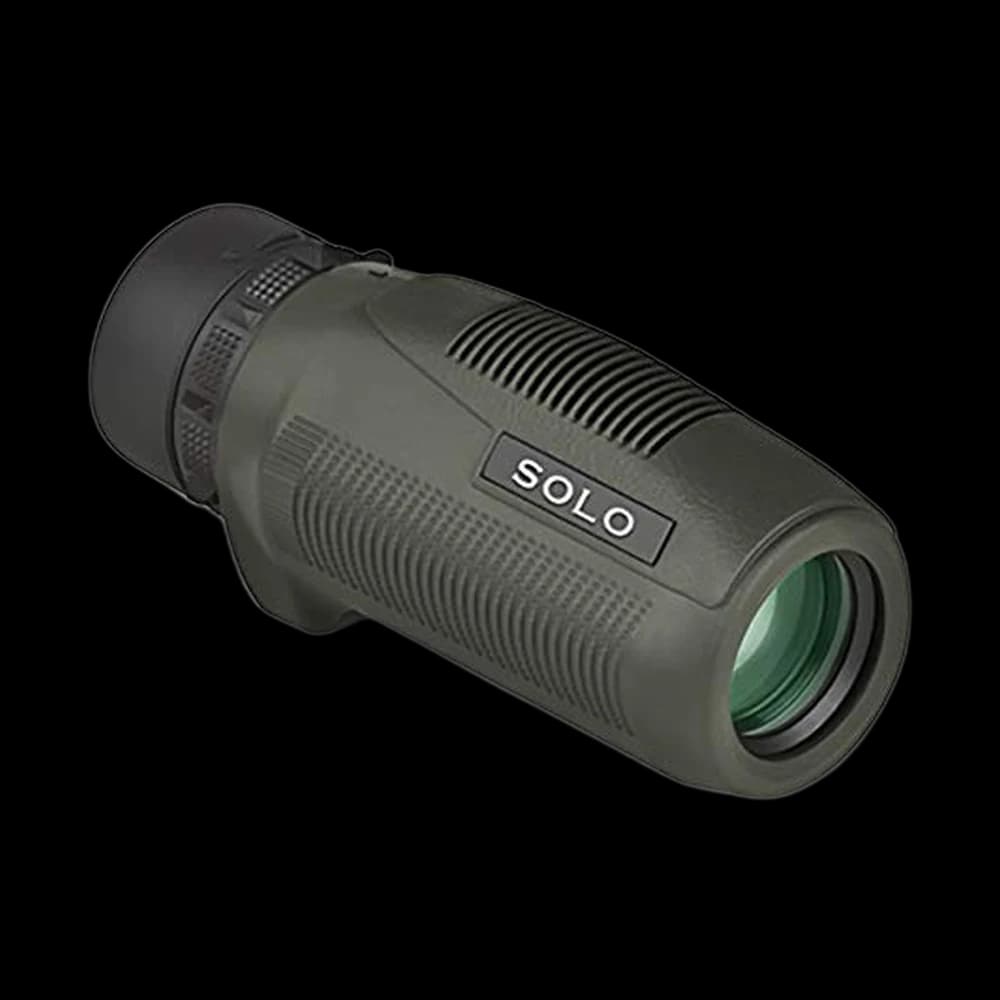
| Vortex Solo 10x25 (monocular) | 6.0° | 16.4 ft | 5.6 oz | 2.5 mm | $79.00 |
| Vortex Vanquish 8x26 | 6.7° | 7.6 ft | 12.7 oz | 3.25 mm | $99.00 |
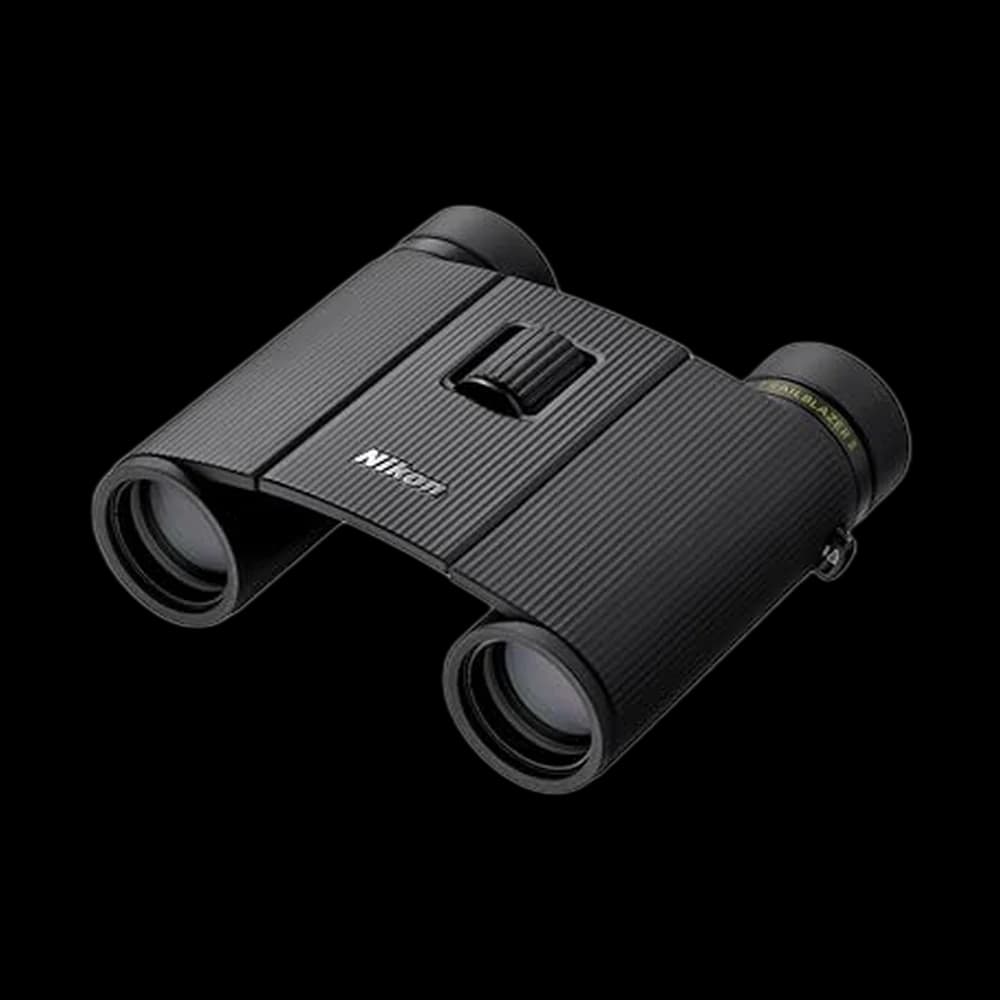
| Nikon Trailblazer II 8x25 | 8.3° | 8.2 ft | 10.9 oz | 3.1 mm | $99.99 |
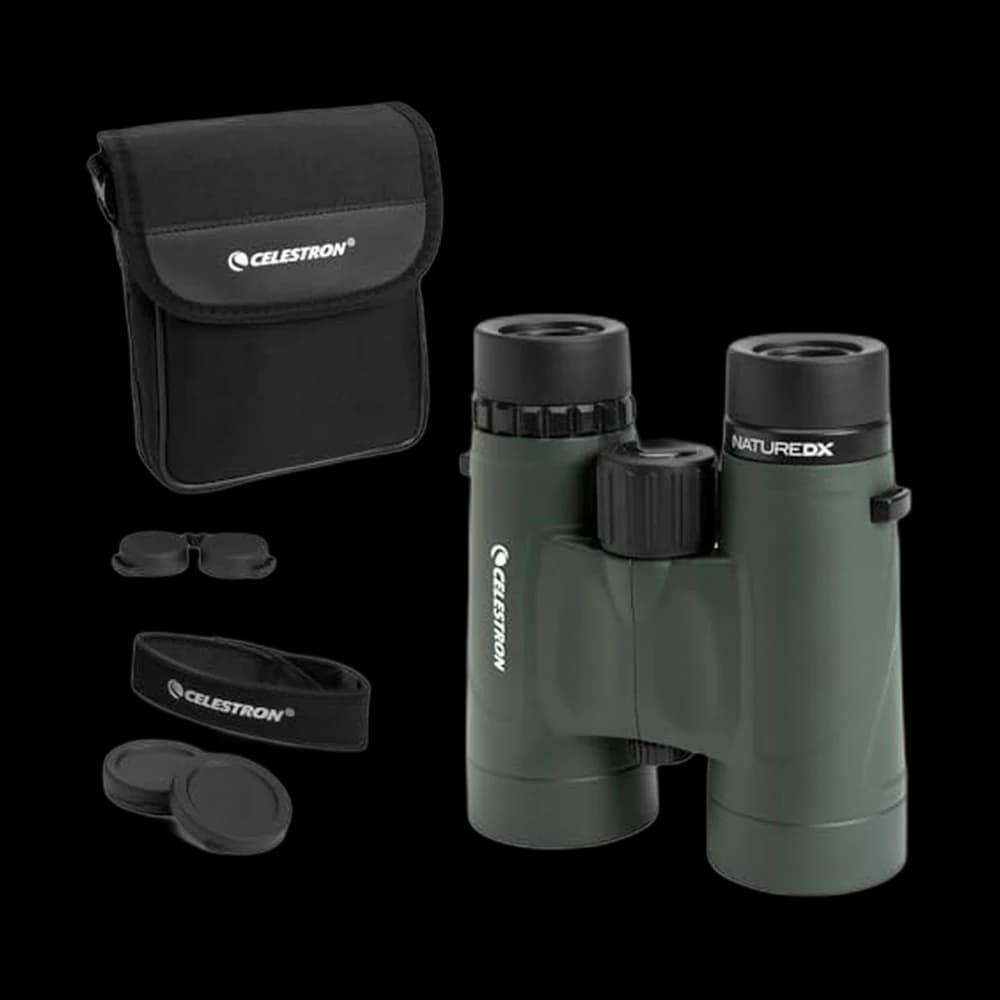
| Celestron Nature DX 8x42 | 7.4° | 6.5 ft | 22.2 oz | 5.25 mm | $143.99 |
Exit pupil is objective size divided by magnification. Vortex publishes no exit pupil on the Solo page, so we did the division: 25 ÷ 10.
We left the catalog's larger monoculars out because this table only uses figures we could confirm on a manufacturer's page, and retailer listings for them disagree.
Where the monocular actually wins
Weight, against the right rival
Against a full-size 8x42, the Solo saves 16.6 oz, which you will feel on any walk. Against the Trailblazer II, the gap shrinks to 5.3 oz. The honest question is rarely "monocular or full-size?" It is "monocular or pocket binoculars?"
Pocket fit
Vortex lists the Solo at 4.4 inches long. Nikon's pocket pair is 3.9 by 4.5 inches, so it folds short but stays wide. A jacket takes both; a shirt pocket really only takes the monocular.
The case in one line: the optic on you beats the better optic in a drawer. That is the whole argument for a monocular, and it is a good one.
Where it costs you
Field of view: the big one
Cornell Lab calls field of viewHow wide a scene you see through the glass, usually given as feet at 1,000 yards — wider makes finding flitting birds easier. very important for finding birds in flight, searching dense foliage and following a bird as it moves. Its own example: 8° against 6° is 33% wider and about 76% more area. The Solo's 6.0° is below the 6.5° that Audubon sets as the minimum for birding binoculars. Audubon's article does not cover monoculars, so read that as a benchmark rather than a verdict.
Close focus: the number most comparisons skip
Vortex lists 16.4 ft for the Solo, against 6.5 to 8.2 ft for the three binoculars. A chickadee on a feeder 10 ft from your window is in sharp reach of all three pairs and out of focus through the monocular.
Low light
The Solo's 2.5 mm exit pupil is the smallest in the table. Nikon's guide puts the daylight human pupil at 2 to 3 mm and the dark-adapted one near 7 mm, so this barely matters at noon and matters plenty at dawn. Our compact binoculars guide covers that trade in full.
Magnification
The Solo is 10x and the binoculars here are 8x. Cornell notes field of view falls as magnification rises, and our 8x42 vs 10x42 comparison explains why steadiness suffers too. Birders in a BirdForum thread report the same problem: hard to hold steady, and very hard to stay on anything flying.
Two claims we checked
- "Monoculars are cheaper." Often true across the whole market, weak at this level. Look at the table: the Solo ($79.00) and the Trailblazer II ($99.99) sit close together. One barrel does not mean half the price.
- "One eye causes strain." Widely repeated, and birders do report it, but we could not find a study measuring it with monoculars. Treat it as a common report, not an established fact.
There is firmer science on a related point. A meta-analysis of 65 studies found people detect faint images better with two eyes than one, by more than the classic factor of √2. That is lab contrast sensitivity, not field birding, but it points the same way as the spec sheet at dawn.
Which one fits you
Use the decision table below, then ask one question: what will you actually carry?
- Serious about learning birds? Start with binoculars and set them up properly with our setup fixes.
- Want small, but plan to watch birds? Choose pocket binoculars. The extra 5 oz buys a far wider view.
- Already own binoculars and want a pocket spare? A monocular is a fair buy, with its limits understood. See the Vortex Solo on Amazon
- Birding with sight in one eye? A monocular is a sensible primary. Field of view and close focus still matter, so compare both.
Rule of thumb: binoculars for birding, a monocular for the moments you would not otherwise have had any optic at all.
Compared in this guide
The optics from the table above, from our live catalog. Spec figures in this post come from each manufacturer's page.
Frequently asked
Is a monocular as good as binoculars for birding?+
Not for finding and following birds. The Vortex Solo 10x25 has a 6.0 degree field of view and 16.4 ft close focus, while comparable pocket binoculars reach 8.3 degrees and 8.2 ft. It does win on weight and pocket size.
Are monoculars cheaper than binoculars?+
Not reliably at the level worth buying. Compare current prices for a waterproof monocular and pocket binoculars before assuming one barrel means half the cost; the gap between the two compared here is small.
Does using a monocular cause eye strain?+
Retailers and birders on forums commonly report it over long sessions, but we could not find a study measuring it for monocular use. Treat it as a common report and judge it on your own eyes during a short session.
What about birders with sight in one eye?+
A monocular makes sense as a primary optic, since a second barrel adds weight without adding a view. Look for the widest field of view and closest focus you can find, because those specs still matter.
Sources & further reading
We research from primary and authoritative sources. Where our guidance rests on a fact, here's where it comes from.
- Cornell Lab: Field of View Is Important in Birdwatching Binoculars — Why field of view matters for following birds, the 5.5 to 8.5 degree typical range, and 6 vs 8 degrees as 33% wider and about 76% more area.
- Audubon: How To Choose Your Binoculars — Birding binoculars should have an angle of view of at least 6.5 degrees; the article does not cover monoculars.
- Vortex Solo 10x25 Monocular specifications — 6.0 degrees, 315 ft at 1,000 yds, 16.4 ft close focus, 5.6 oz.
- Nikon Trailblazer II 8x25 specifications — 8.3 degrees, 8.2 ft close focus, 3.1 mm exit pupil, 10.9 oz.
- Vortex Vanquish 8x26 specifications — 6.7 degrees, 7.6 ft close focus, 12.7 oz.
- Celestron Nature DX 8x42 specifications — 7.4 degrees, 6.5 ft close focus, 5.25 mm exit pupil, 22.2 oz.
- Baker et al. 2018: Binocular summation meta-analysis — Meta-analysis of 65 studies: contrast sensitivity with two eyes beats one by more than the classic factor of the square root of 2.
- Nikon: Exit pupil guide — Exit pupil formula and human pupil sizes in daylight and darkness.
- BirdForum: Monocular vs binocular thread — Birders' first-hand reports on steadiness, following flying subjects and eye strain; anecdote, not measurement.
Prices and BirdingScores reflect our most recent research and refresh on a cycle; confirm the live price before buying. We may earn a commission from affiliate retailers — it never changes our recommendations. See how we review.