
Compact Binoculars: The Exit-Pupil Trade Nobody Explains
Compact binoculars trade away dawn light. We compare exit pupil, weight and price across five 8x25-8x32 pairs, and say when to buy full-size.
The short answer
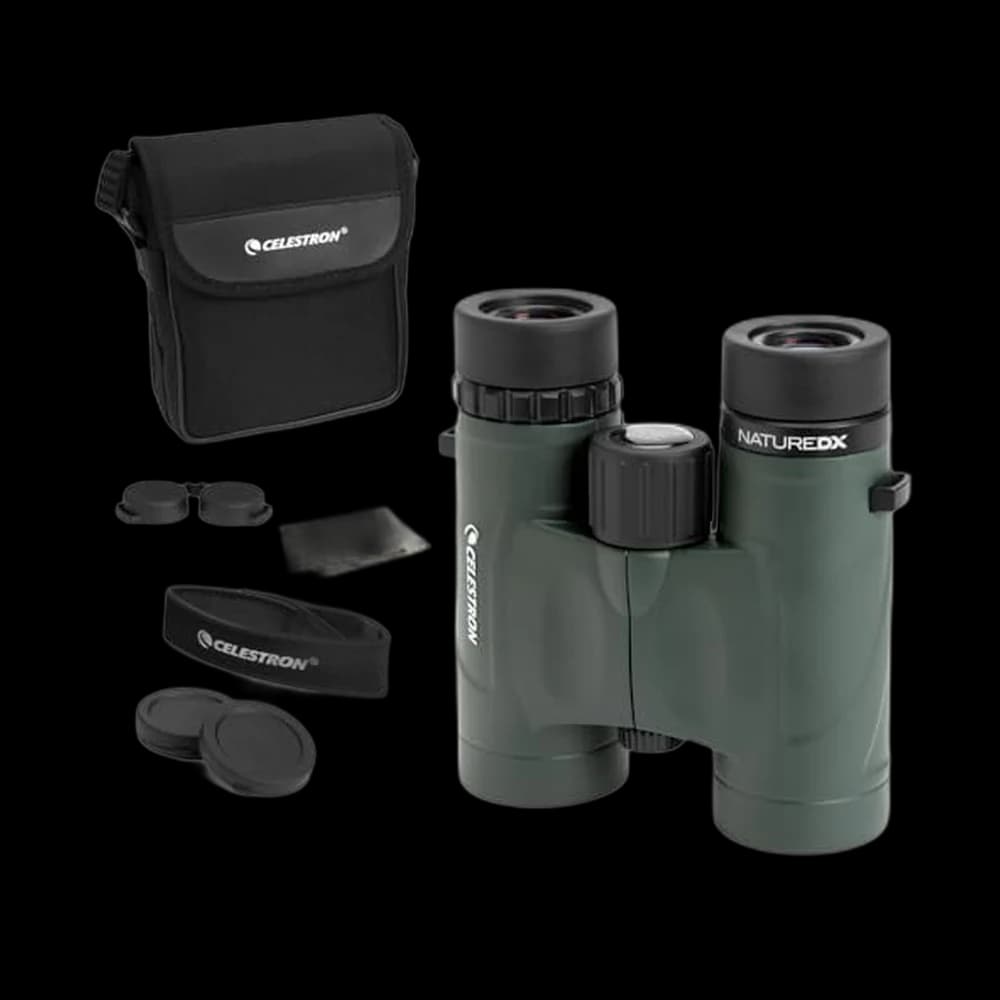
- Hikers wanting Nature DX sharpness and sealing in a lighter 1.1 lb, packable 8x32 body.
- Skip if you bird mostly at dawn and dusk; the 32mm objective gathers less light than a 42mm.
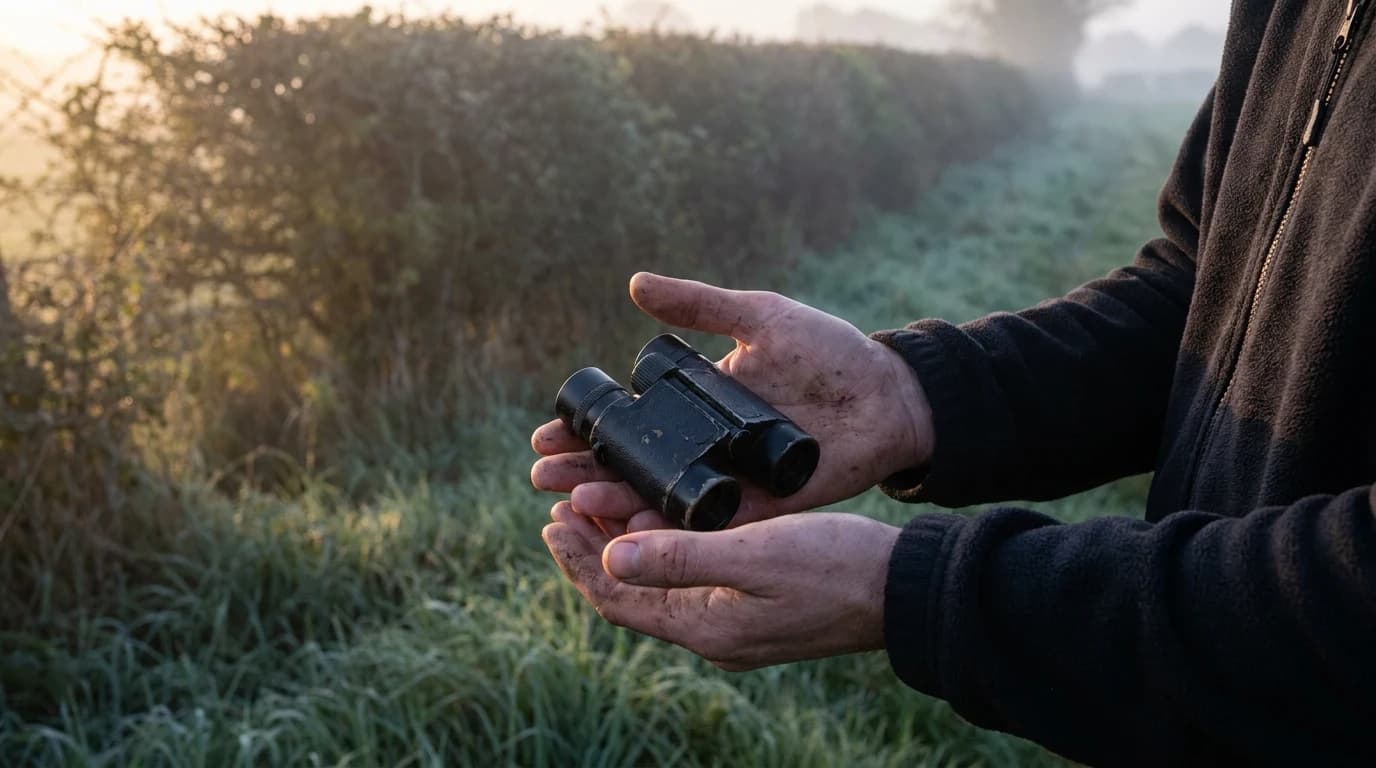
Key takeaways
- Divide the second number by the first. That is your exit pupil: 3.1mm on an 8x25 against 5.25mm on an 8x42. The gap only shows up when the light is poor.
- Your pupil opens to roughly 7mm in the dark. A compact cannot fill it, so first-light views look dim — Nikon's own optics guide says so plainly.
- 8x32 is the compact that still works at dawn. 4.0mm of exit pupil is a real step up from 3.1mm, for about six extra ounces.
- Buy a compact as your second pair. If you will only ever own one binocular, a full-size 8x42 is the safer call.
Pick by your situation
| If your situation is… | Pick | Why |
|---|---|---|
| You bird at dawn, dusk, or in woodland | Celestron Nature DX 8x32 ($139.99) | 4.0mm exit pupil, the only pair here that holds up in low light. |
| You want the most compact per dollar | Vortex Vanquish 8x26 ($99.00) | Highest score of the group, plus Vortex's lifetime VIP warranty. |
| You want it in a jacket pocket every day | Nocs Standard Issue 8x25 ($99.74) | IPX7 sealing at 11.9 oz, built to be carried rather than shelved. |
| You wear glasses and won't compromise | Zeiss Terra ED Pocket 8x25 ($399.99) | 16mm eye relief and ED glass; the only pocket pair here glasses wearers see fully. |
Each pick is one of the products compared below — a shortcut by situation, not a separate recommendation.
Compact & Travel Binoculars: our picks
| Pick | Best for | Rating | Price | |
|---|---|---|---|---|
| TopCelestron - Nature DX 8x32 Binoculars | Half-size Nature DX, same sealing. | ★ 4.6 | $139.99 | Buy on Amazon |
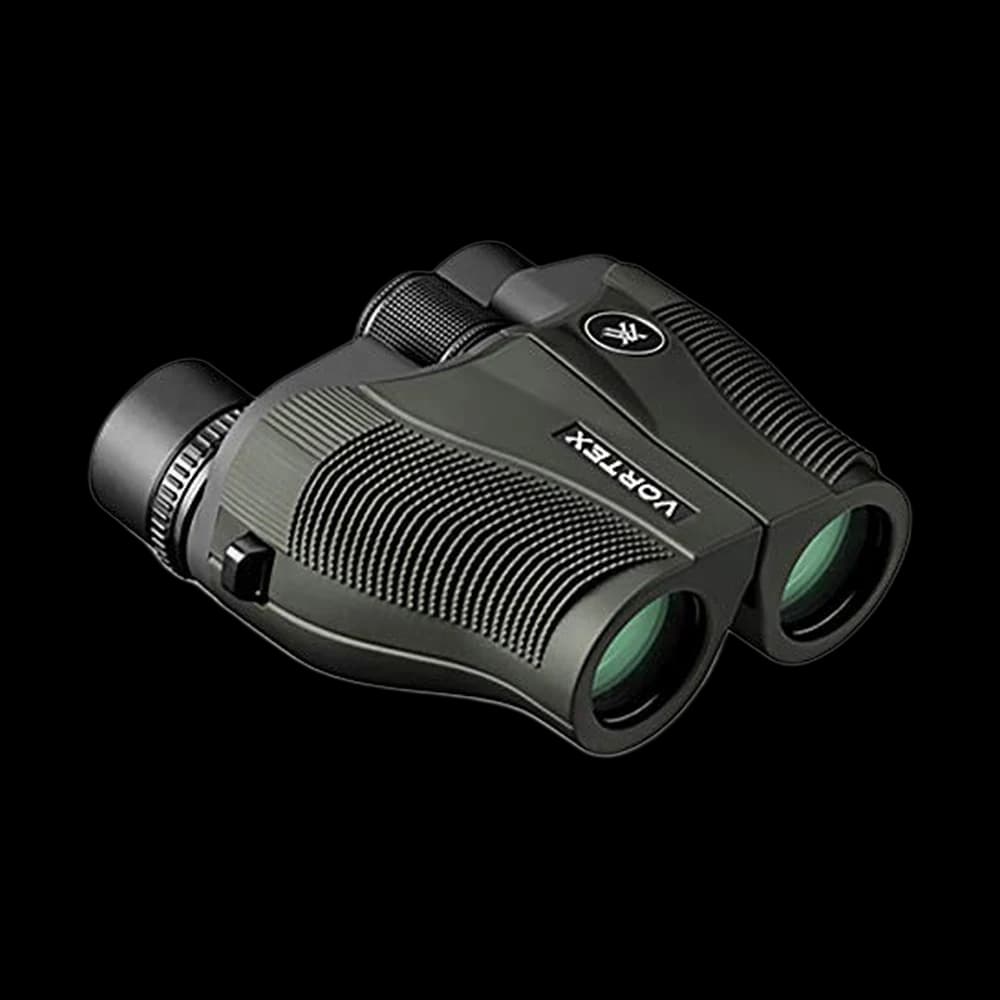 Vortex Vanquish Reverse Porro Prism Binoculars 8x26 Vortex Vanquish Reverse Porro Prism Binoculars 8x26 | Reverse-porro brightness plus Vortex warranty. | ★ 4.5 | $99.00 | Buy on Amazon |
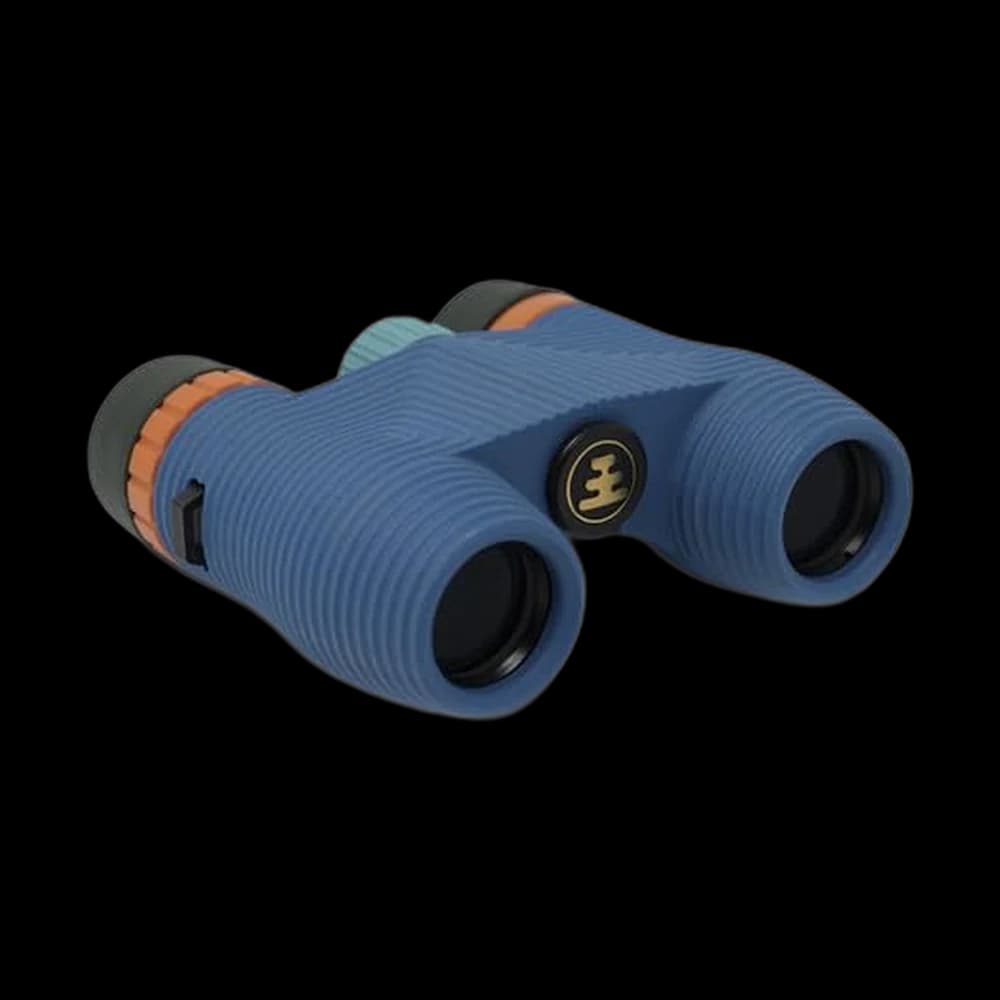 Nocs Provisions Standard Issue 8x25 Waterproof Binoculars, 8X… Nocs Provisions Standard Issue 8x25 Waterproof Binoculars, 8X… | Waterproof, warrantied, worn on purpose. | ★ 4.7 | $99.74 | Buy on Amazon |
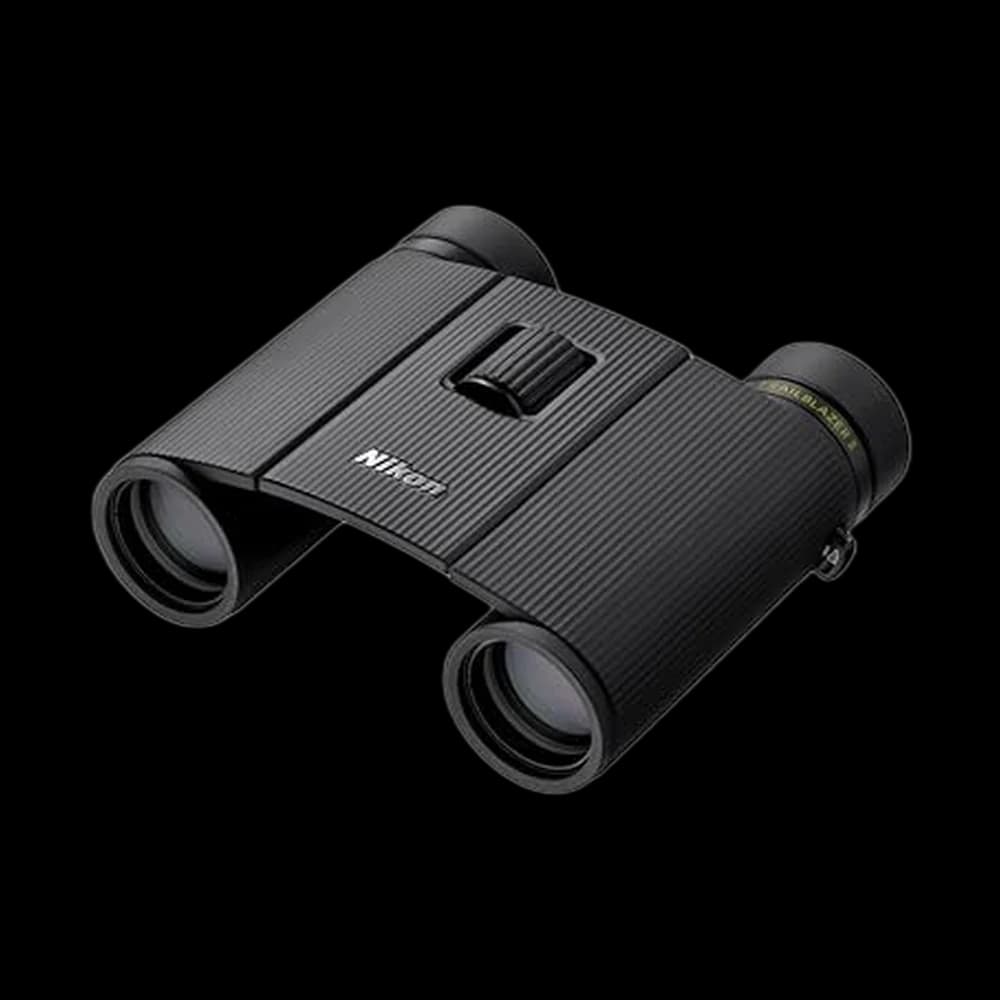 Nikon Trailblazer II 8x25 Nikon Trailblazer II 8x25 | The best cheap sealed compact. | ★ 4.1 | $86.95 | Buy on Amazon |
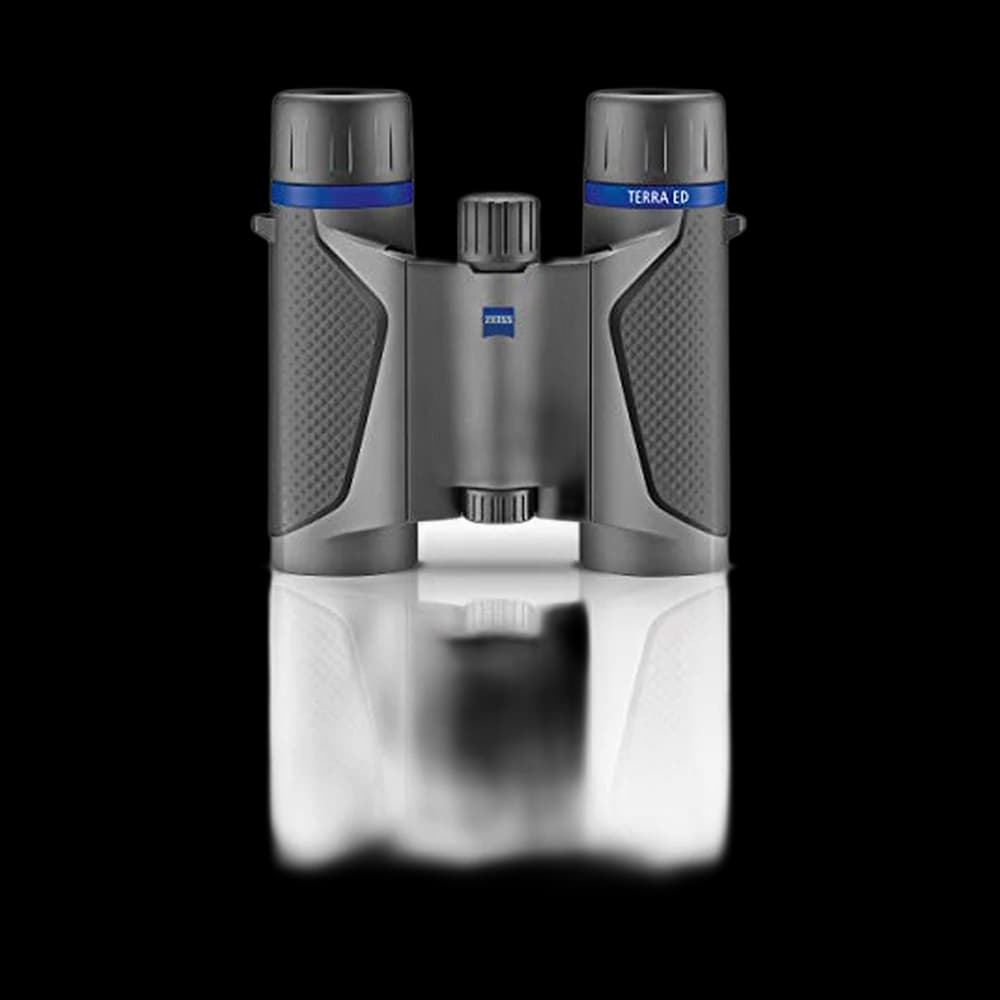 ZEISS Terra ED Pocket Binoculars 8x25 Compact, Waterproof, and Fast… ZEISS Terra ED Pocket Binoculars 8x25 Compact, Waterproof, and Fast… | Real Zeiss glass in a jacket pocket. | ★ 4.5 | $399.99 | Buy on Amazon |
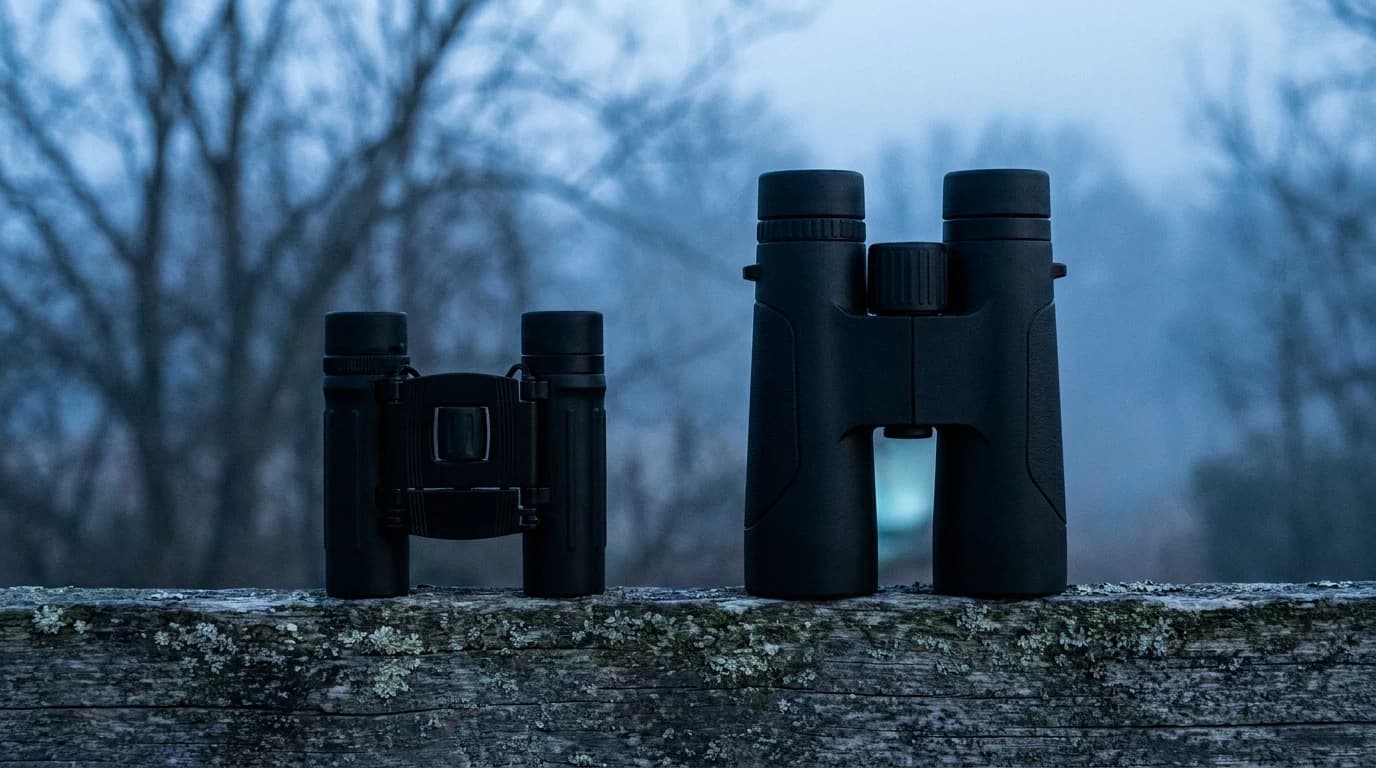
Compact binoculars sell on one honest promise: the pair you have on you beats the pair in a drawer. That holds. A 10-ounce pocket pair rides along on trips a full-size pair never gets invited on. But the trade has a shape most roundups skip past. A compact binocular trades away the light you need at the one time of day birds are most active — buy one as a second pair, not a first.
We researched manufacturer spec sheets and Cornell Lab guidance for the five pairs below — the same five in our compact binoculars comparison, where you can line their specs up side by side. The number that settles the argument takes three seconds to work out.
The one number nobody prints on the box
Every binocular projects an exit pupil: the disc of light it hands to your eye. Nikon's optics guide gives the formula, and it is arithmetic, not marketing.
Exit pupil = objective diameter ÷ magnification.
An 8x42 gives 42 ÷ 8 = 5.25 mm. An 8x25 gives 25 ÷ 8 = 3.1 mm: same magnification, same field marks, a beam of light barely three-fifths as wide.
Whether that gap matters depends on your own pupil. Nikon puts the dark-adapted human pupil at about 7 mm and the daylight pupil at 2–3 mm. In bright sun your eye is the bottleneck, so 3.1 mm and 5.25 mm look identical. At first light your pupil opens wider than a small binocular can fill, and Nikon states the result plainly: you perceive the image as dark. Cornell Lab calls the field version a sense of tunnel vision.
Dawn is not an edge case. It is when birds sing and forage hardest.
| Pair | Exit pupil | Weight | Price |
|---|---|---|---|
| Celestron Nature DX 8x32 | 4.0 mm | 18.0 oz | $139.99 |
| Vortex Vanquish 8x26 | 3.3 mm | 12.7 oz | $99.00 |
| Nocs Standard Issue 8x25 | 3.2 mm | 11.9 oz | $99.74 |
| Nikon Trailblazer II 8x25 | 3.1 mm | 10.9 oz | $86.95 |
| Zeiss Terra ED Pocket 8x25 | 3.1 mm | 10.9 oz | $399.99 |
| Full-size: Celestron Nature DX 8x42 | 5.25 mm | 22.2 oz | $148.99 |
Read the last row twice. The full-size sibling of that 8x32 costs a little more, weighs four ounces more, and hands your eye a beam 31% wider. Specs come from each maker's own page; prices are pulled from Amazon and carry their own checked date on each product page.
Field cue: divide the second number by the first. Under 4 mm is a daylight tool. At or above 5 mm and it still works when the sun is barely up.
What a compact gets right, and where it disappoints
What genuinely works:
- The weight. Cornell puts a typical 8x42 at about 1.6 lb and a pocket pair at 11 oz. Neck strain is why binoculars stay home.
- Midday and open country. Your pupil is already smaller than the exit pupil, so you lose nothing.
- The 8x32 middle ground. Four millimetres is a different animal from 3.1.
- The glovebox. A pair that lives in the car gets used.
What usually disappoints:
- Dawn, dusk and closed woodland — the exact hours and habitats birding rewards most.
- Eye relief on the smallest bodies. Nikon lists 10 mm for the Trailblazer II, Nocs 10 mm for the Standard Issue. Glasses wearers get a black ring.
- Fiddly adjustment. Cornell notes eyecups too small to seat and focus wheels too tiny for fine work.
- The bottom of the price range. Cornell found a wider spread of image quality among small binoculars than full-size: little lenses leave less margin for error.
Five compacts worth carrying
The Celestron Nature DX 8x32 is the compromise we would steer most birders toward: 4.0 mm exit pupil, 17.5 mm eye reliefHow far your eye can sit from the eyepiece and still see the full image — 15mm+ matters if you wear glasses., 18 oz. The only pair here we would willingly raise at dawn.
The Vortex Vanquish 8x26 is the value answer and our highest-scoring compact. Its reverse-porro layout buys a larger 26 mm objective at pocket size, and the lifetime VIP warranty seals it.
The two you carry rather than store
The Nocs Standard Issue 8x25 is the one people actually wear: IPX7 sealed, 11.9 oz, built to be carried. That 10 mm eye relief is the catch.
The Nikon Trailblazer II 8x25 is the cheapest sealed roof-prism pocket pair we would recommend: 10.9 oz, unusually wide 8.3° field.
The Zeiss Terra ED Pocket 8x25 costs four times the others and earns some of it: still 3.1 mm of exit pupil, but 16 mm of eye relief and ED glass. Cornell is blunt about this class: if you want the smallest binoculars, buy premium.
When a compact is the wrong tool
Buy a full-size 8x42 instead if any of this is your birding.
- You bird the dawn chorus or the last hour of light. No coating recovers photons the objective never collected.
- You bird closed woodland. A summer canopy is dim at noon.
- This will be your only pair. Cornell names full-size as the best starter and budget choice.
- You wear glasses. Long eye reliefHow far your eye can sit from the eyepiece and still see the full image — 15mm+ matters if you wear glasses. is easier to find at 42 mm.
The honest exception
If the compact is what you will actually carry, carry it. A dim view of a bird beats a bright view of the hall closet.
Before you buy: four checks
- Do the division. Objective ÷ magnification, then ask if that suits your light.
- Look up eye relief, not just the headline numbers. 15 mm or more if you wear glasses.
- Skip 10x in a compact body. Nocs publishes 2.5 mm for its 10x25: less light, more shake.
- Spend more per millimetre than at 42 mm. Small lenses punish cheap glass.
Our verdict
For birding, the Celestron Nature DX 8x32 is the compact to buy: the only one here whose exit pupil survives the hour when birds are busiest, and 18 oz is a real weight saving. Want true pocket size and a warranty that outlives you? Take the Vortex Vanquish 8x26 and accept that it is a daylight instrument.
The real rule: a compact is a second pair that removes excuses, not a first pair that does everything. If you own exactly one binocular, make it an 8x42.
Still deciding? Our binocular finder narrows it in a minute, and our 8x42 vs 10x42 breakdown covers the full-size call.
Frequently asked
Are compact binoculars good for birding?+
In daylight, yes. A compact's smaller objective lens produces a narrower exit pupil, so views at dawn, dusk and inside woodland look noticeably dark. As a second, always-with-you pair they are excellent; as your only pair, a full-size 8x42 is the safer buy.
What size compact binocular is best for birding?+
8x32. It gives a 4.0mm exit pupil against the 3.1mm of an 8x25, which is the difference between usable and frustrating in low light, and it still weighs around four ounces less than a full-size 8x42.
What is exit pupil and why does it matter?+
Exit pupil is the width of the light beam a binocular sends to your eye, calculated as objective diameter divided by magnification. Nikon puts the dark-adapted human pupil near 7mm, so a 3.1mm exit pupil cannot fill it and the image looks dark at first light.
Can you use compact binoculars with glasses?+
Check eye relief before you buy. Nikon lists 10mm for the Trailblazer II and Nocs lists 10mm for the Standard Issue, which is short enough that glasses wearers see a black ring. The Zeiss Terra ED Pocket at 16mm and the Celestron Nature DX 8x32 at 17.5mm are the glasses-friendly options here.
Is a 10x25 compact better than an 8x25?+
For birding, no. Dropping to 10x25 shrinks the exit pupil to 2.5mm, the figure Nocs publishes for its own 10x25, and it magnifies hand shake at the same time. Stay at 8x in a compact body.
Sources & further reading
We research from primary and authoritative sources. Where our guidance rests on a fact, here's where it comes from.
- Exit pupil | Basic Information about Binoculars | Nikon — Manufacturer technical page for the exit-pupil formula (objective ÷ magnification), the ~7mm dark-adapted and 2-3mm daylight human pupil figures, and the statement that an exit pupil smaller than your pupil makes images look dark.
- Which Binocular Design Is Right for You—Full-Size, Compact, or Pocket? | Cornell Lab (All About Birds) — Backs the tunnel-vision effect from a narrow exit pupil, the full-size (~1.6 lb) vs pocket (~11 oz) weights, the wider spread of image quality in small binoculars, the fiddly-eyecup and tiny-focus-wheel drawbacks, full-size as the best starter choice, and the advice to buy premium if you want pocket size.
- How To Choose Binoculars: Our Testing Tips | Cornell Lab (All About Birds) — Source of the weight figures: a typical 8x42 runs about 1.6 lb (726 g), a compact 8x32 nearly half a pound lighter, and pocket binoculars about 11 oz (302 g).
- Nature DX 8x32 Binoculars — Specifications | Celestron — Manufacturer spec page: 4mm exit pupil, 17.5mm eye relief, 18 oz, 388 ft field of view.
- Nature DX 8x42 Binoculars — Specifications | Celestron — Manufacturer spec page for the full-size reference row: 5.25mm exit pupil, 17.5mm eye relief, 22.2 oz.
- Nikon TRAILBLAZER II 8x25 — Specifications | Nikon USA — Manufacturer spec page: 3.1mm exit pupil, 10mm eye relief, 10.9 oz, 8.3° real field of view, roof prism.
- ZEISS Terra ED Pocket — Technical Data | ZEISS — Manufacturer technical data for the 8x25: 3.1mm exit pupil, 16.0mm exit pupil distance (eye relief), 310 g / 10.9 oz.
- Standard Issue 8x25 Waterproof Binoculars — Specs | Nocs Provisions — Manufacturer spec table: 3.2mm exit pupil for the 8x25 and 2.5mm for the 10x25, 10mm eye relief, 336 g / 11.85 oz.
- Vanquish 8x26 Binocular — Specifications | Vortex Optics — Manufacturer spec page: 15.0mm eye relief, 352 ft field of view, 12.7 oz, and the lifetime VIP warranty.
Prices and BirdingScores reflect our most recent research and refresh on a cycle; confirm the live price before buying. We may earn a commission from affiliate retailers — it never changes our recommendations. See how we review.