
How to Choose Your First Birding Binoculars Under $200
You don't need to spend a fortune on your first pair. Why 8x42 wins under $200, the specs that matter, and how to actually use them in the field.
The short answer
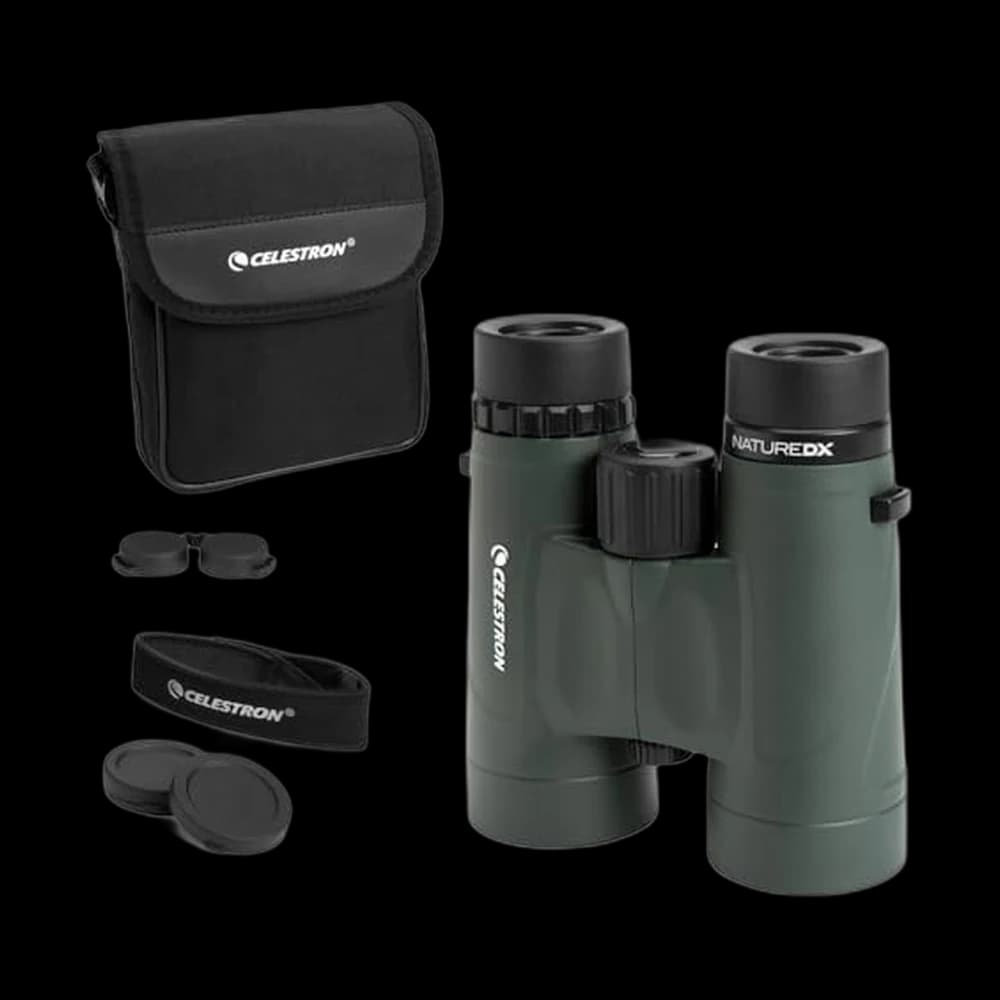
- New birders wanting the consensus best-value sealed, waterproof 8x42 with a wide, sharp view under $160.
- Skip if you want a featherweight or bombproof body; buyers note the weight and flag durability.
Key takeaways
- 8x42 is the beginner sweet spot. Enough magnification to see detail, enough brightness for shady woods, steady enough to hold by hand.
- Eye relief matters if you wear glasses. Look for 15mm or more so you can see the full image with your glasses on.
- Find the bird first, then raise the binoculars. The number one beginner mistake is searching for the bird through the glass.
Pick by your situation
| If your situation is… | Pick | Why |
|---|---|---|
| You want the safest all-round first pair | Celestron Nature DX 8x42 ($148.97) | Our category top pick: waterproof, 17.5 mm eye relief, 1.4 lb. |
| You want a sealed pair for less | Bushnell H2O 8x42 ($89.99) | IPX7 waterproof with 17 mm eye relief; narrower 350 ft view. |
| You bird in dry weather and want the widest view | Nikon Action 8x42 ($96.95) | 420 ft field and 17.3 mm eye relief, but not waterproof and 1.7 lb. |
Each pick is one of the products compared below — a shortcut by situation, not a separate recommendation.
Budget Binoculars (Under $200): our picks
| Pick | Best for | Rating | Price | |
|---|---|---|---|---|
| TopCelestron - Nature DX 8x42 Binoculars | A sealed, waterproof value step-up. | ★ 4.6 Amazon | $148.97 | Buy on Amazon |
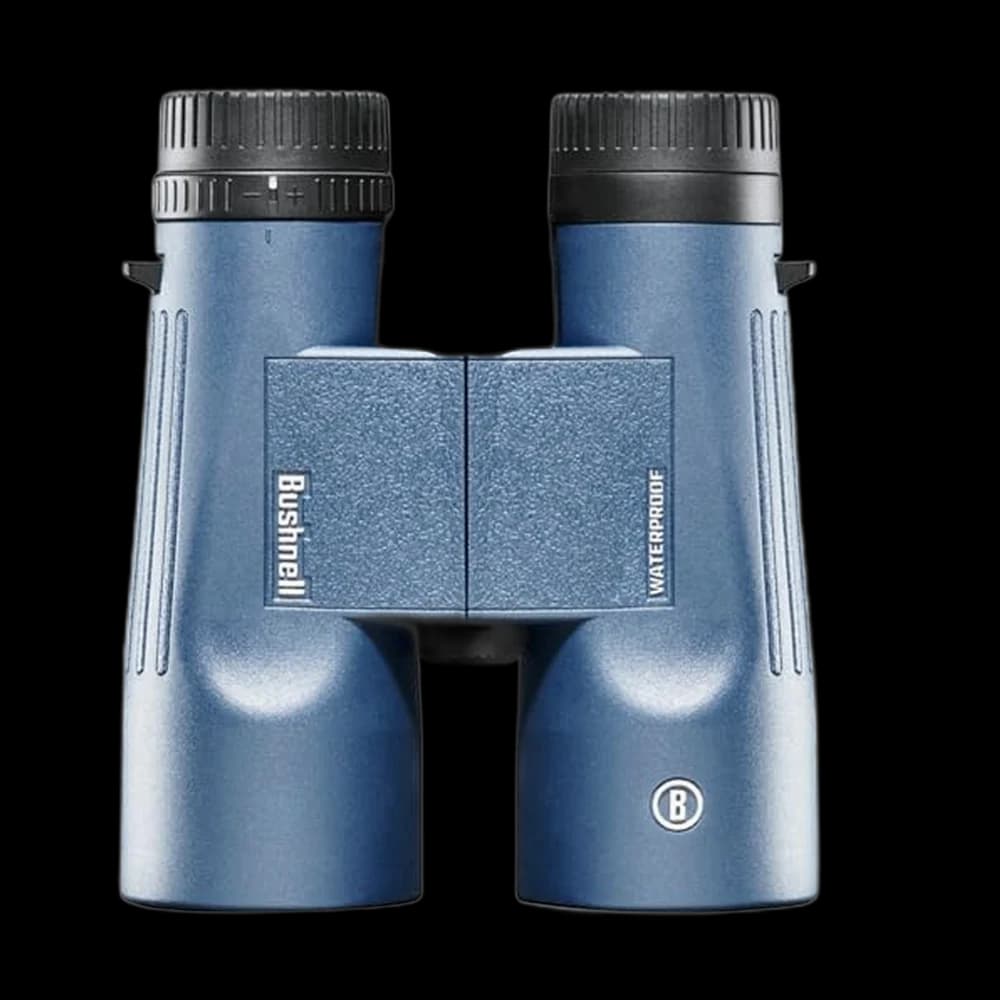 Bushnell H2O 8x42mm Binoculars, Waterproof and Fogproof Binoculars… Bushnell H2O 8x42mm Binoculars, Waterproof and Fogproof Binoculars… | Sealed and armored; lives by the back door. | ★ 4.6 Amazon | $89.99 | Buy on Amazon |
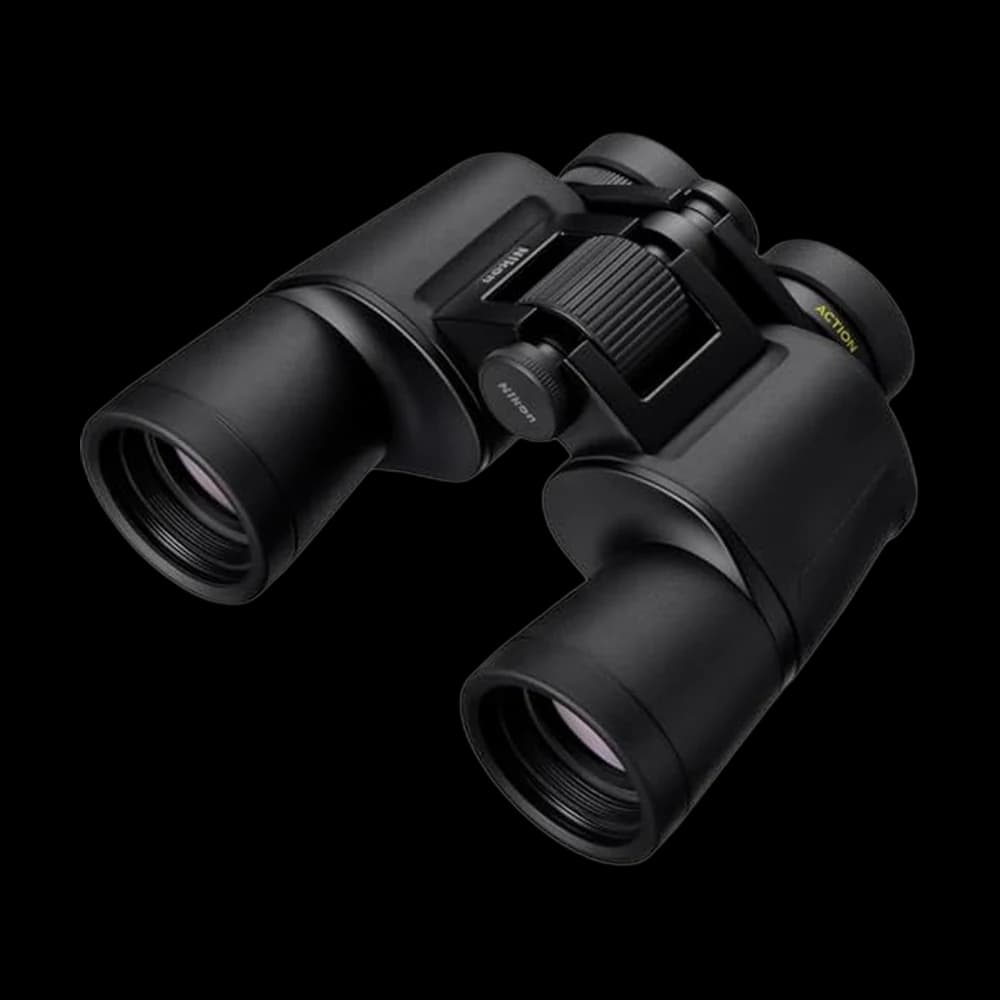 Nikon Action 8x42 Binocular Nikon Action 8x42 Binocular | Bright and comfortable for porch sessions. | ★ 4.7 Amazon | $96.95 | Buy on Amazon |
Walk into any birding conversation and someone will eventually tell you to spend $1,500 on binoculars. Ignore them. A great pair of beginner binoculars costs well under $200, and honestly, the gap between a good $100 pair and a stunning $1,500 pair is a lot smaller than the price tag suggests — especially when you're just starting out.
Binoculars are the single most-searched piece of birding gear, and for good reason: they're the tool that turns a distant brown blob into a rose-breasted grosbeak. So let's get you a good pair without the sticker shock. We researched and analyzed the most popular budget binoculars to find three we'd happily hand a friend.
Why 8x42 is the magic number
Binoculars are labeled with two numbers, like 8x42. Each one tells you something you can feel in the field.
- The first number is magnification. An 8x pair makes things look eight times closer.
- The second is the diameter of the front lenses in millimeters, which controls how much light gets in.
Eight power is enough to see field marks — the eye ring, the wing bars, the streaking on a chest — without being so powerful that every tiny hand tremor bounces the image around. Ten power sounds better on paper, but it's genuinely harder to hold steady, and for beginners that's a real problem.
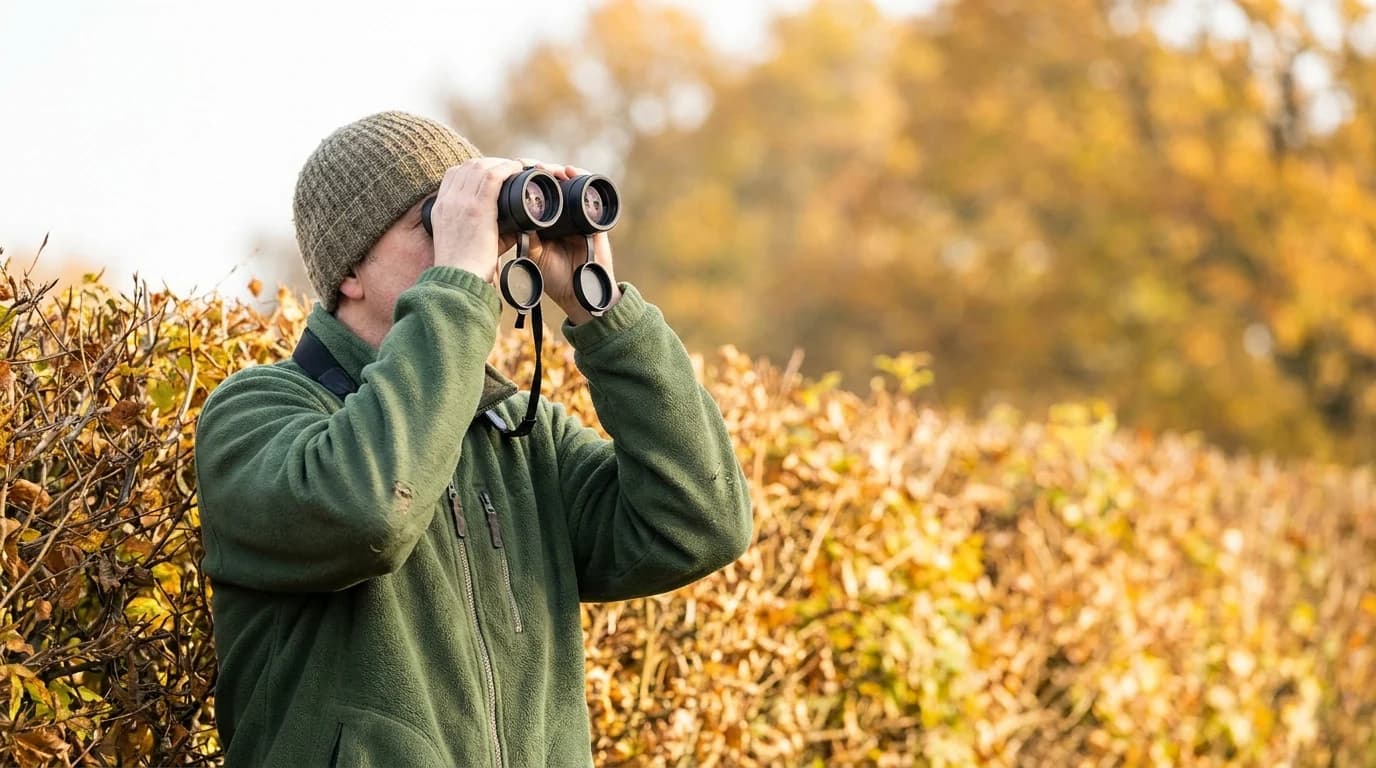
And 42mm lenses gather plenty of light, so birds stay bright even in the dim understory of a forest at dawn, when a lot of the best birding happens.
Worth knowing: smaller compact binoculars (say, 8x25) are lighter and pack down nicely, but they struggle in low light. For an all-around first pair, 8x42 is what we'd steer almost everyone toward.
Eye relief is the spec glasses-wearers must check
If you wear glasses, there's one more number to hunt down: eye relief. It's the distance your eye can sit from the lens and still see the whole image. Wear glasses and you need that distance to be generous — look for around 15mm or more, and roll the rubber eyecups down so your glasses can get close. Skip this and you'll get an annoying black ring around everything, like looking through a tunnel.
The technique that changes everything
Before we get to specific models, learn this, because it's free and it matters more than which binoculars you buy.
What actually works:
- Spot the bird with your naked eyes first, and lock your gaze onto it.
- Keep your eyes glued to that exact spot while you bring the binoculars straight up to your face.
- Don't look away on the way up. The bird will be right there.
What new birders do instead:
- Lift the binoculars to their eyes first, then start scanning the treetops.
- Hunt for a needle in a haystack at 8x zoom, and lose the bird.
It feels awkward for about a week, then it becomes automatic, and suddenly birding stops being frustrating.
Three pairs worth your money
| Pair | Price | Why you'd pick it |
|---|---|---|
| Celestron Nature DX 8x42 | $148.97 | Our pick: waterproof, 17.5 mm eye relief, 1.4 lb |
| Bushnell H2O 8x42 | $89.99 | IPX7-sealed alternative, 17 mm eye relief, 1.4 lb |
| Nikon Action 8x42 | $96.95 | Widest view here (420 ft), but not waterproof and 1.7 lb |
The Celestron Nature DX is our pick, and it is the same pair that leads our budget binoculars category. It is waterproof and fogproof, it has the longest eye reliefHow far your eye can sit from the eyepiece and still see the full image — 15mm+ matters if you wear glasses. of these three at 17.5 mm (good news if you wear glasses), it weighs 1.4 lb, and it is one of the names that keeps coming back when beginners ask birding forums for a first pair.
The Bushnell H2O is the pair to look at if you want to spend less. It is rated IPX7, sealed against accidental submersion, with 17 mm of eye relief and the same 1.4 lb weight. What you give up is field of viewHow wide a scene you see through the glass, usually given as feet at 1,000 yards — wider makes finding flitting birds easier.: 350 ft at 1,000 yards against the Celestron's 388 ft, so a warbler hopping through branches is a little harder to keep in frame.
The Nikon Action has the widest view of the three at 420 ft, plus 17.3 mm of eye relief. But it is not waterproof and it is the heaviest here at 1.7 lb, so it suits dry-weather porch and yard viewing more than damp morning trails.
Not sure which fits you?
Budget, glasses, hand size, and how much weight you want around your neck all nudge the decision. If you'd rather answer a few quick questions than compare specs yourself, our binocular finder tool matches you to a pair in about a minute.
Our verdict
For most beginners, the Celestron Nature DX 8x42 is the one to buy. It is sealed against rain and fog, comfortable with glasses, and light enough to carry all morning, which is why it also tops our budget binoculars list. If you would rather keep more of the budget for a field guide or a feeder, the Bushnell H2O is a sealed pair with a narrower view. Choose the Nikon Action only if you bird in dry weather and want the widest field.
The real rule: the best binoculars are the ones that end up around your neck on a Saturday morning. Buy a solid pair, learn the raise-to-your-eyes trick, and go find your first bird.
If you want a gentle roadmap for those first outings, our Fledgling level lays out what to look for and where to start. The gear is ready when you are.
Frequently asked
What magnification is best for beginner birding binoculars?+
8x42 is the sweet spot. Eight power shows plenty of detail while staying steady in your hands, and 42mm lenses keep the view bright even in shady woods at dawn.
Can I use birding binoculars if I wear glasses?+
Absolutely — just check the eye relief spec and look for around 15mm or more, then roll the rubber eyecups down so your glasses sit close to the lenses.
Do I really need to spend a lot on my first binoculars?+
No. Every pair in this guide is a budget pair, and the jump to premium glass matters far less when you're just starting out. If money is tight, compare the Bushnell H2O 8x42: still a sealed 8x42 with 17 mm of eye relief.
Sources & further reading
We research from primary and authoritative sources. Where our guidance rests on a fact, here's where it comes from.
- How To Choose Your Binoculars (Audubon) — Backs 8x42 as the birding sweet spot and the eye-relief guidance for eyeglass wearers.
- The Cornell Lab Review: Affordable Full-Size 8x42 Binoculars (All About Birds) — Cornell Lab review supporting 8x42 as the standard beginner configuration and that good budget pairs exist under $200.
- The Audubon Guide to Binoculars — Explains the 8x42 notation (magnification x objective-lens mm) and why 42mm balances brightness and portability.
Prices and BirdingScores reflect our most recent research and refresh on a cycle; confirm the live price before buying. We may earn a commission from affiliate retailers — it never changes our recommendations. See how we review.