
Best Birdhouses and Nest Boxes
The right box, mounted right, turns your yard into breeding habitat — bluebirds, wrens, chickadees, and more.
Content updated October 21, 2026
The 30-second answer
The Nature's Way cedar bluebird box is the pick — cedar, a 1.5-inch hole, wall and floor vents and a clean-out door. Hosting wrens or chickadees instead? The Woodlink cedar box's 1.125-inch hole is sized for them. Build for one species rather than a generic birdhouse, because hole diameter, floor area and depth decide who moves in, and decorative painted boxes go unused year after year. No perch, a baffle underneath, up in late winter — and expect to monitor it, because a nest box is a small ongoing commitment rather than a decoration.
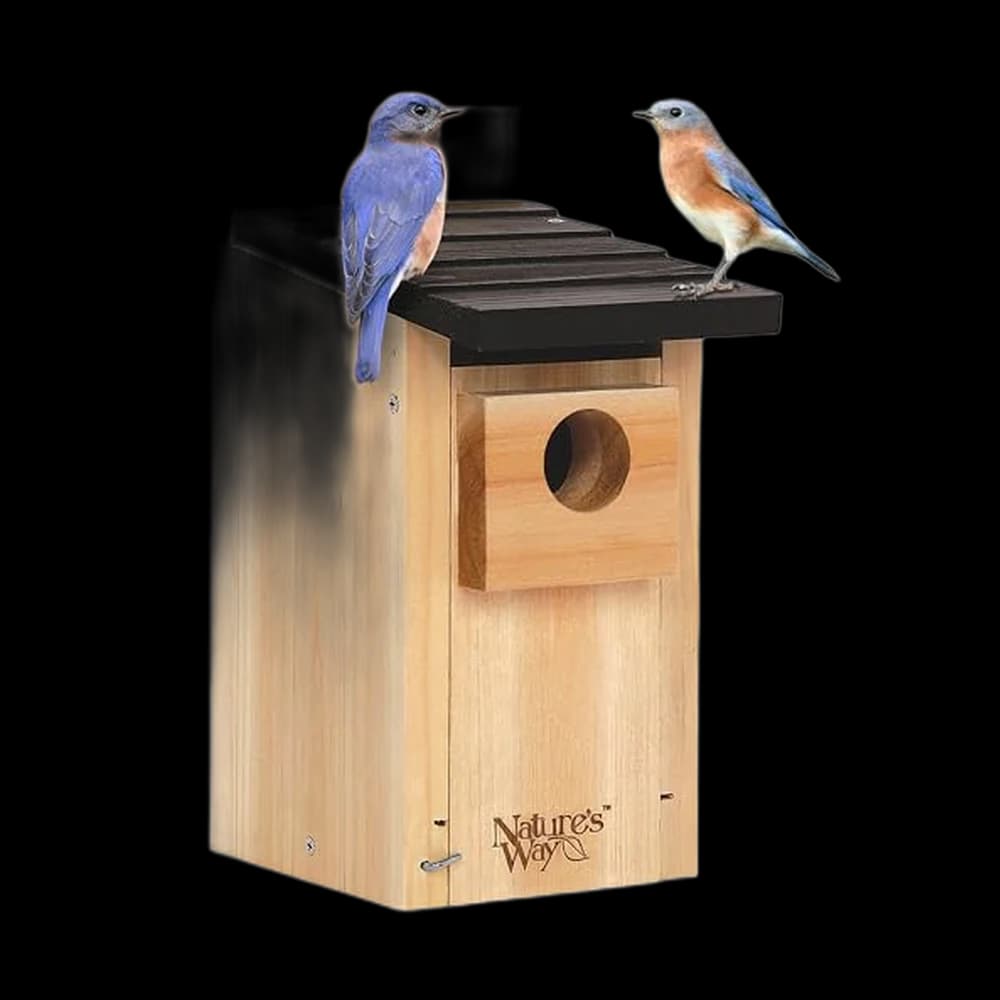
Top pickNature's Way CWH3 Cedar Bluebird
Bluebird hosts wanting a cedar box with a 1.5-inch hole, wall and floor vents, a clean-out door and a predator-guard entrance.
Buy on Amazon$29.99
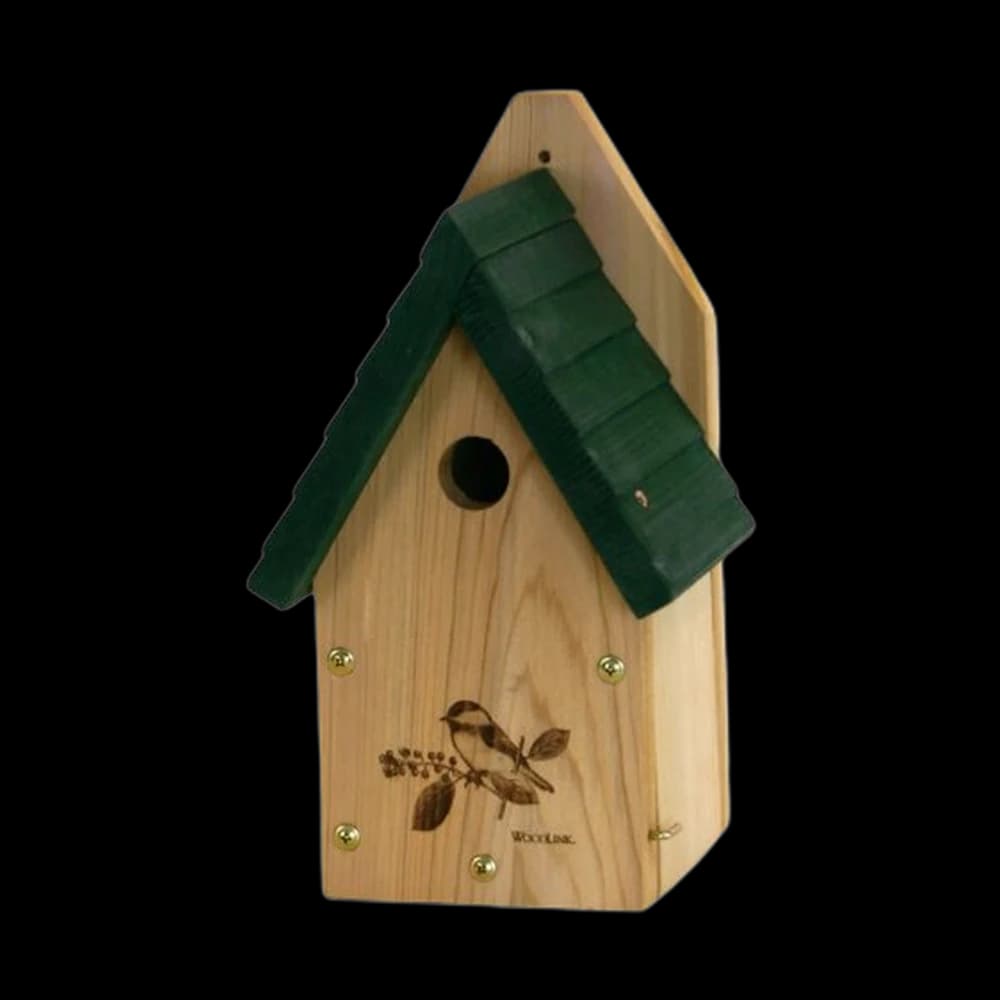
Great valueWoodlink Wren / Chickadee
Wren and chickadee landlords wanting a proper cedar box with a 1.125-inch hole and side clean-out.
Buy on Amazon$56.95
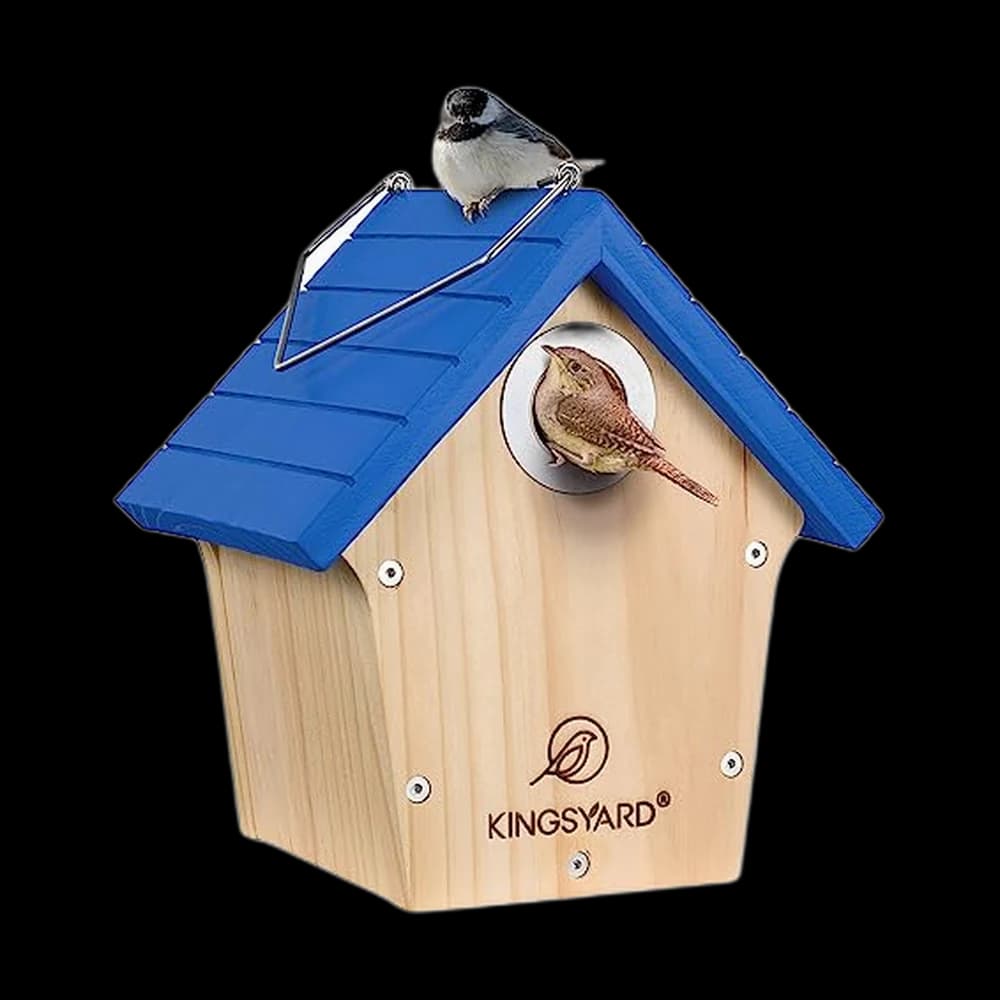
Cheapest alternativeKingsyard Wooden Wren
Budget wren hosts wanting a 1-inch predator-guarded entrance, air vents, and an easy-open cleaning lid.
Buy on Amazon$22.99
Owner ratings come from Amazon; BirdingScore is our separate research score.
Compare two picks
Tap an unselected chip to compare it with your current right-hand pick — all 4 picks available.
BirdingScore
86/100
82/100
Skip it if
You want to watch the nest through a window; this box has none, so nest checks mean opening the clean-out door.
You're hosting bluebirds; the small 1.125-inch entrance is sized to exclude larger cavity nesters. It carries only about 30 ratings, a thin sample by our usual bar.
Entrance hole
1.5 in
1.125 in
Target species
Bluebirds
Wrens & chickadees
Material
Cedar
Cedar
Ventilation / drainage
Yes (wall & floor vents)
—
Cleanout access
Yes (clean-out door)
Yes (side opens)
Mounting
Pole or flush mount
Yes (hardware included)
The constraint-stacked answer
Entrance hole diameter decides the tenant, so build for one species rather than buying a generic birdhouse. The Woodlink cedar box records 1.125 in for wrens and chickadees, the Kingsyard wren house 1 in, and both bluebird boxes here 1.5 in. A side or lid clean-out is what lets you empty it between broods. No perch — a perch only helps the birds you are trying to exclude.
Every pick, reviewed
86Bird
NATURES WAY BIRD PRODUCTS
Nature's Way CWH3 Cedar Bluebird
Cedar bluebird box with a 1.5-inch hole and clean-out door.
Skip it if: You want to watch the nest through a window; this box has none, so nest checks mean opening the clean-out door.
4.7 Amazon(5,086)$29.99
82Bird
Woodlink
Woodlink Wren / Chickadee
A proper small-cavity box for wrens.
Skip it if: You're hosting bluebirds; the small 1.125-inch entrance is sized to exclude larger cavity nesters. It carries only about 30 ratings, a thin sample by our usual bar.
4.6 Amazon(32)$56.95
80Bird
Kingsyard
Kingsyard Wooden Wren
Predator-guarded entry on a budget.
Skip it if: You want years of weathering; some buyers flag thin pine durability and bird-friendliness.
4.6 Amazon(711)$22.99
78Bird
Kettle Moraine
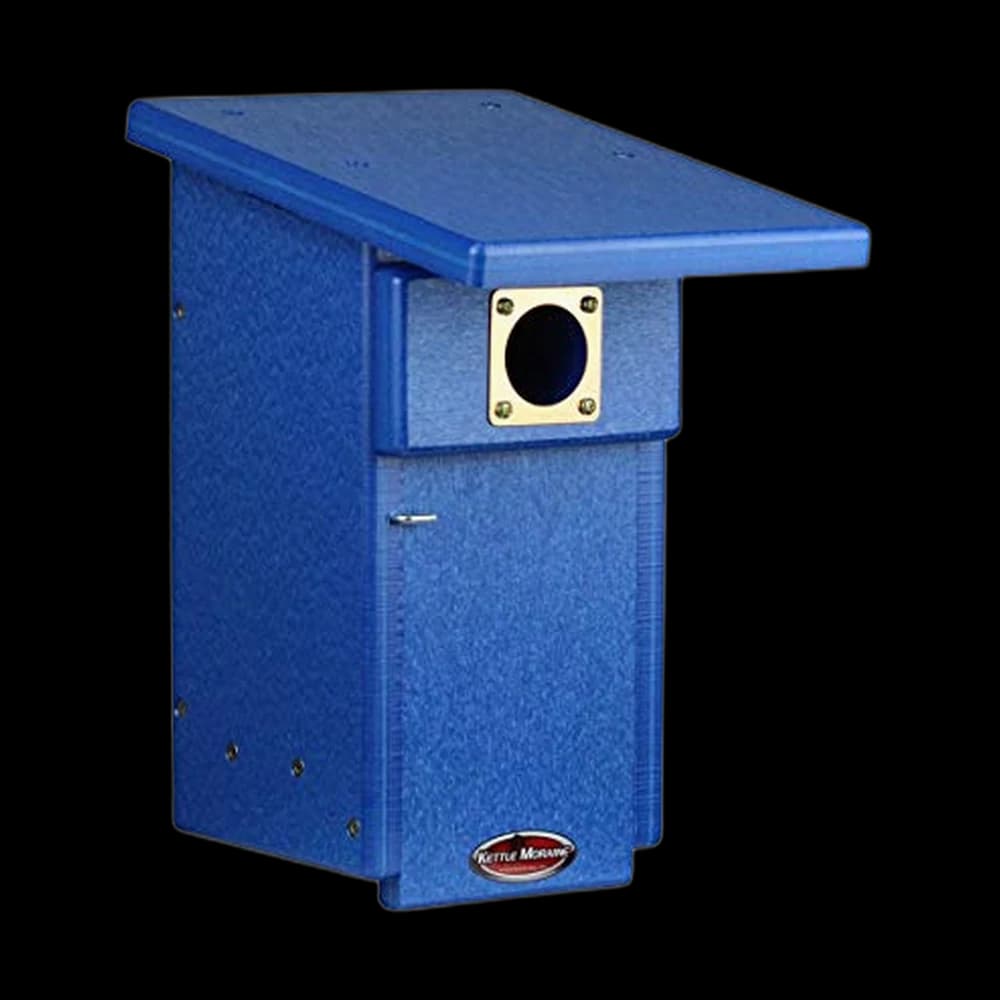
Kettle Moraine Bluebird Box
Hobbyist-favorite build quality.
Skip it if: You want cedar looks or a clear cleanout spec; this is recycled milk-jug plastic.
4.4 Amazon(60)$66.00
From the birding community
What birders actually say about birdhouses & nest boxes
Recurring themes we found across 146 public discussion threads in r/birding, r/Ornithology, r/birdhouses, read in July 2026. We summarise what comes up repeatedly and link the threads — we never quote or identify anyone, and these forums don't give us vote counts, so treat this as the shape of the conversation rather than a measured majority.
Comes up again and again
Build for one species, not for a generic birdhouse
The firmest guidance in this category: entrance hole diameter, floor area and depth are species-specific, and a box built to the wrong dimensions either goes unused or admits the wrong occupant. Reputable plans for your target species are the recommended starting point.
Comes up again and again
No perch, and a predator baffle underneath
A perch below the hole is described as helping predators and competitors rather than the residents. Mounting on a smooth baffled pole well clear of jumping distance is treated as mandatory, exactly as with feeders.
The recurring complaint
Decorative birdhouses are ornaments
Painted novelty boxes going unused year after year is a recurring disappointment. Thin material, sealed construction, wrong hole size and no drainage or ventilation are the reasons given.
Comes up again and again
Put it up early, and expect to wait a season
Boxes are reported to work better once birds have had time to notice them, so late winter is the recommended install window. A box put up in spring may simply not be found in time for that year's nesting.
The recurring complaint
Putting up a box makes you responsible for monitoring it
House sparrows taking over and killing the occupants is a serious recurring theme, along with mites and end-of-season cleaning. Regulars are clear that a nest box is a small ongoing commitment rather than a decoration.
What we didn't pick
Options we researched and catalogued but left off the list above, with the reason each one is being held back.
- Nature Anywhere Window Bird Feeder - Weather Proof Transparent…Held back because the listing is a clear window bird feeder, not a nest box. It scores well, but a feeder cannot be compared fairly against boxes on hole size, floor area and clean-out access — our window feeder picks cover this style properly.
Guides for buying Birdhouses & Nest Boxes
Frequently asked
What size entrance hole do I need?+
It depends entirely on the species you are building for. Hole diameter, floor area and depth are species-specific, and a box built to the wrong dimensions either goes unused or admits the wrong occupant.
Which nest box should I buy?+
The Nature's Way cedar bluebird box is our top pick, with a 1.5-inch hole, vents and a clean-out door. For wrens and chickadees, the Woodlink cedar house has a 1.125-inch hole and a side clean-out; for eastern bluebirds, the Kettle Moraine box ships with a pole kit and predator baffle.
When should I put a birdhouse up, and what happens next?+
Late winter, because boxes work better once birds have had time to notice them. Then expect to monitor it: house sparrows taking over, mites and end-of-season cleaning make a nest box a small ongoing commitment rather than a decoration. No perch below the hole, and a baffle underneath.
Sources & research (18)Show
- Nest Box Placement | NestWatch (Cornell Lab) — Requirements table: hole size, box height, minimum spacing and habitat by species; place boxes by February in the south and mid to late March in the north; metal or PVC poles; pair boxes 15 to 25 feet apart
- Features of a Good Birdhouse | NestWatch (Cornell Lab) — Untreated wood, 3/4-inch walls, four 3/8 to 1/2-inch drainage holes, two 5/8-inch vents per side, 2 to 4-inch roof overhang, no perches, cone/stovepipe/Noel guards; starlings need 1 9/16 inches, House Sparrows 1 1/4 inches
- Managing House Sparrows and European Starlings | NestWatch — Both introduced in the 19th century and not protected by the Migratory Bird Treaty Act; kill nestlings and adults; no completely sparrow-proof box; placement and delayed opening as passive controls
- Frequently Asked Questions | NestWatch — Clean only when there is no breeding activity; fine to wait until fall; boxes can stay up over winter as roosts or be sealed; illegal to disturb native birds' nests or eggs
- House Wren — Right Bird, Right House | NestWatch — 1-inch hole, 5 1/2 x 5 1/2 floor, 8-inch depth; keep other species' boxes 100 feet from wren boxes
- Black-capped Chickadee — Right Bird, Right House | NestWatch — 1 1/8-inch hole, 5 1/2 x 5 1/2 floor, 8-inch depth
- Carolina Chickadee — Right Bird, Right House | NestWatch — 1 1/8-inch hole, 5 1/2 x 5 1/2 floor, 8-inch depth
- Tufted Titmouse — Right Bird, Right House | NestWatch — 1 1/4-inch hole, 5 1/2 x 5 1/2 floor, 8-inch depth
- White-breasted Nuthatch — Right Bird, Right House | NestWatch — 1 1/4-inch hole, 5 1/2 x 5 1/2 floor, 8-inch depth
- Tree Swallow — Right Bird, Right House | NestWatch — 1 3/8-inch hole, 5 1/2 x 5 1/2 floor, 9-inch depth; clean out once young leave
- Eastern Bluebird — Right Bird, Right House | NestWatch — 5 1/2 x 5 1/2 floor, 9-inch depth; lists a 2 1/4-inch entrance (the oval's height); clean out as soon as a brood fledges
- Carolina Wren — Right Bird, Right House | NestWatch — 5 x 6 1/2 floor, 7-inch depth, slot-style pseudocavity; boxes used for winter roosting
- Eastern Bluebird Nest Box | Tennessee Wildlife Resources Agency — Peterson-style box needs an oval hole; never include an under-the-hole perch; mount on conduit, not trees or fence posts
- Eastern Bluebird Nest Box Construction Plan (PDF) | New York State DEC — Do not change the entrance size: 1 1/2 inches is correct for bluebirds; a bluebird box should never have a perch; mount boxes by mid-March
- The Eastern Bluebird (PDF) | Iowa Department of Natural Resources — Repair boxes in February, place new boxes mid-March to early April; clean between broods and at season's end; plug the entrance over winter to keep sparrows out
- Nestbox Recommendations (factsheet) | North American Bluebird Society (NABS) — Backs the 1.5 in round hole (1 9/16 in for Western/Mountain), drainage holes, and spacing between boxes.
- Feeding Mealworms to Bluebirds | Sialis.org — Supports mealworms (live fastest, dried effective) as the single most reliable draw and platform-feeder method.
- To Support Nesting Eastern Bluebirds, Plant Native | NestWatch (Cornell Lab) — Supports open short-grass habitat, native berries/plants, and skipping pesticides that kill insect prey.
Keep narrowing the choice
Prices and ratings shown are the most recent values we pulled from affiliate retailers and refresh on a recurring cycle; confirm the live price before buying. See how we score.