
How to Attract Bluebirds: Mealworms + the Right Box
Bluebirds come for mealworms and a proper nest box over open grass, not for seed feeders. Here's exactly how to set your yard up.
The short answer
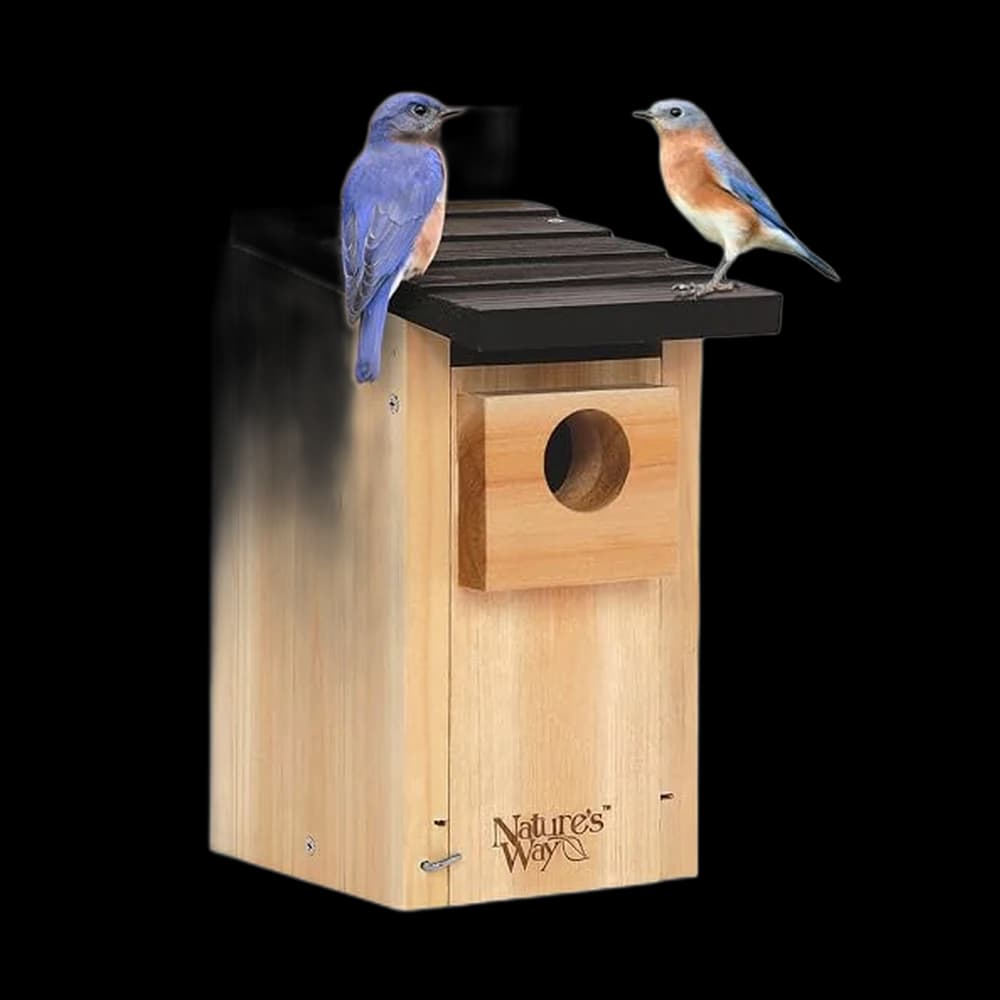
- Bluebird hosts wanting a cedar box with a 1.5-inch hole, wall and floor vents, a clean-out door and a predator-guard entrance.
- Skip if you want to watch the nest through a window; this box has none, so nest checks mean opening the clean-out door.
Key takeaways
- Mealworms are the #1 draw. Bluebirds mostly ignore seed feeders, so skip the sunflower and put out mealworms instead.
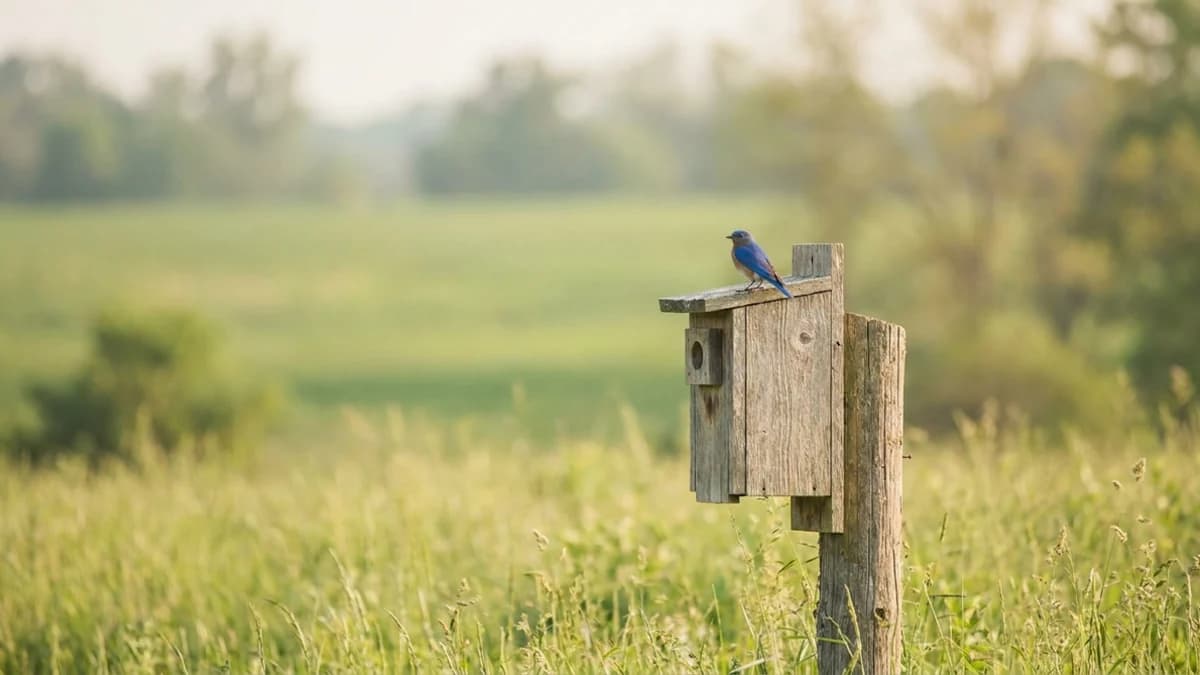
- Habitat matters more than gear. Open, short-grass lawn with a few scattered perches is exactly what bluebirds hunt over.
- The nest box spec is specific. A 1.5-inch entrance hole, 4-6 feet up, on a smooth pole facing open ground, is the proven combination.
- Add water and they'll stay. A shallow bird bath, ideally moving, seals the deal in every season.
Pick by your situation
| If your situation is… | Pick | Why |
|---|---|---|
| If you want the fastest possible bluebird visit | Put out live mealworms on an open dish | It's their top food and they find it within days when present nearby |
| If you want bluebirds to nest and return yearly | Mount a 1.5-inch-hole box 4-6 ft on a baffled pole facing open grass | Correct box specs plus predator protection turn visitors into residents |
| If house sparrows keep taking your box | Monitor weekly and clear sparrow nests immediately | Sparrows will kill adult bluebirds and nestlings if left unchecked |
A shortcut by situation — start from the row that sounds like you.
Birdhouses & Nest Boxes: our picks
| Pick | Best for | Rating | Price | |
|---|---|---|---|---|
| TopNature's Way Bird Products CWH3 Cedar Bluebird Box House | Cedar bluebird box with a 1.5-inch hole and clean-out door. | ★ 4.7 Amazon | $29.99 | Buy on Amazon |
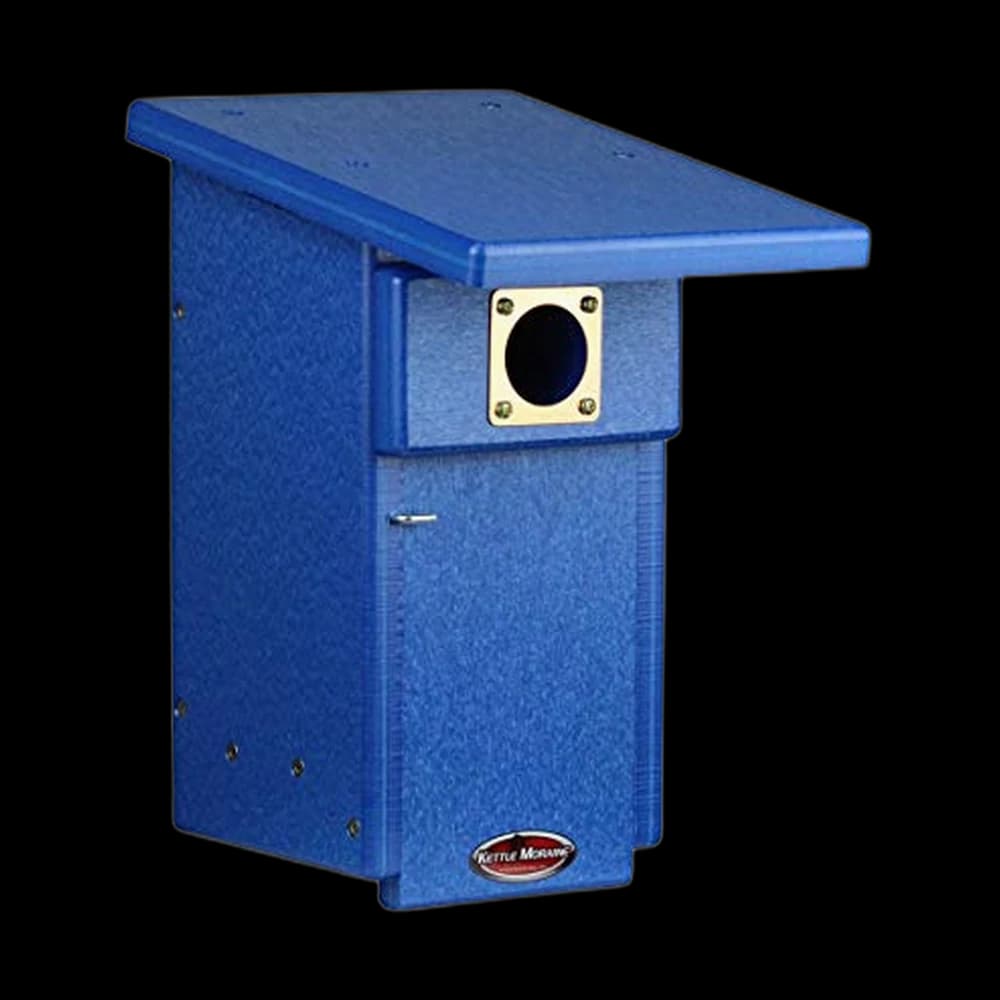 Kettle Moraine Eastern Bluebird Recycled Nest Box (Nest Box,… Kettle Moraine Eastern Bluebird Recycled Nest Box (Nest Box,… | Hobbyist-favorite build quality. | ★ 4.4 Amazon | $66.00 | Buy on Amazon |
To attract bluebirds, put out mealworms and set up a proper nest box over open grass with water nearby. That's the whole formula. Bluebirds are insect-eaters, so the seed feeder that works for cardinals and finches largely does nothing for them.
What actually draws bluebirds
Bluebirds hunt insects from low perches, dropping onto short grass to grab them. Everything you do should support that.
- Mealworms — the single most reliable draw. Live worms work fastest; dried worms (offered in a shallow dish or platform feeder) are easier to keep and still very effective.
- Open, short-grass habitat — a mowed lawn, meadow edge, orchard, or park-like yard. Bluebirds avoid dense woods and thick shrubs.
- Low perches — a fence, a shepherd's hook, a bare branch, or the nest box roof itself. They perch, scan, and pounce.
- Water — a shallow bath, especially with moving or dripping water, is a huge attractant year-round.
- Native berries in fall and winter — dogwood, sumac, holly, and juniper carry them through cold months when insects vanish.
Build the routine first: start with a small handful of mealworms at the same time each morning on an open platform. Once a bluebird finds a reliable food source, it returns daily and often brings its mate and later its fledglings.
Why seed feeders don't work for bluebirds
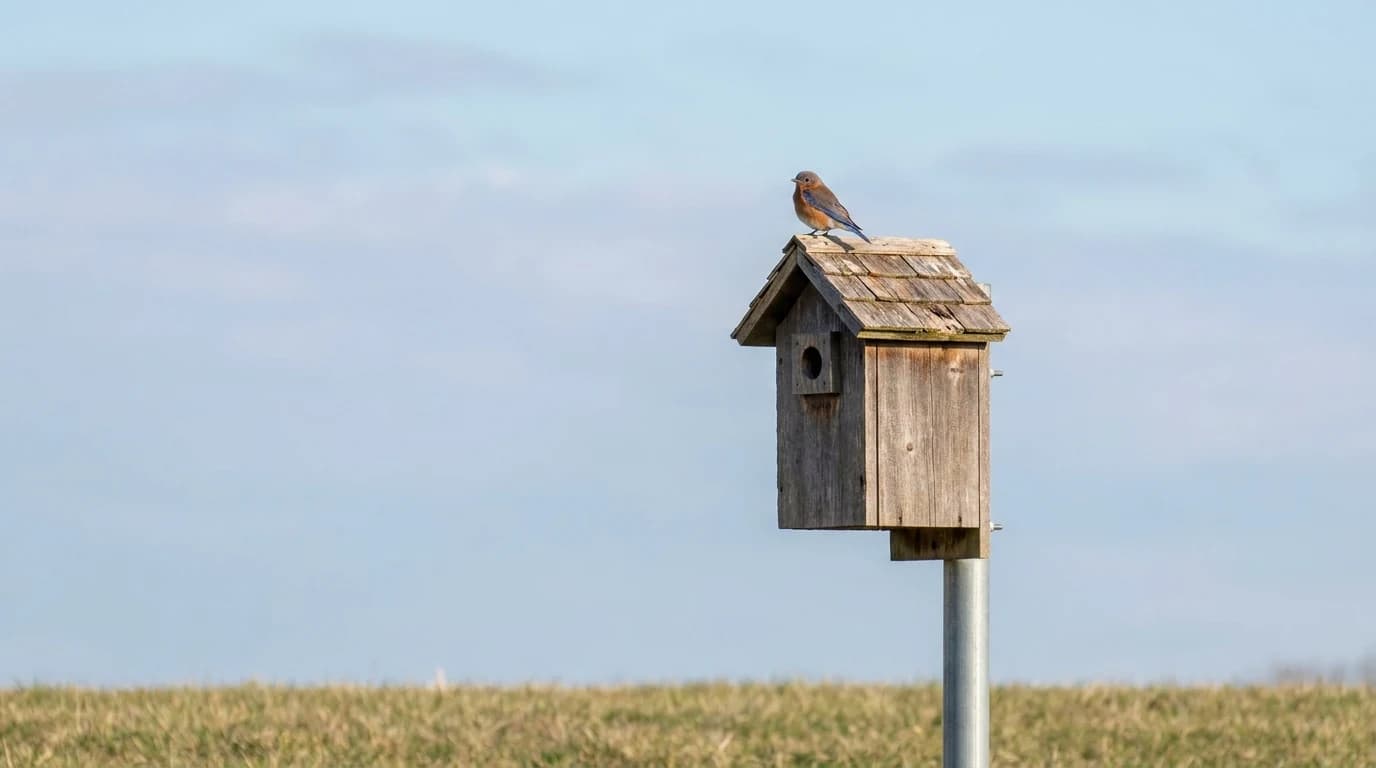
Bluebirds lack the heavy conical bill of a seed-cracker. They will occasionally take suetA high-energy cake of rendered fat (often with seeds) that draws woodpeckers, nuthatches, and chickadees., bark butter, or crushed peanuts, but they will not line up at a sunflower tube. Set that expectation early so you don't waste weeks wondering why they skip your feeder.
Spend your effort on:
- Mealworms, offered at a predictable time and place.
- A correctly built, correctly placed nest box.
- Open short-grass habitat with low perches and clean water.
Don't bother with:
- A fancier seed blend, or a bigger sunflower tube.
- Dense shrub plantings right beside the box.
The bluebird nest box: exact specs
A correctly built and correctly placed box is what turns a passing bluebird into a resident. Get the numbers right.
| Spec | Target | Why it matters |
|---|---|---|
| Entrance hole | 1.5 in (1 9/16 in for Western/Mountain) | Lets bluebirds in, keeps starlings out |
| Mounting height | 4-6 ft above ground | Easy to monitor; within their preferred range |
| Mount type | Smooth metal pole with a baffle | Blocks climbing predators far better than a tree or fence post |
| Facing | Toward open grass, away from prevailing wind | Fledglings' first flight lands on safe open ground |
| Spacing | 100+ yards between boxes | Bluebirds are territorial; crowding causes fighting |
| Floor | ~5 x 5 in, with drainage holes | Room for the brood, drains after rain |
Mount the box so the hole faces an open area the birds can fly straight into. Avoid pointing it into dense brush or a busy patio.
Boxes worth buying
A cedar box with a side- or front-opening panel makes monitoring easy, which matters because you should check for house sparrow takeovers. The Nature's Way Cedar Bluebird House is a solid cedar box with a clean-out door, and the hobbyist-favorite Kettle Moraine Eastern Bluebird box is built to last for years of nesting seasons. Either fits the 1.5-inch spec.
Put the box up earlier than feels necessary
Boxes should go up in late winter to very early spring so they're weathered and ready before pairs start scouting. In much of the US and southern Canada that means February to March; further north, aim for March to April.
A box left up year-round also provides winter roosting shelter, so there's no reason to take it down in fall.
Keep them coming back
- Refresh mealworms daily at a set time.
- Keep water clean and shallow.
- Monitor the box without disturbing active native nests. Confirm the occupant is a House Sparrow before considering any removal; native sparrows and other cavity nesters are different. Follow NestWatch's species-specific guidance and local rules, or ask your local bluebird group if uncertain.
- Skip pesticides on the lawn — they wipe out the insects bluebirds and their chicks depend on.
Do those four things and a single curious bluebird usually becomes a returning family.
Regional notes for the US and Canada
Three species split the continent. Eastern Bluebirds range across the eastern US and into southern Canada. Western Bluebirds cover the far West, and Mountain Bluebirds favor high open country of the Rockies and interior West.
The playbook is the same for all three, with one tweak: Western and Mountain boxes do best with a slightly larger 1 9/16-inch hole. In the north, many bluebirds migrate, so watch for returning pairs in early spring and have your box up and waiting.
Frequently asked
What attracts bluebirds fastest?+
Live mealworms on an open platform or dish. Bluebirds recognize them as easy prey and will often show up within days if bluebirds are already in your area. Offer them at the same time each morning to build a routine.
Where should I put a bluebird house?+
Mount it 4-6 feet up on a smooth metal pole with a predator baffle, facing open, short-grass area the birds can fly straight into. Keep it away from dense brush, busy patios, and other bluebird boxes (100+ yards apart).
What do bluebirds eat?+
Mostly insects and spiders in spring and summer, including mealworms, caterpillars, beetles, and crickets. In fall and winter they shift to berries like dogwood, sumac, holly, and juniper. They rarely eat seed.
When should I put up a bluebird house?+
Late winter to early spring, before pairs start scouting nest sites. February-March works for most of the US and southern Canada; go a few weeks later in the far north. Leaving boxes up year-round also gives birds a winter roost.
Sources & further reading
We research from primary and authoritative sources. Where our guidance rests on a fact, here's where it comes from.
- Eastern Bluebird | NestWatch (Cornell Lab) — Authoritative nest-box specs: 1.5 in entrance hole, mounting height, floor size, facing open habitat, predator-baffled pole.
- Nestbox Recommendations (factsheet) | North American Bluebird Society (NABS) — Backs the 1.5 in round hole (1 9/16 in for Western/Mountain), drainage holes, and spacing between boxes.
- Feeding Mealworms to Bluebirds | Sialis.org — Supports mealworms (live fastest, dried effective) as the single most reliable draw and platform-feeder method.
- To Support Nesting Eastern Bluebirds, Plant Native | NestWatch (Cornell Lab) — Supports open short-grass habitat, native berries/plants, and skipping pesticides that kill insect prey.
- Managing House Sparrows and European Starlings | NestWatch — Distinguishes invasive House Sparrows from protected native birds and explains why correct identification is essential before nest management.
Prices and BirdingScores reflect our most recent research and refresh on a cycle; confirm the live price before buying. We may earn a commission from affiliate retailers — it never changes our recommendations. See how we review.